M A R K E D
an immersive art exhibition
by Jonathan McKinneyREDDING, CALIFORNIASEPTEMBER 2026
MARKED was an immersive exhibition about the people, moments, questions, and experiences that shape a life.Across eleven chapters, visitors moved through a physical journey of remembrance, identity, tenderness, trust, wonder, love, and becoming.
The exhibition has ended.
The story hasn't.
Go behind the work and discover the making, meaning, failures, stories, and details you couldn't see inside the exhibition.
ME
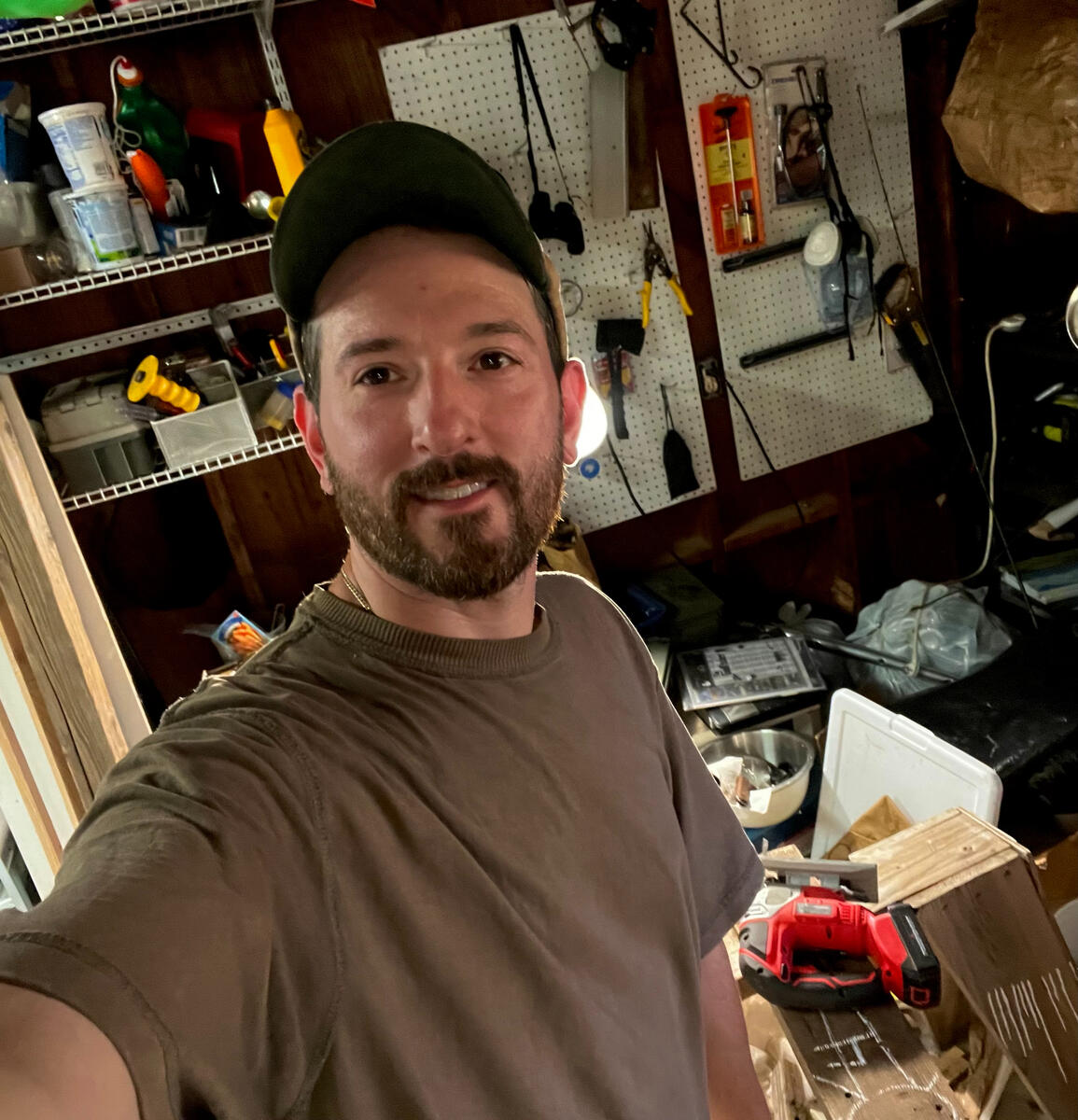
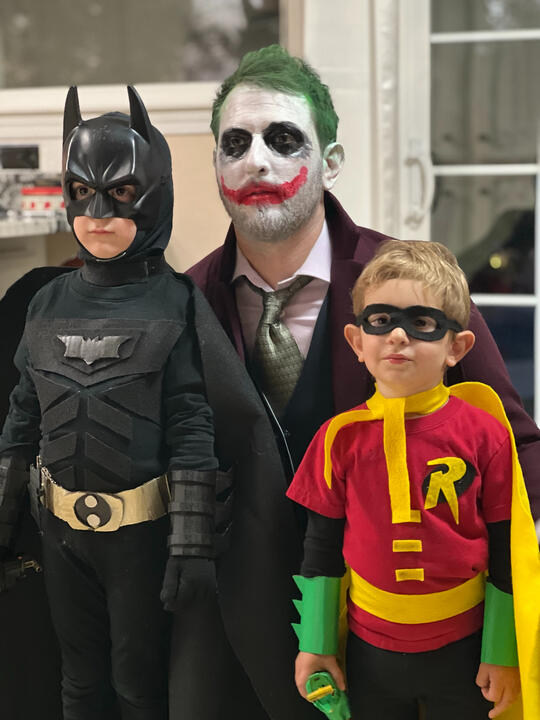
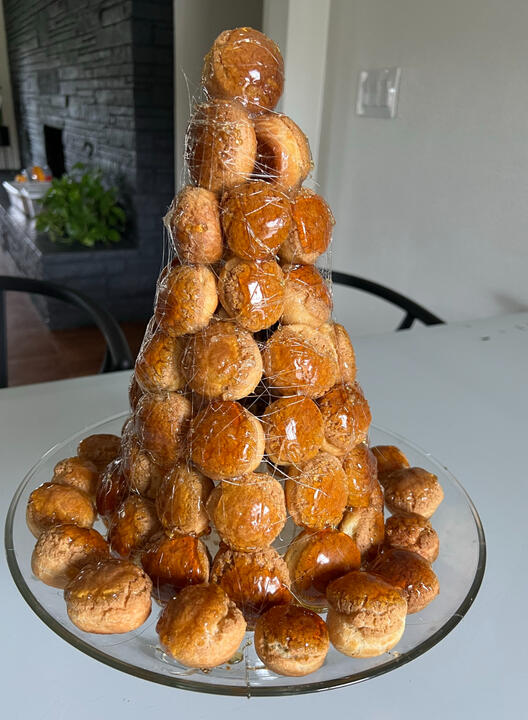
Most people who know me call me Jon.For this, I chose Jonathan.It's the name I've always had, but rarely the one I've used. Something about putting my full name on this felt important. Maybe because making this has felt a little like becoming more fully myself.I grew up in a small town in Northern California, in a family where creativity was everywhere. I don't think any of us would have described it that way at the time. We just made things.There were haunted houses and Halloween costumes, school projects that were never allowed to be boring, art supplies and a giant blackboard at my grandma's house, things being built and tinkered with, stories and jokes and poetry. My parents, grandparents, brother and sister are all creative in completely different ways. Some make art. Some build things. Some engineer things. Some teach. All of them, in their own way, showed me that an idea could become something real.I think I inherited a little bit of all of it.Apparently, when I was little, if I couldn't explain something with words, I'd eventually grab a piece of paper and say, Here. Let me just draw it.I still do that.I've never really had one particular creative medium. I'm much more interested in the idea, and then figuring out what form it should take. Give me something that could be made, and my brain immediately starts wondering what else it could become.A work presentation could become an elaborate storytelling experience. Easter eggs could each become tiny individual works of art. A Halloween costume could turn into a weeks-long build. I once decided I could make a croquembouche (a ridiculous tower of cream puffs held together with caramel) for Christmas despite having absolutely no business making one. At one job, I picked up a camera and started filming my coworkers and somehow ended up writing, shooting, and editing an entire episode of The Office.Then we made episode two.That's generally how it goes.I see something and think, I could probably do that.There's an almost absurd confidence I have when it comes to making things. I don't need to know exactly how to do something before I begin. When an idea really gets hold of me, I tend to believe I'll figure out how to make it real.Somehow, I usually do.For most of my adult life, though, I followed a much more conventional path. I built a career. I worked in sales, education, and technology. I've worked for startups and large companies. I've led teams, given presentations, made a lot of cold calls, changed jobs, chased goals, supported my family, and done what most of us do. I've built a life.And creativity kept showing up anyway.For most of my life, creativity appeared whenever life gave it somewhere to go.A project. A presentation. A costume. Something for my kids. Something for someone I loved. Some completely unnecessary idea that suddenly felt very necessary.Creativity was everywhere in my life. It just wasn't at the center of it.Somewhere along the way, I started wondering what would happen if it was.Approaching forty made that question harder to ignore. Not because I wanted a different life. I love the life I have. I just started thinking more seriously about how I wanted to spend it.My wife is Amy, and we have two boys, Maximilian and Kingston. They are, without question, the most important part of my life. A friend once told me that nothing I ever make will be greater than those two boys.I agree.They've also made me think about what we show our kids is worth pursuing. What happens when an idea matters enough to follow it? What happens when you believe you can make something before you know exactly how?Eventually, one of those ideas led here.MARKED is my first art exhibition.Someone recently described it to me as twenty years in the making.Maybe it is.But maybe it's forty.Because this doesn't feel like something that appeared out of nowhere. It feels like all the different ways I've been creative throughout my life finally arrived in the same place.For the first time, creativity isn't something that found a place in the rest of my life.I gave it a place of its own.And it feels like a long time coming.So if my name brought you here, Jon or Jonathan, whether we grew up together, worked beside each other somewhere along the way, shared a meal, crossed paths at a coffee shop, met recently, or have never met at all, I'm genuinely glad you're here.If you're coming to MARKED, thank you.You could spend your time a thousand different ways. I'm honored that you've chosen to spend some of it here.I can't wait to share it with you.— Jonathan
M A R K E D
an immersive art exhibition
A PERSONAL INVITATION
You are personally invited to experience MARKED, an immersive art exhibition I've created.
MARKED is an exploration of the people, moments, questions, and experiences that shape a life, and what it means to discover that your life has been marked all along.
September 11 marks my 40th birthday. I can’t think of a more meaningful way to mark the moment than by sharing it with you.
I would be honored to have you there.
come as you are
FRIDAY, SEPTEMBER 11, 2026
5—10 PM
1401 MARKET STREET
REAR ENTRANCE
DOWNTOWN REDDING, CALIFORNIA
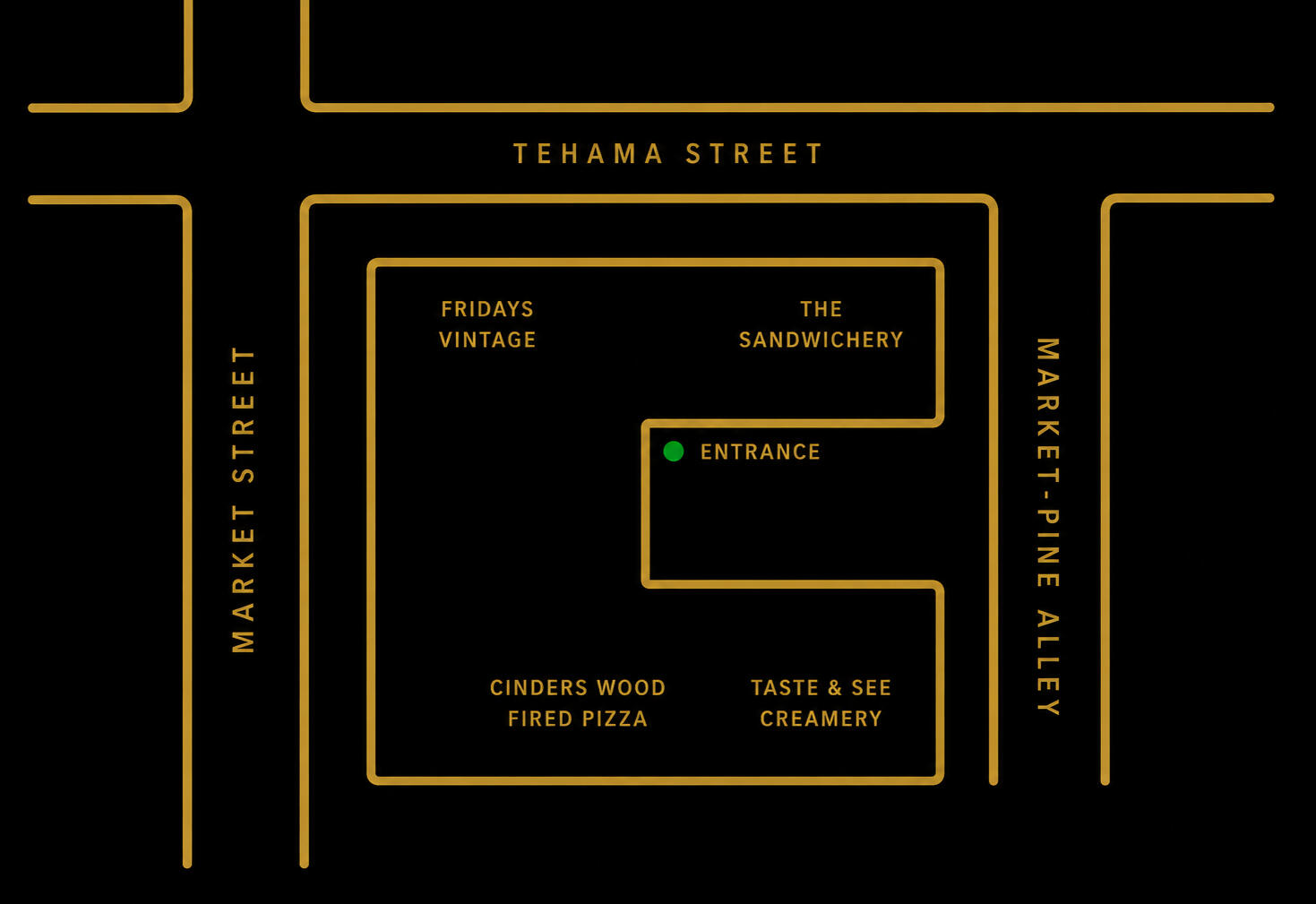
MARKED will also be open
SATURDAY · 9 · 12 · 5 — 9 PM
SUNDAY · 9 · 13 · 5 — 8 PM
FRIDAY · 9 · 18 · 5–9 PM
SATURDAY · 9 · 19 · 1–8 PM
SUNDAY · 9 · 20 · 1–7 PM
FRIDAY · 9 · 25 · 5–9 PM
SATURDAY · 9 · 26 · 1–8 PM
SUNDAY · 9 · 27 · 1–7 PM
Jonathan Anthony McKinney
the EPILOGUE
behind the work.
OCTOBER 1, 2026
remind me
the EPILOGUE
behind the work.
You came back.
When you left MARKED, I told you to take something with you because you would need it later.This is later.You saw the finished work. Now I want to show you everything you couldn't see.MARKED was made to be experienced with sound, so I made a playlist for this part of the story too. It includes music from the exhibition, along with songs that became part of the months I spent making it. If you can, put on some headphones, press play, and let it run while you read.
One more thing before you begin. I told you I was going to show you what you couldn't see. I wasn't kidding. This isn't meant to be a quick scroll.It's the whole story behind MARKED: the making of it, the things that didn't work, the details you couldn't see, and some of what I discovered along the way. Take your time with it. Read a movement or a chapter and come back later. If you can, experience it on a computer or larger screen. Your phone will work just fine, but this was made to be spent some time with.Welcome back.
MOVEMENT I
BEFORE THE MARK
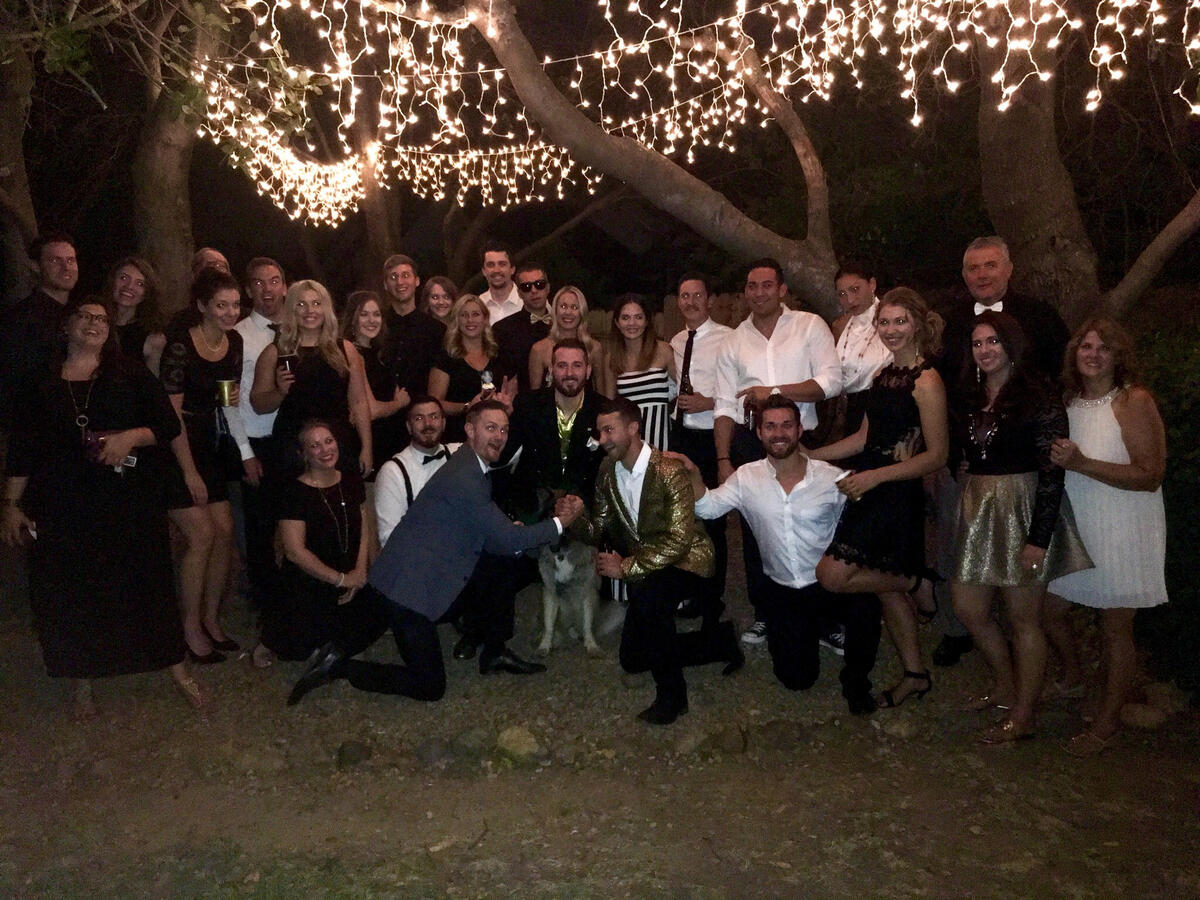
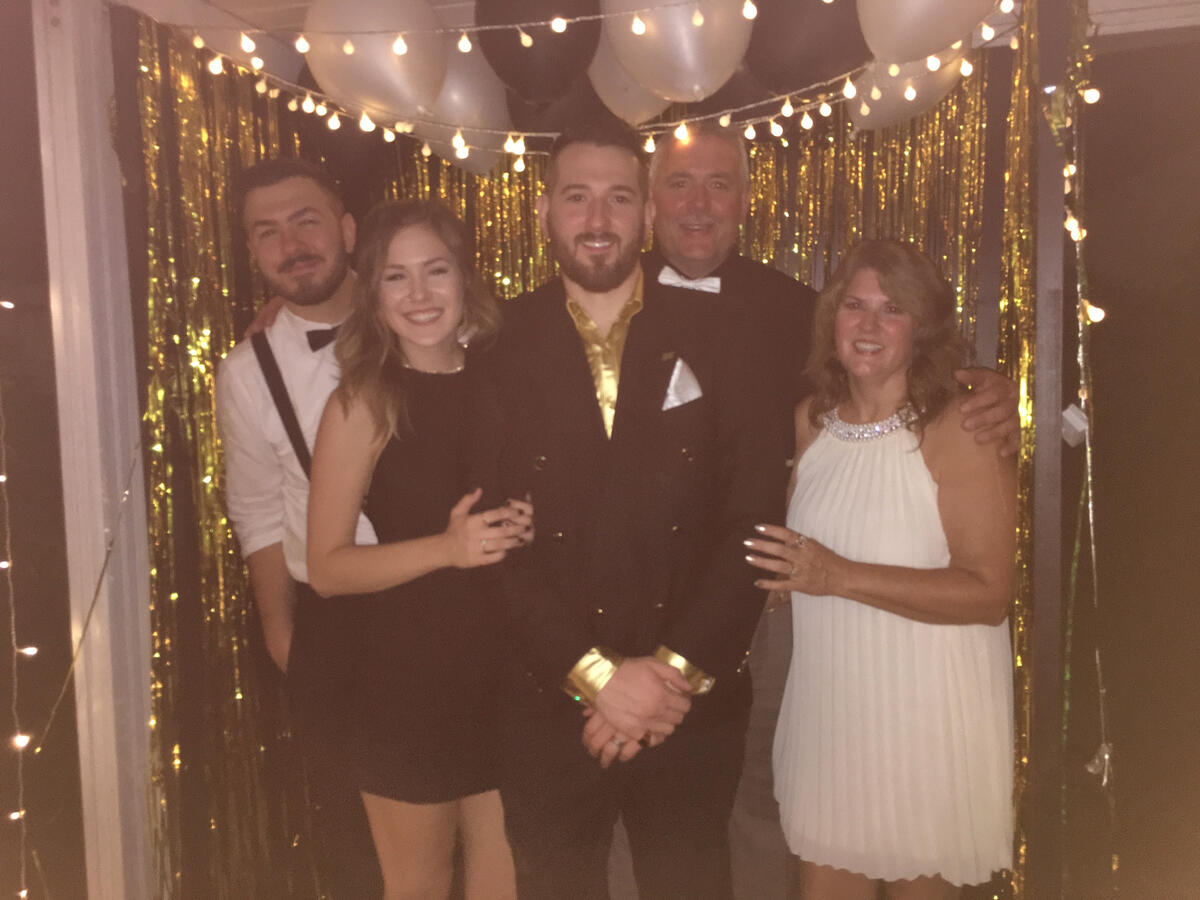
I spent most of my life feeling like I was looking for a missing piece.When I turned 30, I hated it. Not the party. The party was incredible. Amy made these beautiful black, white and gold invitations, and friends from completely different parts of my life filled the room with my family. There are pictures where I look incredibly happy. And I was. I just hated turning 30.Something about that number made me take inventory of my life, and I didn't think I was where I was supposed to be. I thought I should be more established. More successful. More certain. I thought I should know who I was and where I was going.Ten years passed. Amy and I built a family. We had two boys I couldn't imagine my life without. I accomplished things I was proud of. There was so much about my life that was good.And yet, as 40 got closer, I recognized something familiar underneath all of it.I was still searching.For as long as I can remember, I've carried this picture in my head of a missing puzzle piece. The right job. The right opportunity. The right amount of success. The thing I was meant to do. If I could just find it, everything else would finally click into place.A few years before MARKED, I thought I had. I was working for a company I loved, leading a team and doing work I was proud of. Then things changed, and I lost a role I had attached far too much of my identity to.It made me realize how much power I had given other people to tell me who I was and what I was worth.That realization didn't fix anything overnight. But it started a question that followed me toward 40.
On my 39th birthday, I started saying something out loud that I didn't completely understand yet:I just want to be fully Jonathan McKinney.Most people call me Jon. And I am Jon. But there was something about saying my whole name that felt fuller to me.I wasn't trying to reinvent myself. I wasn't looking for some better version of myself to perform. If anything, I wanted to strip some of that away. I wanted to know what it felt like to simply be myself, fully.The problem was that I had absolutely no idea what that meant.And the year leading up to 40 wasn't exactly a peaceful little journey of self-discovery. There was pressure coming from almost every direction. Marriage. Parenting. Work. Money. Cars. Responsibilities. Ordinary life didn't stop just because I was questioning what I wanted mine to look like.By the beginning of June 2026, I knew I couldn't keep waiting for the right opportunity, the right purpose, or somebody else to recognize something in me.So I decided to make something.
• GOLD •
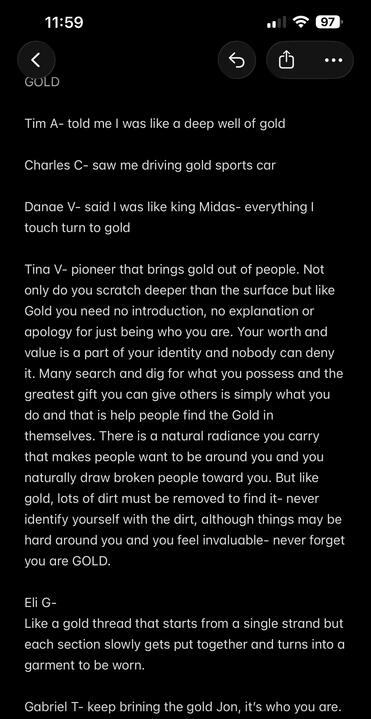
I've kept notes on my phone for as long as I've had an iPhone. Hundreds of them. Fragments of ideas. Things people have said to me. Things I wanted to build. Sentences I didn't want to forget.Years of my brain, basically.And throughout those notes, one thing kept appearing: gold.I don't completely know why. People had used the word about me over the years. I'd been told I was a deep well of gold. I'd been compared to Midas, someone who could touch something and somehow turn it into something more.Years earlier, I had even built a work presentation around two colors. Green represented the driven part of me. Business. Achievement. Growth. Gold represented something else:The creator. The artist.The strange thing is, I was already making things all the time. Videos. Halloween costumes. Food. Designs. Elaborate work presentations. Random ideas that made people ask some version of, How did your brain even think of that?I just didn't call myself an artist.And I had never really given that part of myself anywhere to go.
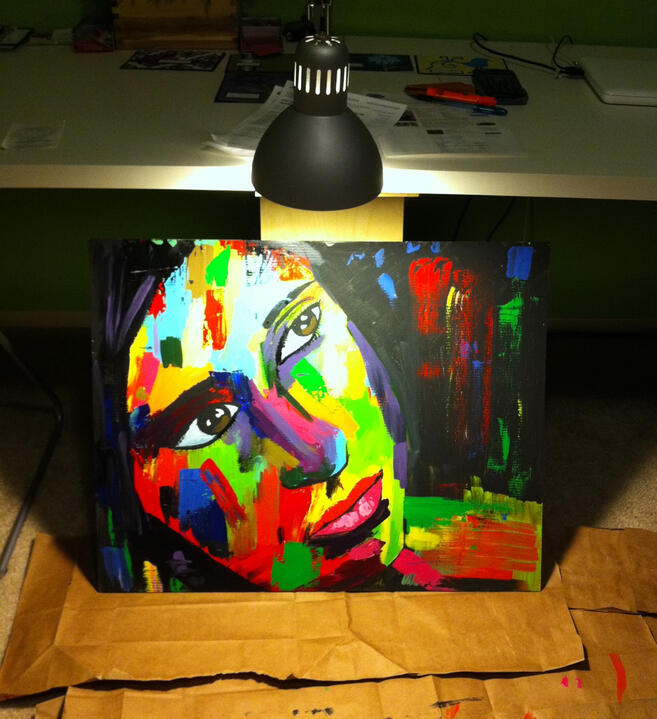
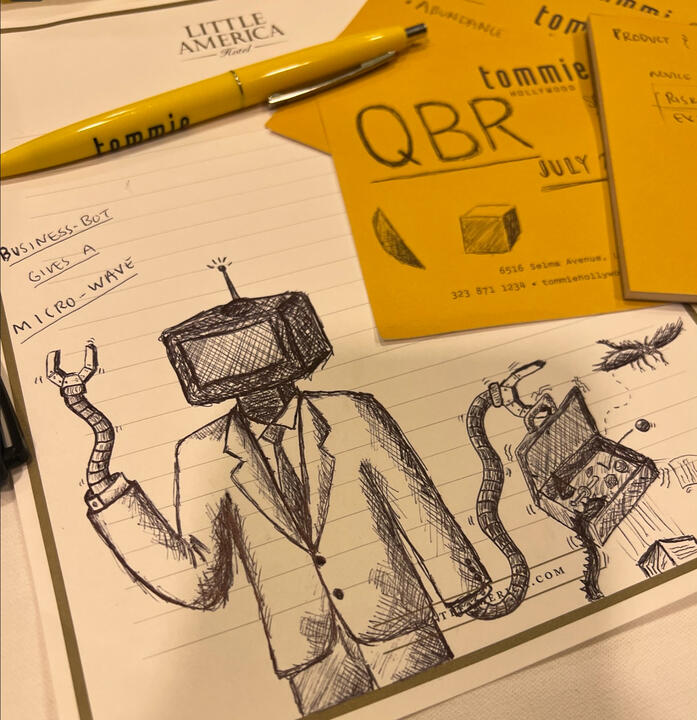
Then, on June 12, 2026, a few months before my 40th birthday, I wrote:My 40th birthday is coming up and I'd like to have a party. But not just a birthday party. An art show.That was it. There was no gallery waiting for me. No body of work sitting in storage. No curator. Nobody had asked me to do this. I didn't even have a venue.I just decided I was going to have an art show.And I didn't want to hang some art on the walls and put a birthday cake in the corner. I wanted the whole thing to mean something.Years earlier, my friend Tim had said something to me that never left:You've got to mark the moment.Forty felt like a moment worth marking. Not because I felt like I had arrived. Almost the opposite.I wanted to enter my forties having finally taken a chance on this part of myself instead of waiting for somebody else to give me permission to.So I did.
• THE FIRST MARK •
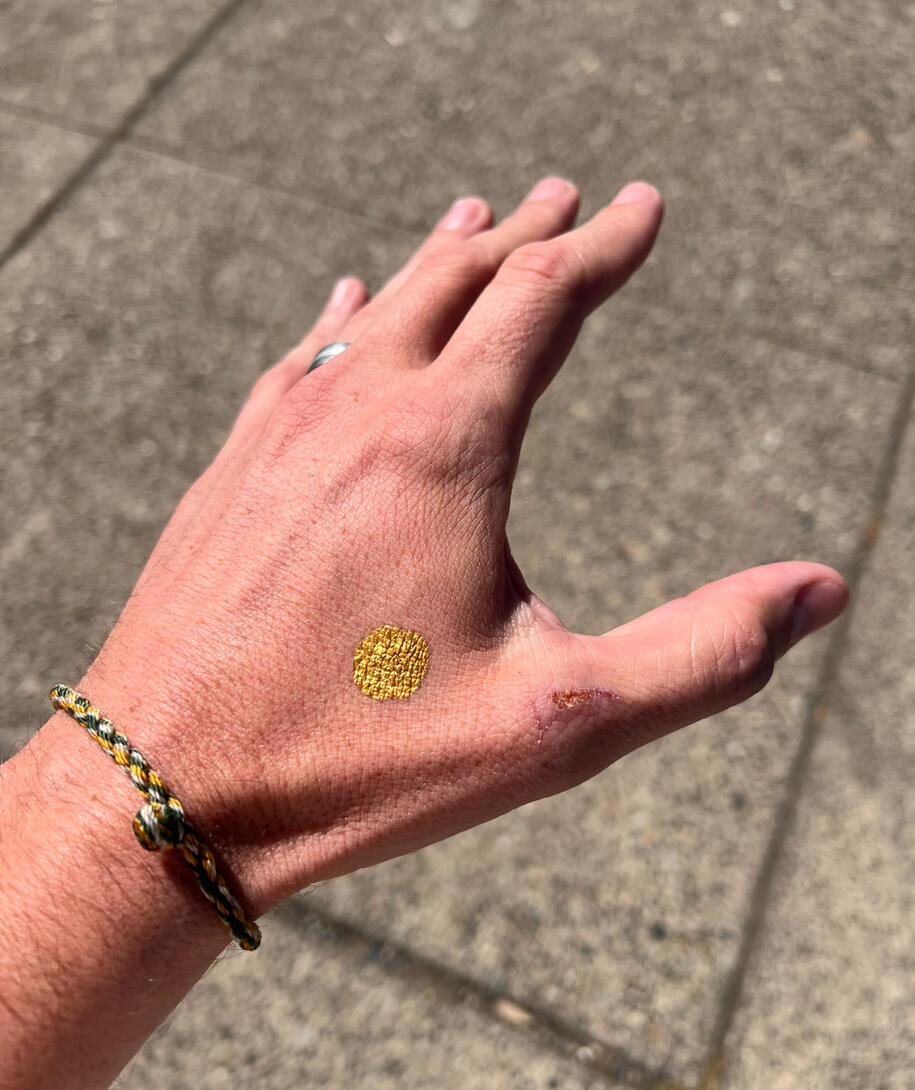
At first, the ideas were everywhere. Gold rooms. Sculptures. Fabric. Mirrors. Hearts. Hands. Threads. Objects. Experiences. Some survived. A lot didn't.But I knew almost immediately that I didn't want people to simply walk into a room and look at things I had made. I wanted them to enter something. I wanted mystery. Curiosity. Discovery. I wanted people to slow down and pay attention.Before I could make that experience for anybody else, though, I had to start digging through my own life.I went through old memories and photographs. I thought about people who had shaped me, things I had lost, things that had hurt me, dreams I'd forgotten, and moments I hadn't thought about in years. Some ideas that eventually became entire chapters of MARKED had been sitting in my phone as a single sentence.June became a month of excavation.I'd start with an idea for a piece and keep pushing on it. Why does this matter? What am I actually trying to say? Is that really true?Sometimes the thing I thought I was making wasn't the thing at all. A piece would change. An idea would disappear. Something I thought was finished would open another question.And eventually, those questions started asking something of me.That's when I realized:As much as I was making the art show, the art show was making me.And somewhere in the middle of all of that, I dipped my finger into gold paint.I wish I could tell you this was a profound moment. It wasn't. I was playing with paint. I put a small gold mark on my hand. I liked the way it looked, so I took a picture.
That's it.I didn't know what it meant. I didn't know it would eventually be placed on hundreds of other hands. I didn't even know the exhibition would be called MARKED.The mark came first. The meaning came later.Maybe that's fitting. Because when I started all of this, I thought I was looking for something I was missing.I had no idea what I was about to find.
MOVEMENT II
MAKING MARKED
By the end of June, MARKED existed.Just not physically.I had spent weeks thinking, writing, sketching, changing names, moving chapters around, and asking the same questions over and over: What am I actually trying to say? Why does this piece need to exist?By then, most of the exhibition was surprisingly clear in my head. I knew there would be an amphora, cast hands, a cocoon, a heart, a path you had to walk, a compass, and somehow, eventually, a giant hand coming out of the ceiling.I could see the experience.I just had absolutely no idea how to make most of it.I tend to understand what I want something to feel like long before I know how I'm going to get there. So once the ideas were strong enough, I stopped trying to solve everything in my head and started making.Almost all of it began in our garage.Calling it a studio would be generous.It was an unfinished little garage in Redding in the middle of summer. No insulation. No drywall. Cobwebs. Spiders. Evidence of mice. Christmas decorations. Tools. Old stuff from the boys. Boxes and bins that had accumulated through years of ordinary life.I pushed as much of that life to the edges as I could.And for the next few months, that garage became the place where MARKED slowly became real.
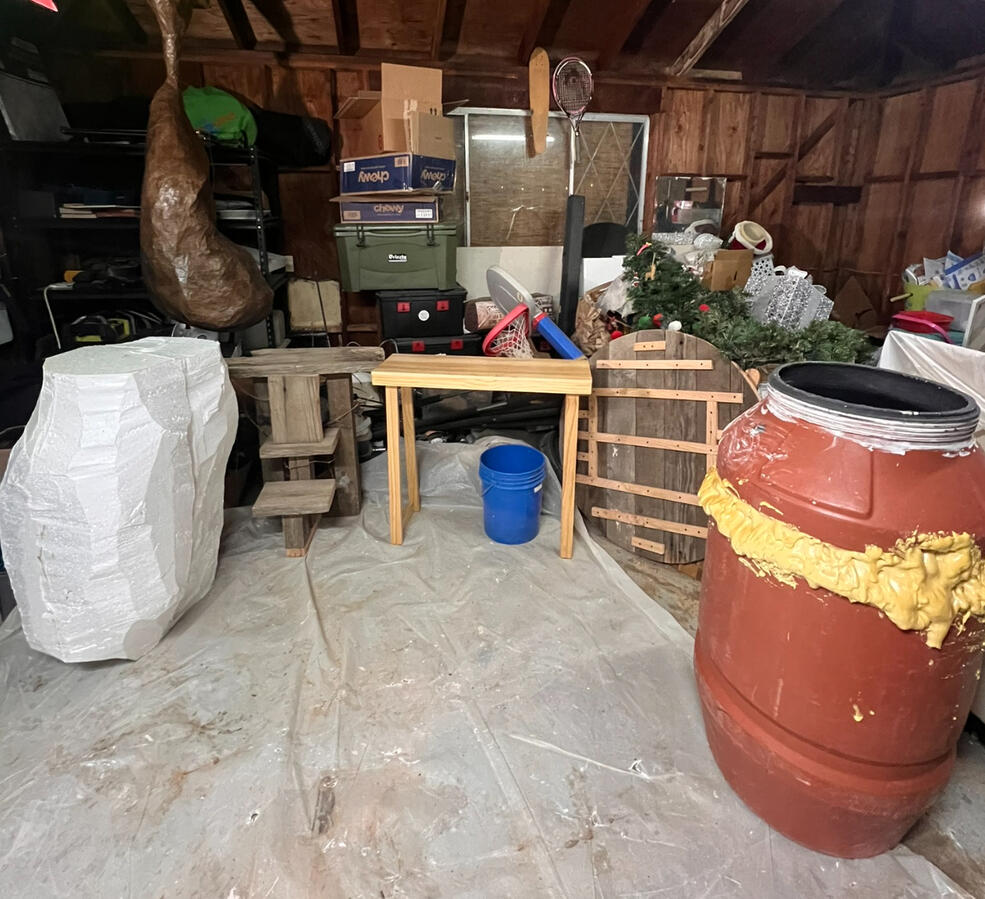
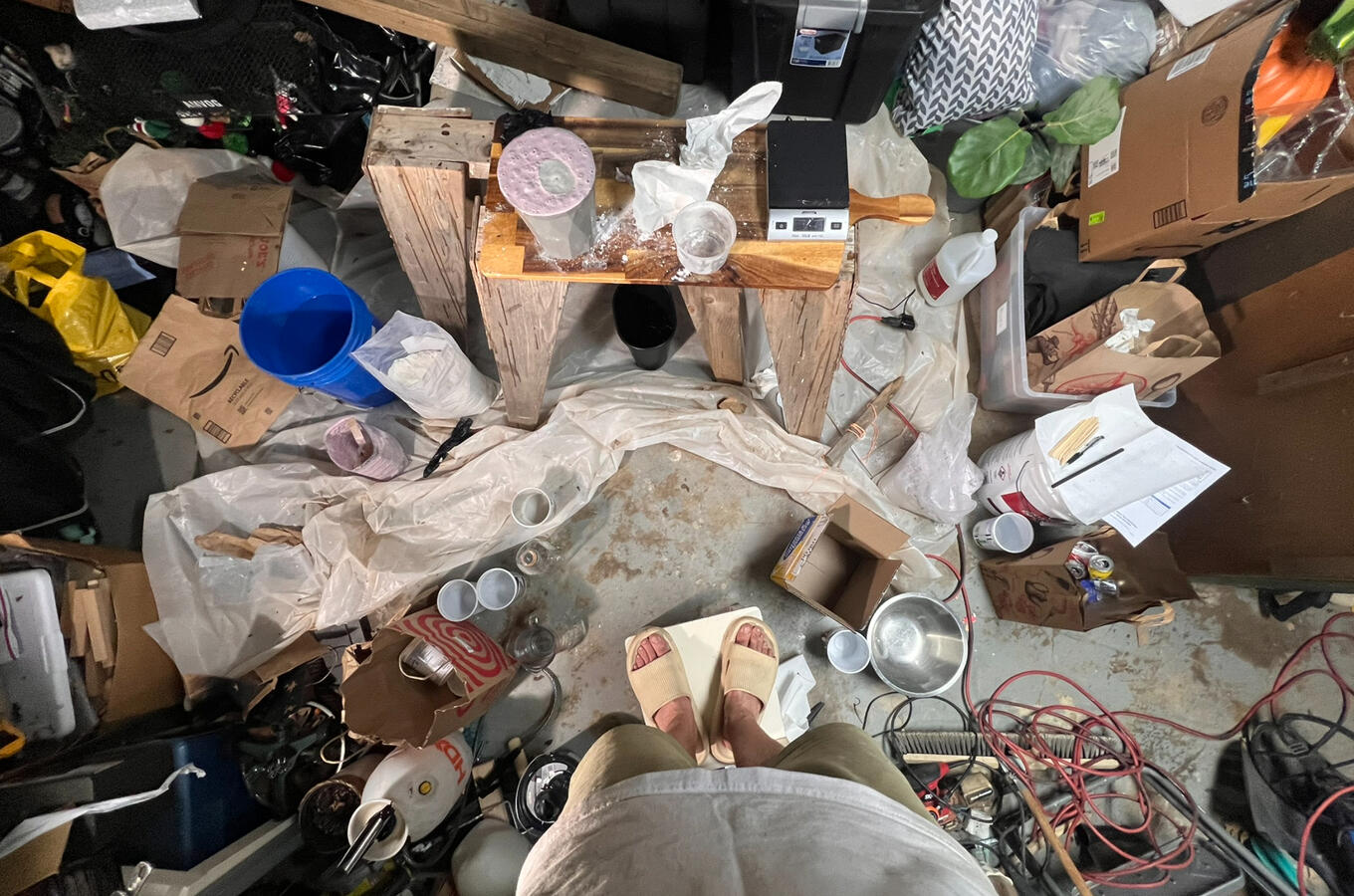
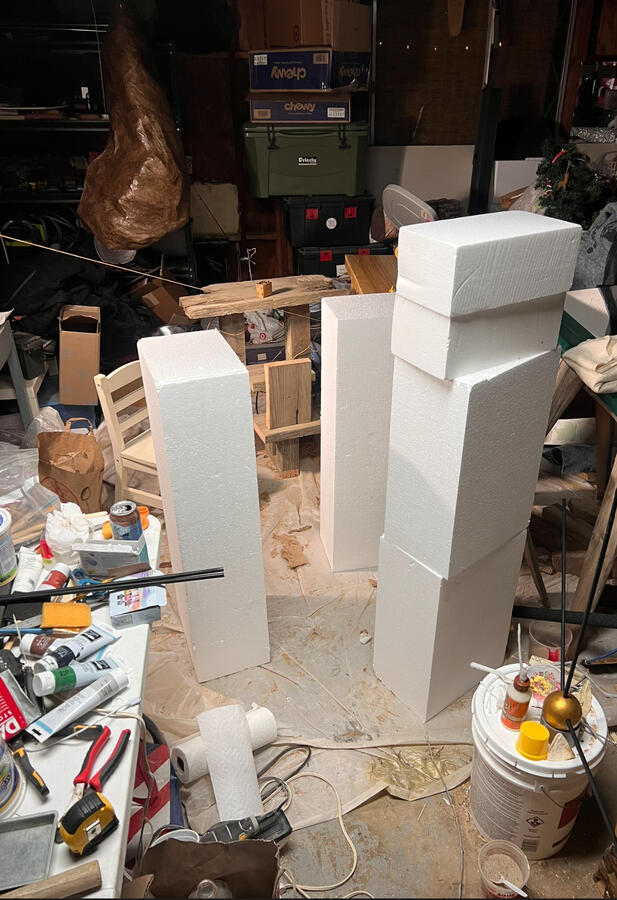
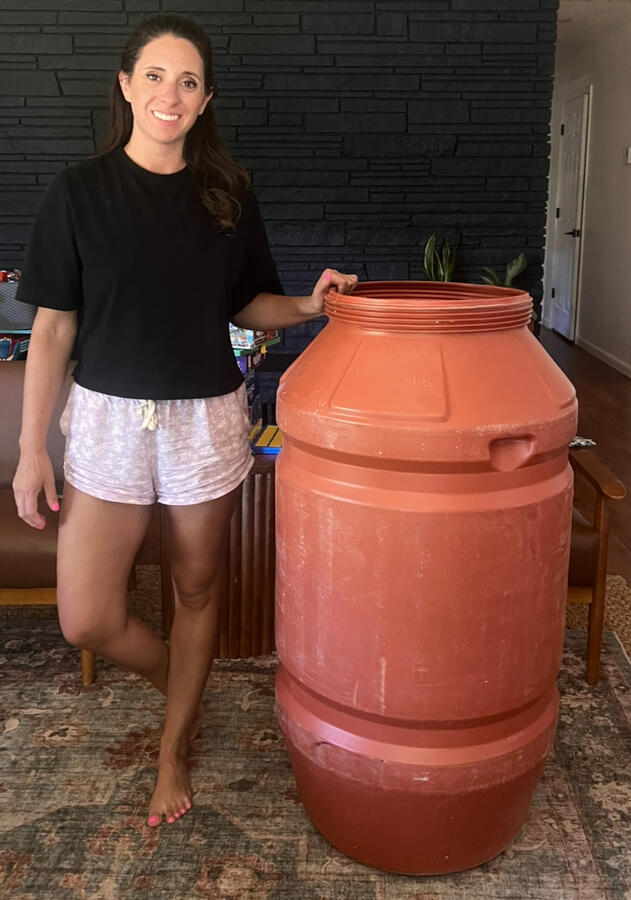
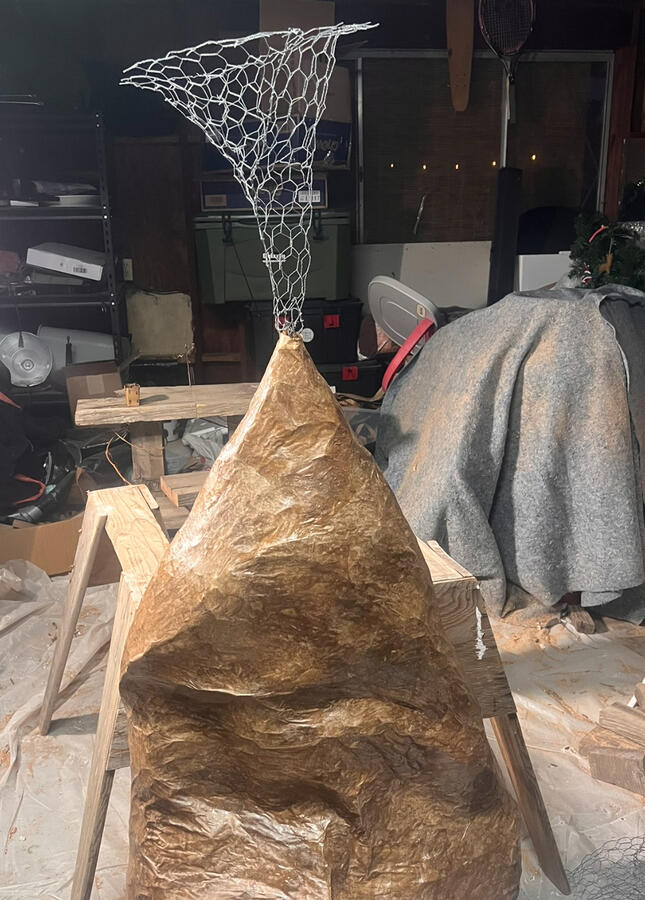
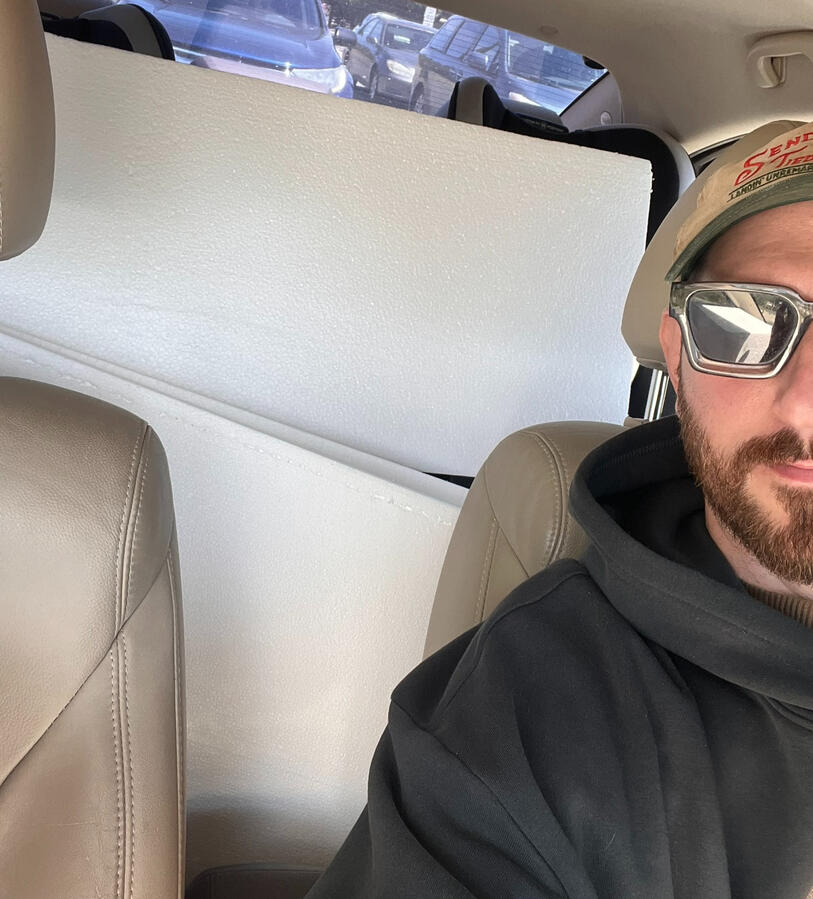
• MAKE PROGRESS EVERY NIGHT •Most nights, I started around 9:00. The boys would go to bed, the house would get quiet, and I'd walk into the garage and figure out what I could move forward.That became the rule: Make progress every night.Not finish something. Not solve everything. Just move something forward.There was almost never only one piece happening at a time. While plaster dried on one, I'd paint another. If something wasn't working, I'd leave it alone and move to something else until I figured out what it needed.I also became very comfortable making things out of whatever I could find. Chicken wire. Amazon packing paper. Foam. Old wood. Fabric. A backyard sunshade. A $20 plastic olive drum that somehow needed to become an ancient vessel.I was, as I kept saying, ballin' on a budget.But I loved the transformation. There was something incredibly satisfying about looking at an ordinary object and thinking, Yeah, but what else could you be?At one point, I needed large pieces of Styrofoam, so I started calling businesses around town asking if they had any they were throwing away. After probably thirty or forty calls, a guy named Bob at Ethan Allen took my name and number.
Later, he called me back. They had foam.Then he texted again: Hey, I got more. Do you want it?Eventually my car was packed with Styrofoam that would become parts of Remembrance and Presence. Months later, Bob and his wife came through MARKED. I loved knowing that part of what he was looking at existed because he'd remembered some random guy who called asking for his trash.
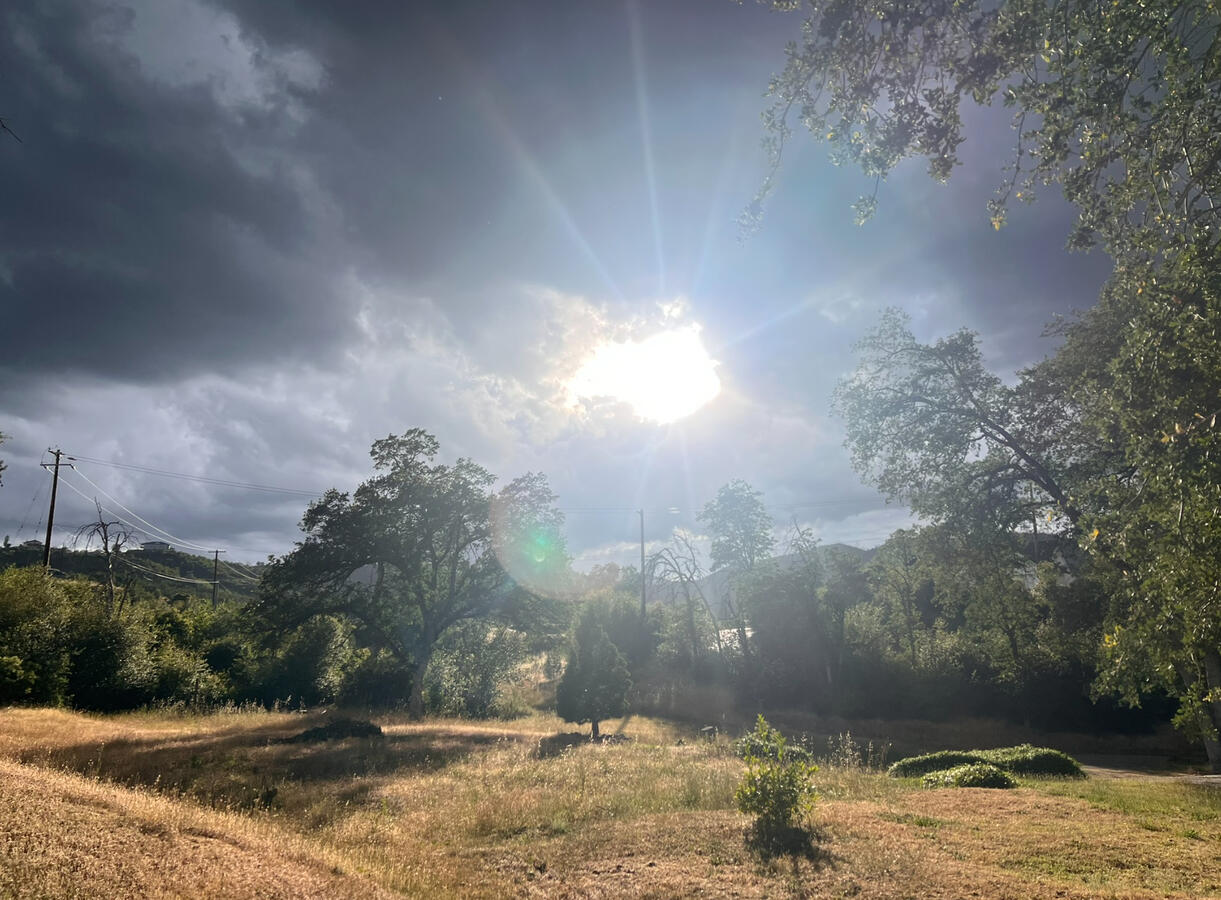
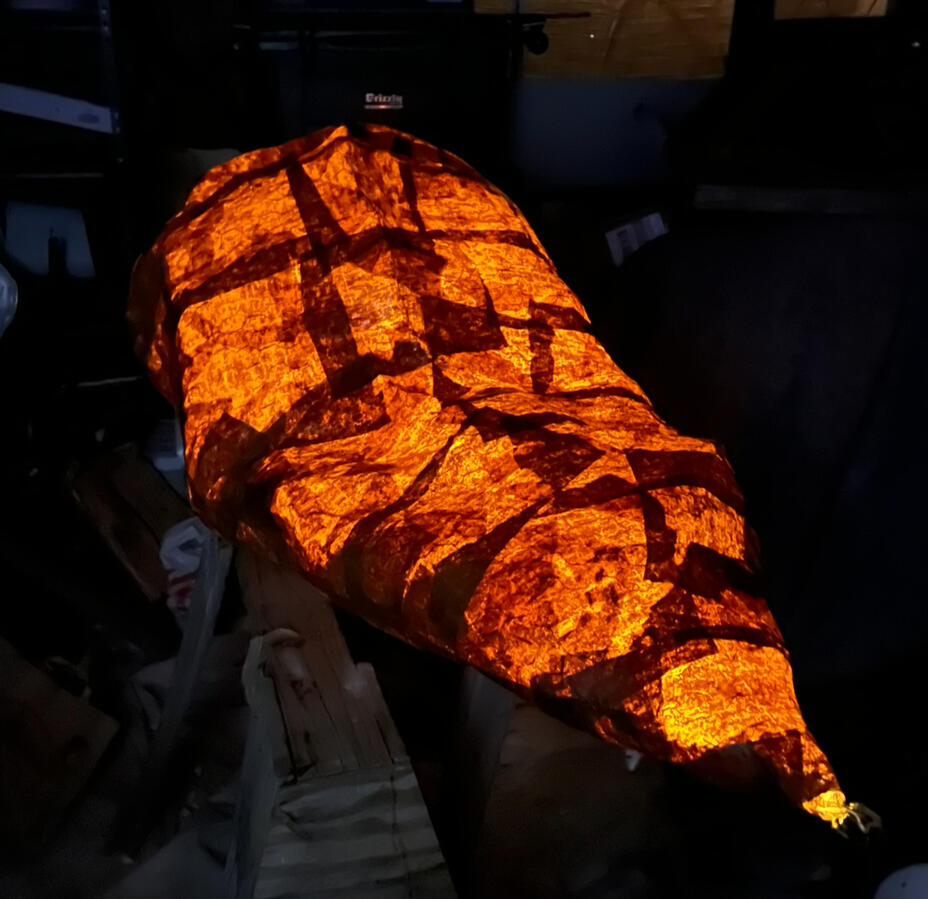
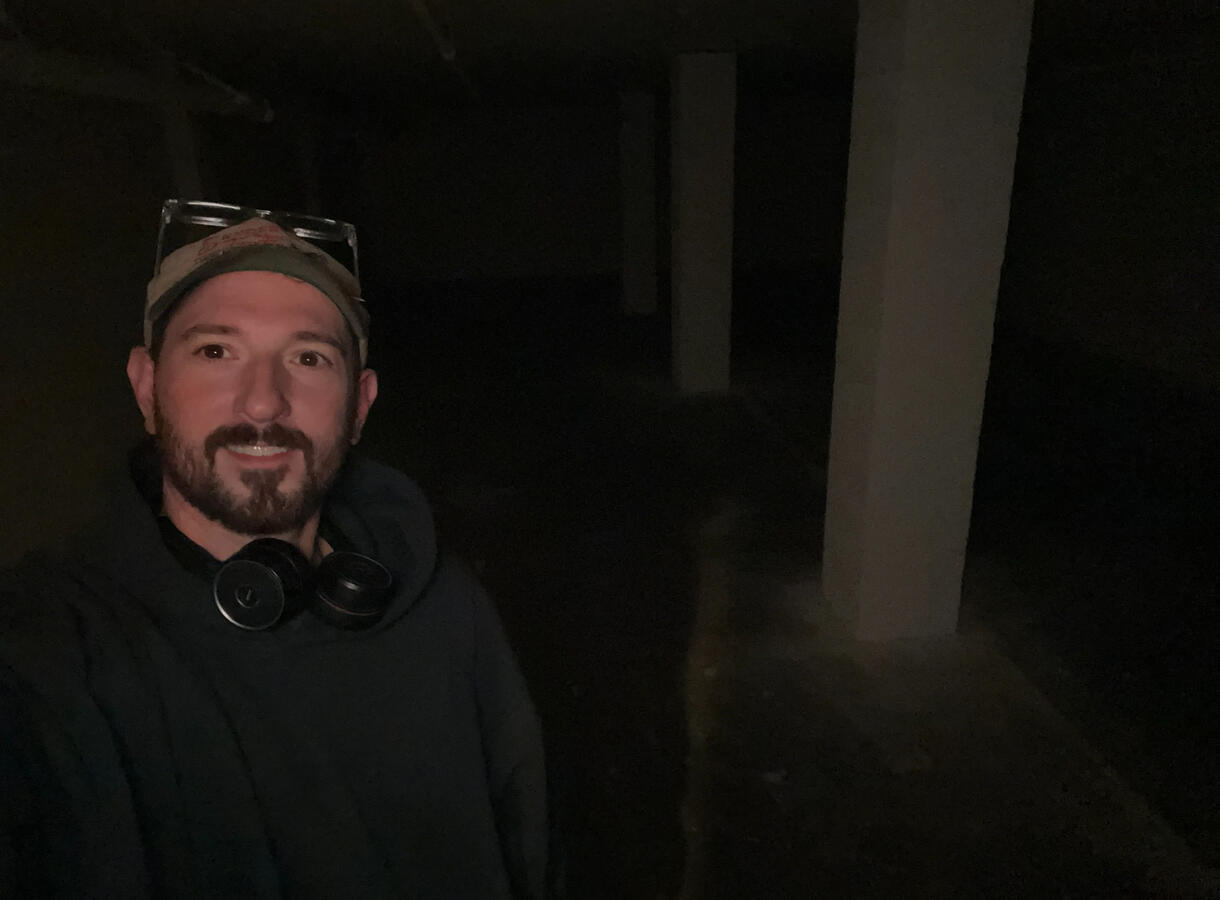
• THE PART YOU COULDN'T SEE •Making MARKED and living my actual life never became separate things. I was still a husband. Still a dad. Still working. Still dealing with money, cars, responsibilities, and all the ordinary things that don't politely step aside because you've decided to make an art exhibition in your garage.Some nights I made a lot. Some nights I barely made anything.There was an old stump where I would sit and watch the sunset.There were nights I sat there thinking, praying, crying, or just trying to understand what was happening inside me.Eventually I realized those nights counted too.Sometimes I didn't work on the pieces because I was working on myself.And that started changing the art.The cocoon, for example, was originally supposed to glow from the inside. I actually installed the lights. But once I saw it illuminated, it felt wrong. The years of my life it represented hadn't felt illuminated from within. They had felt dark and confined, like I couldn't always tell whether I was changing or just falling apart.So I turned the lights off.They're still in there.That happened over and over while I made MARKED. I'd begin with an idea, make it physical, and then have to decide whether I actually believed what I'd made.
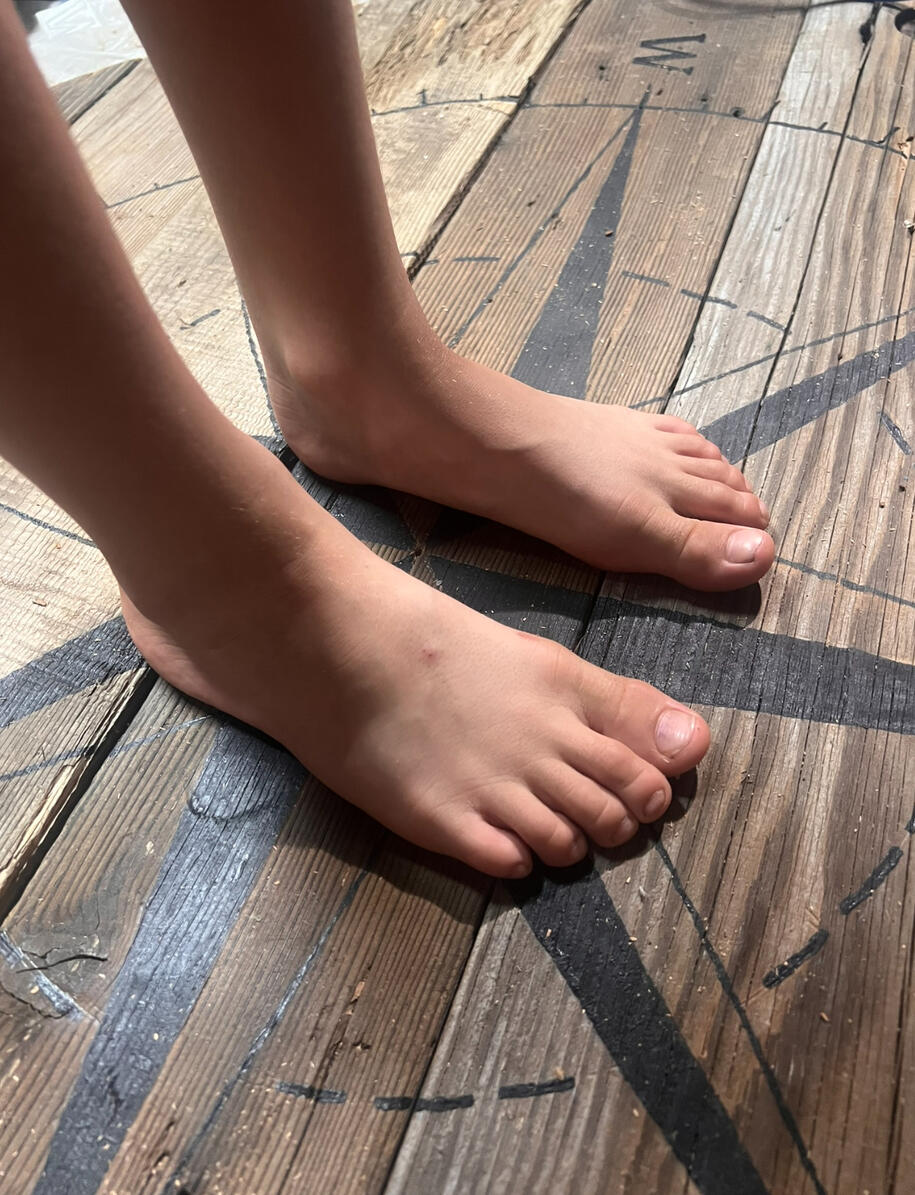
One night, my oldest was supposed to be asleep. Instead, he ended up in the garage with me while I was working on Polaris.At some point he stood barefoot on the unfinished compass and started describing the art exhibition he was going to make someday. His would have mysteries and surprises. A golden river. Fish. A tree. He kept adding things, completely awake now, because apparently imagining an exhibition is not particularly helpful when you're supposed to be going to bed.I remember looking around the garage while he talked. I saw everything that wasn't finished yet. Tools. Dust. Scraps. Problems I still had to solve. A deadline getting closer.He saw something else.He saw his dad making art.And apparently, that meant he could make art too.I remember that night.
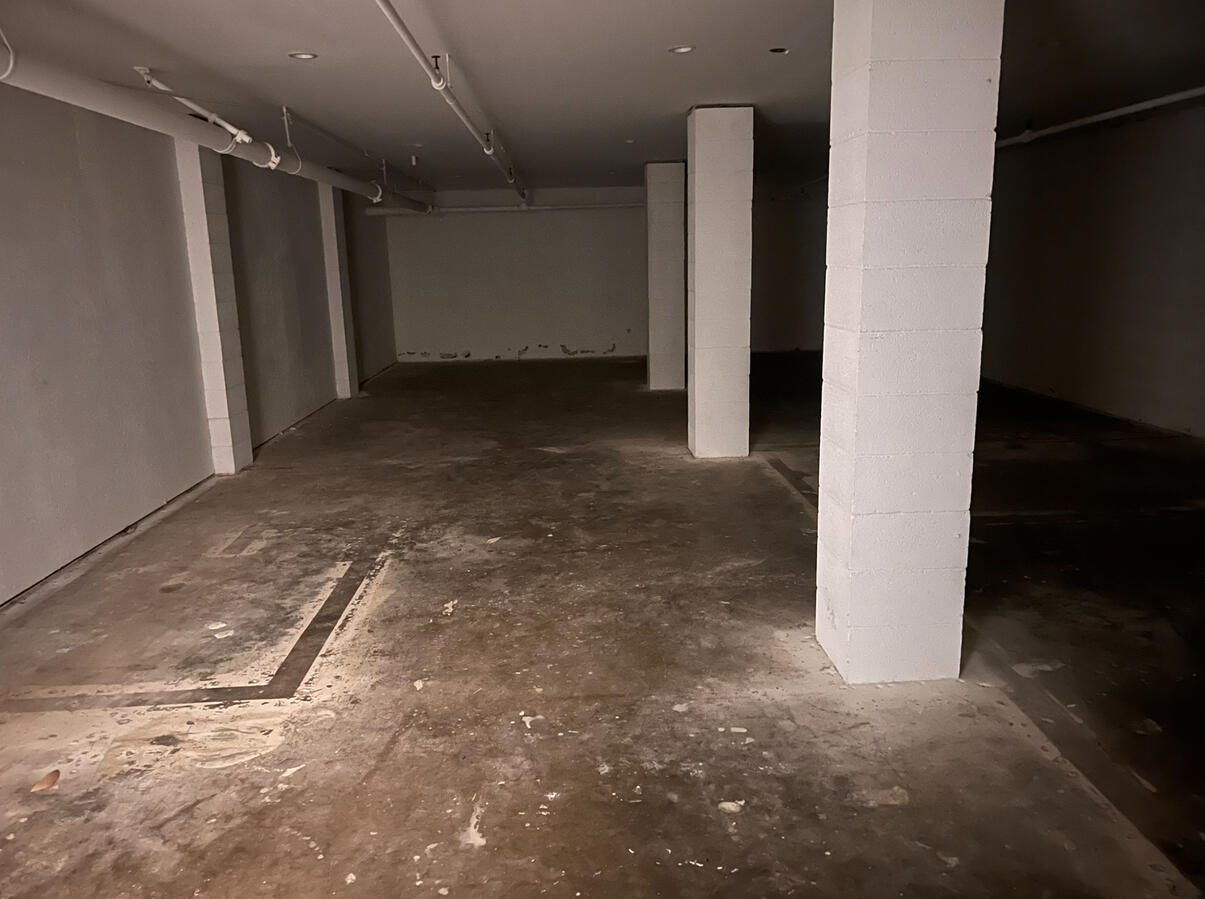
At some point during those months, I started saying something else: I literally cannot fail.I didn't mean everything I made would be good. And I definitely didn't mean I knew what I was doing.I meant MARKED was going to happen.If something broke, I'd fix it. If an idea didn't work, I'd change it. If I didn't know how to make something, I'd learn enough to try. If that didn't work, I'd try something else.There wasn't really a version of the story anymore where I quietly decided this had been a fun idea and stopped.I had decided to do it. So I kept going.Gradually, the work started leaving the garage and moving downtown. One piece at a time, the strange collection of objects that had occupied our house and garage began occupying a real room.
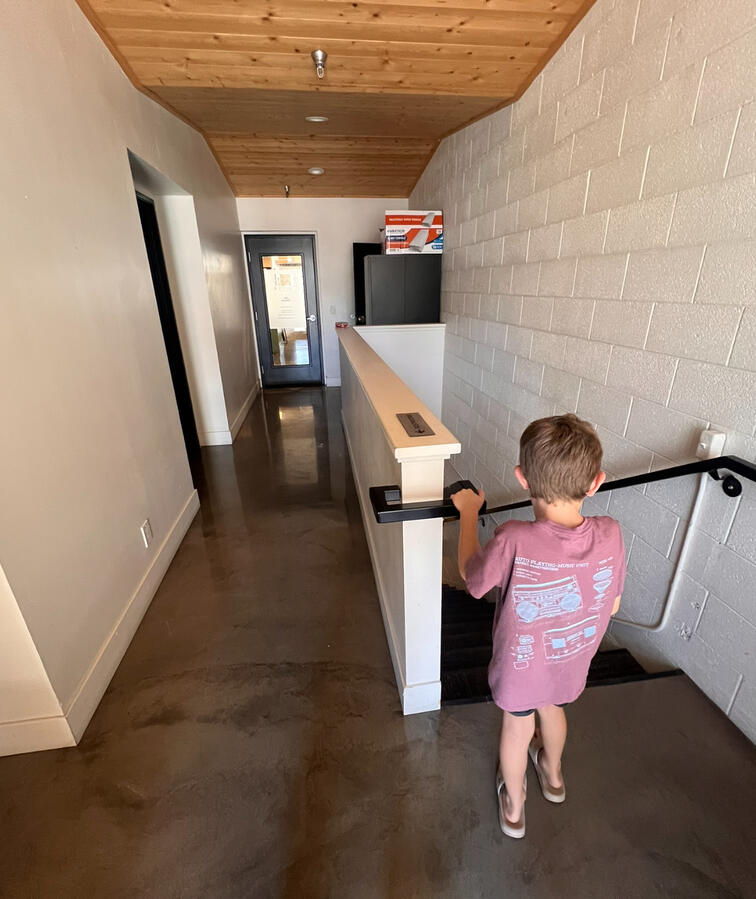
After months of going out there around 9:00 every night, the garage slowly became a garage again.
I was exhausted. I was ready to sleep.And pretty soon, I was going to open the door and let you in.
MOVEMENT III
THE WORK
You saw the finished pieces. What you couldn't see were all the versions that came before them. The materials underneath them. The things that broke, changed, surprised me, or became something entirely different along the way.
Let's walk through MARKED again. This time, I'll show you what was behind it.
CHAPTER 1
REMEMBRANCE
What moments are worth carrying?
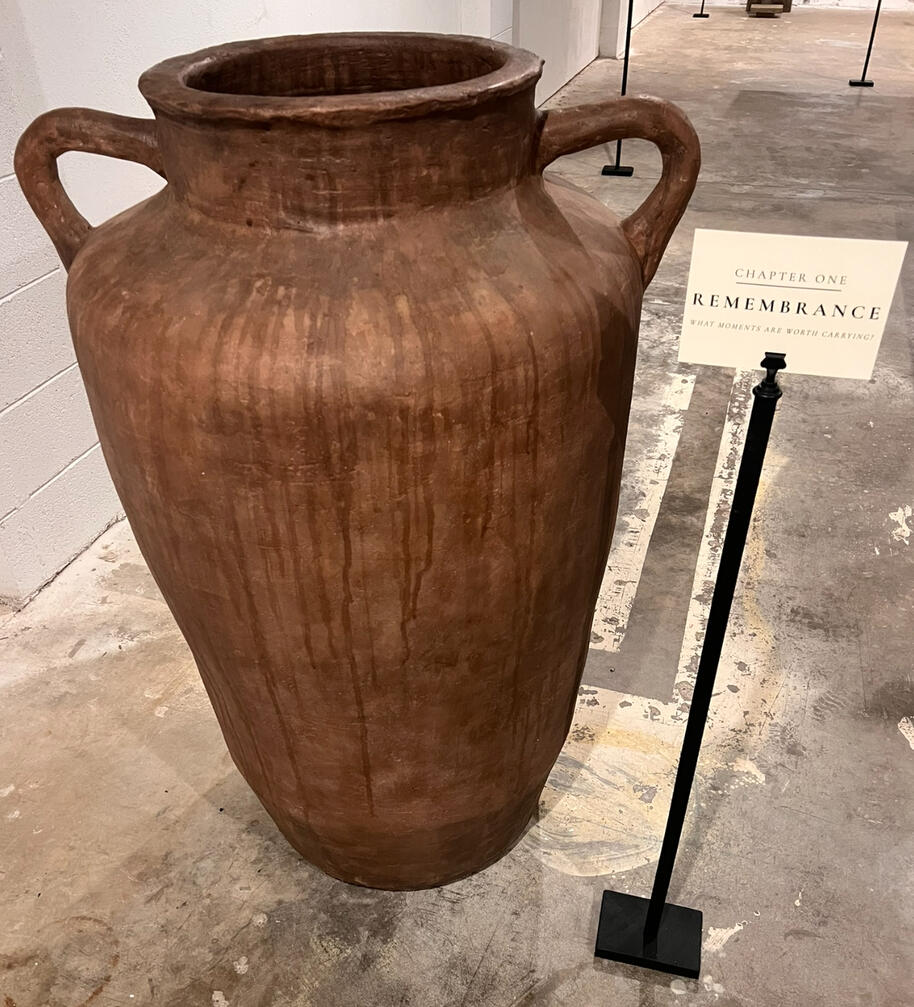
The first object in MARKED began with a rock.One Saturday, I was at the Sacramento River with my family when I found an almost perfectly round, flat stone. There was nothing extraordinary about it. I just liked it. I showed it to my family, slipped it into my pocket, and took it home.The next day, I was at my parents' house helping my dad pick rocks out of the dirt, something I had done countless times growing up. He laughed at the fact that his 39-year-old son was apparently still helping him pick rocks.That night, one word kept coming to me:Free. Free. Free.Then Monday came, and I was sitting in a coffee shop carrying some difficult things from work when I noticed a woman wearing a sweatshirt with the word FREE printed huge across it.We started talking.At some point she told me about the biblical idea of stones of remembrance, physical objects kept as reminders of moments when God had shown up, so that later, when life became uncertain again, you could remember what had already happened.And the whole time she was talking, I had that stone from the river in my pocket.I remember thinking:Okay. I'm paying attention.That conversation became the beginning of Chapter One.
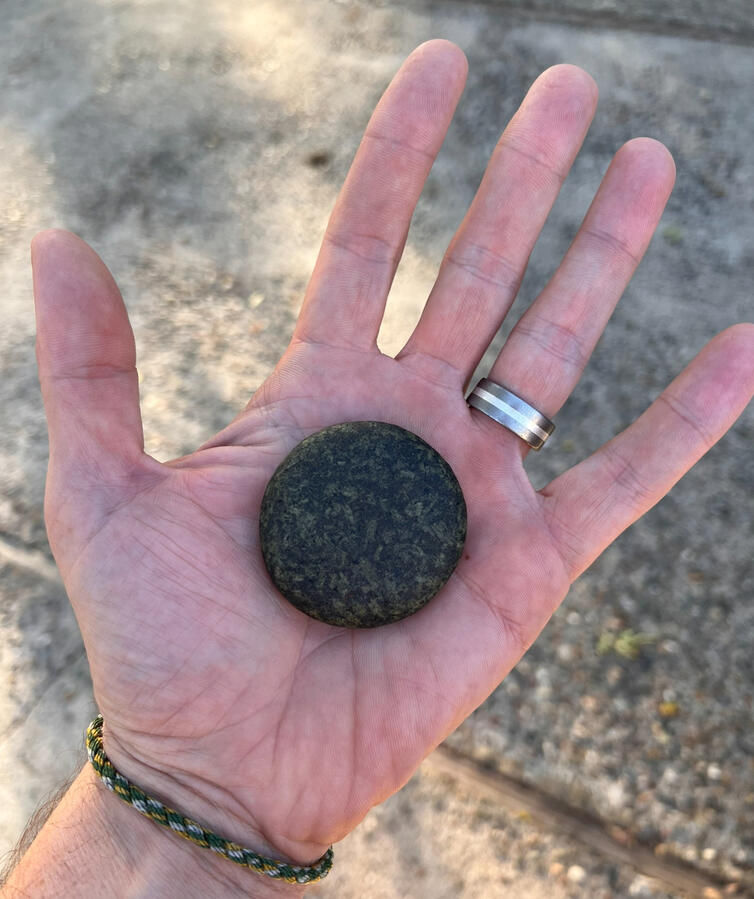
Originally, the question behind the piece was something closer to:What do you carry?But the more I thought about it, the less I liked that question. We carry all kinds of things simply because they happened to us. Pain. Shame. Fear. Things other people said. Things we wish we could undo.I didn't want the first chapter of MARKED to ask you to pick all of that back up.The question became:What moments are worth carrying?That changed the piece.The stones inside Remembrance weren't random rocks I bought for the exhibition. The summer before, I had spent time at creeks with my boys, and we would pick up stones we thought were beautiful. I had kept them in a bin in our backyard without knowing what I would ever do with them.A year later, there they were.Waiting.I didn't fill the vessel to the top. There were only a handful of stones at the bottom, illuminated in warm light.Not everything belongs in the vessel.We don't have to carry everything just because it happened.
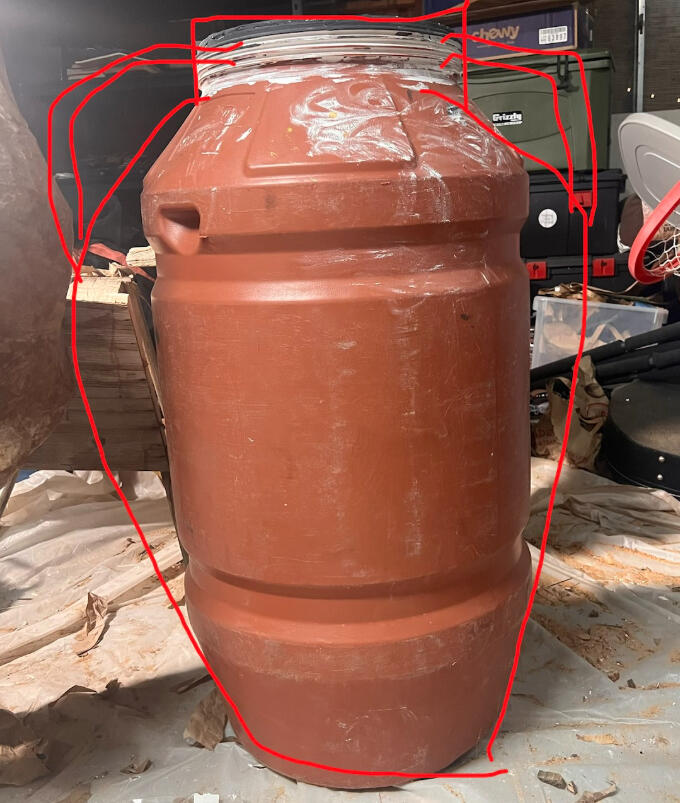
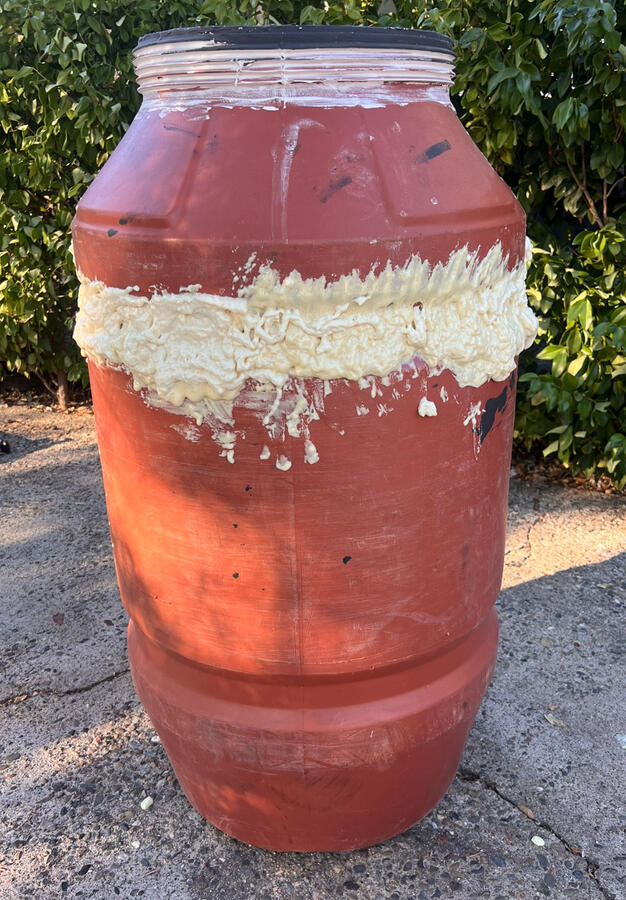
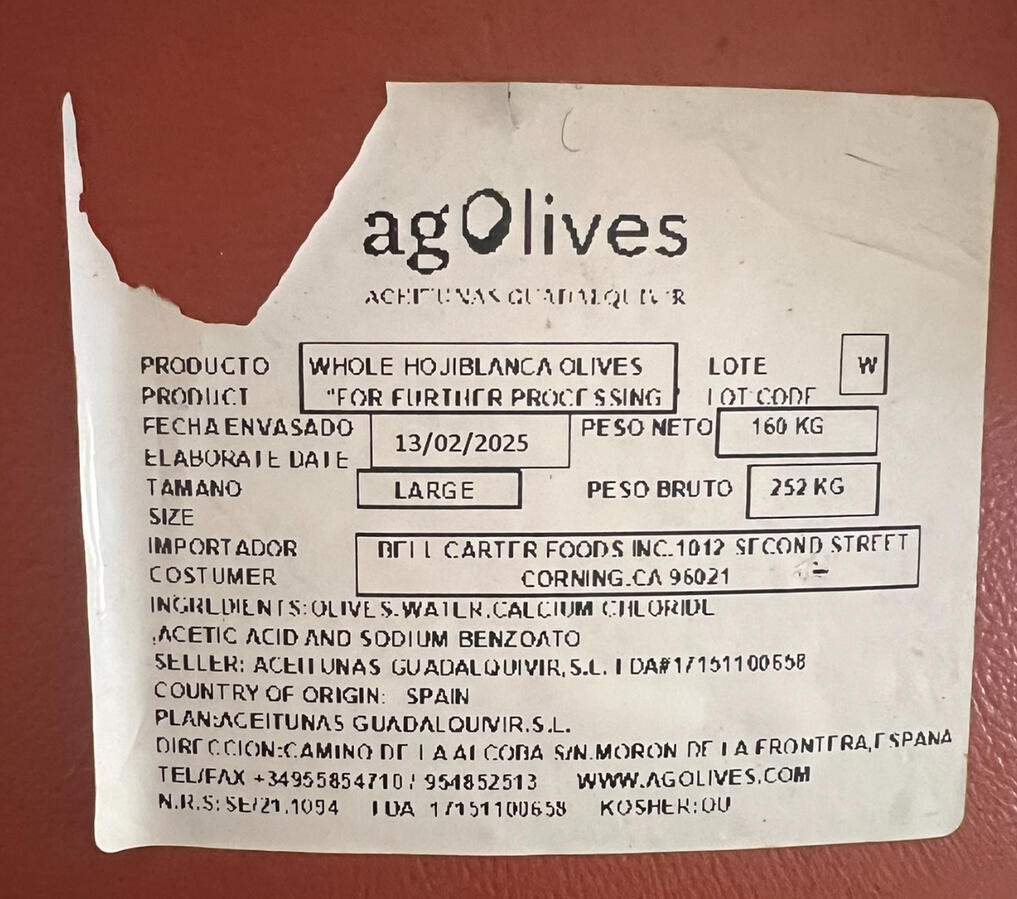
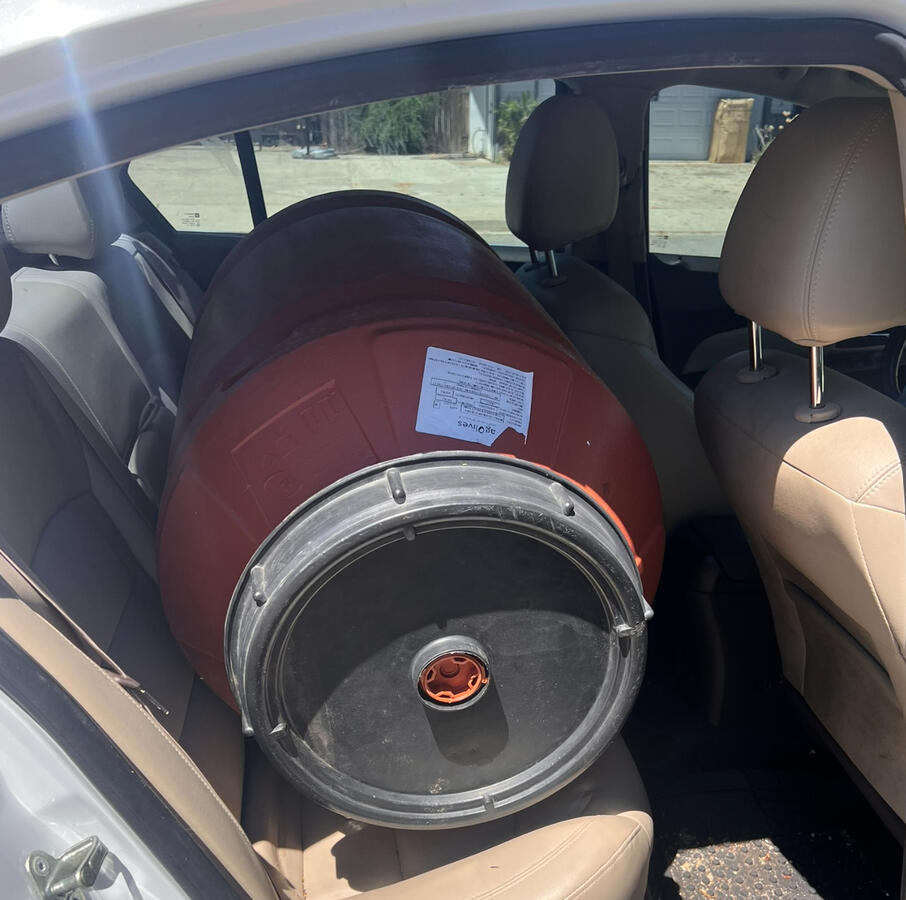
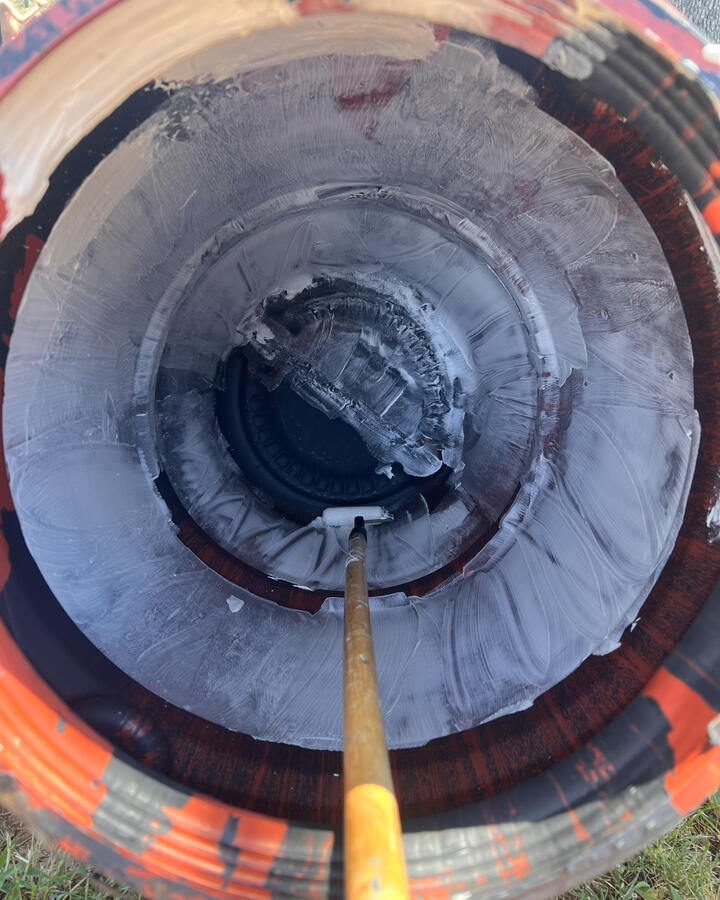
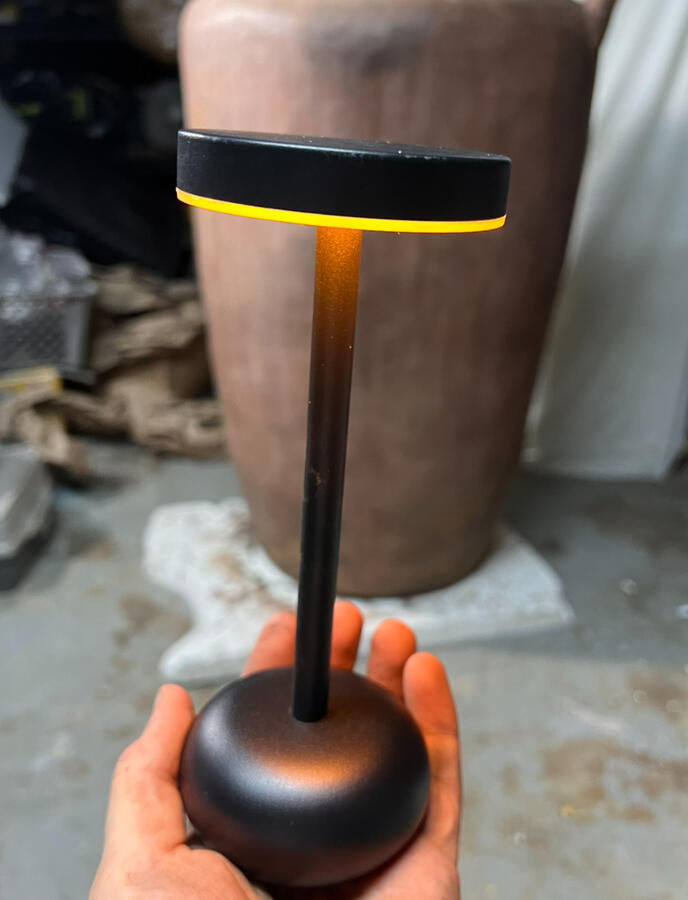
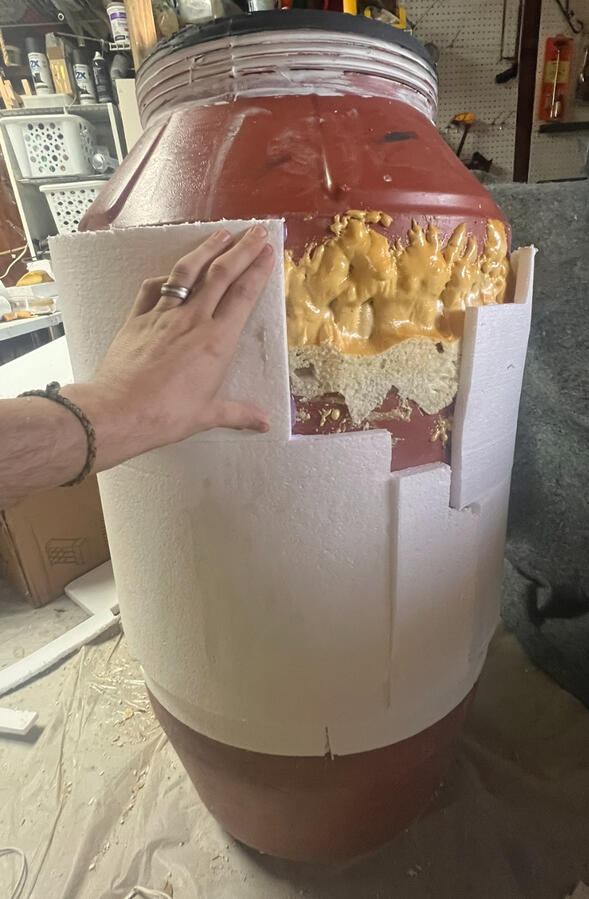
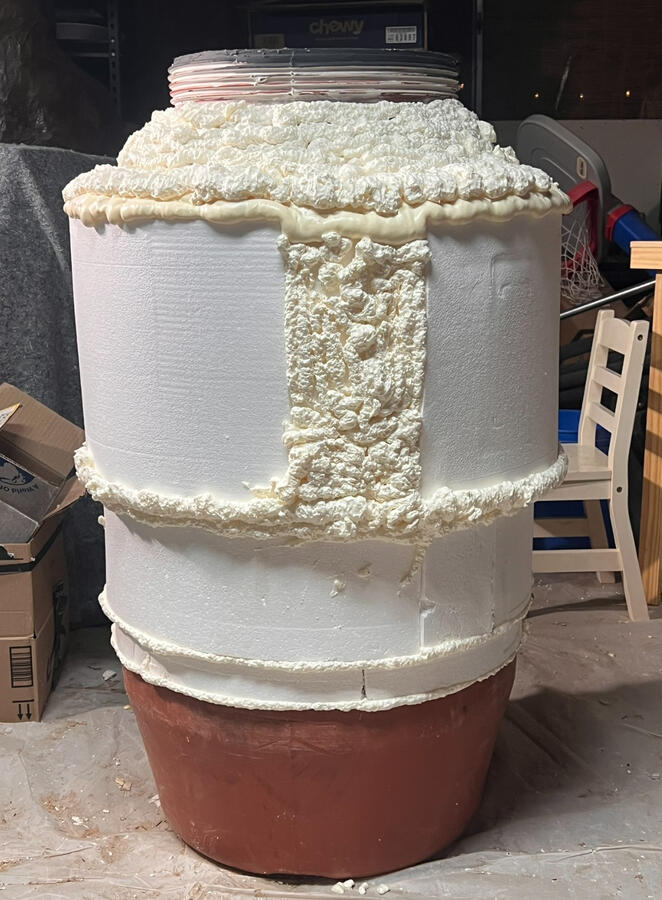
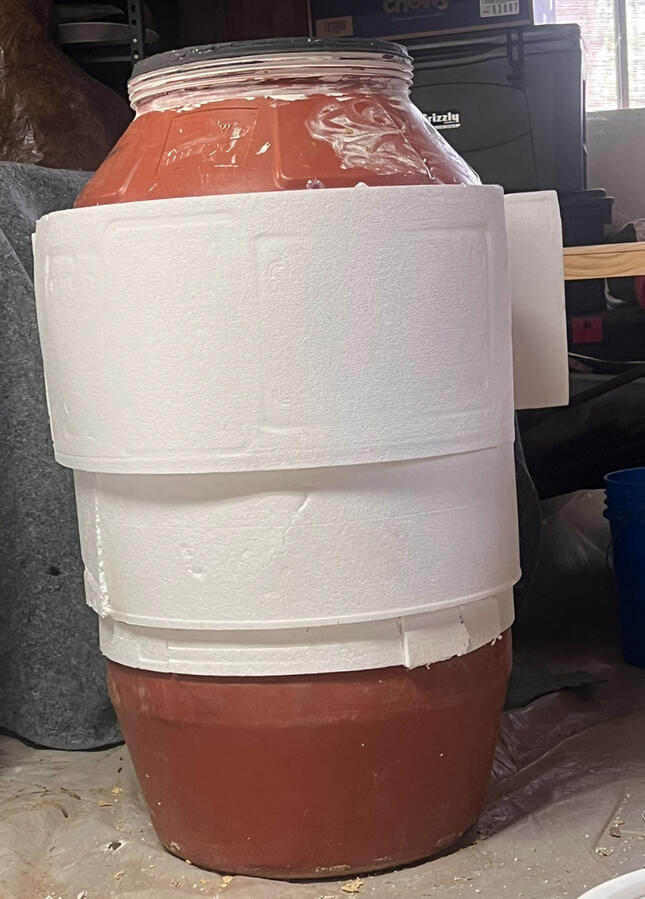
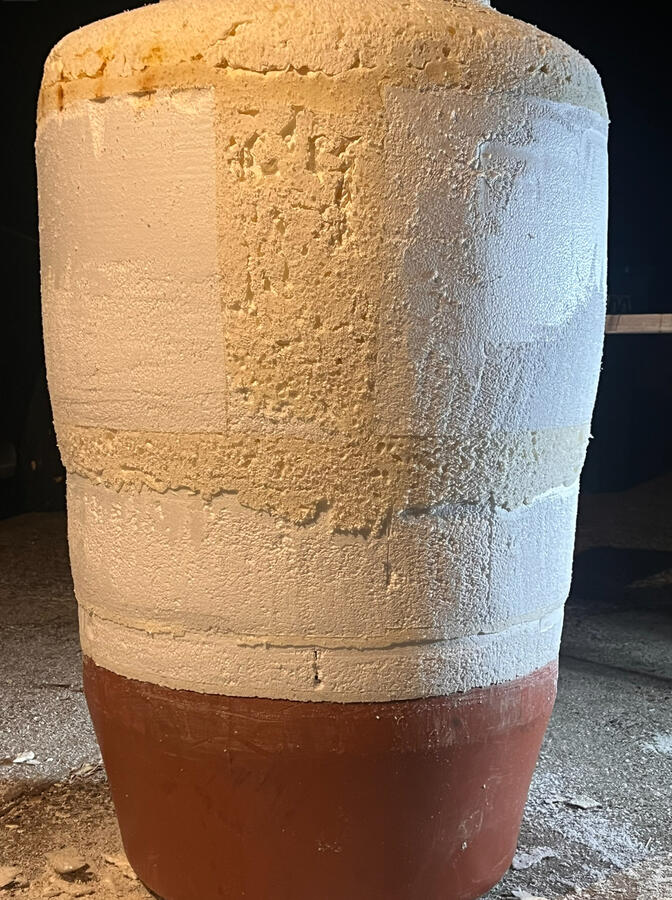
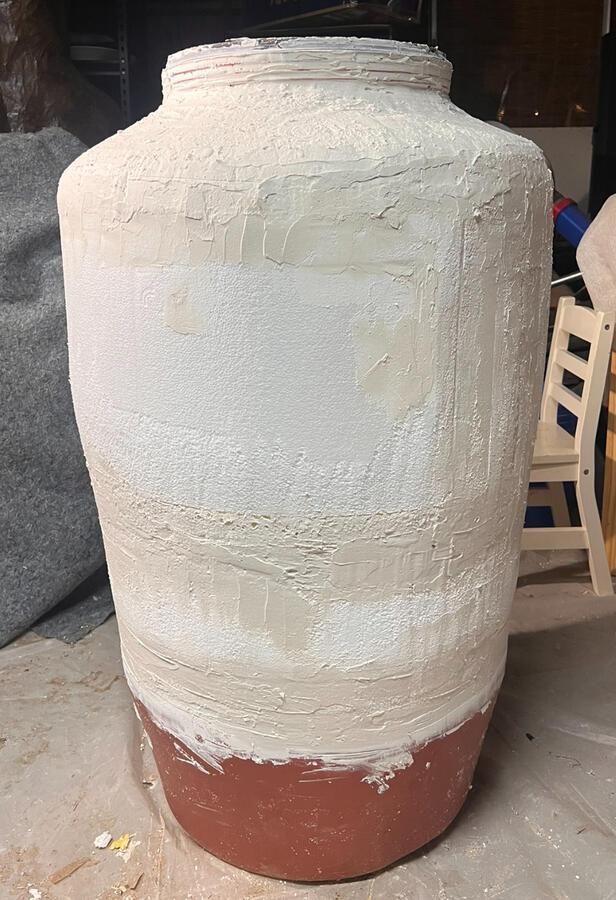
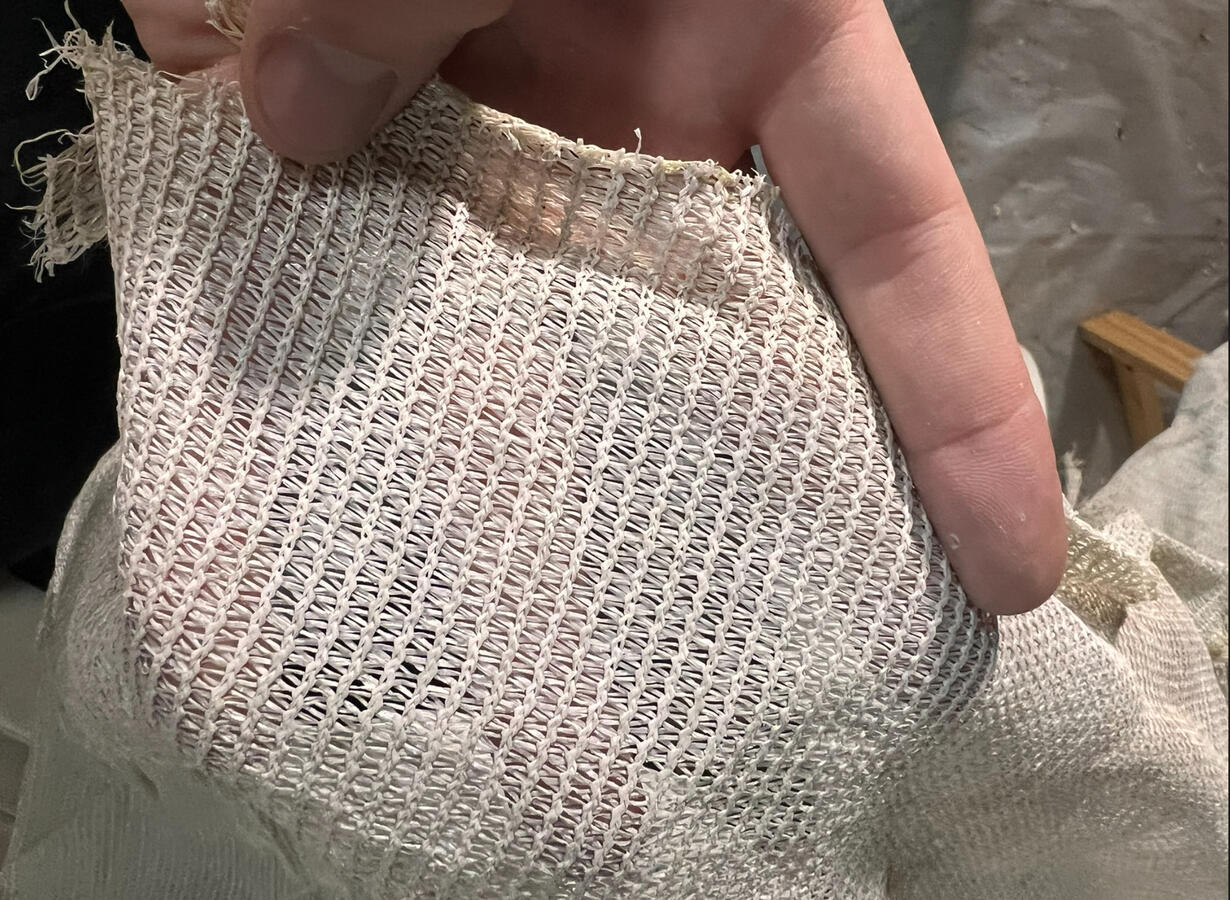
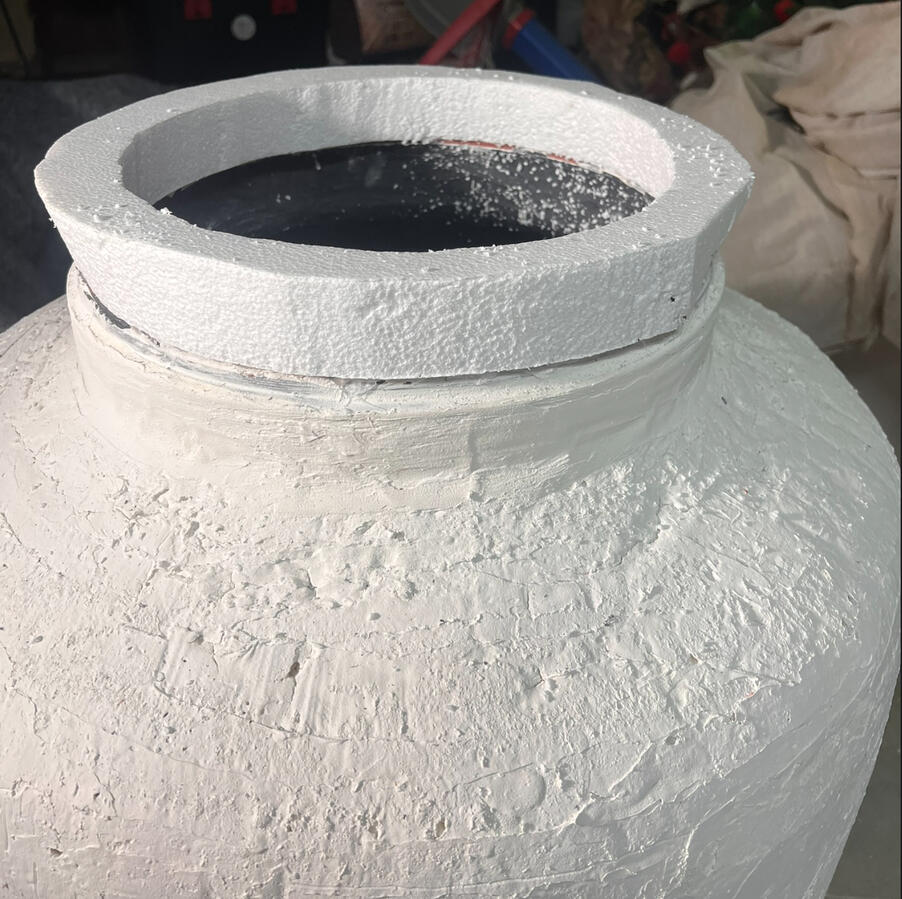
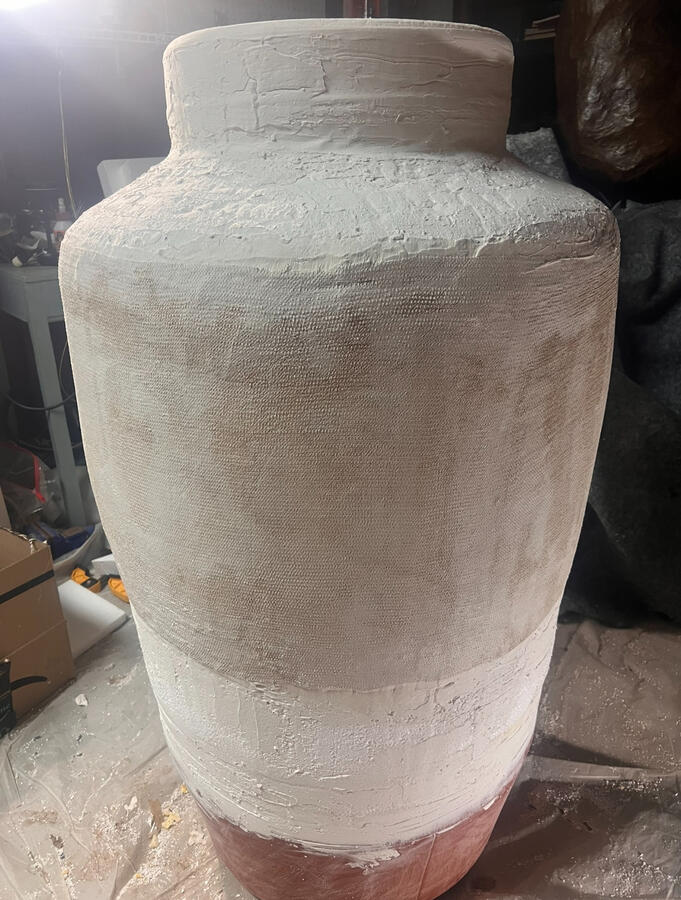
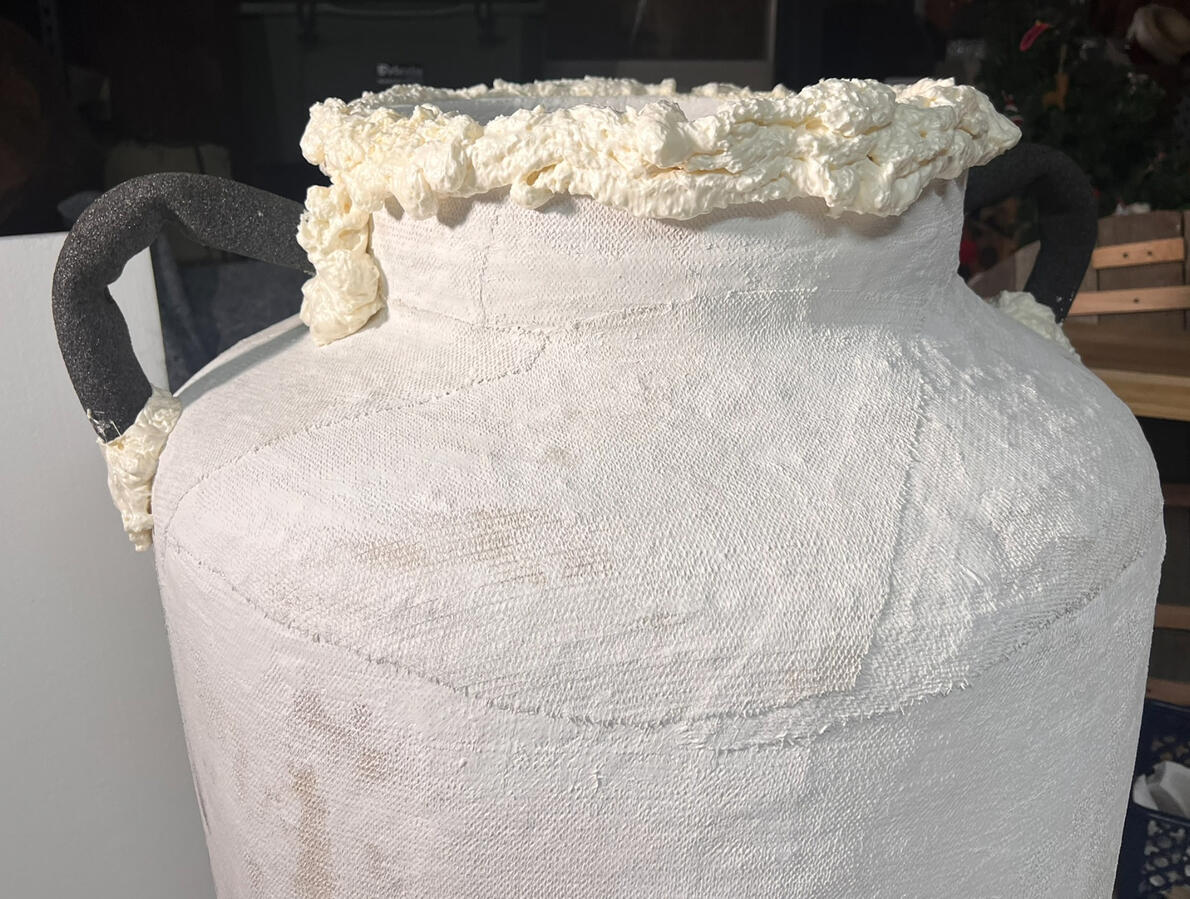
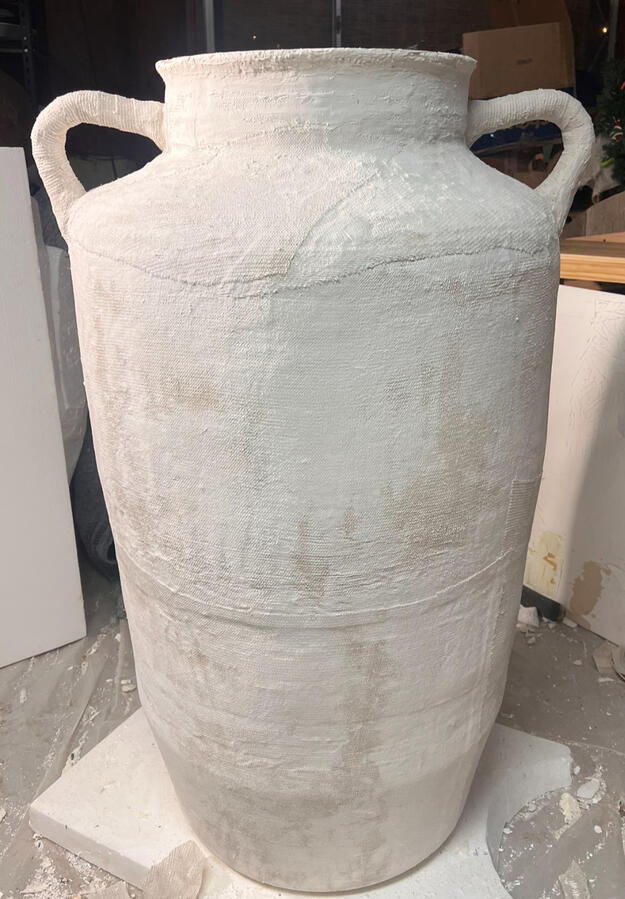
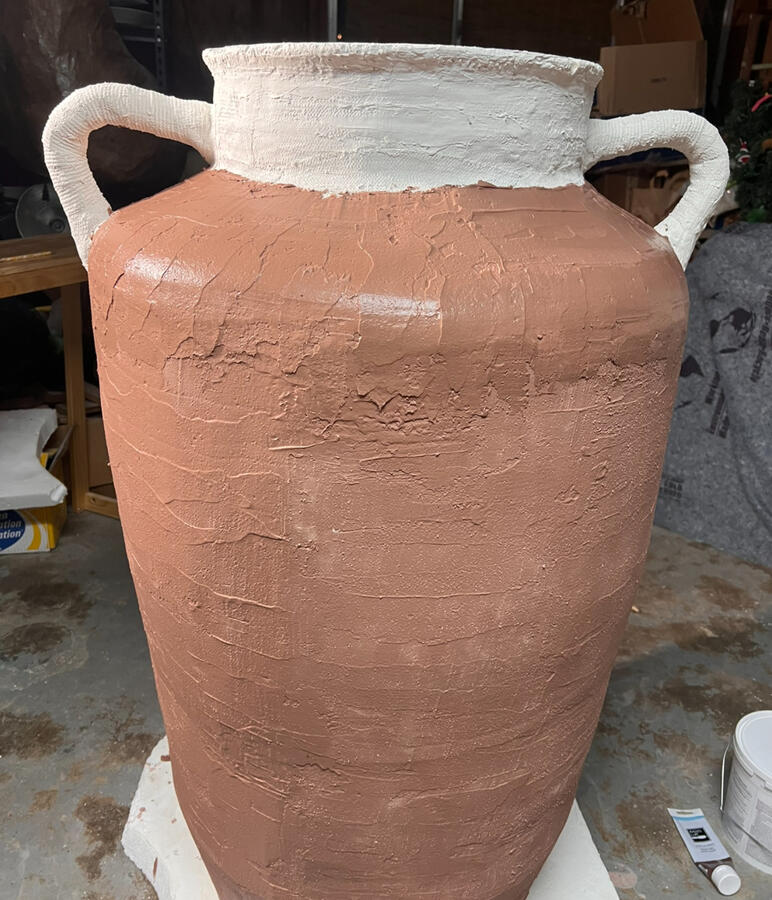
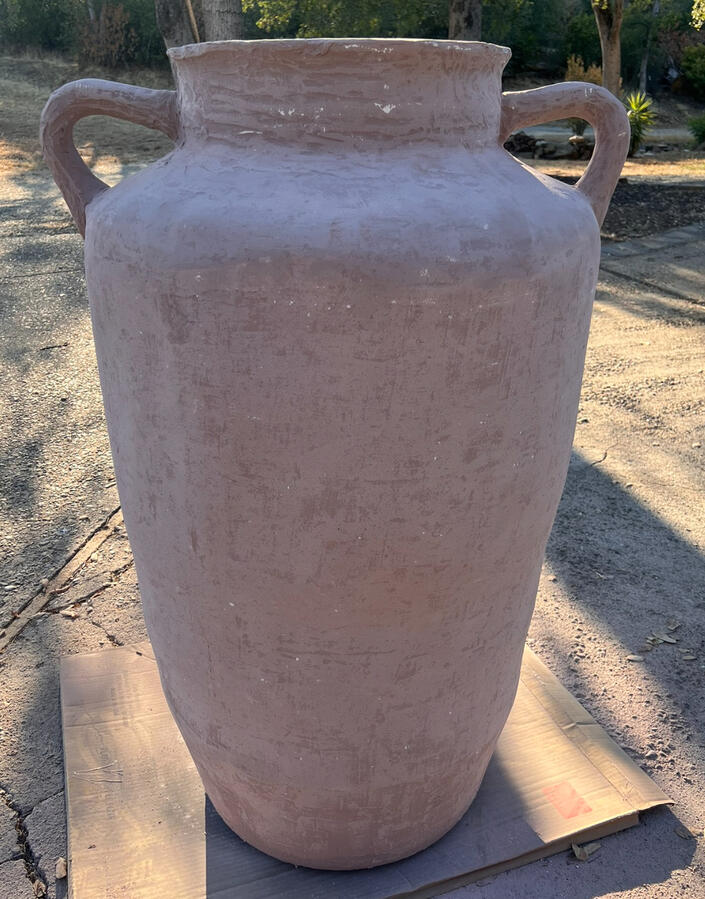
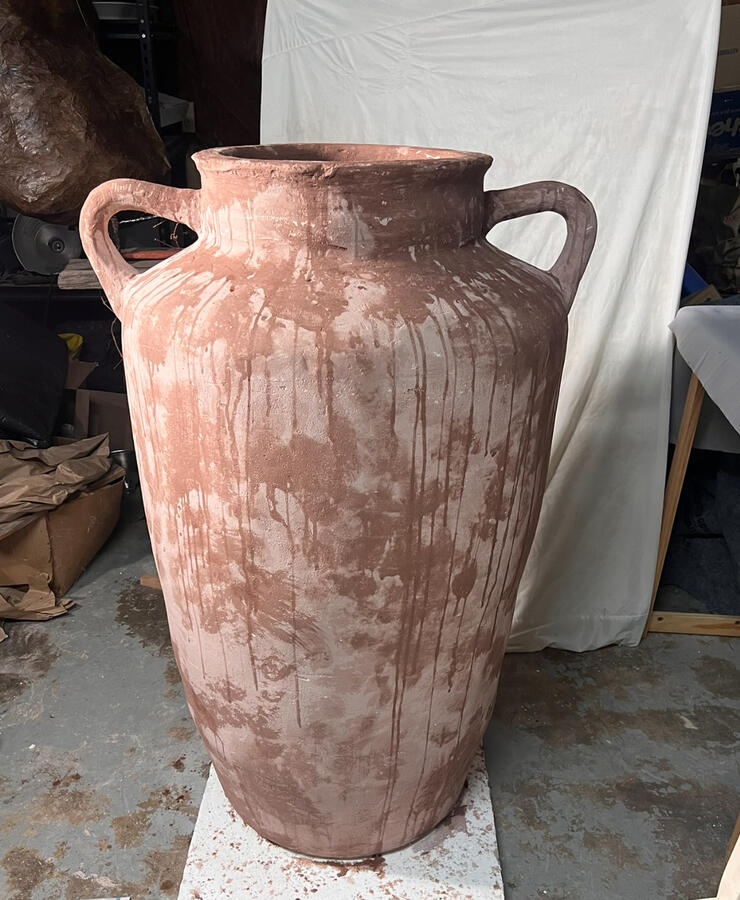
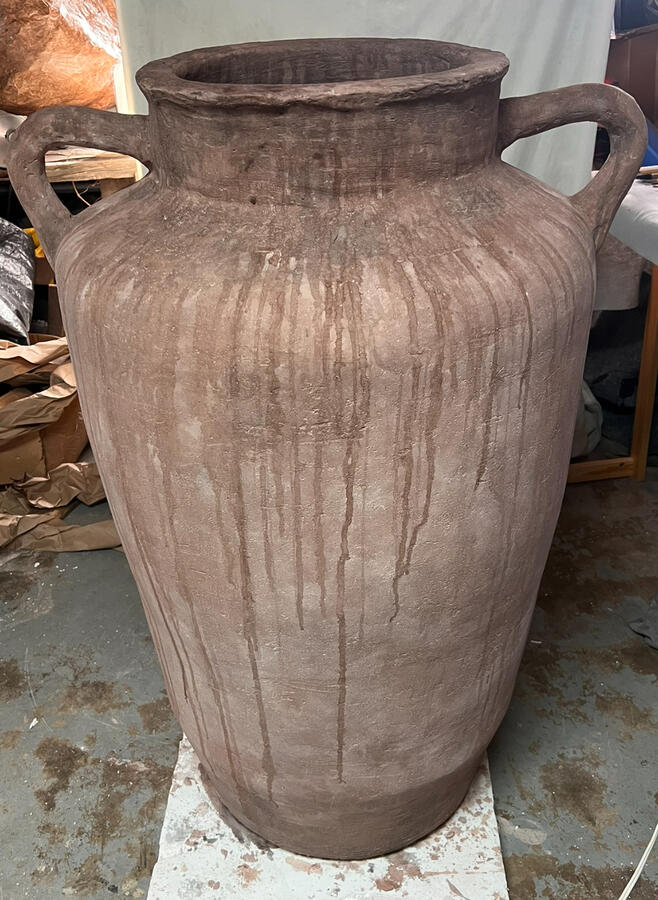
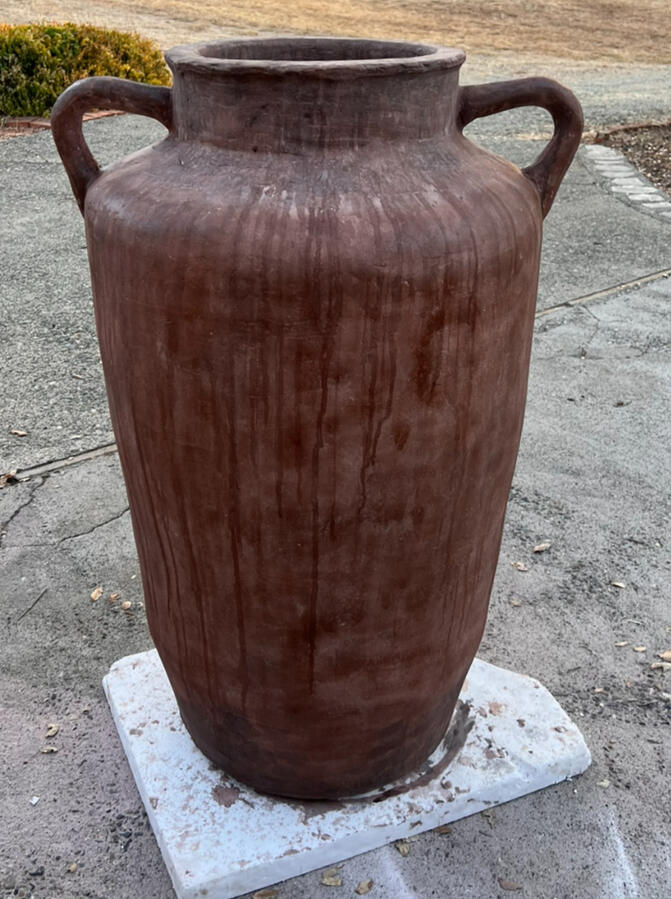
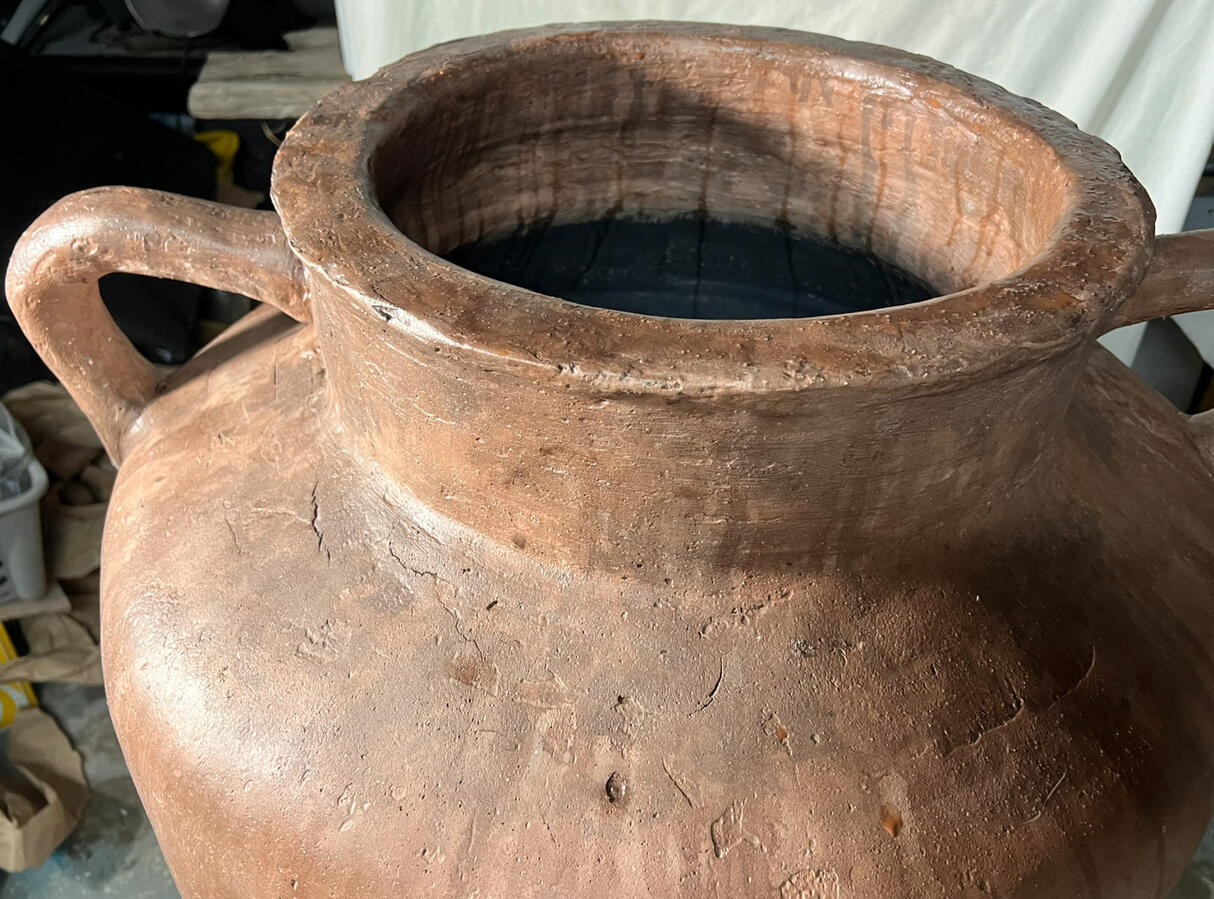
The vessel itself began as a $20 plastic olive drum.Which is still one of my favorite facts about the entire exhibition.I wanted it to feel ancient.Unearthed. Like something that had survived long enough to carry memory.So I started building around the plastic drum. Styrofoam became structure. Wire, paper, foam and compound changed the shape. I built handles, hated them, changed them, textured everything, painted it, dirtied it, and kept working until the plastic barrel underneath disappeared.At one point, I needed to raise the stones inside without filling the entire vessel with rocks, so I built a hidden platform out of Styrofoam and covered the bottom with sand.The sand wasn't symbolic.It solved a problem.The light was another problem. I wanted the stones illuminated from above, but the opening was deep and narrow. Eventually I rigged a small touch light inside and made a long conductive extension out of aluminum foil so I could reach down into the vessel and turn it on.None of that was visible when you stood in front of it.That was becoming one of my favorite parts of making MARKED.The illusion could be beautiful.The solution behind it could be completely simple.
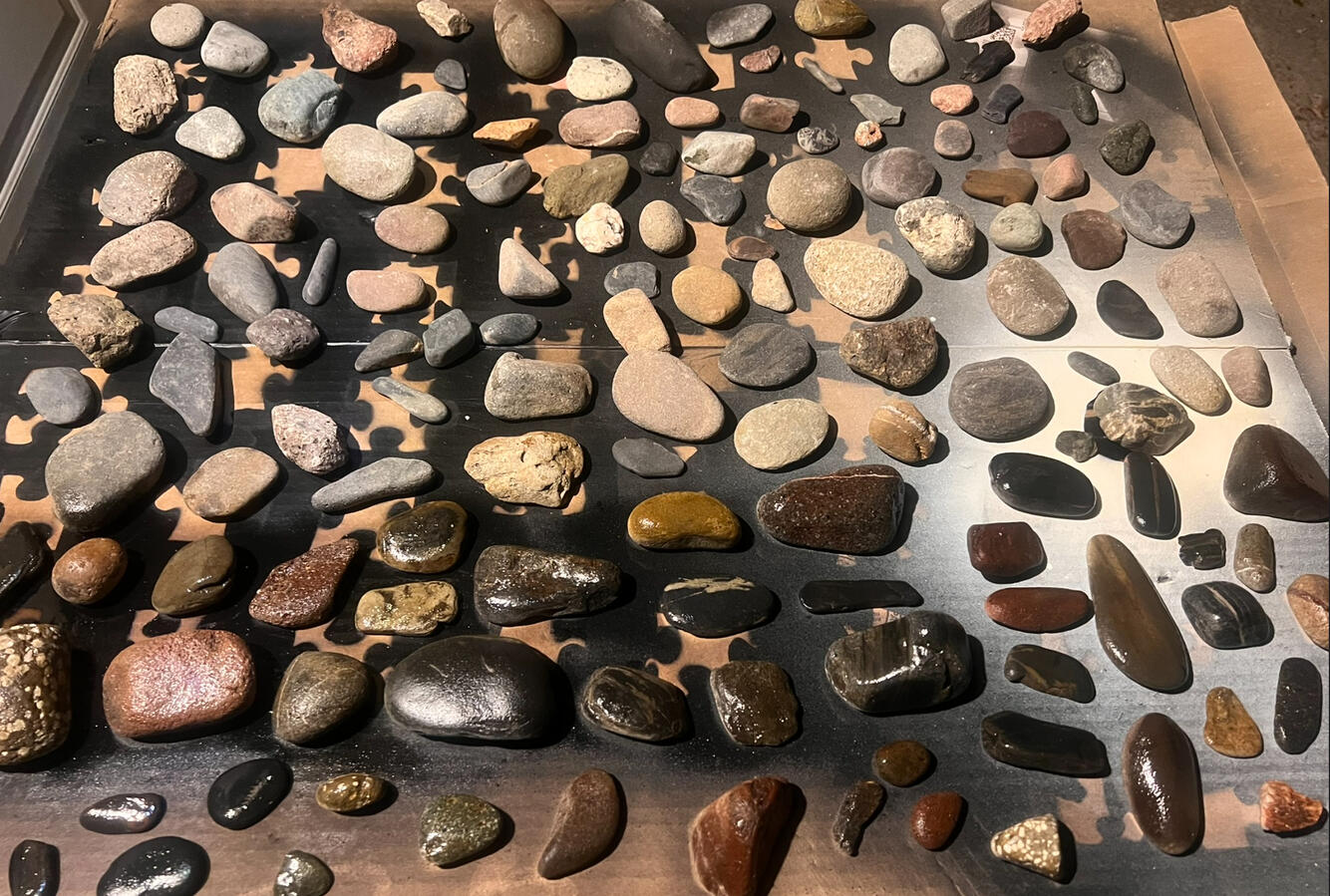
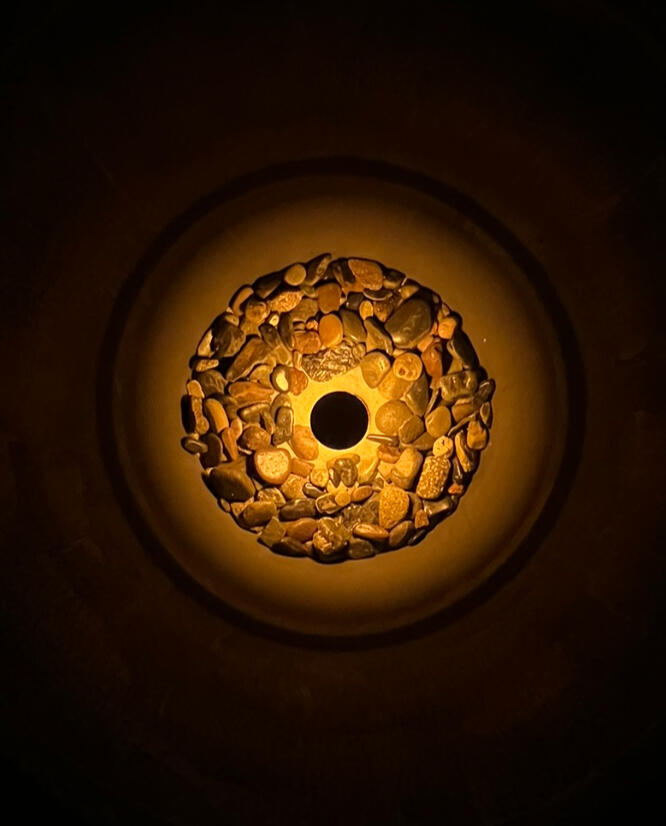
One of the things I loved most about Remembrance was how many people didn't immediately understand what they were looking at.Some thought the vessel was actually pottery.Others looked inside but somehow missed the stones entirely.More than once, someone came out of MARKED and mentioned that they hadn't seen them. I'd tell them to go back.Then they'd return:I can't believe I missed that.I loved that reaction.Because nothing had changed.
The rocks had been there the entire time.
They just hadn't seen them yet.
CHAPTER 2
IMPRINT
Who has left their mark on you?
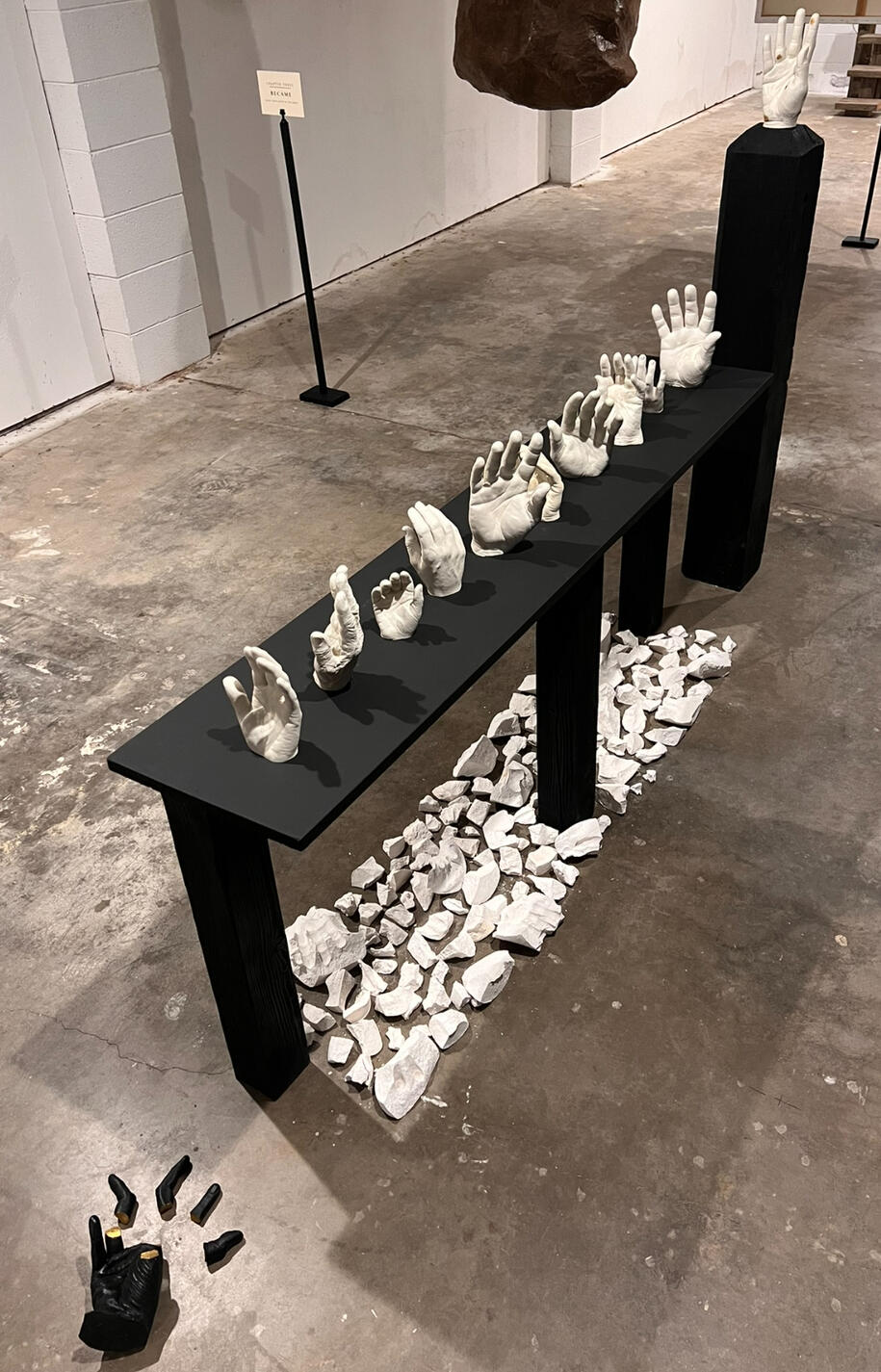
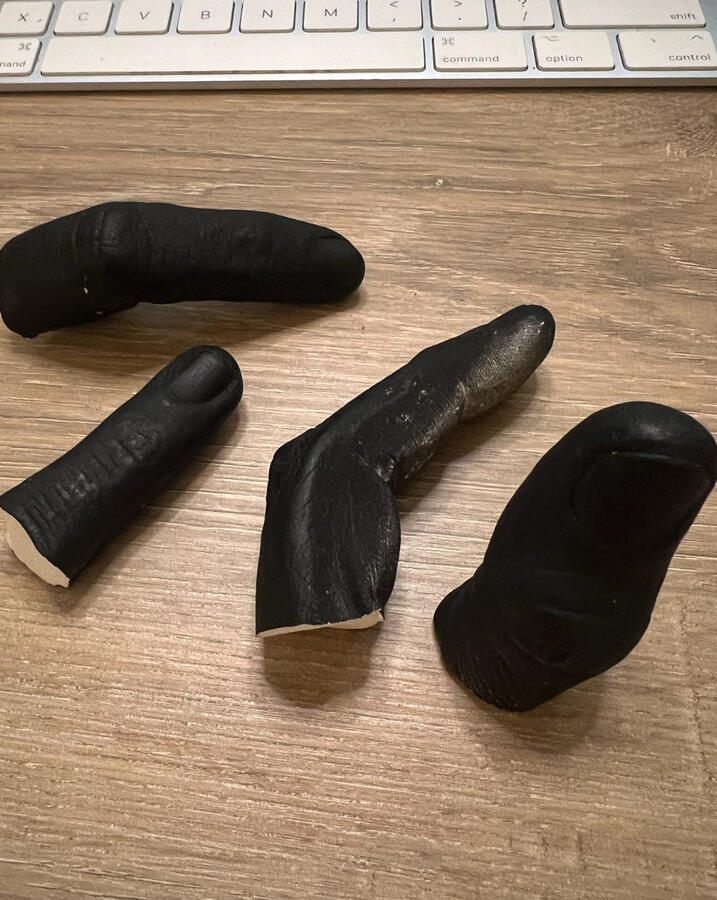
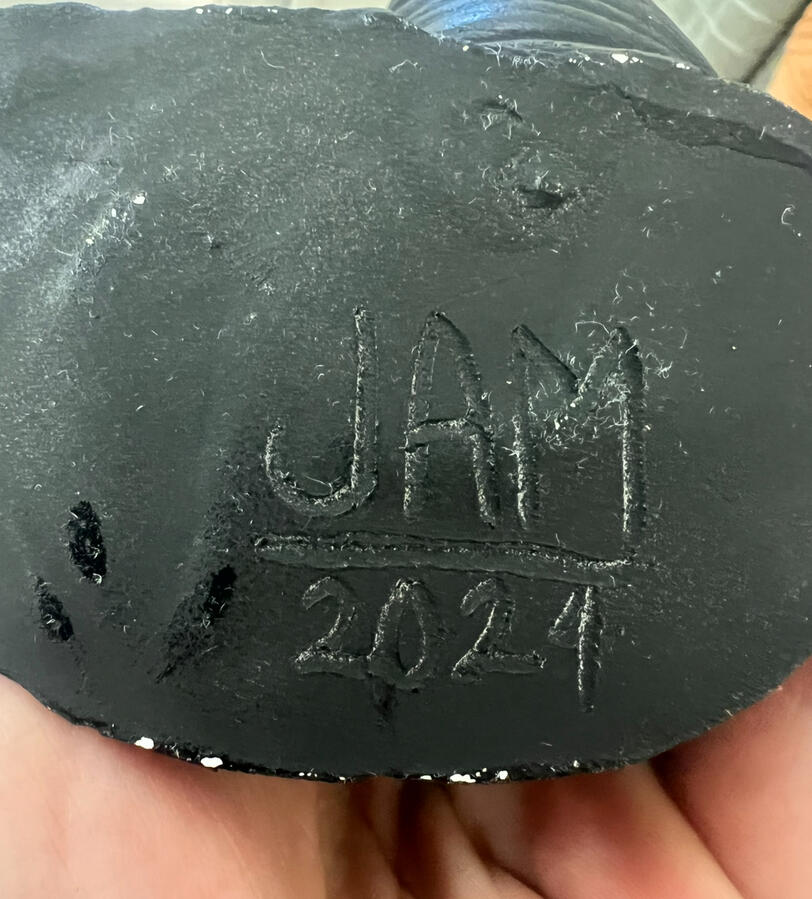
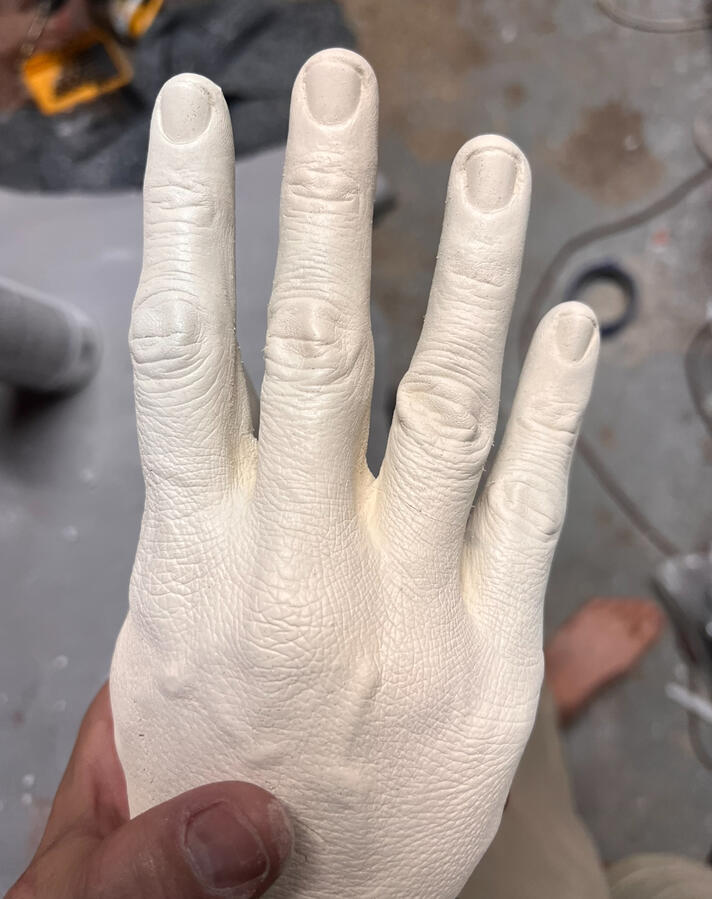
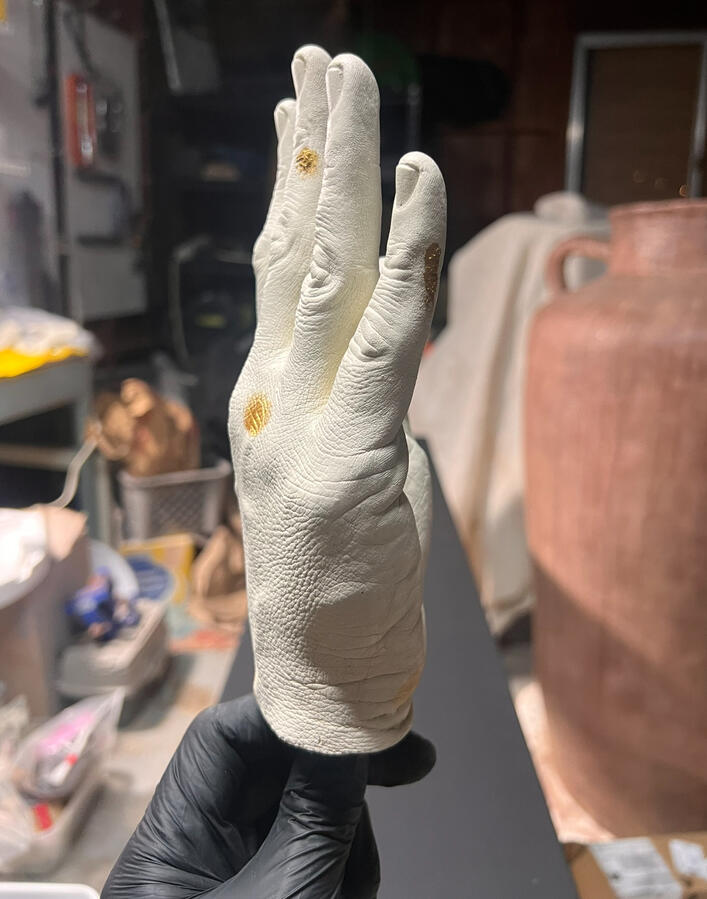
IMPRINT actually began almost two years before MARKED.At the time, I had decided I wanted to start making art. I bought one of those hand-casting kits from Walmart, stuck my own hand into the mold, poured the cast, and painted the finished hand black. I didn't even really like it.Then life happened.During a family evacuation for a fire, the hand was thrown into a backpack. When I unpacked it later, three fingers and the thumb had broken off.I kept it anyway.For almost two years, that broken black hand followed me around without any real purpose. Then I started making MARKED.I painted the broken surfaces gold.Suddenly, the thing I had almost thrown away became the beginning of an entire chapter.The gold wasn't repairing the hand or pretending it hadn't broken.It was revealing something inside it.
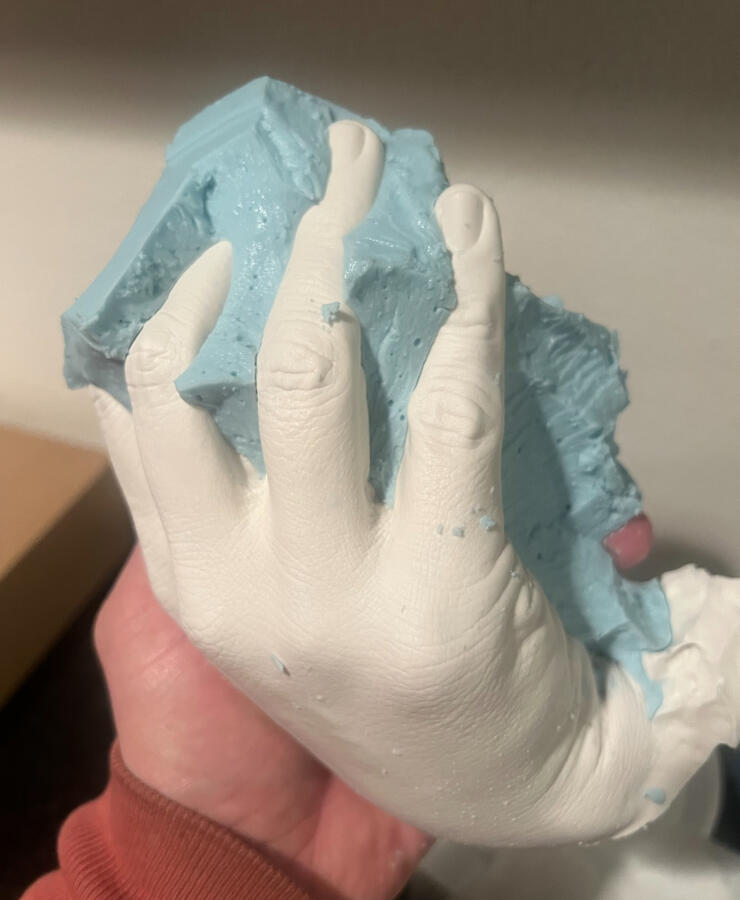

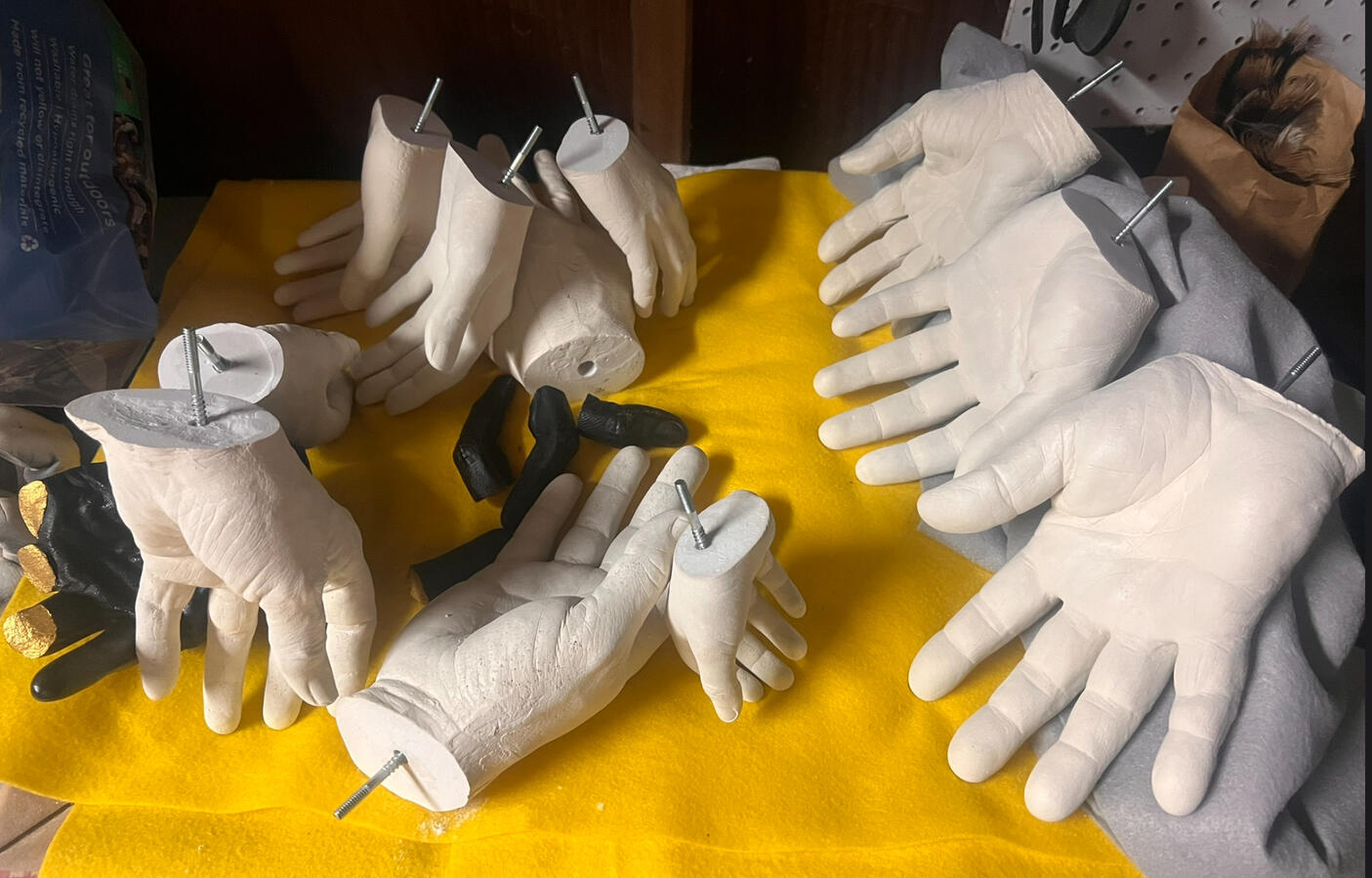
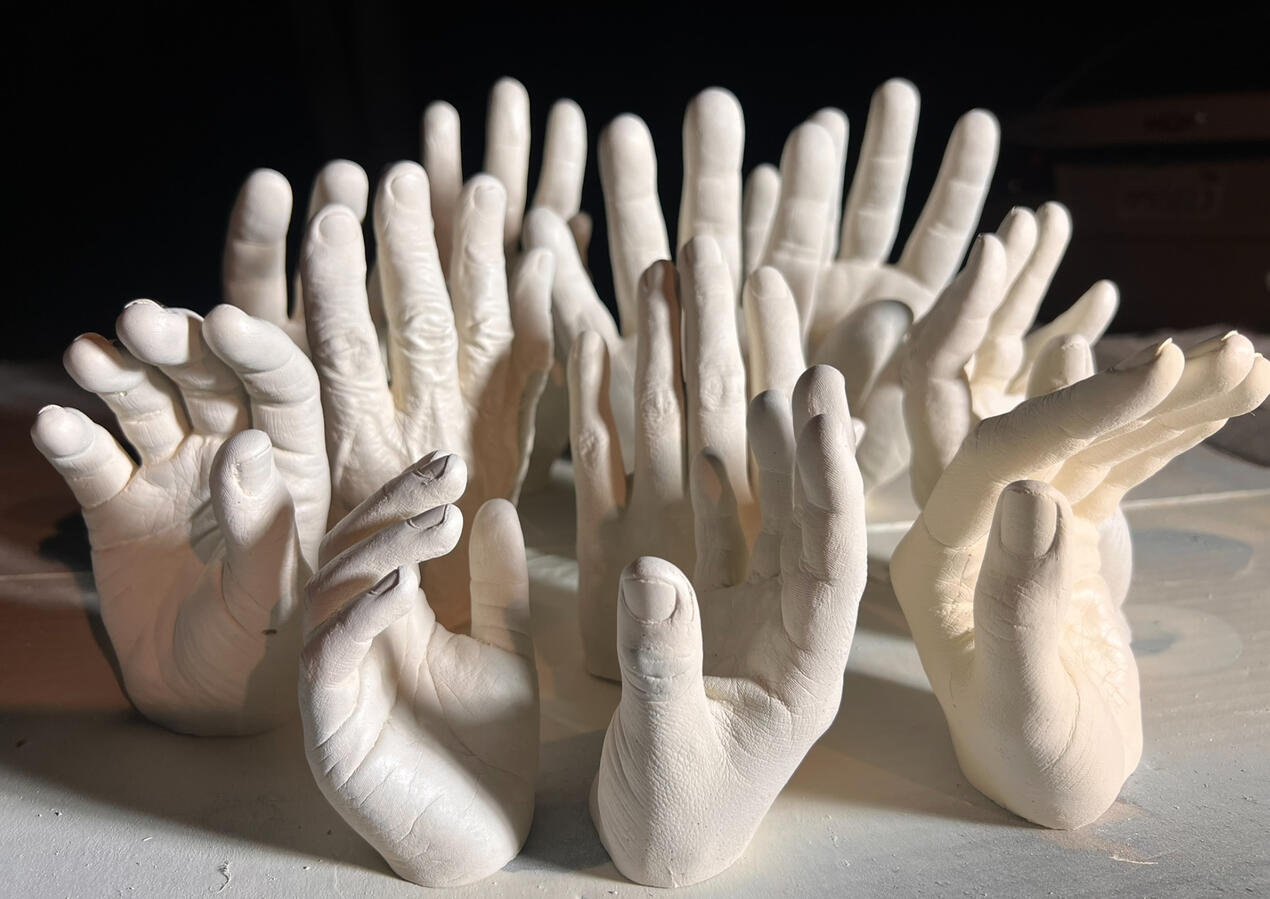
My original idea for IMPRINT was to cast my own hand over and over again in different positions, almost like a record of transformation.But that wasn't really the story.If I was trying to understand who I had become, I couldn't tell that story using only my own hands.Other people were all over it.So I asked some of the people closest to me to let me cast theirs. Amy. My parents. My boys. My sister. My grandmother. A close friend. People whose lives had touched mine closely enough to leave something behind.There were eleven people represented in the finished piece, but twelve casts of hands.Because mine appeared twice.One was the broken black hand from years earlier.The other was the hand I made at the end.And everything between them belonged to the people who had helped shape the distance from one to the other.
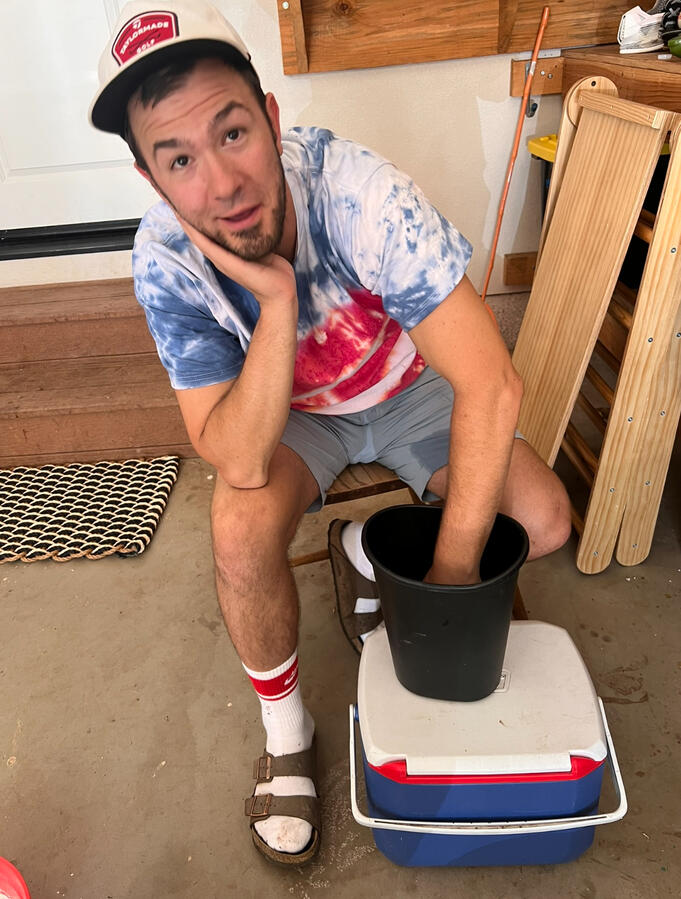
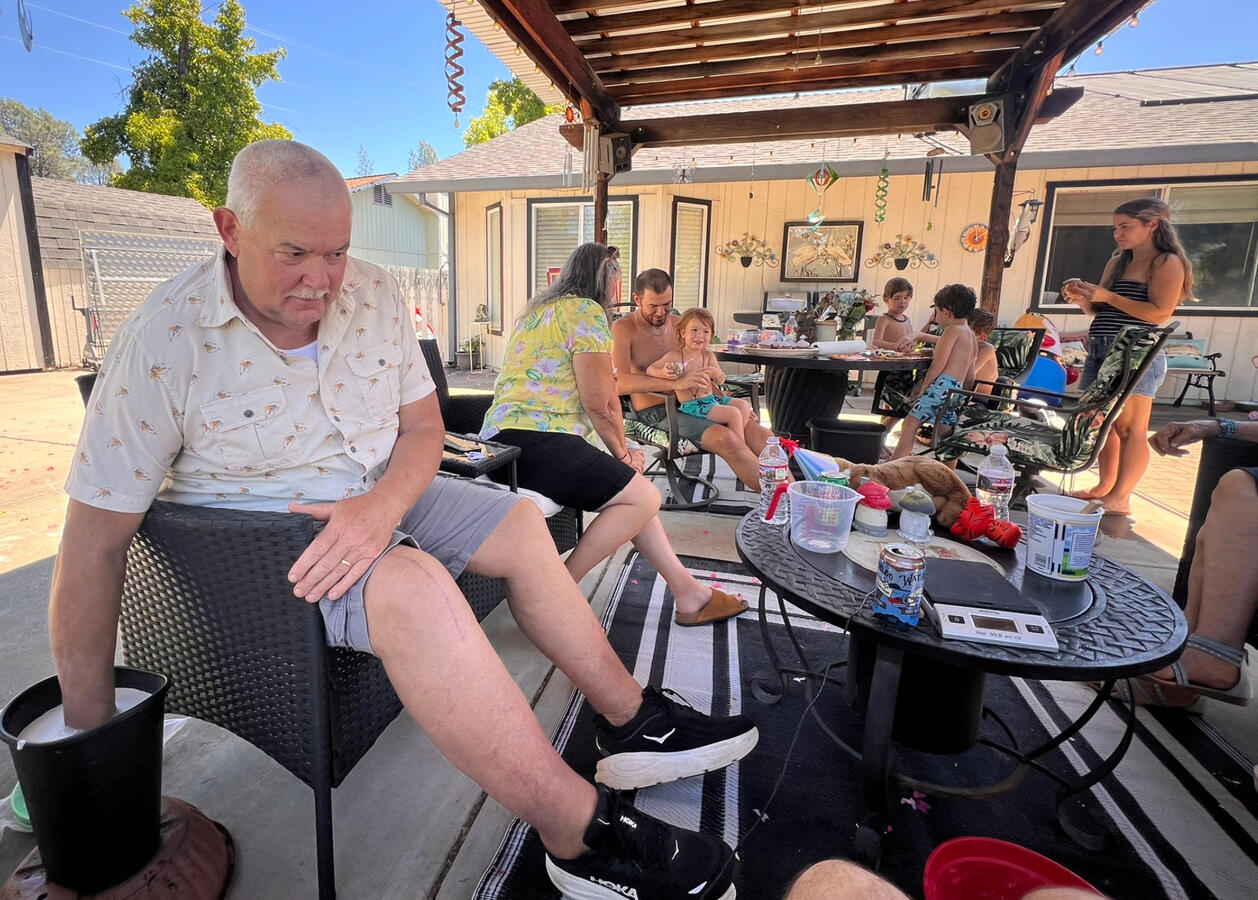
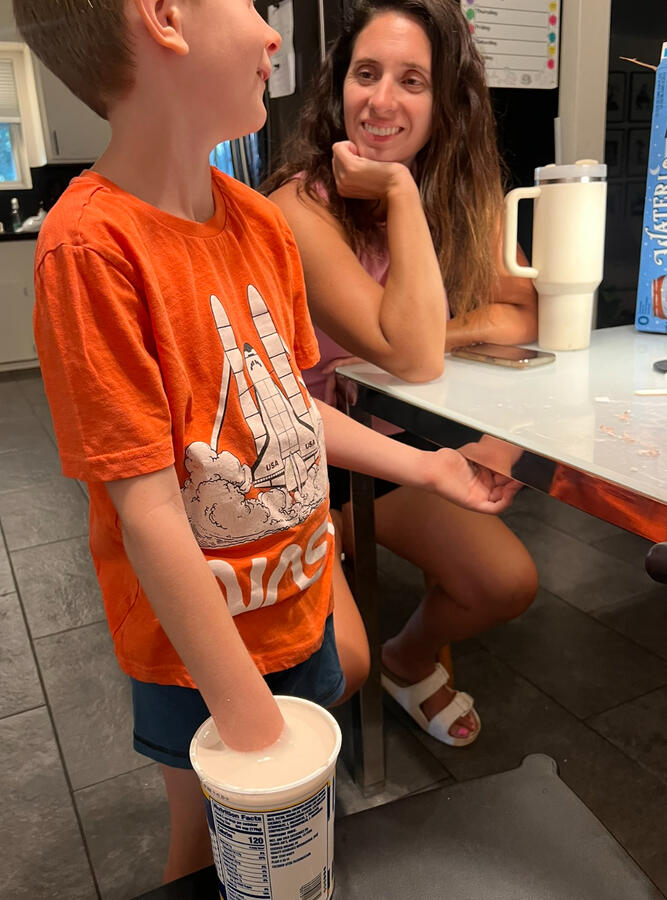
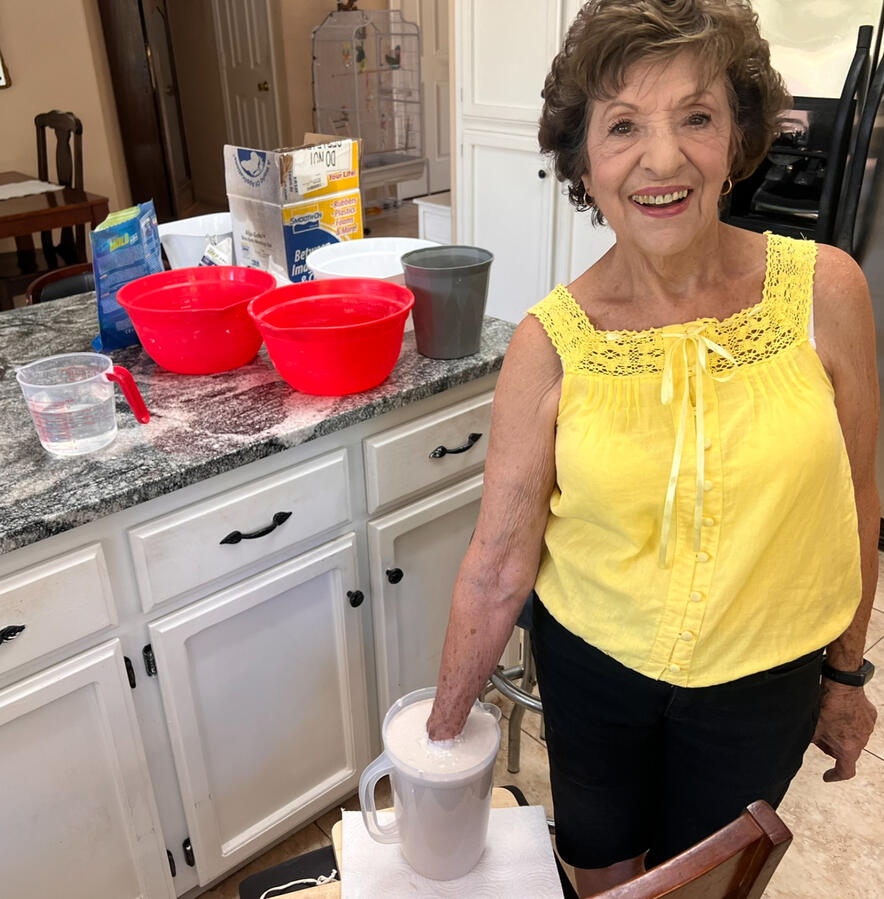
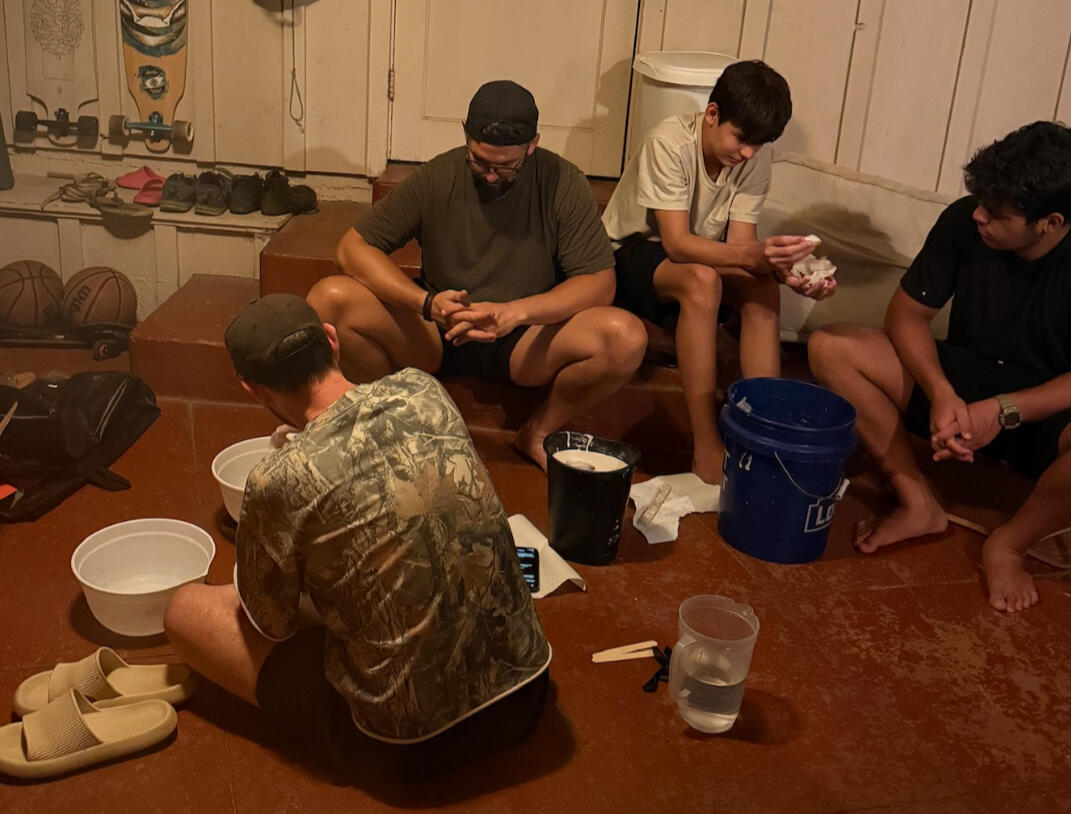
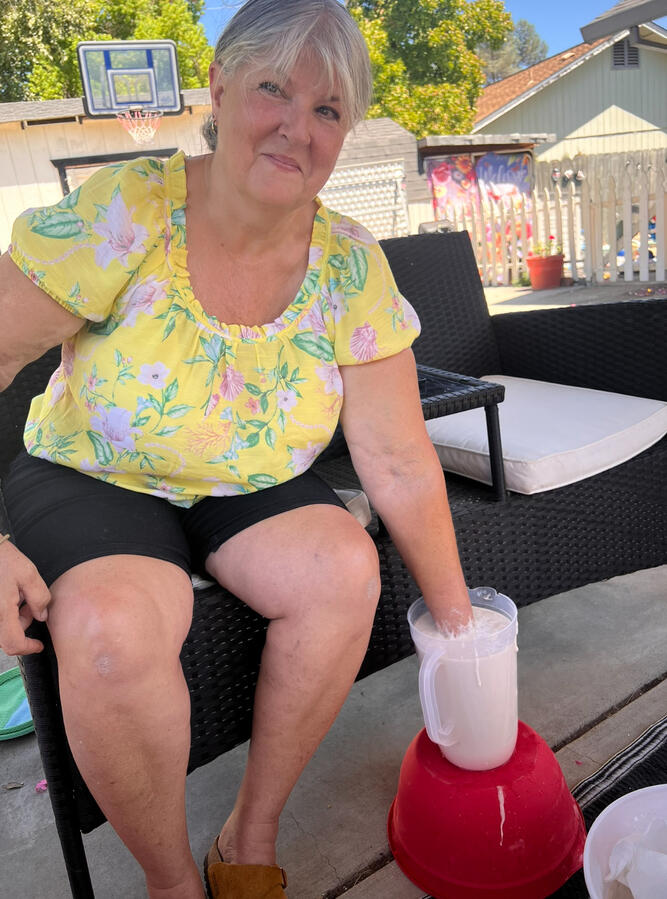
Casting a hand is a strange little process.
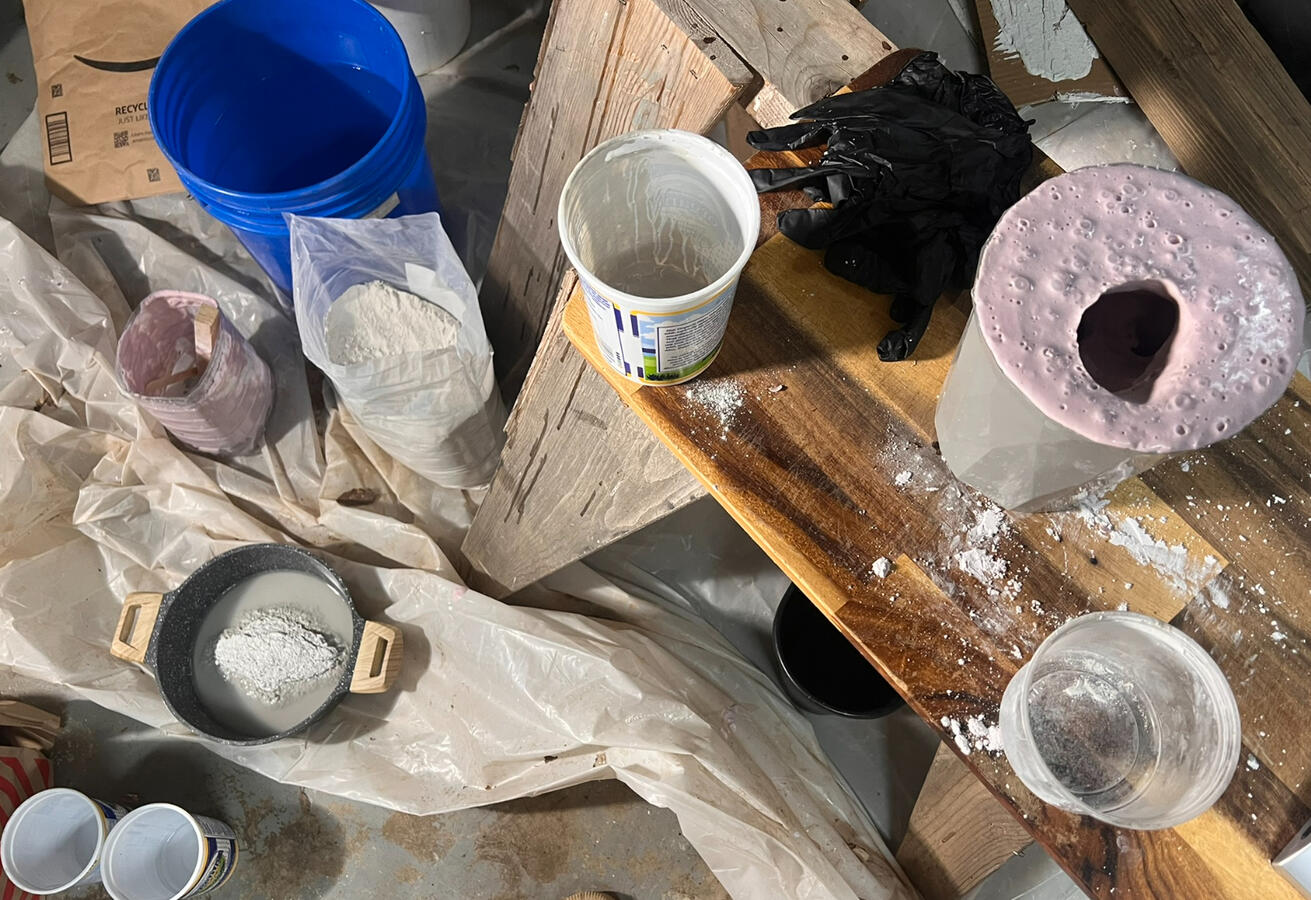
I used alginate, the same basic kind of material used for dental impressions. You mix it quickly, put a hand into it, hold completely still while it sets, and then carefully work the hand free.What's left is a perfect negative space.Then I mixed UltraCal (like Plaster of Paris but stronger), poured it into that empty space, waited for it to harden, and tore the mold apart to find the hand inside.Every casting was different.Different containers. Different positions. Different amounts of material. Timers, measurements, spills, suction, air bubbles, and a lot of hoping I had mixed everything correctly.But the part I loved was the reveal.To get the finished hand out, I had to destroy the thing that had formed it.I started saving those pieces too.The torn alginate molds eventually ended up underneath the finished hands in the exhibition.The thing that shaped them was still there.Just no longer attached to them.
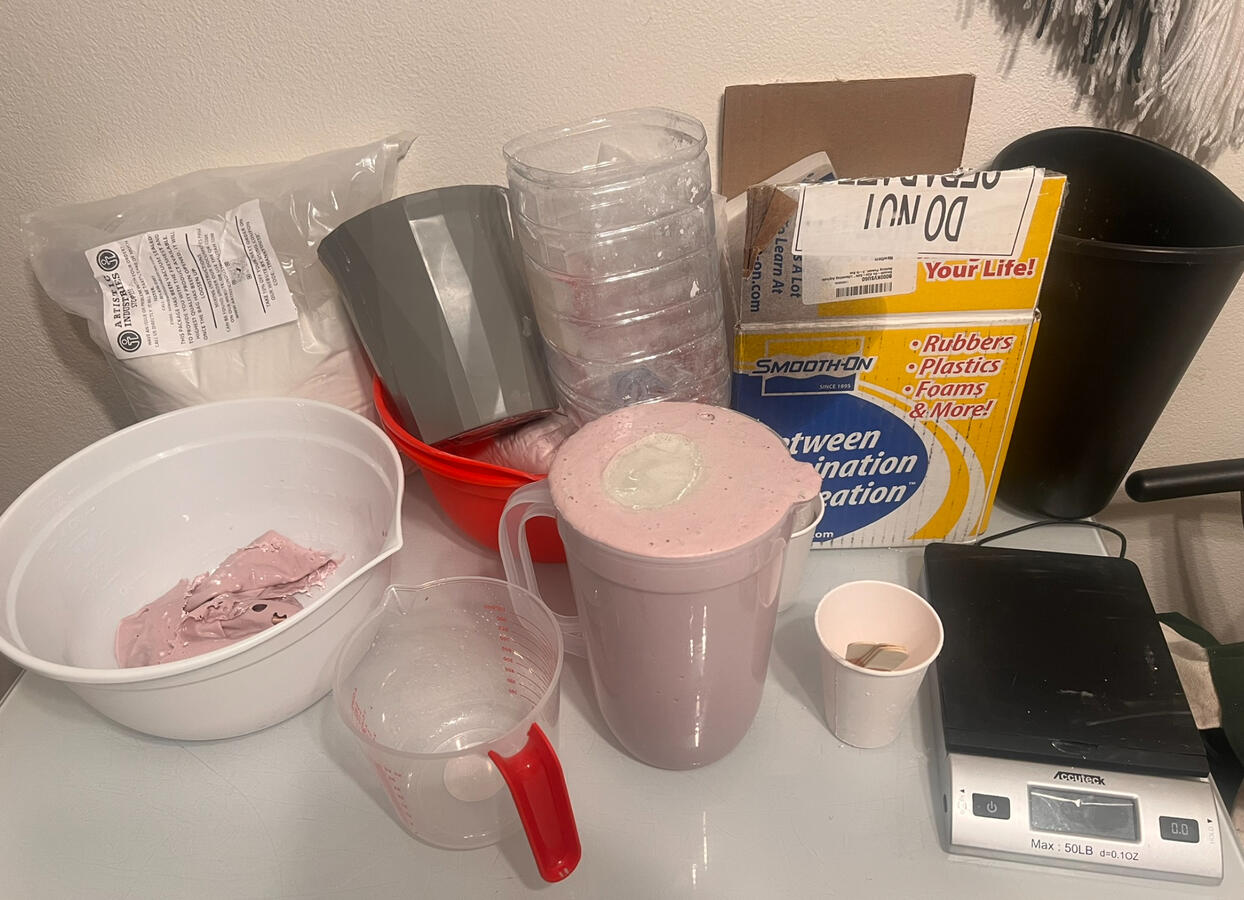
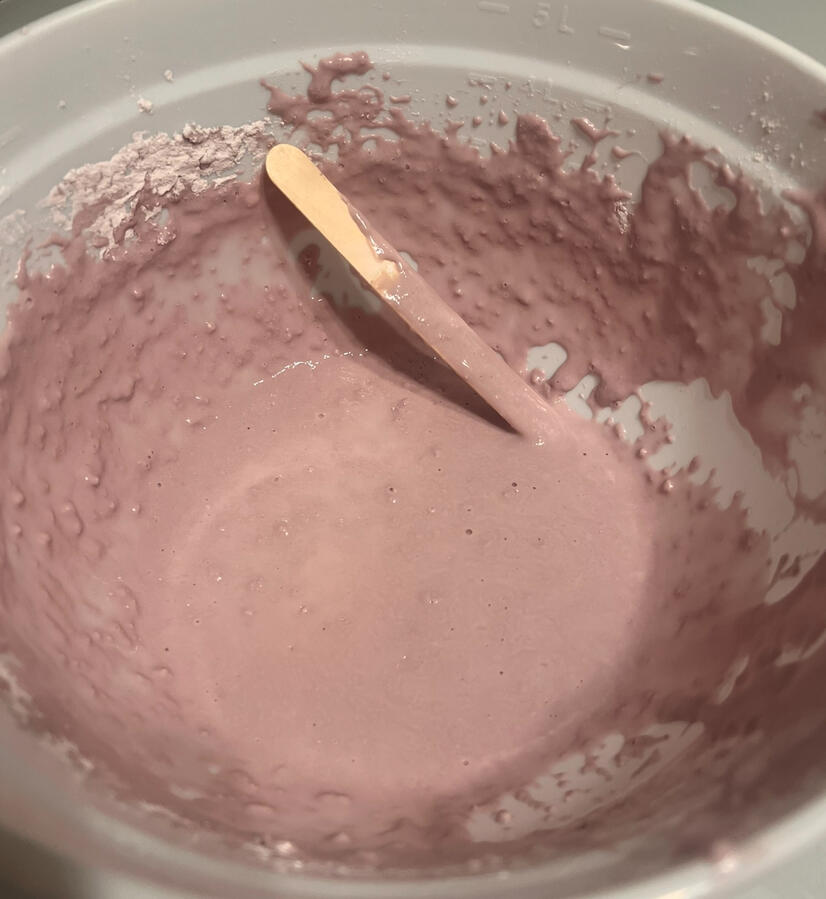
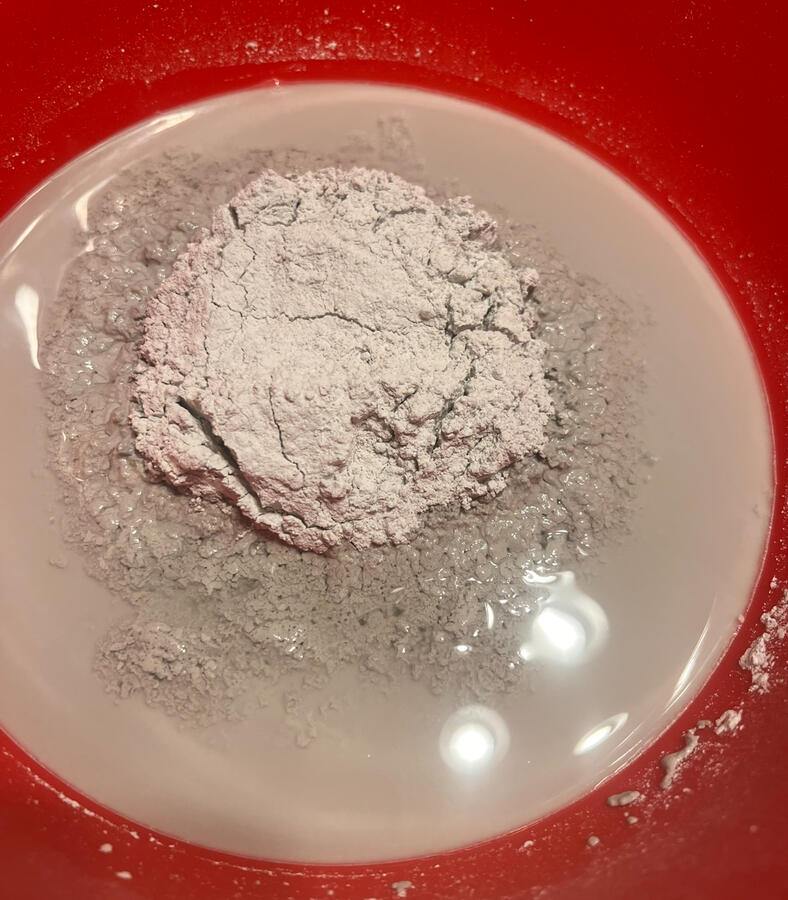
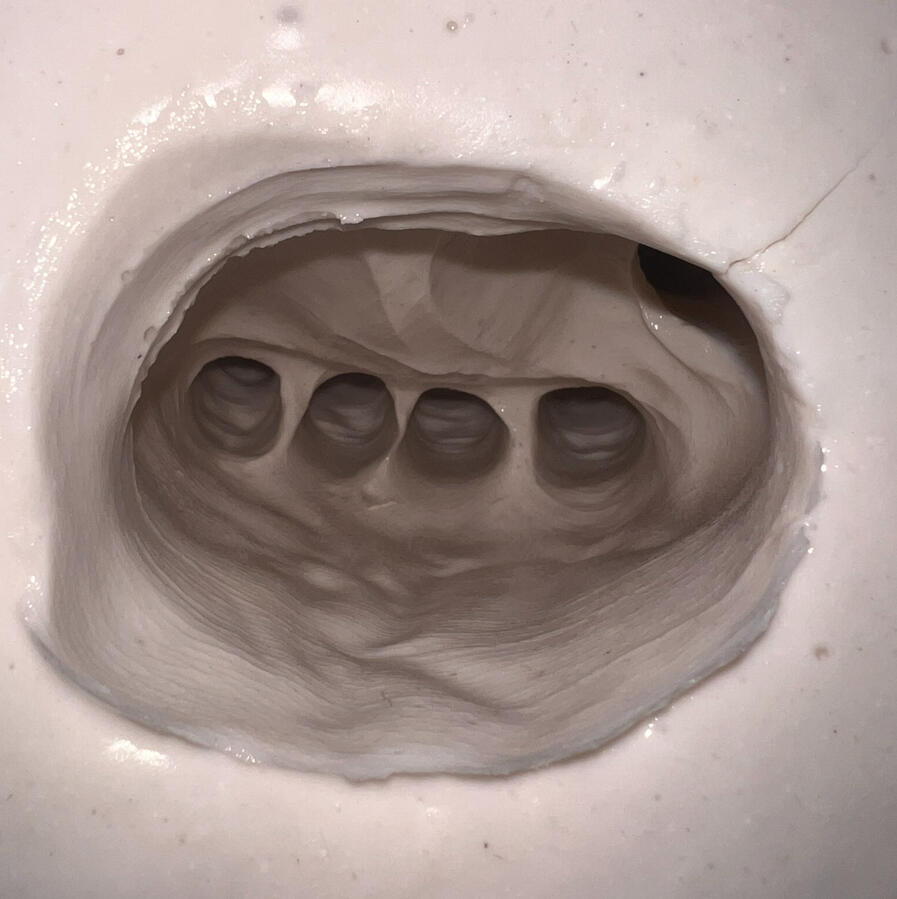
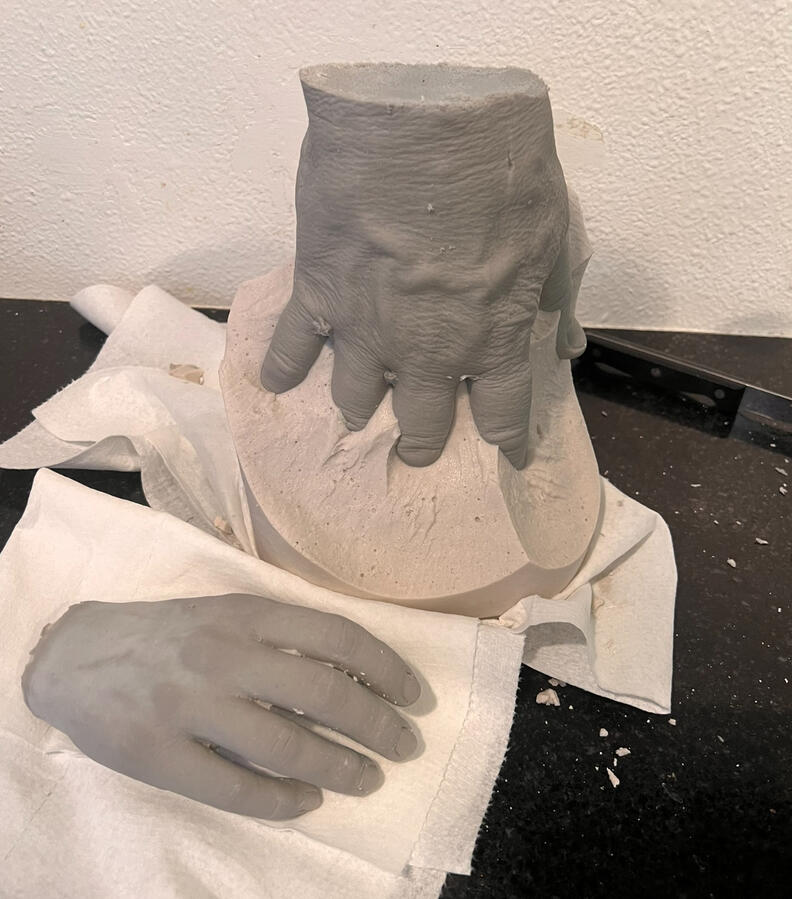
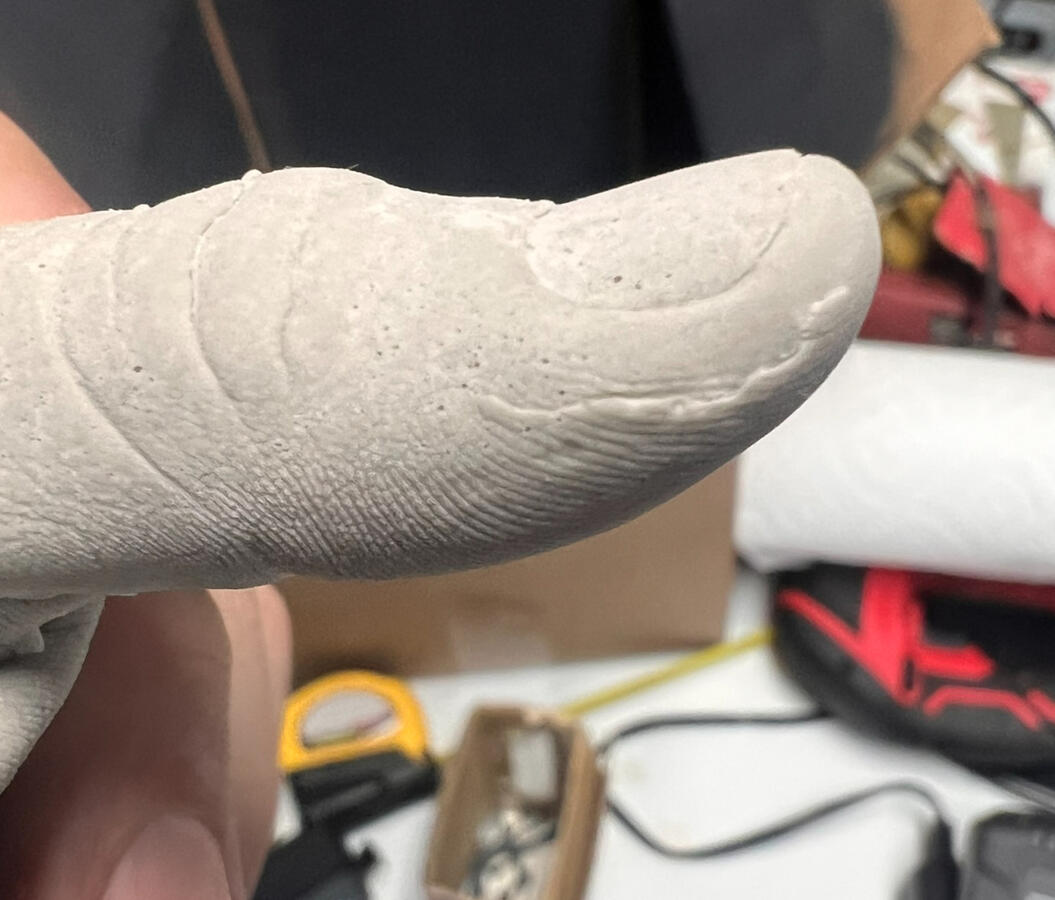
Some of the smallest details became my favorites.My mom removed her ring before putting her hand into the alginate. But when I pulled the finished cast from the mold, the indentation where that ring had rested for years was still there.Her ring isn't in the sculpture.The evidence of a lifetime wearing it is.My oldest had his own little detail.At the time, he had a habit of chewing the skin around his thumb near his nail. The cast captured that too. You can actually see the tiny uneven places where he'd been biting at it.That's what began to fascinate me about the hands. They weren't generic sculptures of hands. They were records of a particular moment.My grandmother was 84 when I cast her hand. My boys' hands were still little. My parents' hands carried decades of their own lives in them. Every line, wrinkle, indentation and imperfection belonged to that exact moment in time.My boys' hands will never be that small again. My parents' hands will change. Mine will too.There will never be another summer when all of those hands look exactly like that.
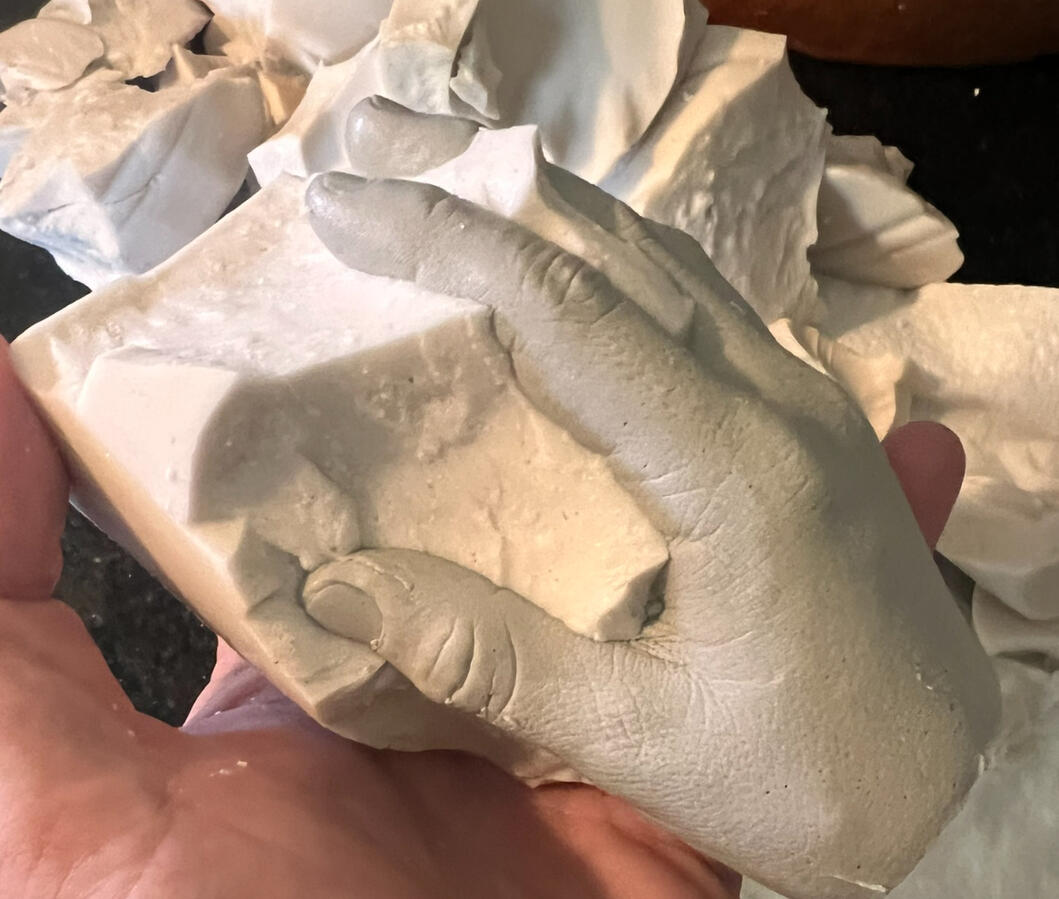
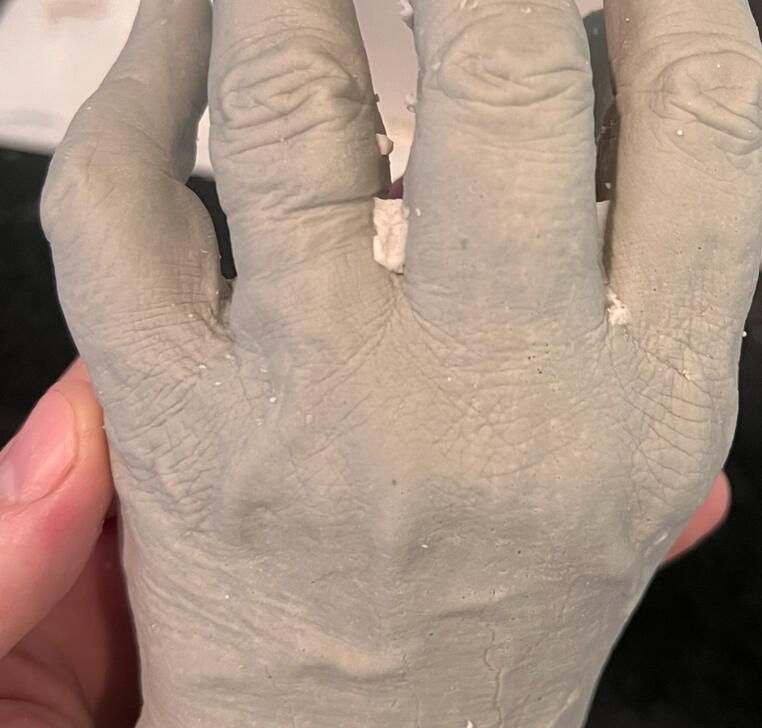
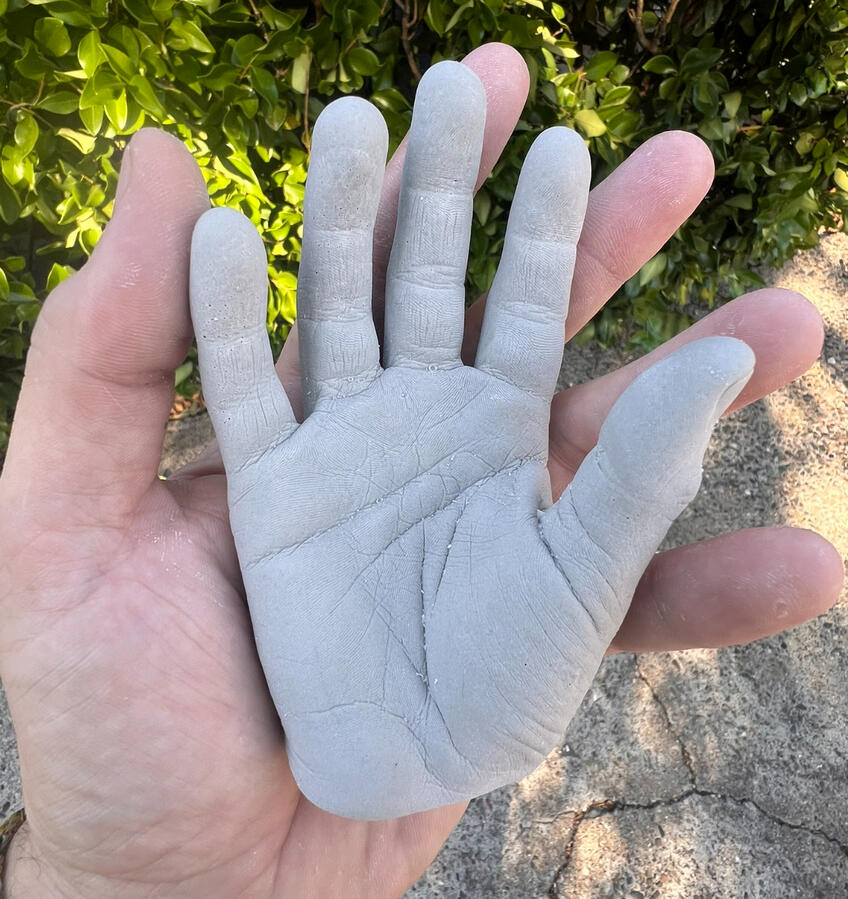
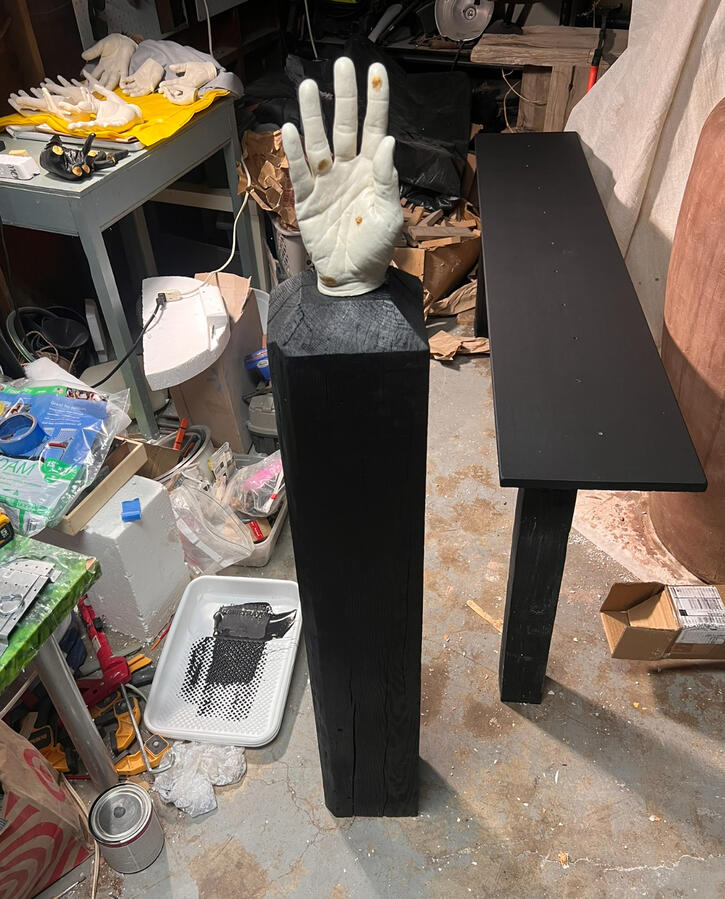
At first, I thought the finished hands should be black and gold.But when I tried it, it felt like I was forcing the language of MARKED onto them.So I painted them ivory.They sat on a long black table I built for them. I only had enough wood for three legs, so the table had three legs.Apparently that was enough.At the far end, my final hand reached outward from a black monolith. Before the exhibition opened, the people represented in IMPRINT each left a small gold mark on it.Those marks meant something different from the gold inside the broken hand.The broken hand already contained gold. Its breaking simply exposed it.The marks on the final hand came from other people.They didn't create its value.They were evidence of contact.Of relationship.Of being changed by knowing someone.
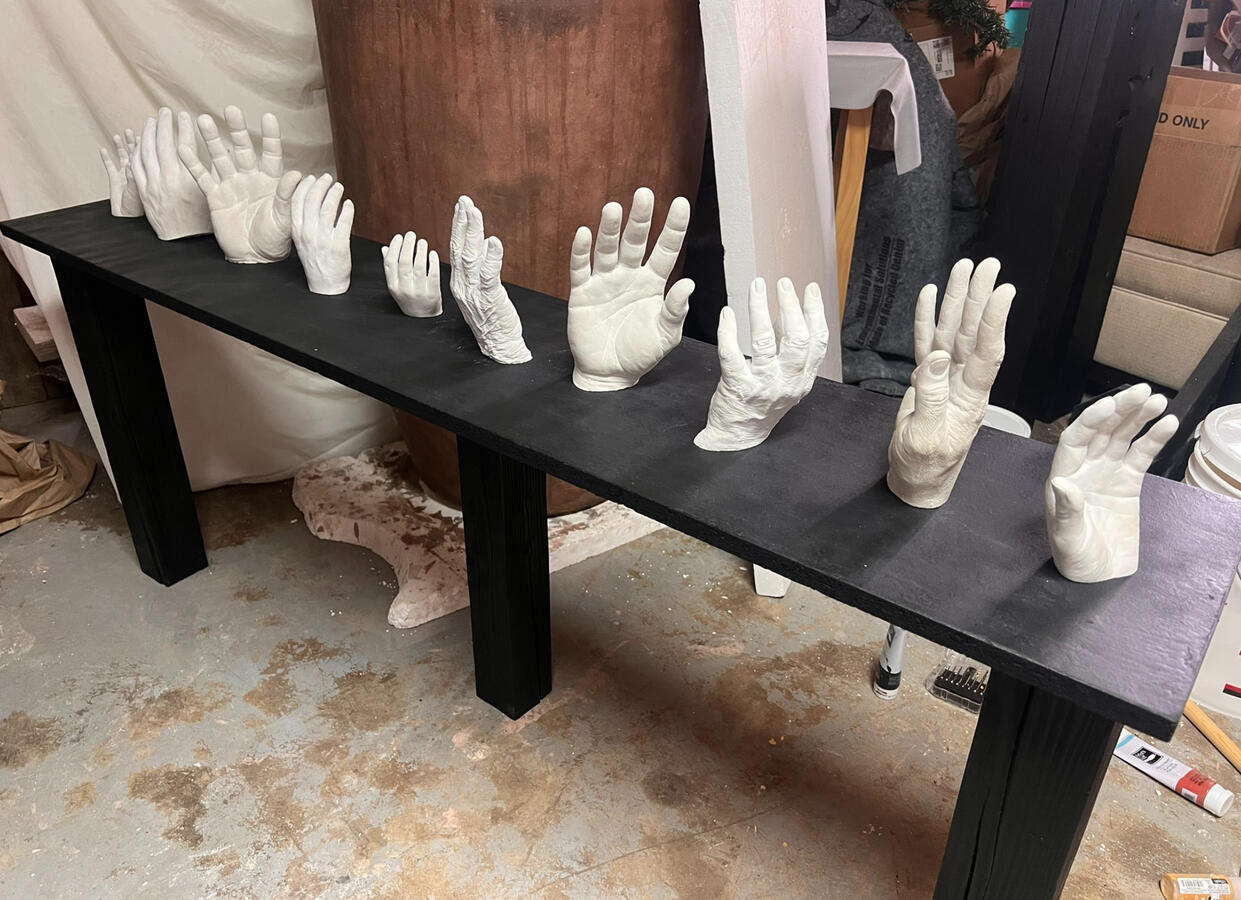
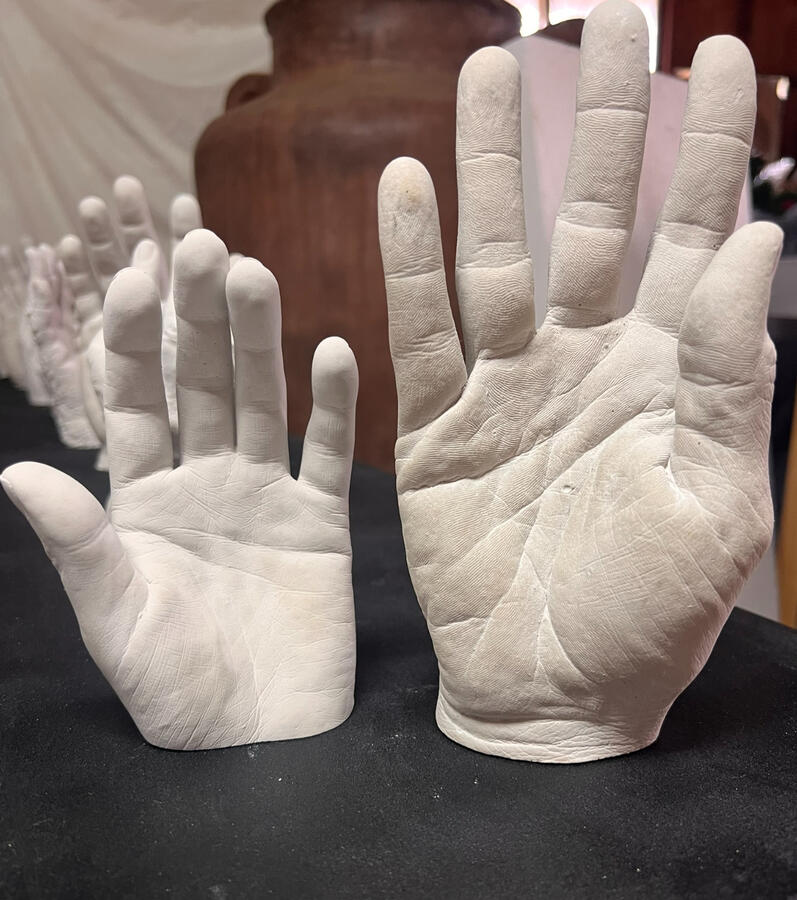
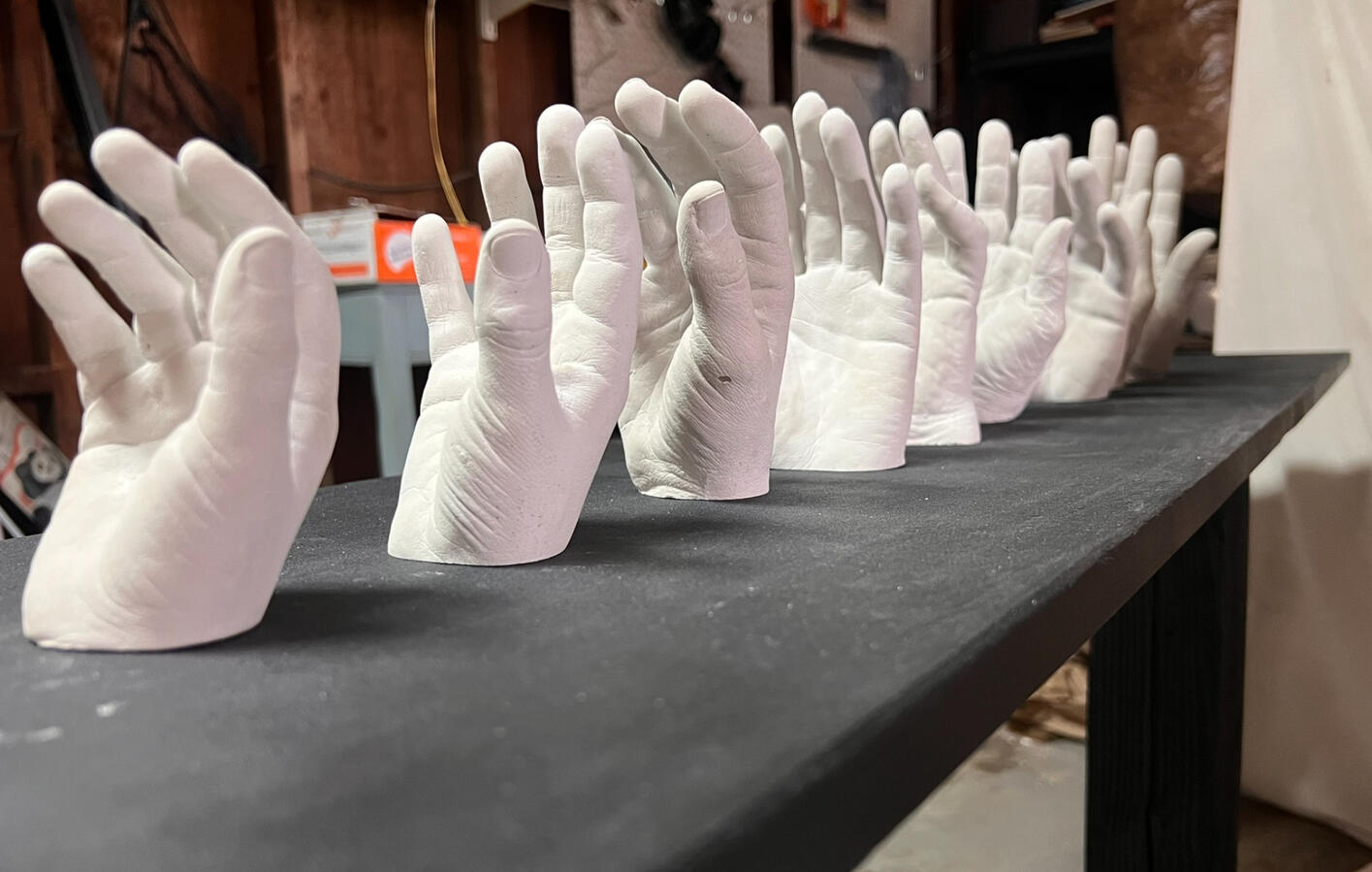
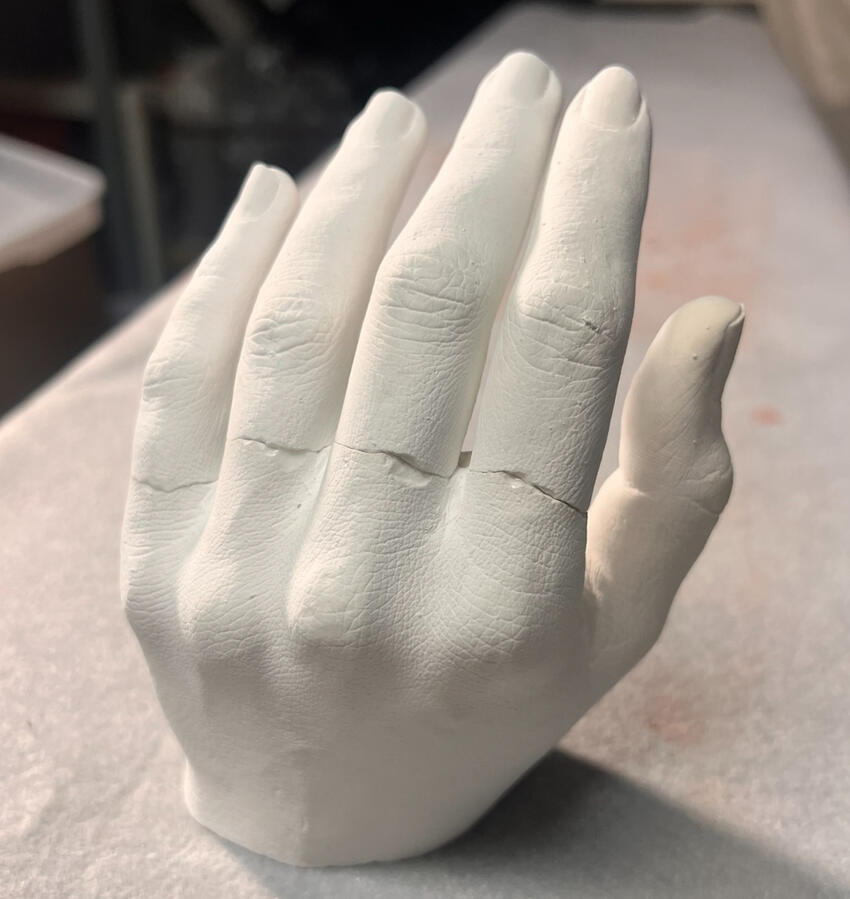
During the exhibition, someone touched that final hand and accidentally left another gold mark on it.At first, I was annoyed.Then I had to laugh.Of course they did.It was a piece called IMPRINT.But my favorite moment happened when a man stopped at one of the ivory hands.He told me it reminded him of his grandmother, who had died. There was something about the shape of it, the age in the hand, that brought her immediately to mind.The hand he was looking at was my grandmother's.He couldn't have known that.For a moment, my grandmother's hand was sitting on a table in downtown Redding, and somehow a stranger looked at it and saw his own.
CHAPTER 3
BECAME
What took shape in the dark?
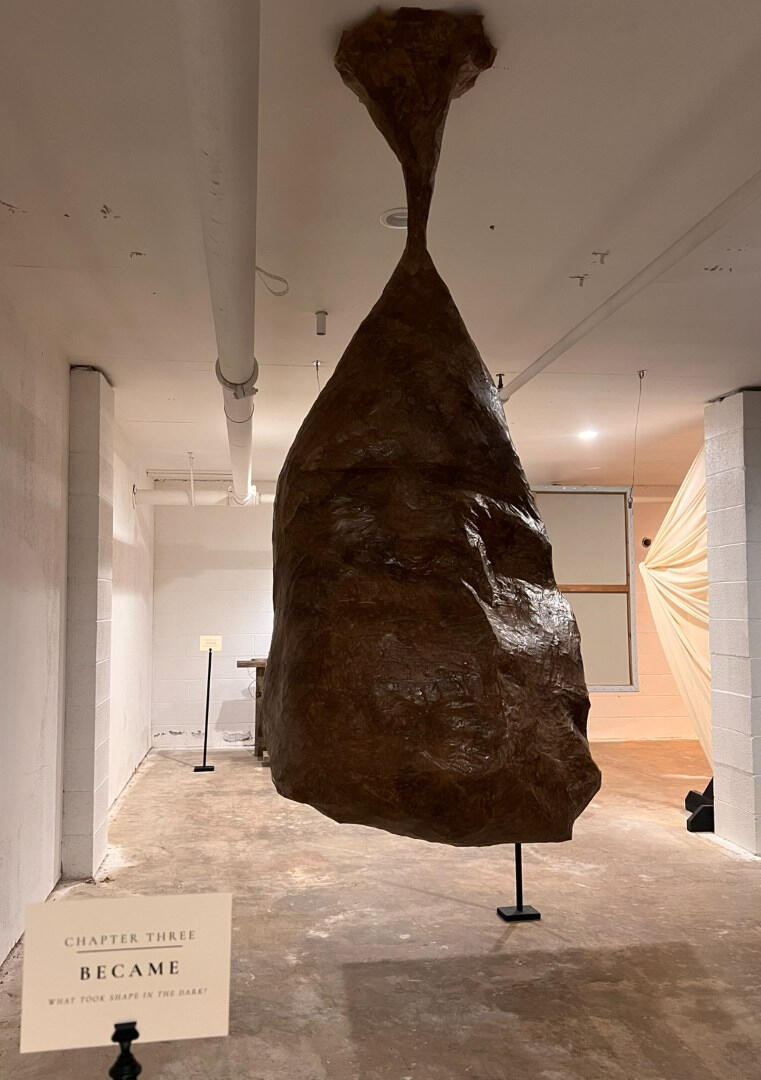
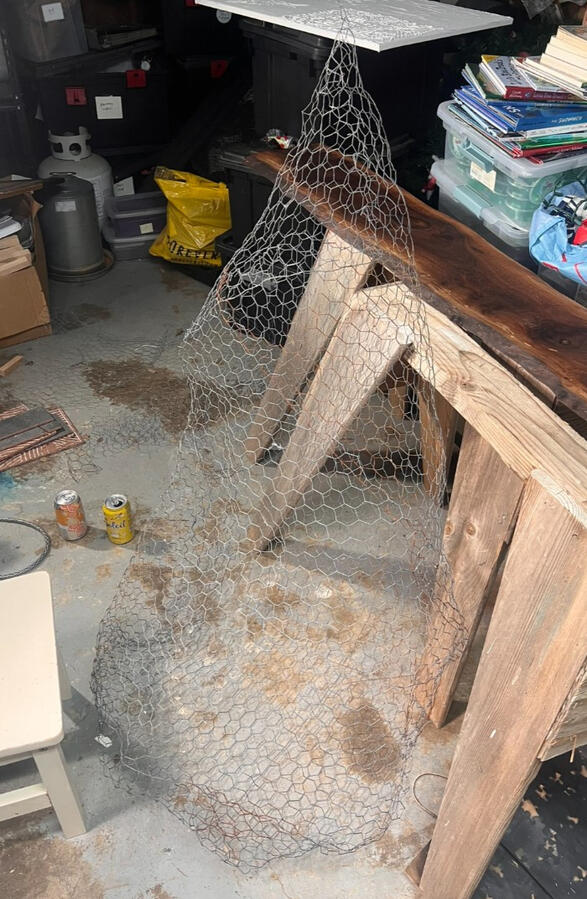
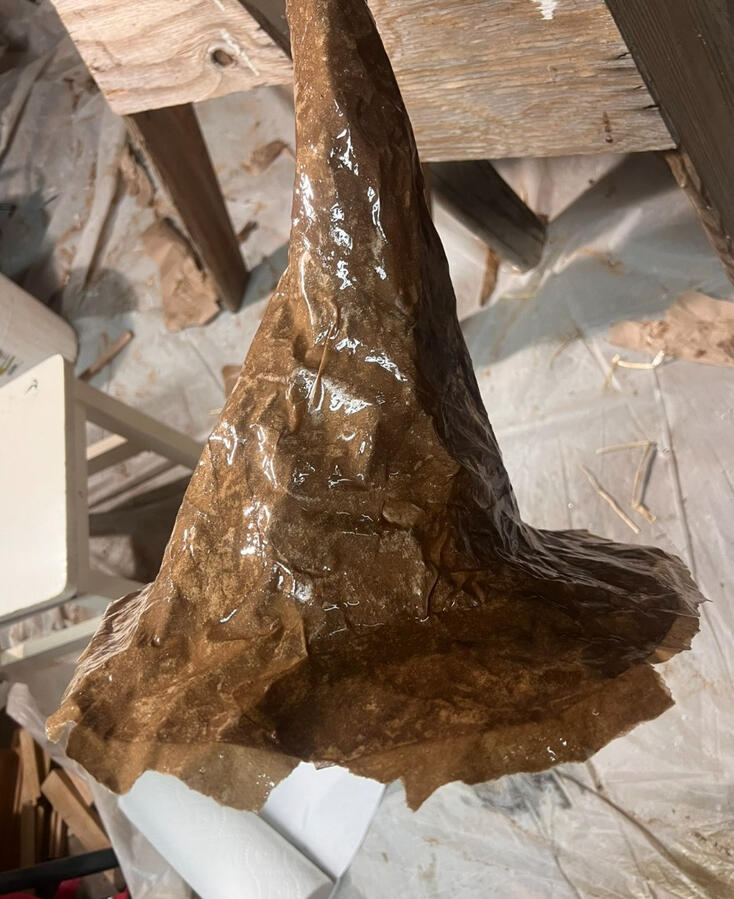
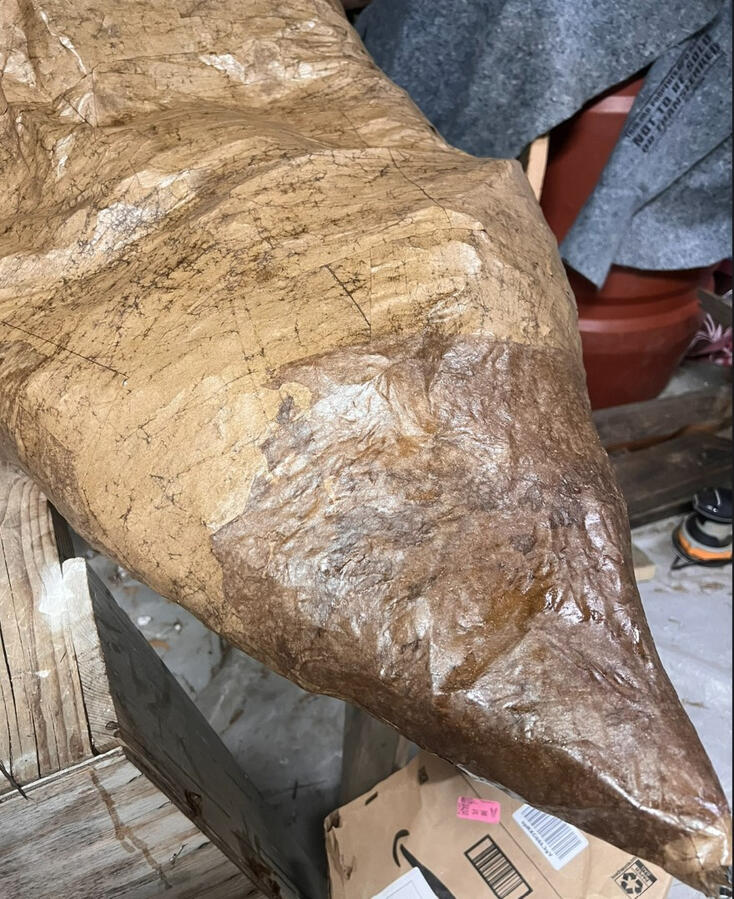
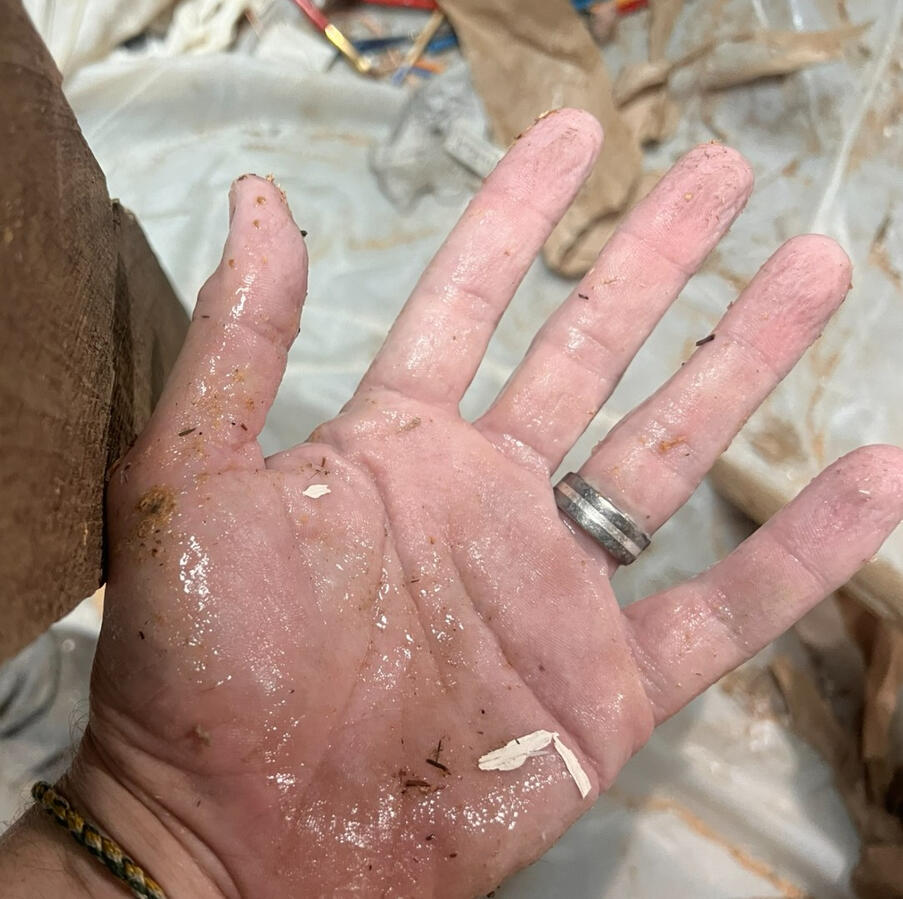
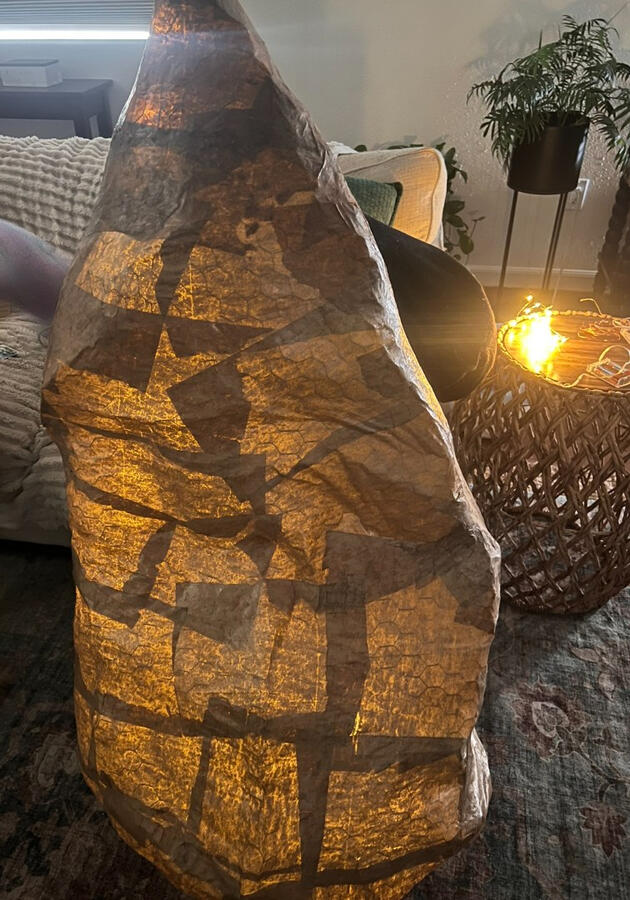
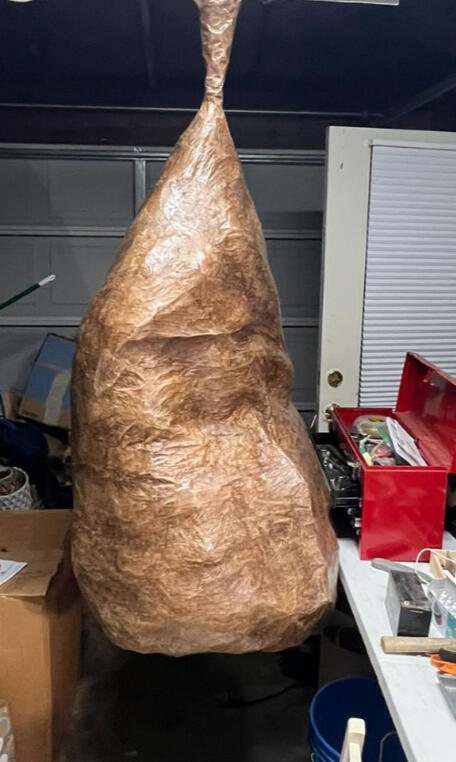
BECAME was one of the first pieces I started making for MARKED.I built the form out of chicken wire, then covered it piece by piece with torn packing paper from Amazon boxes, soaked in a mixture of glue and water. I wasn't trying to make it perfectly smooth. I wanted the surface to feel organic, almost like a membrane.It was messy and repetitive and strangely peaceful.I remember hanging it for the first time and realizing:This is a cocoon.For a long time, the piece was called Awakening.The idea seemed obvious. A cocoon represented transformation. Something enters one way and eventually emerges as something else.And I understood that feeling.For about three years before MARKED, I had felt like I was living inside one.
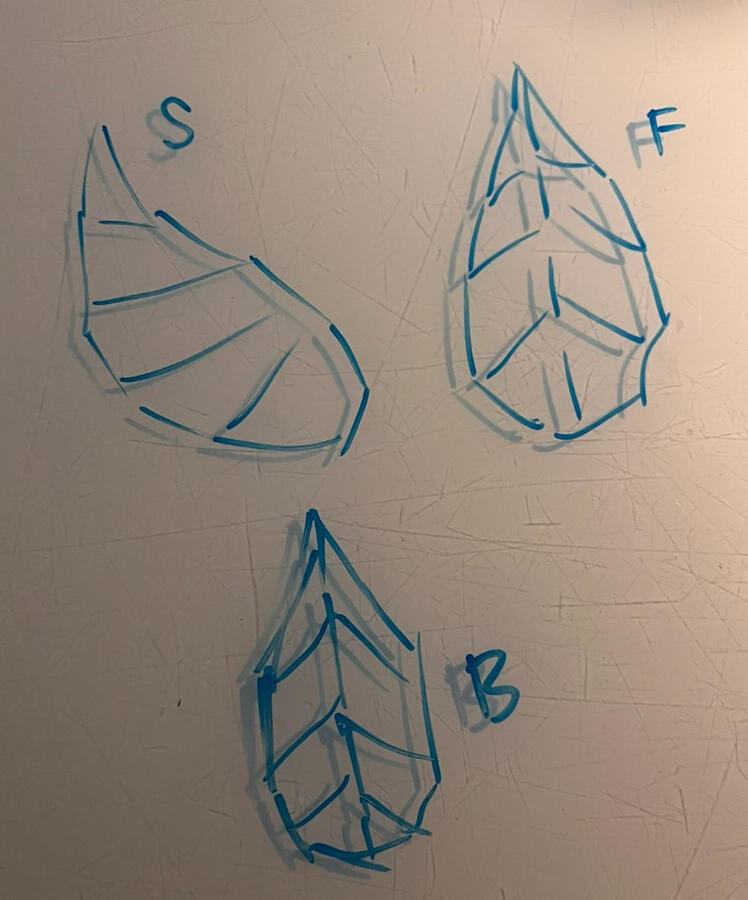
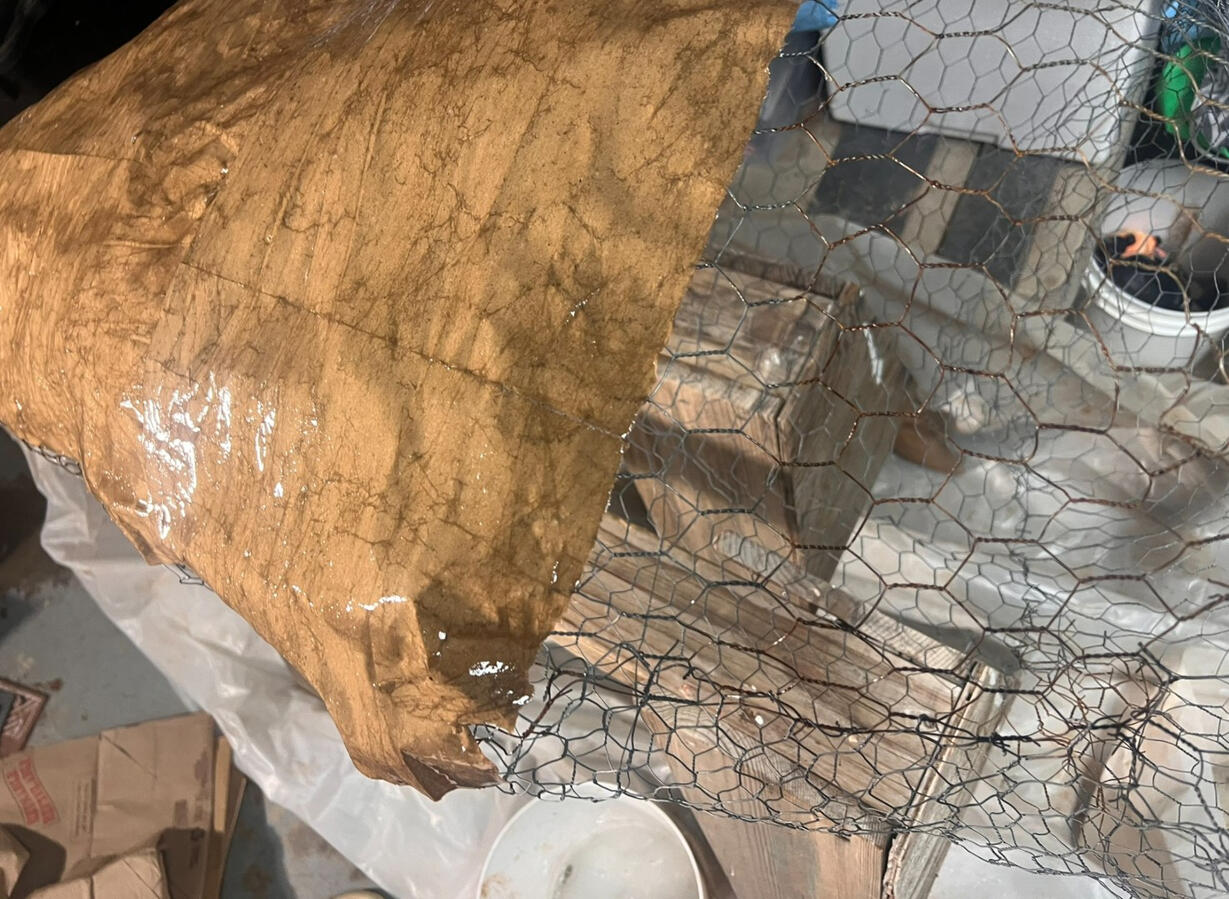
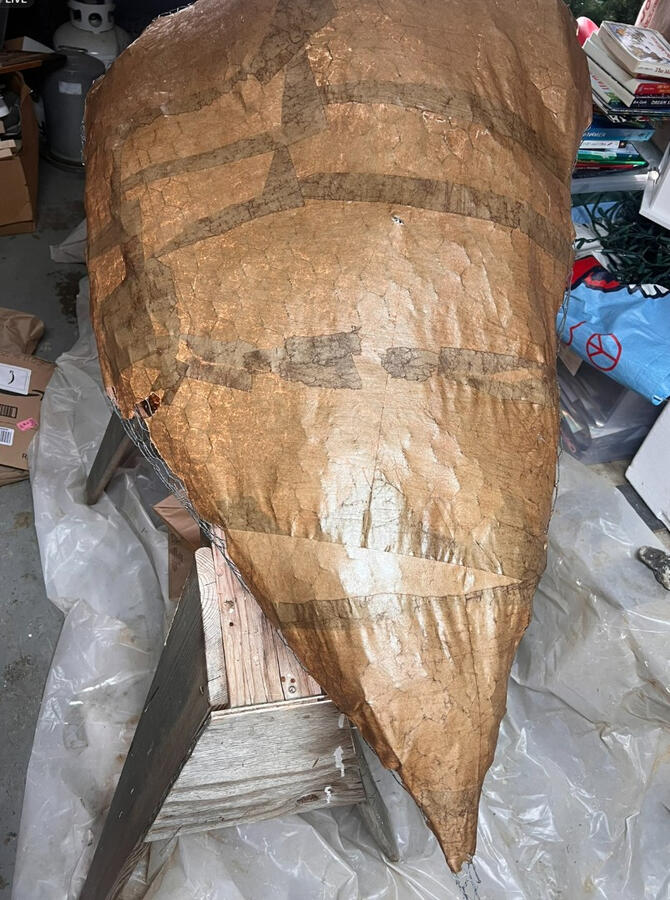
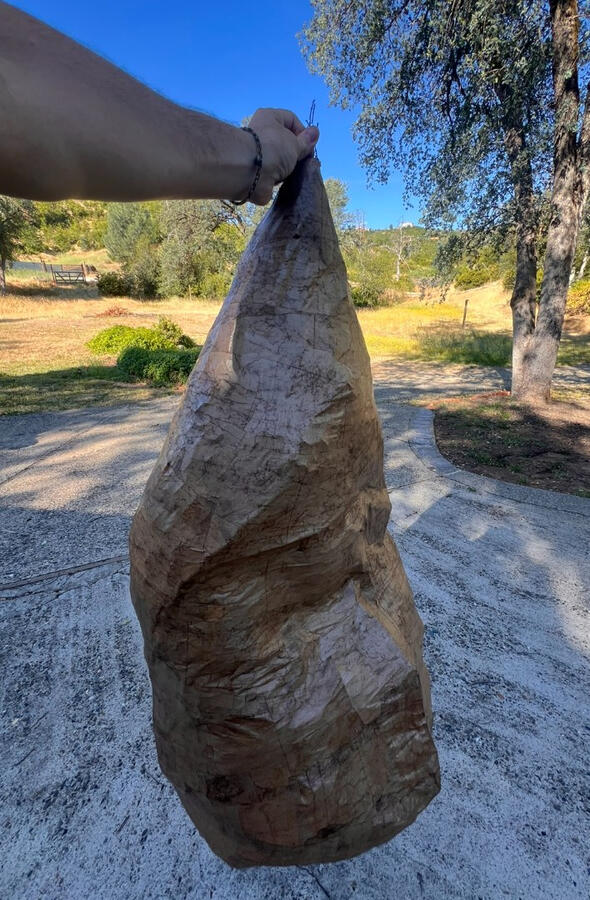
At first, I planned to make the cocoon glow from within.
It made sense. Transformation. Awakening. Light breaking through.So I installed lights inside it. Then I turned them on. And almost immediately, I knew they were wrong.Part of the problem was physical.The light exposed things I didn't want exposed. Seams became visible. The object started feeling more manufactured.But the bigger problem was that the metaphor wasn't true.Those years of my life hadn't felt illuminated from within.They had felt dark.Confined.There were stretches when I couldn't tell whether I was transforming at all. Sometimes I felt like I was getting worse. Sometimes I couldn't tell the difference between becoming something new and simply falling apart.So I turned the lights off.They're still inside the cocoon.They stayed there through the entire exhibition.Then, when I installed BECAME downtown, something happened that I couldn't have planned. Of all the ceiling lights in the room, the one directly above the cocoon didn't work.I could have tried to fix it. I didn't.I had spent all that time deciding this piece wasn't supposed to glow from within, and then somehow it ended up hanging beneath the one dead light in the room.So I left it dark.
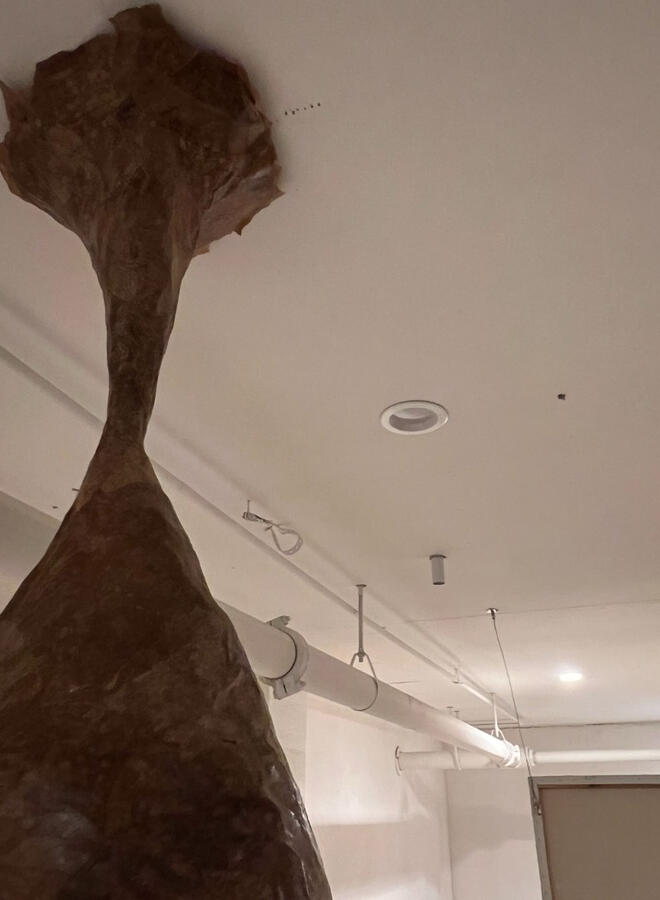
That decision changed the piece for me.I had started with the version of transformation we usually like to tell afterward. The clean version. The one where we can look back and see exactly what was happening and why.But that's not what it feels like when you're inside it.A caterpillar doesn't enter a cocoon already admiring the butterfly.It disappears.The name Awakening started feeling wrong too.Eventually, it became BECAME.Not Becoming.Not Awakened.Became.I liked that it felt almost grammatically unfinished. It didn't tell you what the thing became. It didn't tell you whether the transformation was over.It just acknowledged that something had happened there.Something had taken shape in the dark.
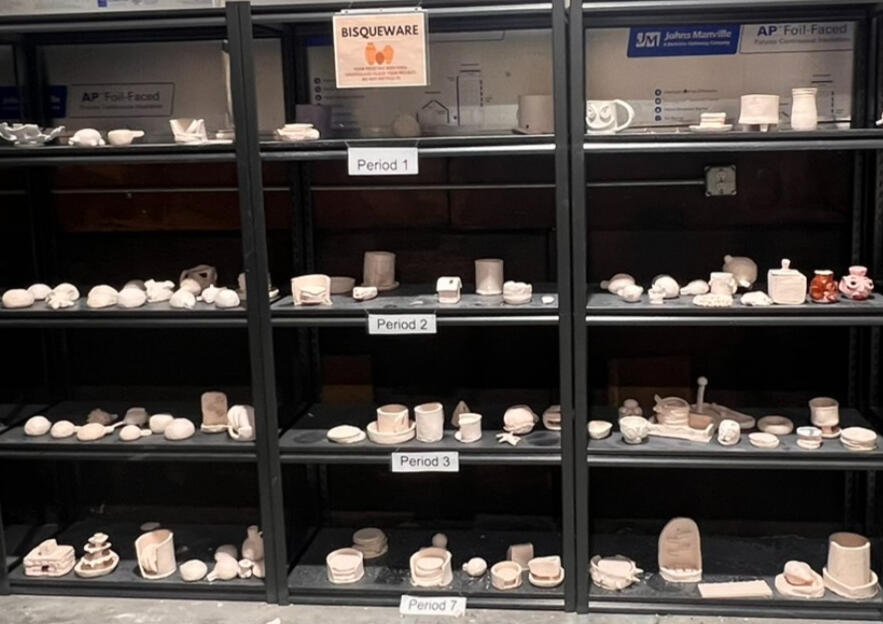
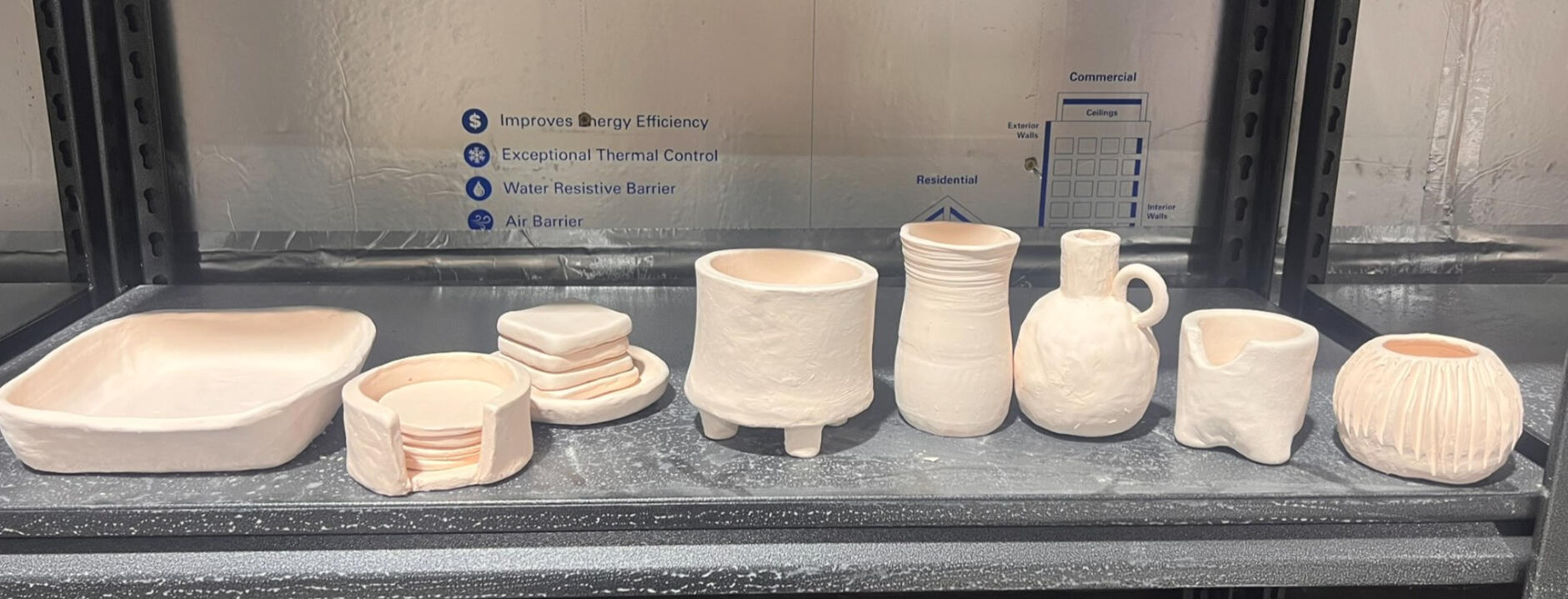
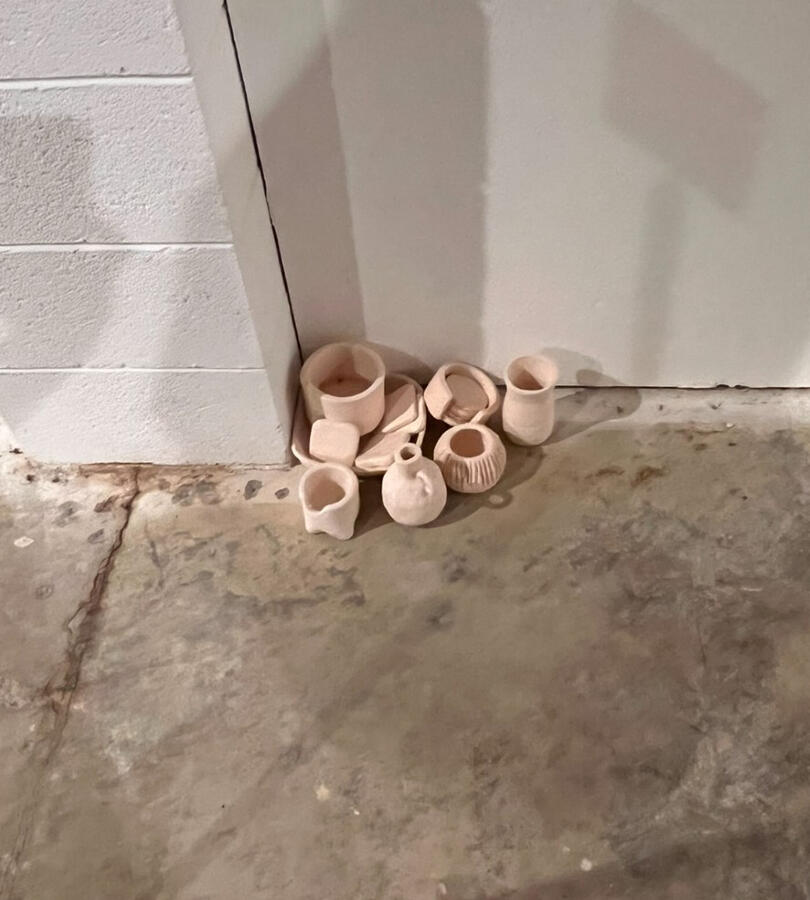
There was another part of BECAME that was much easier to miss.Near the cocoon, I placed a small group of clay pieces made years earlier by students at Enterprise High School.They had been forgotten and left behind, and eventually they were going to be thrown away.I took them.There was no title card beside them in MARKED. Nothing explaining who had made them or telling you that they were important. They simply sat quietly near BECAME beneath the question:What took shape in the dark?On the final weekend, a visitor named Nate noticed them.Of everything in the room, those little pieces of pottery were what stayed with him. He connected them to the question and talked about what had been formed quietly, almost invisibly.He had no idea how close they had once come to disappearing altogether.I loved that.Something made years earlier by students, forgotten and nearly discarded, had somehow survived long enough to become meaningful to a stranger standing in MARKED.He almost missed them.But he didn't.
CHAPTER 4
NAME
What have you accepted as true about yourself?
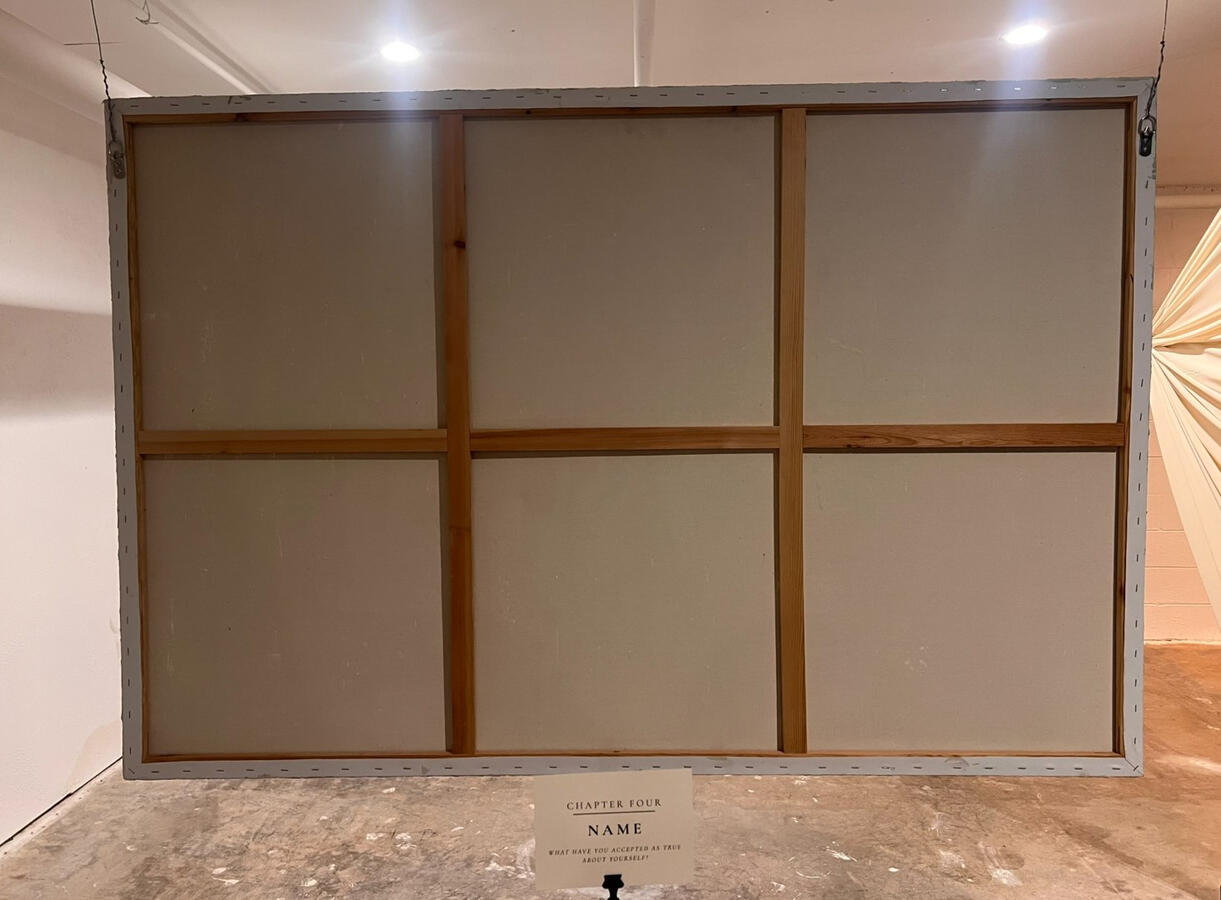
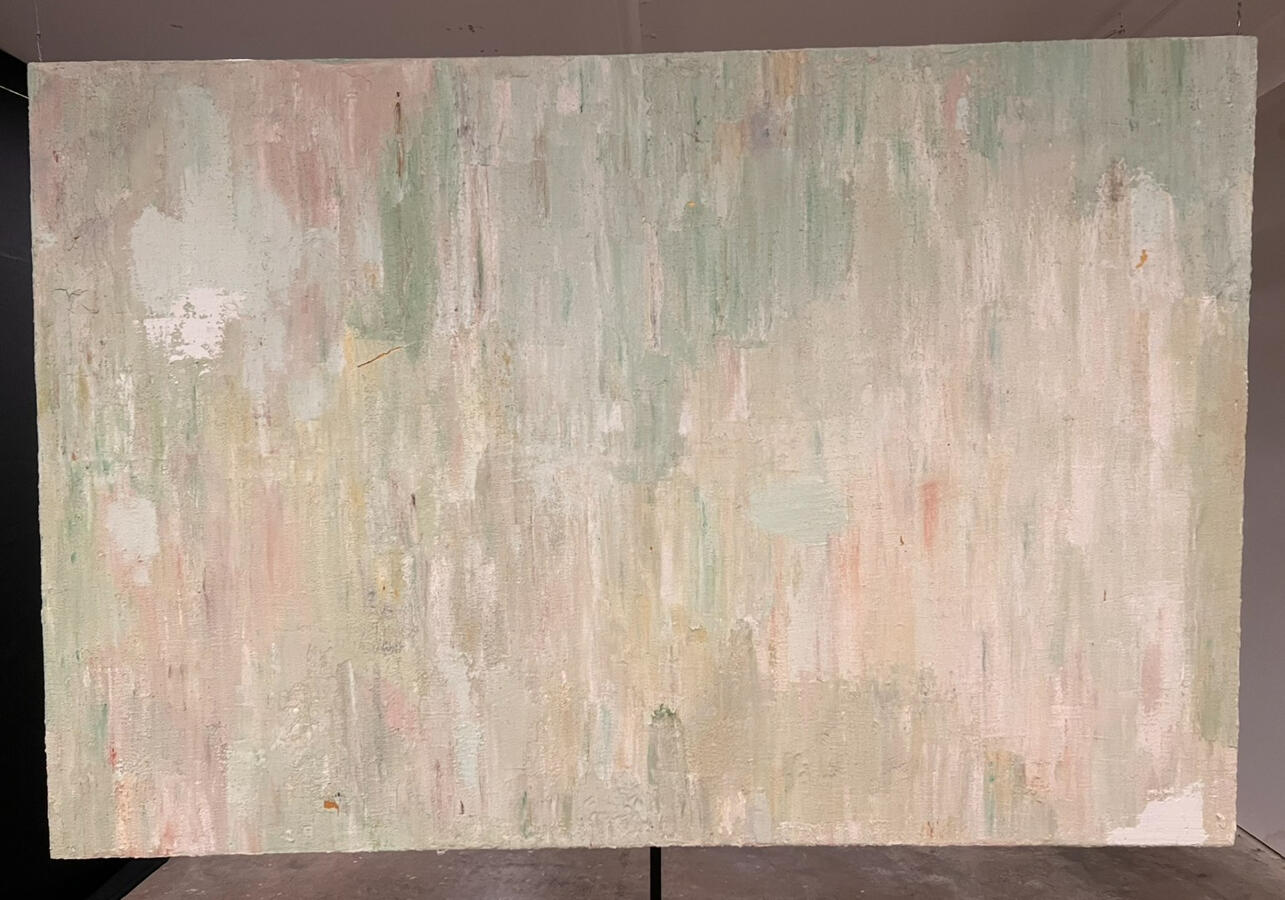
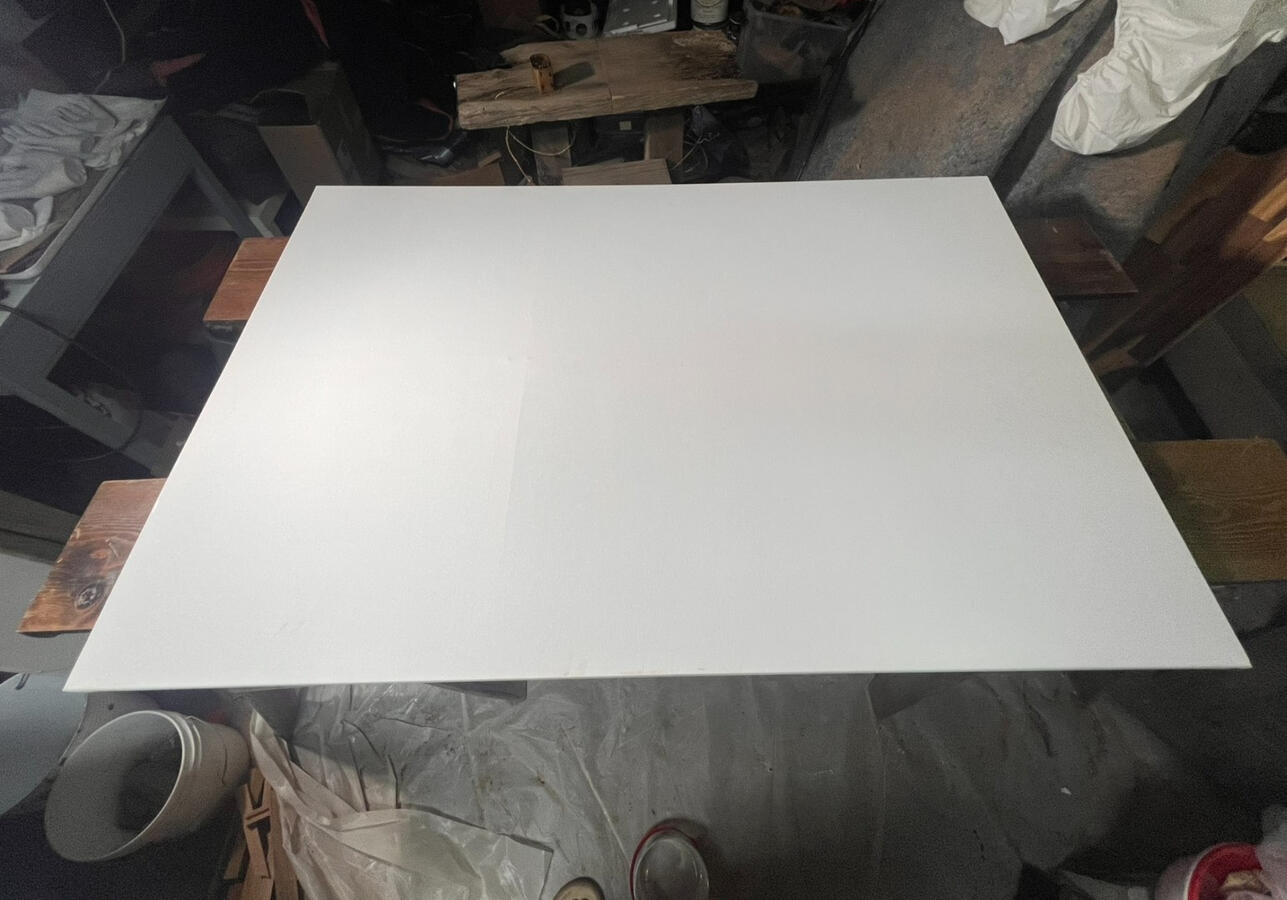
NAME started with a canvas I had owned for about fourteen years.
It was huge, 40 by 60 inches, something I'd bought at Ross years earlier without any real plan for it. It moved with us. It spent years in storage and up in the rafters.Then MARKED happened.My first idea was much more literal than the finished piece. I wanted to create a cracked wall with gold underneath it, as if breaking through the surface would reveal what had always been there.But I had carried that canvas around for fourteen years without ever putting anything on it. I wasn't about to ruin it figuring out whether an idea worked.So before I touched the actual canvas, I tested everything.
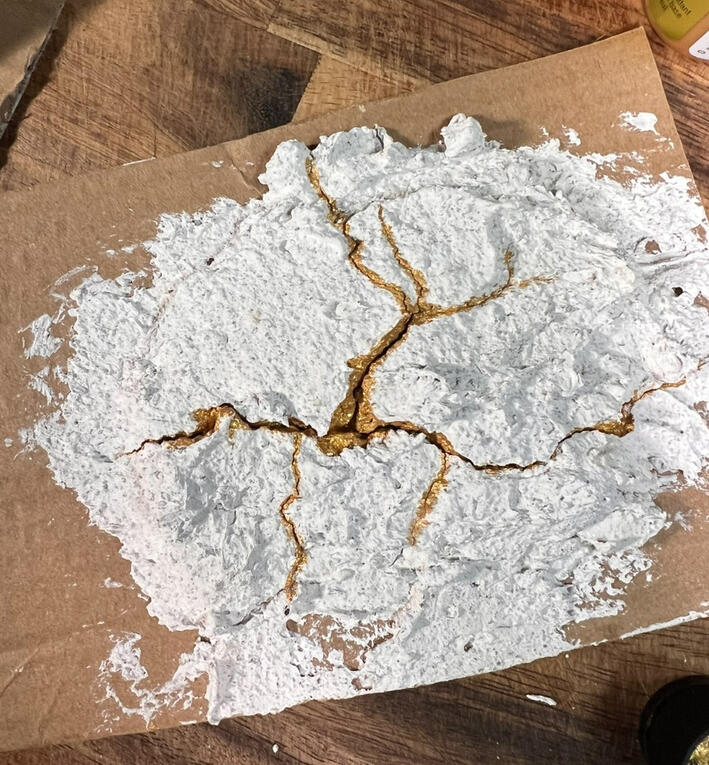
I made probably ten different samples on pieces of cardboard, smaller canvases and whatever else I could experiment on. I tried different mixtures of joint compound, dirt and sand. Different thicknesses. Different ways of creating cracks. I let things dry in the sun. I flexed surfaces to see how they would break. I tried working gold into the fissures.Some cracked too much. Some barely cracked at all. Some looked natural. Others looked like exactly what they were: joint compound smeared onto cardboard.Eventually, I found a combination I thought would work.Only then did I touch the canvas.
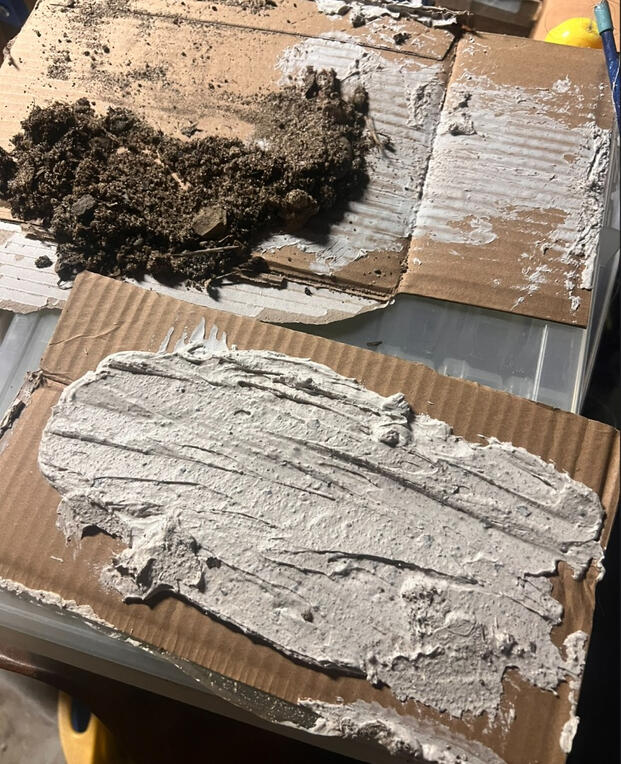
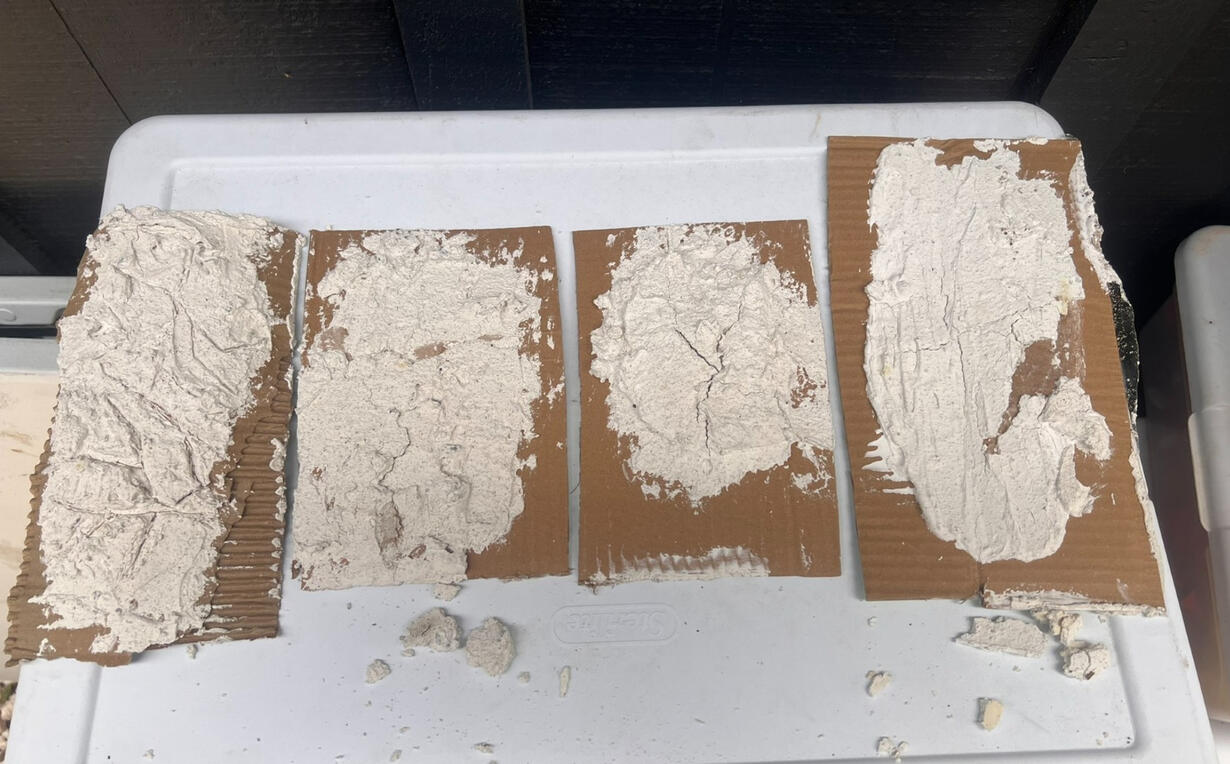
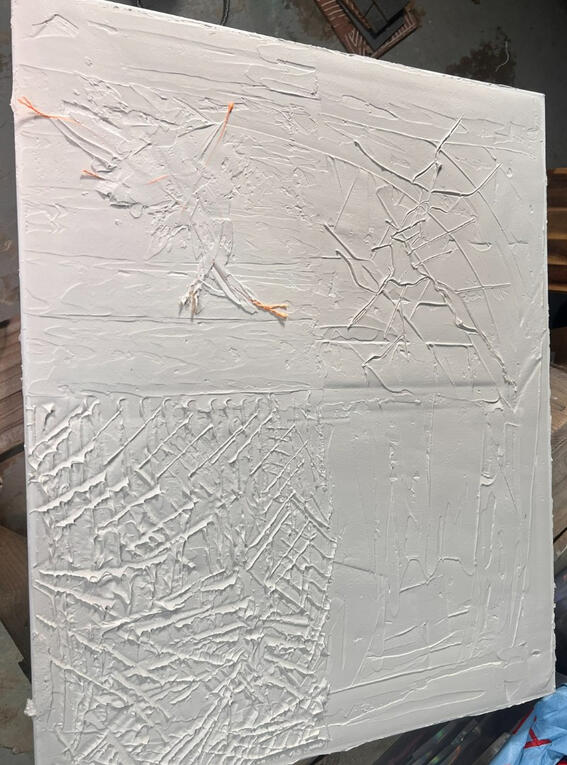
While I was making it, I kept coming back to something that had happened a few years earlier.I had gone through a difficult change at work. I had been leading people, and then I wasn't anymore.What stayed with me wasn't really the change itself. It was what I quietly started believing because of it.If they don't believe I'm a leader, maybe I'm not one.That's a dangerous little sentence.Because somewhere along the way, I had allowed somebody else's decision about me to become information about who I was.Someone handed me a name, and I started answering to it.Once I understood that, the piece wasn't really about being broken anymore.It was about all the things we accept as true about ourselves.
Things people have called us. Roles we've been given. Things we've succeeded at. Things we've failed at. Versions of ourselves that may have been true once, or maybe were never true at all.And underneath all of it, the question:What have you accepted as true about yourself?
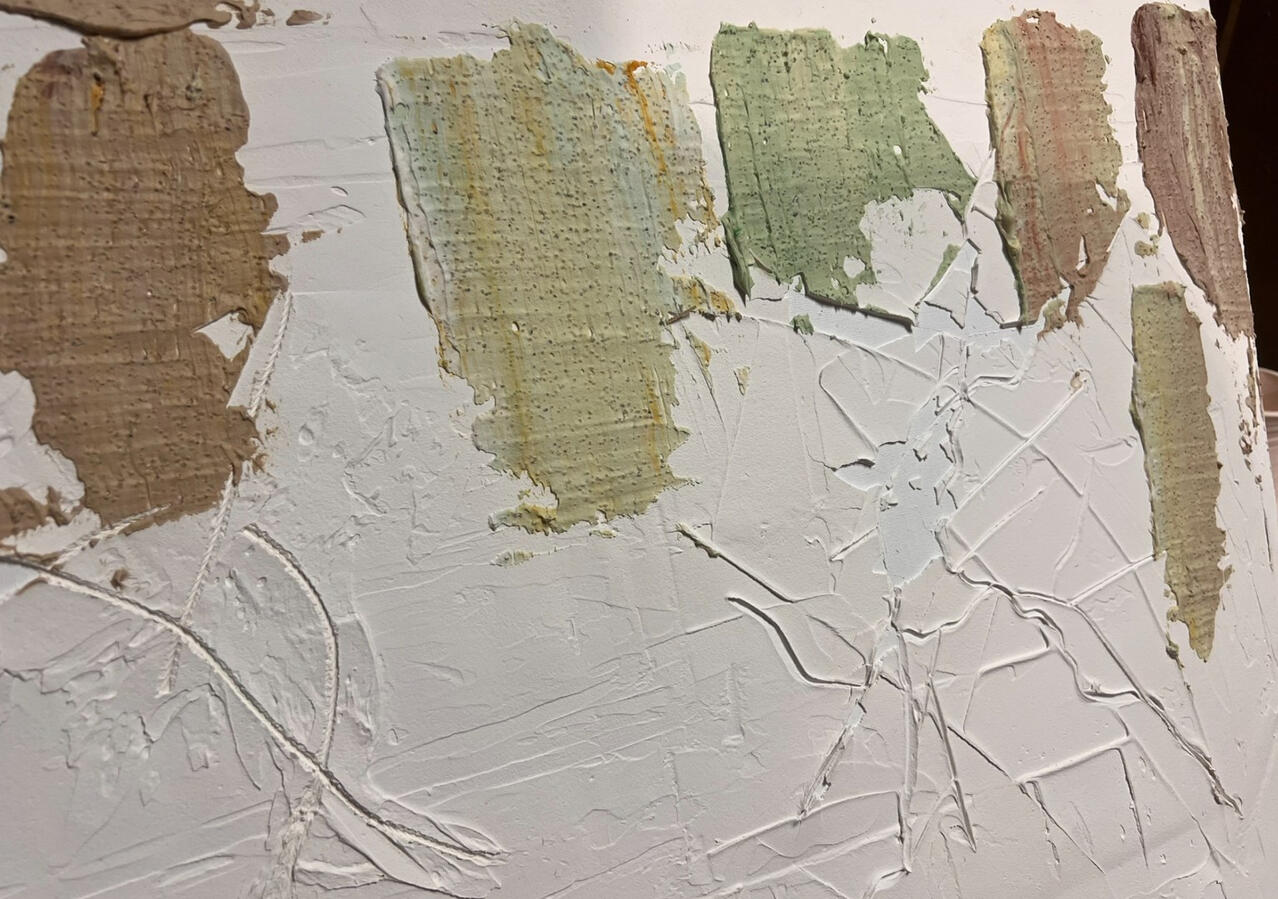
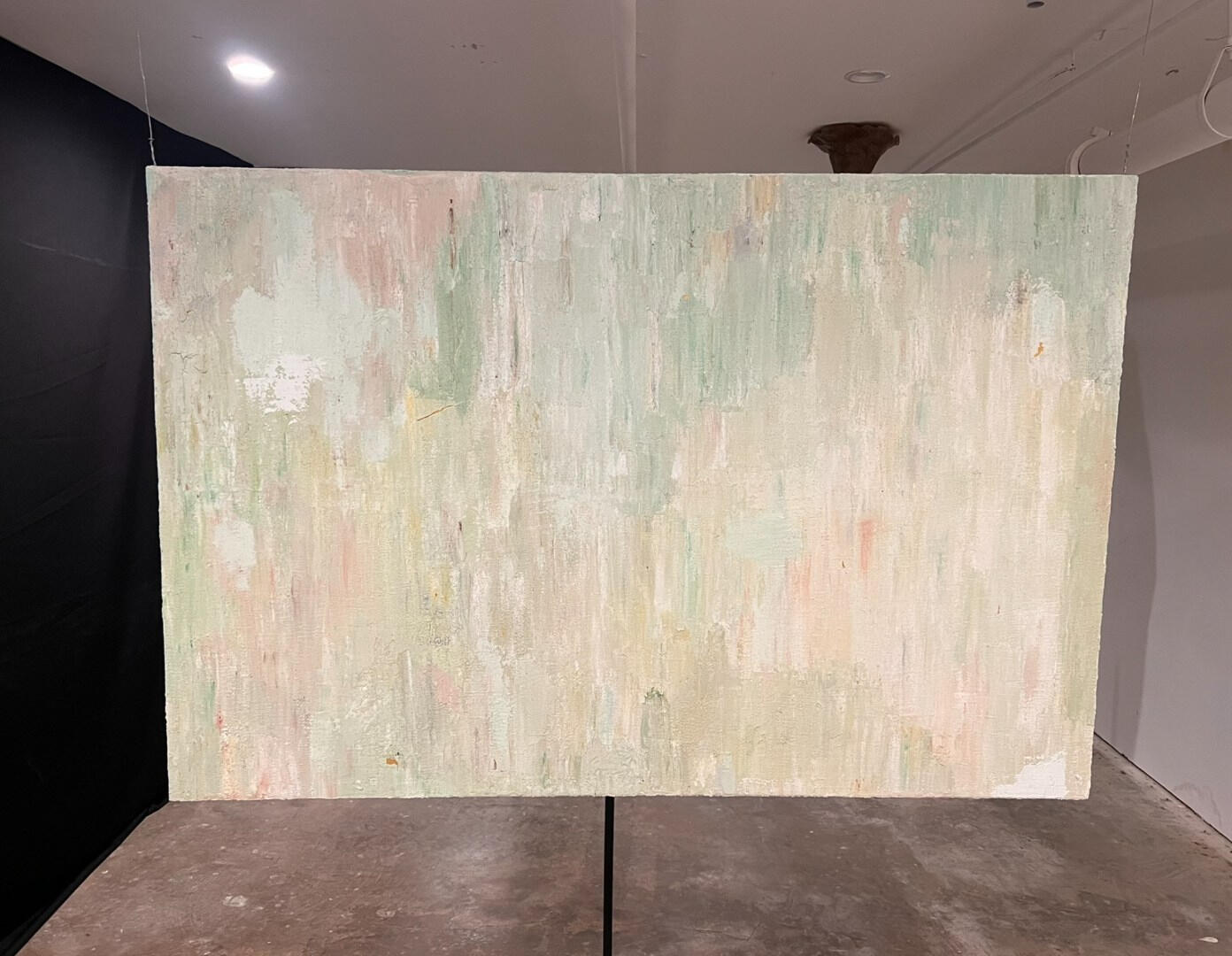
As the meaning became clearer, the surface changed with it.I stopped trying to make a wall that looked dramatically broken and started thinking about something older. A weathered fresco. An old monastery wall. Layers of plaster and paint that had been covered, exposed, repaired, weathered, and covered again.I kept asking myself:What has this wall been through?So I started layering color into it.Ochres. Browns. Terracotta. Pink. Gray-green. Ivory. Colors I honestly wasn't sure belonged anywhere in MARKED.I'd apply them, cover them, scrape them back, expose parts again, then bury other parts underneath something new.And I got nervous.Most of MARKED lived in a restrained world of black, ivory, wood, earth and gold. Suddenly I had this enormous canvas full of color.But eventually I realized that was exactly why the color needed to stay.Those layers weren't mistakes underneath the finished piece.They were the finished piece.
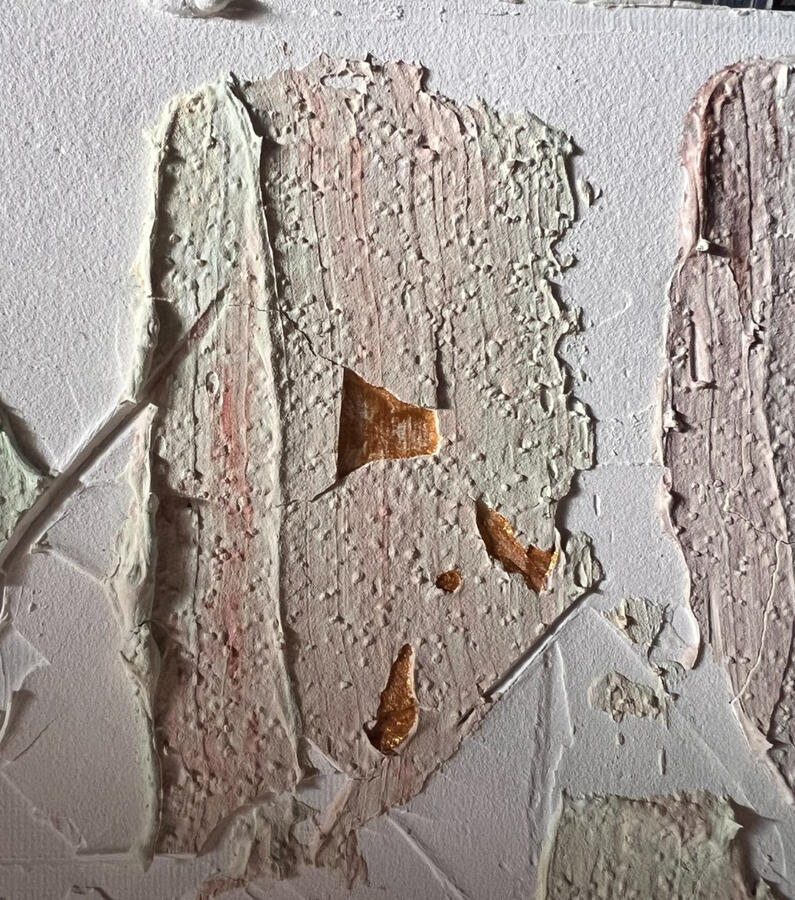
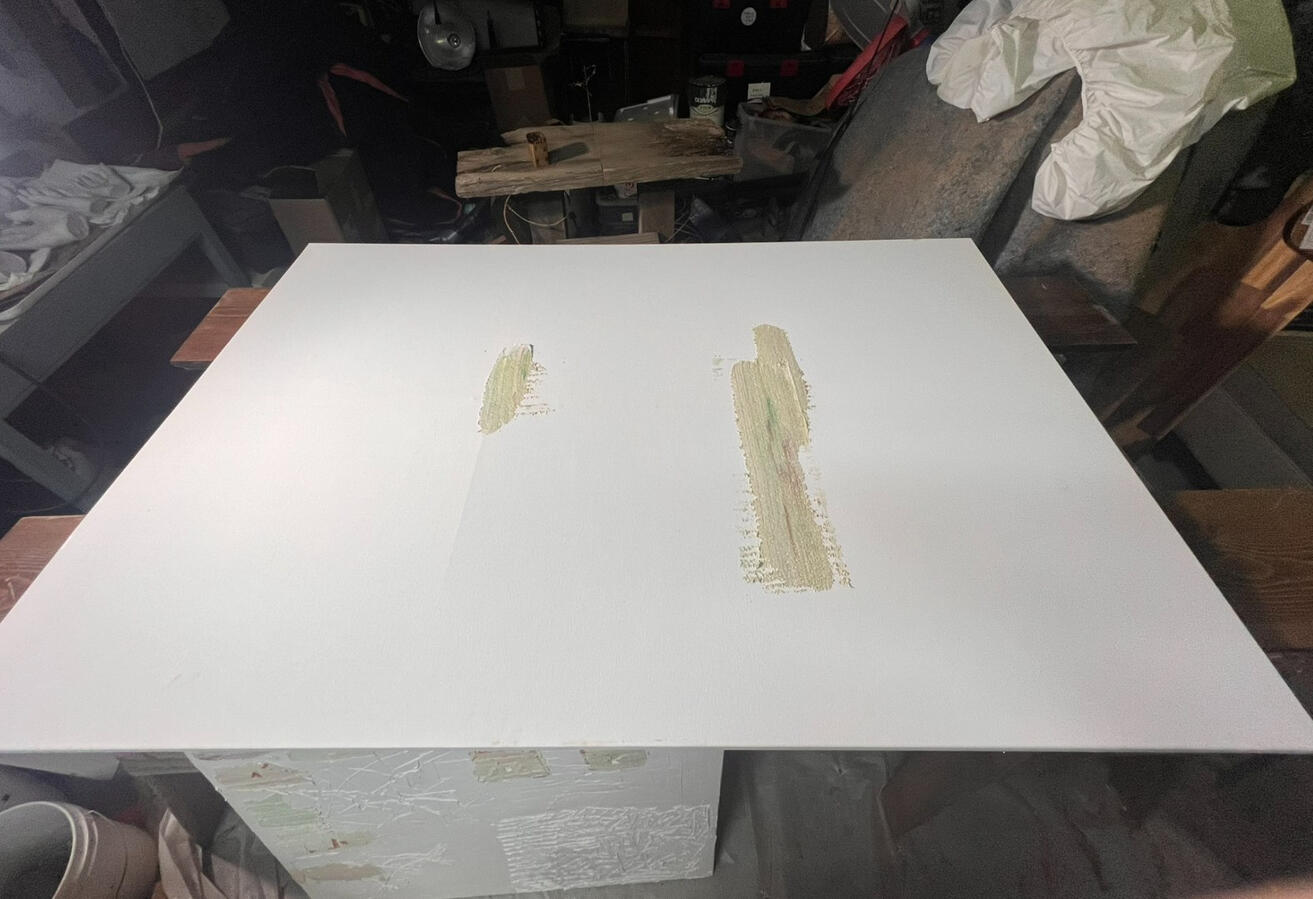
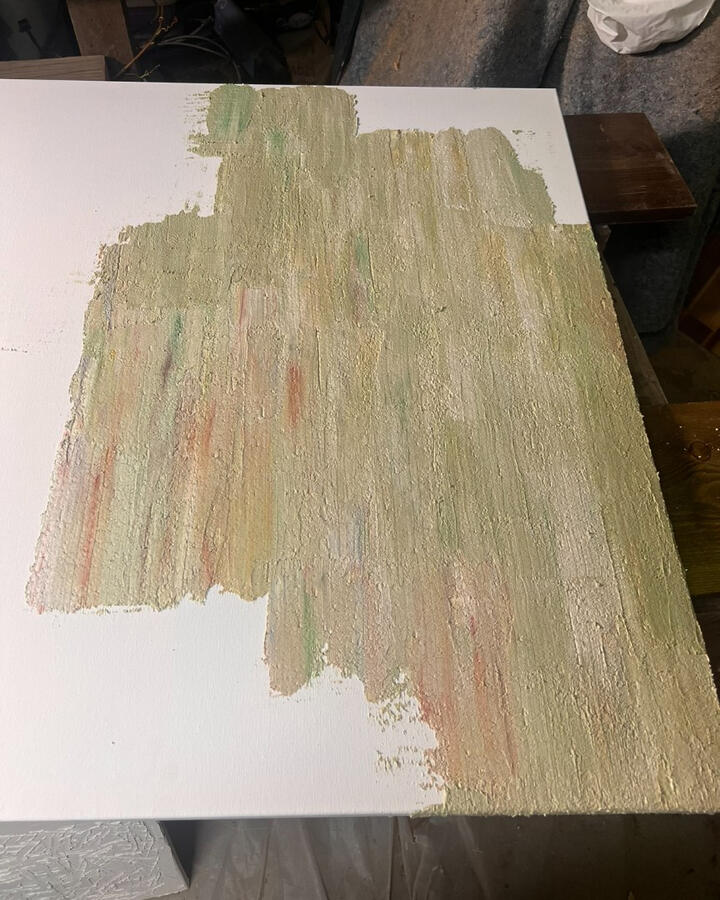
I also became much more restrained with the gold.In the original idea, the cracks announced it.By the end, you had to look for it.There were only small places where gold appeared through the surface, little openings in everything that had accumulated over it.That felt much more honest.The point wasn't that all the other layers were false and the gold was the only “real” thing underneath them. I'm a husband. I'm a father. I'm a friend. I've led people. I've failed at things. I've succeeded at things. Those are real parts of my life.The problem comes when one layer gets mistaken for the whole thing.NAME became less about breaking through some false exterior and more about remembering that no single thing gets to name all of you.
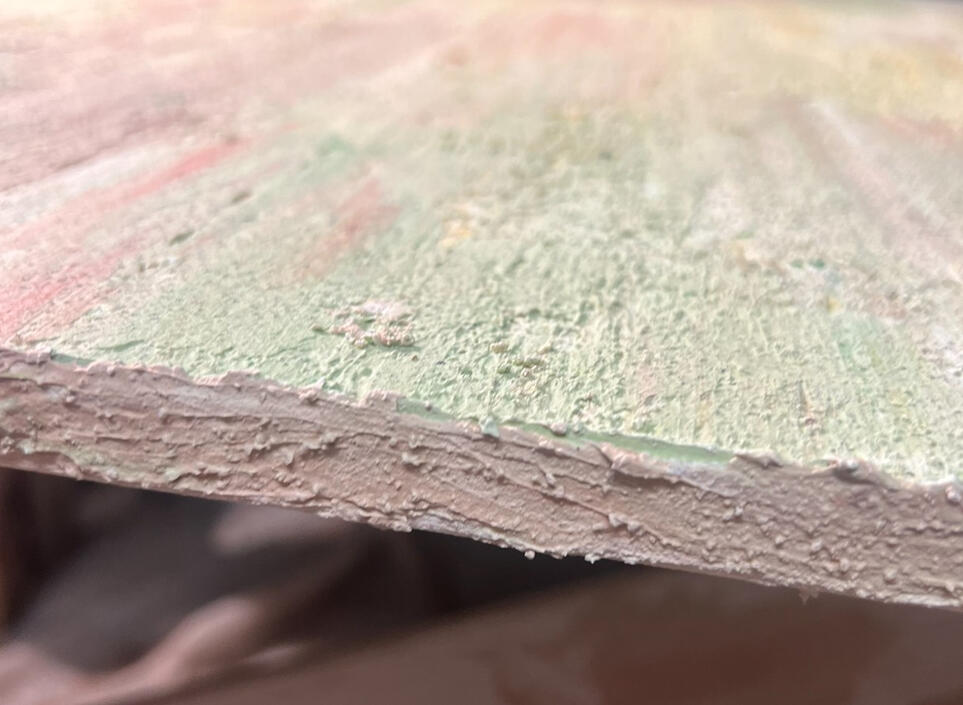
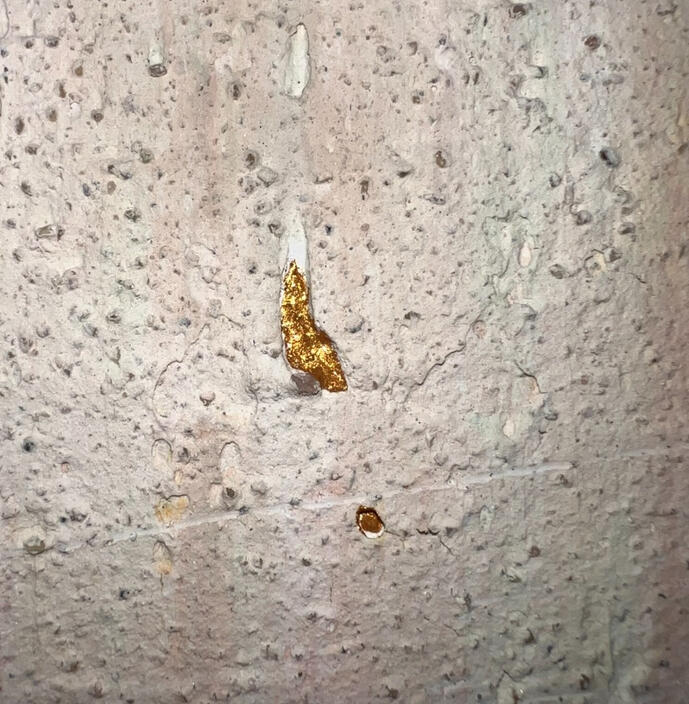
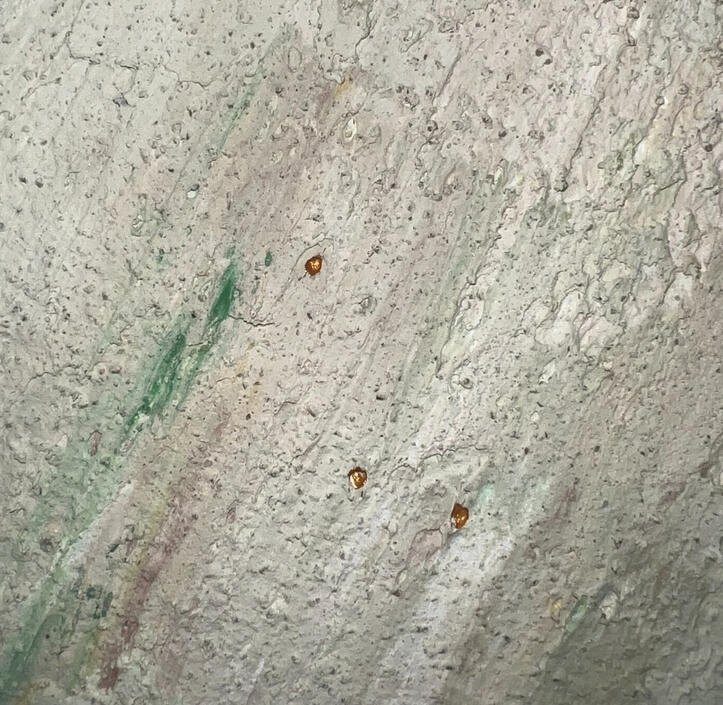
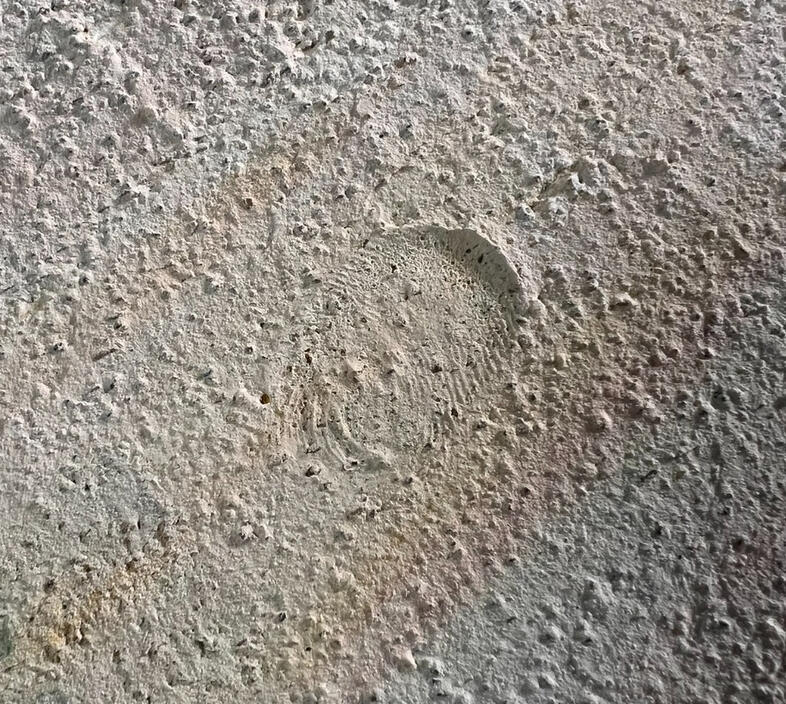
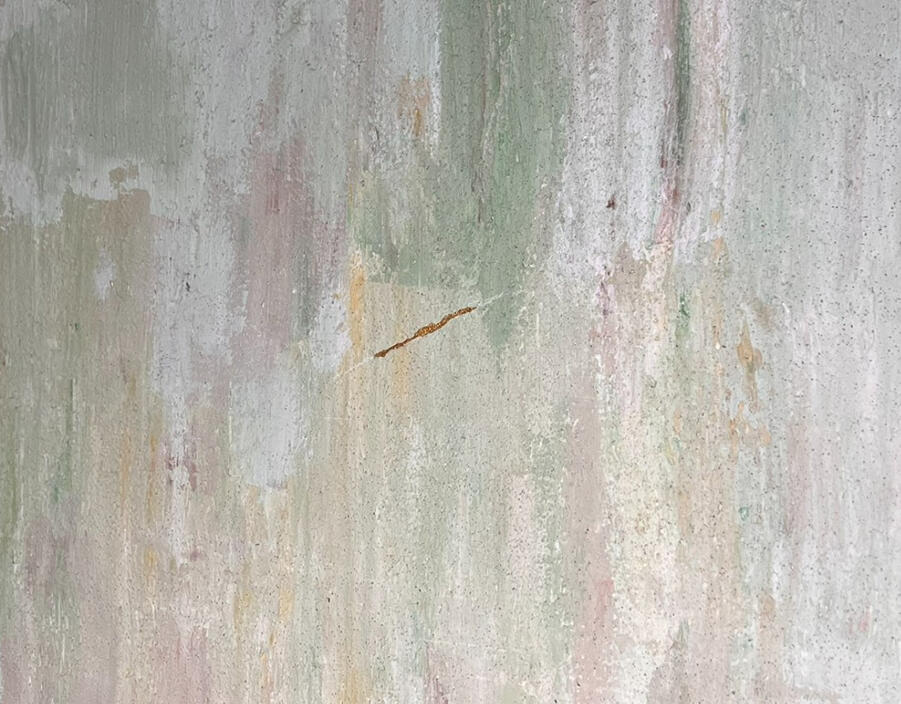
Then I had to figure out how to put a 40-by-60-inch canvas in the middle of a room without attaching it to a wall.The solution was two D-rings and a length of thick wire Amy already had.It was basically chicken-run wire.I spent an absurd amount of time trying to straighten it by hand, attached it to the top of the canvas, and suspended the entire thing from the ceiling joists.No bottom support.Just two wires holding this enormous fake ancient wall in the air.But the way I hung it was intentional.When you approached NAME from the direction of the exhibition, I wanted the first thing you saw to be its back.A plain white canvas and frame.You had to walk around it to discover everything on the other side.Same object. Completely different view.I loved that something could appear almost blank from one position and hold this entire history from another.Sometimes what we think we know about something depends on where we're standing.
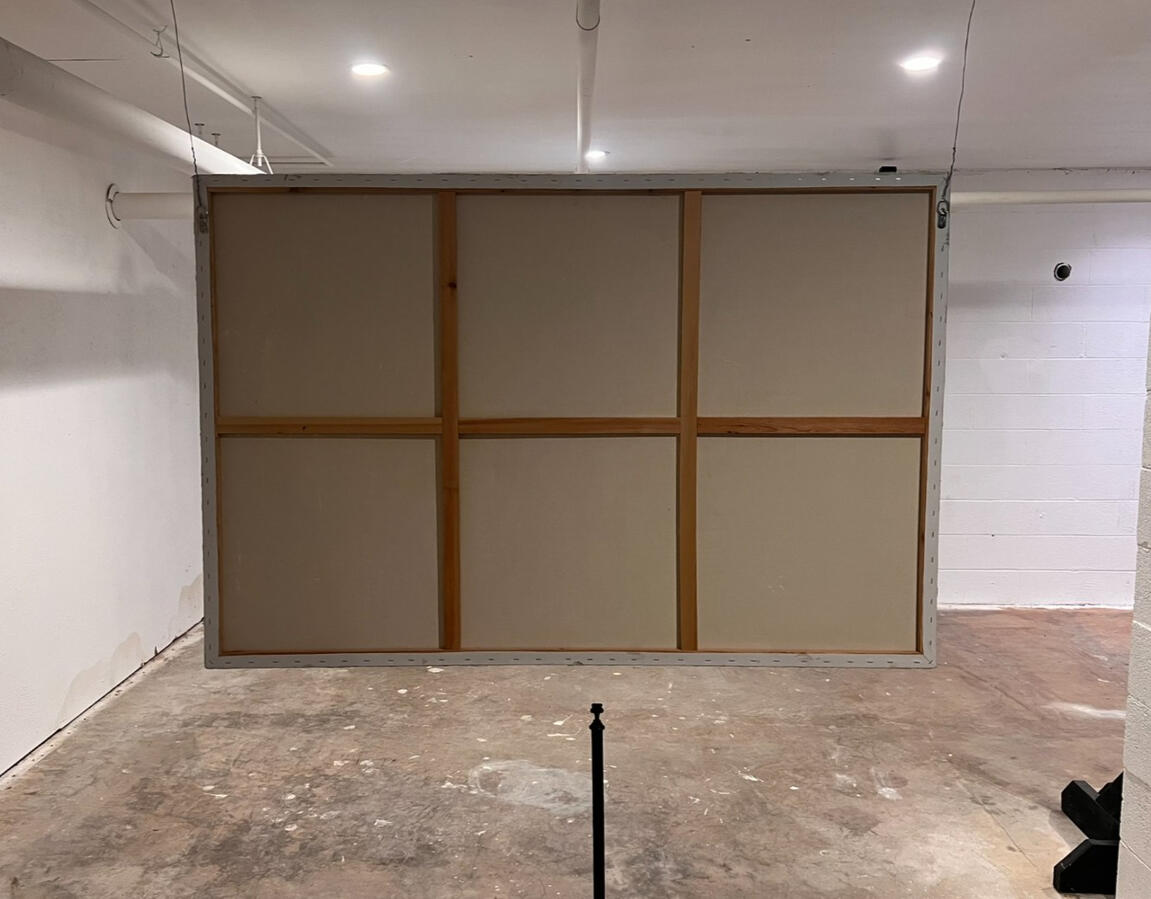
During the exhibition, a friend and his girlfriend came through MARKED.When they got to NAME, they started talking about the colors. One of them mentioned Monet. Flowers. It was interesting to hear what they saw in a piece I had spent so much time wondering whether I had pushed too far.Then my friend told me he was interested in owning it.That caught me off guard.Of all the things I had worried about while making NAME, the color had been one of the biggest. It was so different from almost everything else in the room.And now someone had walked around that plain white canvas, discovered the other side, stood in front of all those layers and colors, and wanted to take it home.
CHAPTER 5
TENDER
What does your heart need?
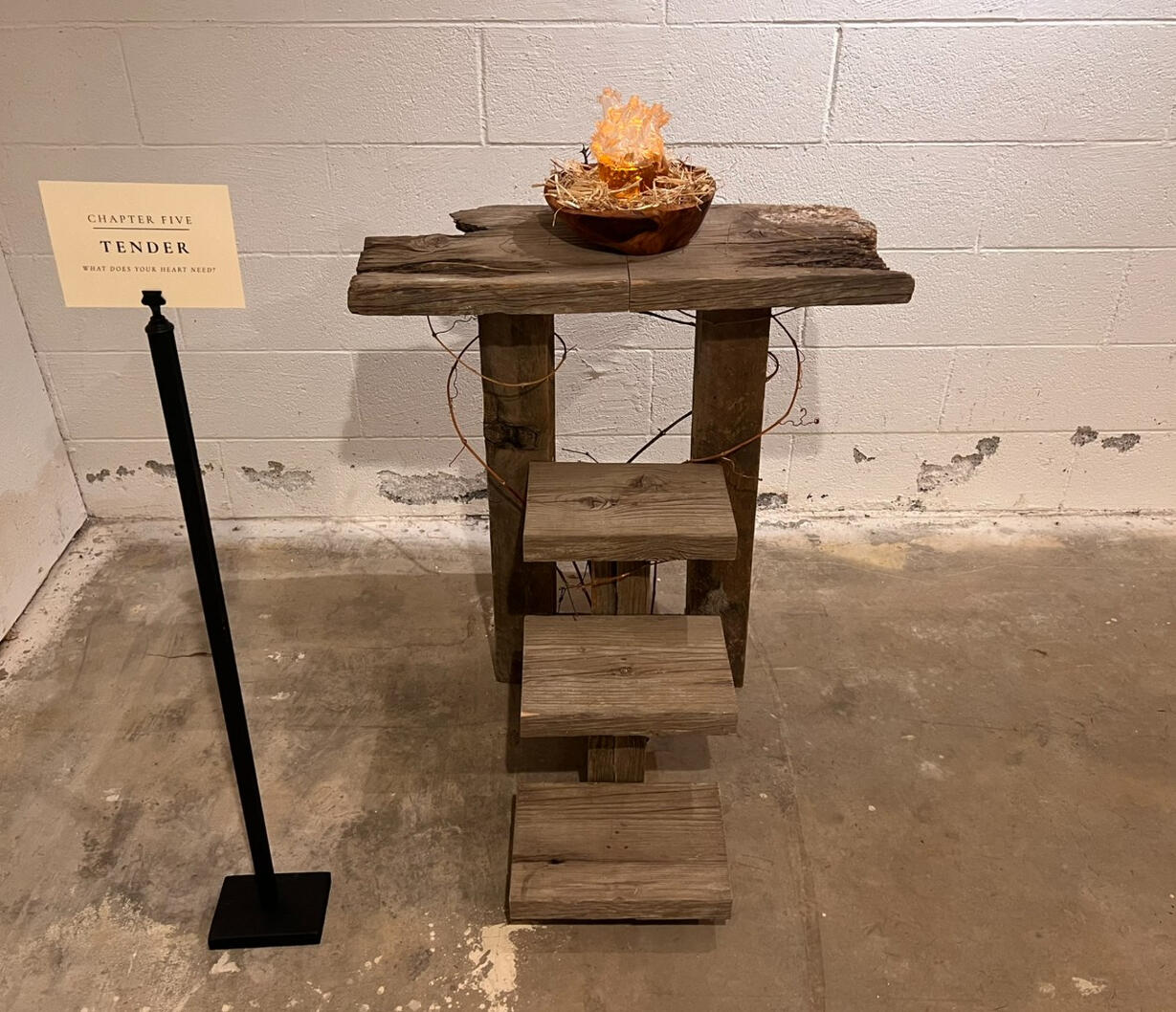
TENDER existed in my head long before MARKED did.The earliest version was enormous. I imagined a heart nearly four feet tall, covered in thick white stone. Underneath all of it would be gold, slowly being revealed as the stone broke away.For years, that was basically the image.Then I actually started making MARKED, and I realized I didn't want to build it.Not because I couldn't figure out how. By that point, I probably could have.It just didn't feel true anymore.I had spent years thinking about what happens when a heart becomes hardened. But while I was making MARKED, the question began changing.I became less interested in showing a heart that was already trapped in stone and more interested in how a heart gets there in the first place.And maybe more importantly:How do you keep a heart tender?
By then, I was already learning that making MARKED and living my life weren't separate things.The nights away from the garage were changing the work too.TENDER may be the clearest example.I had started with this enormous image of a heart already covered in stone. But the more I thought about my own heart, the less interested I became in what happens after it has hardened.I started thinking about everything that happens before that.The small things we carry. The hurt we don't deal with. The resentment we let stay. The ways we protect ourselves. The things that don't seem dangerous enough to matter until they've been growing for a while.And I realized I didn't want TENDER to be a piece about breaking a hardened heart open.I wanted it to be about keeping one from hardening in the first place.That changed everything.The giant stone heart disappeared.What replaced it was something much closer to the size of an actual human heart.Small.Exposed.Vulnerable.Something that could still be affected by what grew around it.Something that needed to be tended.
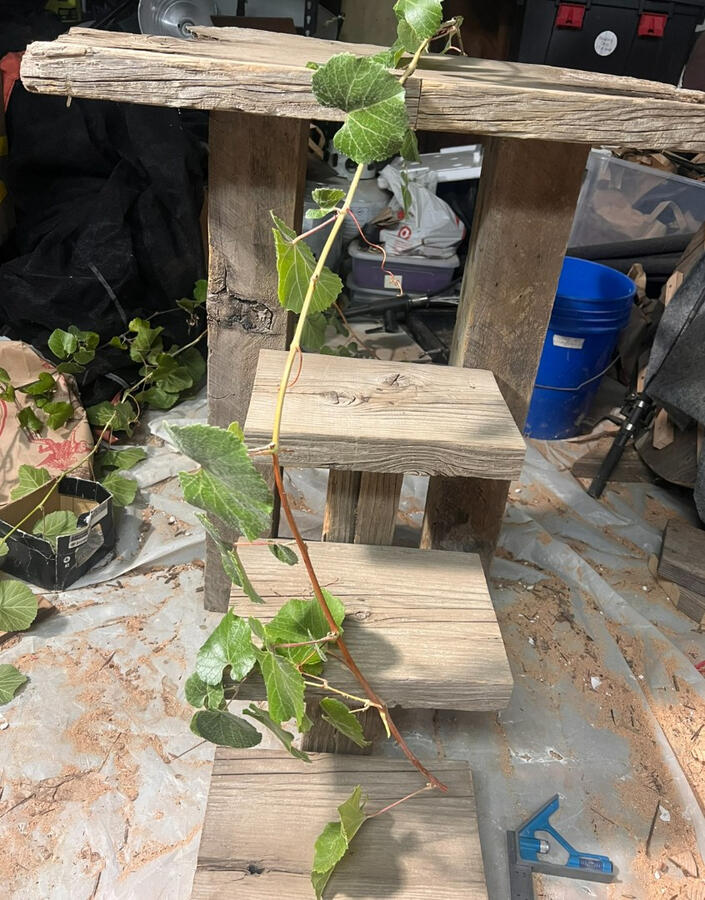
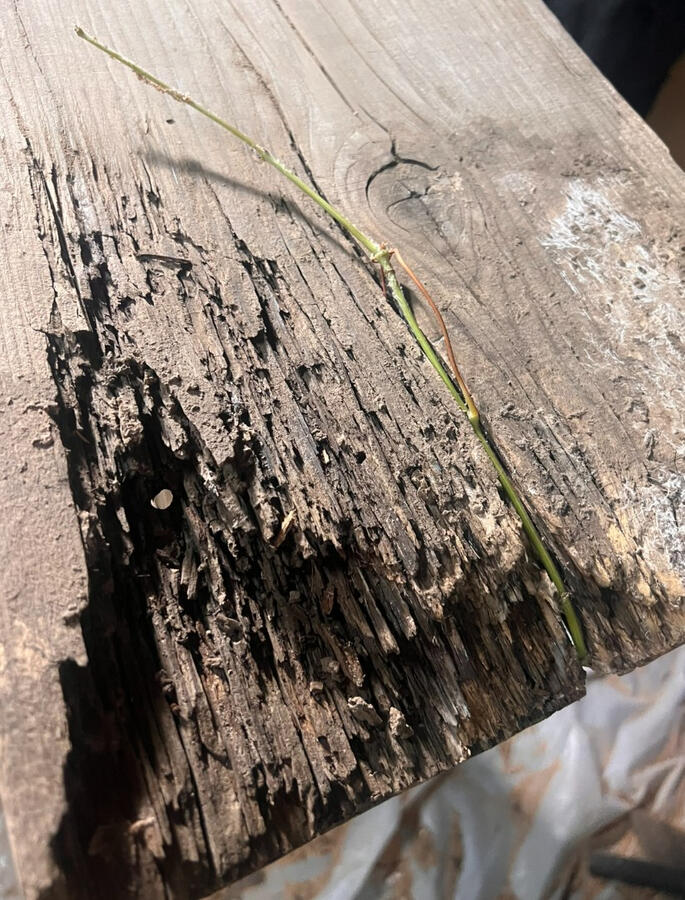
That's where the vines came from.I started thinking about hardening differently.Maybe a heart doesn't usually become hard all at once.Maybe it happens slowly.Something hurts you. Something disappoints you. Something gets left unresolved. Cynicism grows a little. Resentment gets a foothold. You protect yourself somewhere you didn't used to.Then another thing grows over that.And another.The image that came to me was vines.I had lived in a house where vines grew against the building. You could cut them back, but they would return. If you ignored them long enough, they kept climbing.That was what I wanted TENDER to do.The vines would begin outside the altar and slowly work their way in. They would climb the legs, disappear into the structure, emerge somewhere else, and get closer and closer to the heart.And as they approached it, they would begin turning to stone.
That was the piece I saw in my head.The vines weren't supposed to be evil. They were the slow accumulation of things left untended.The hardening wasn't an event.It was a process.
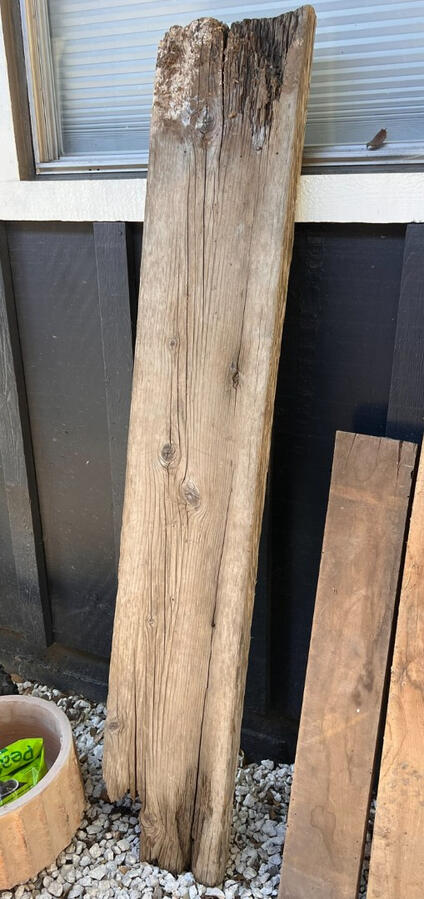
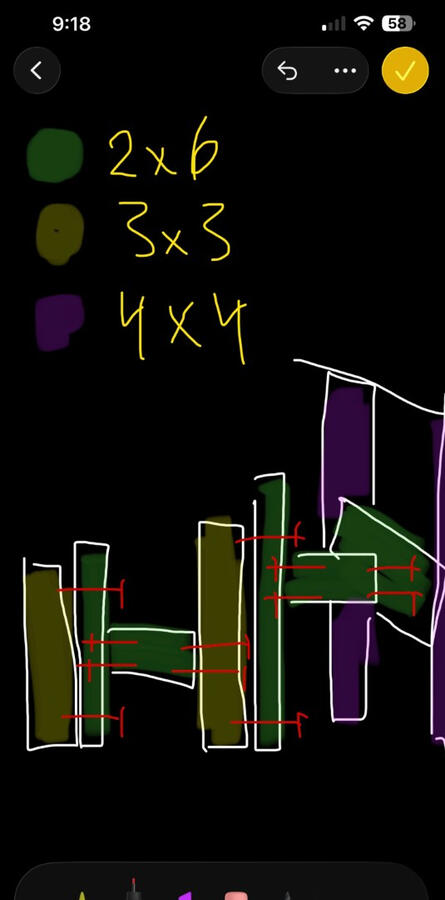
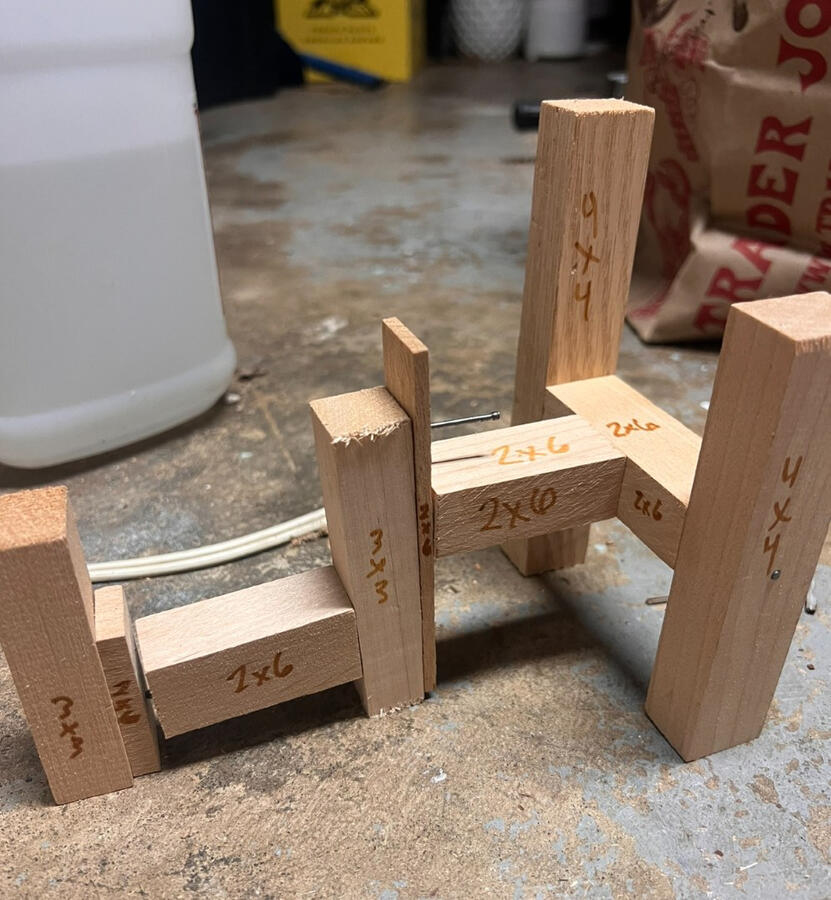
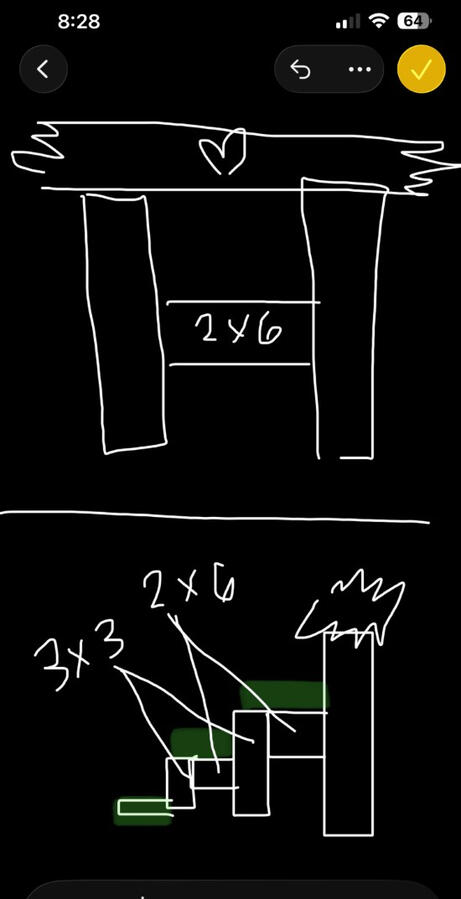
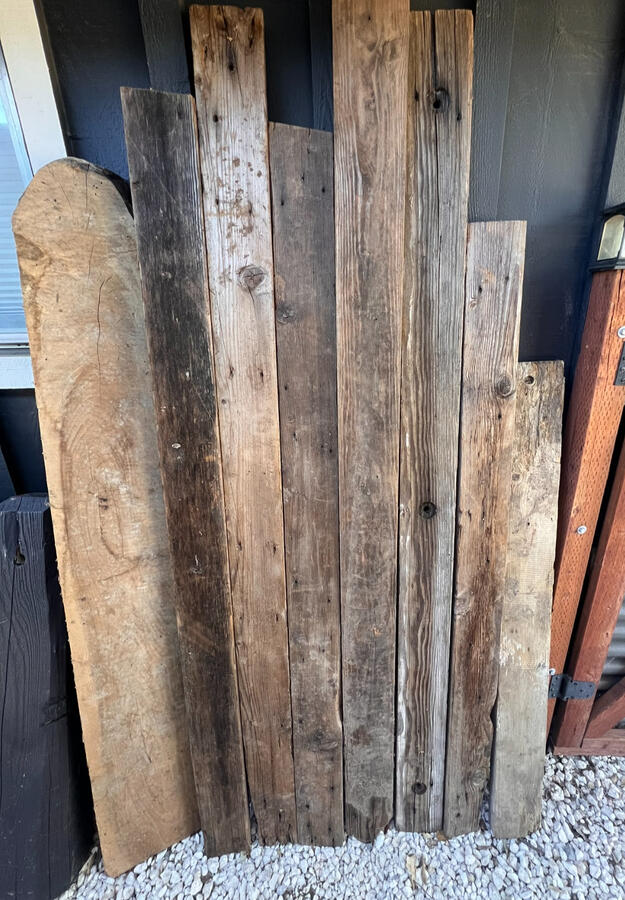
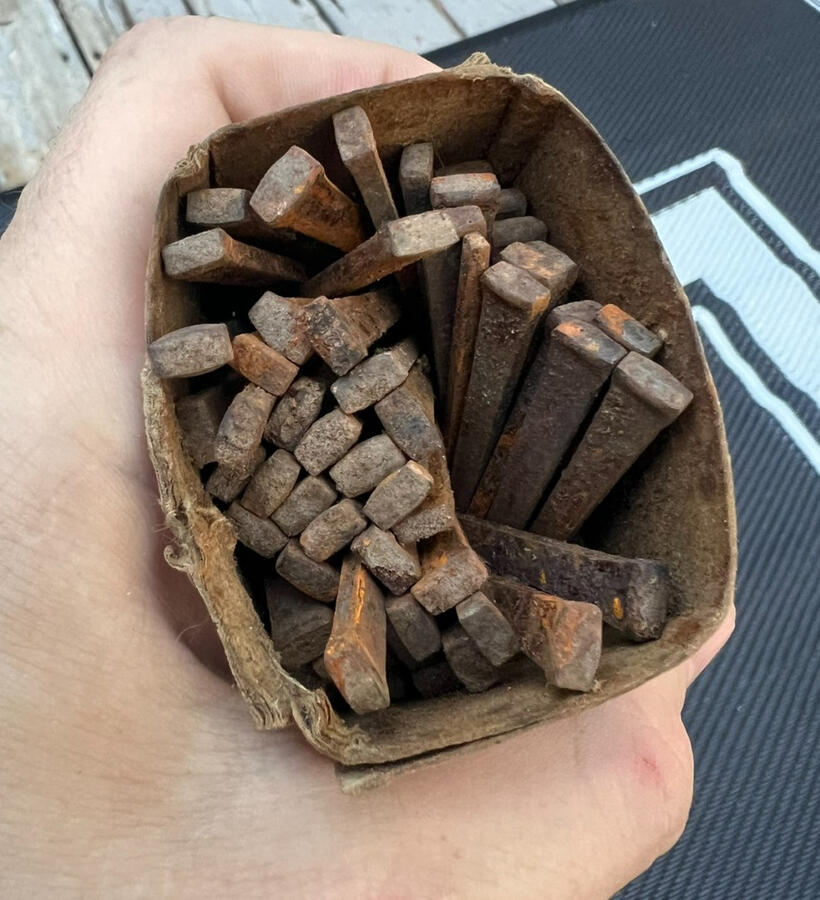
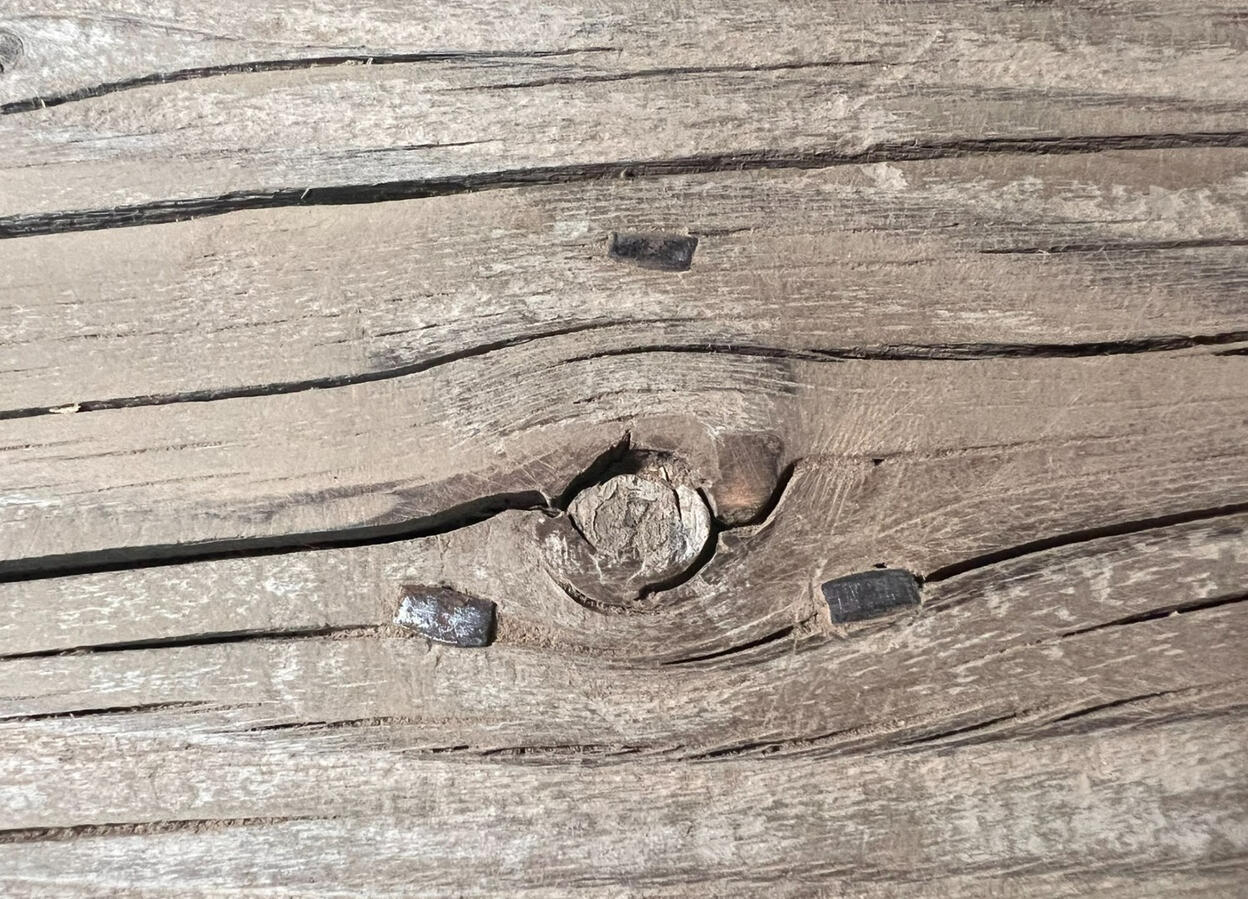
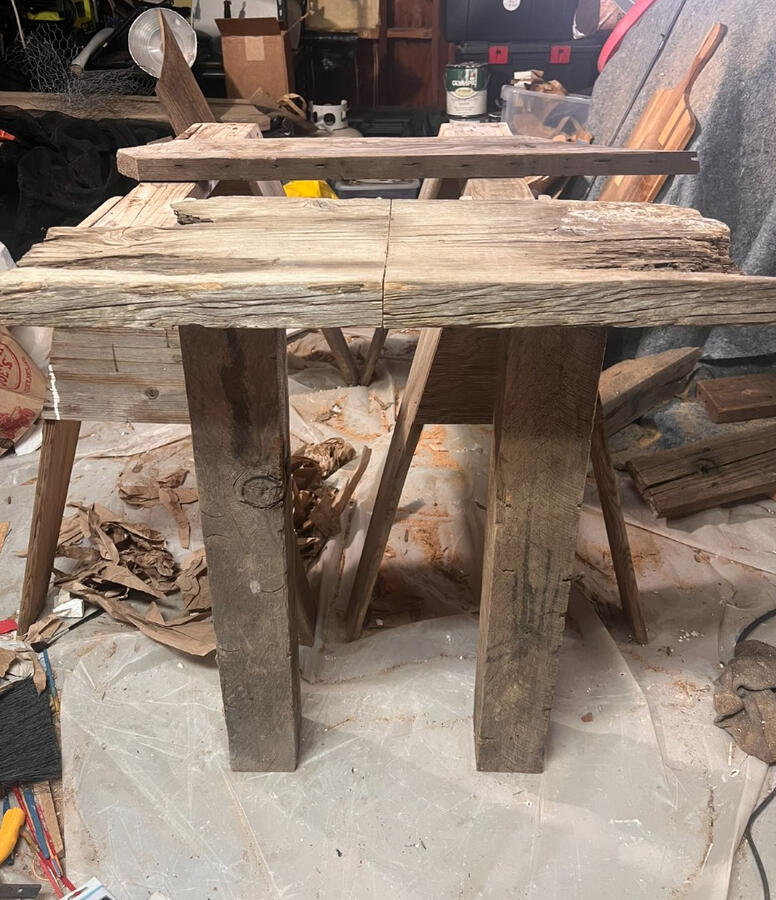
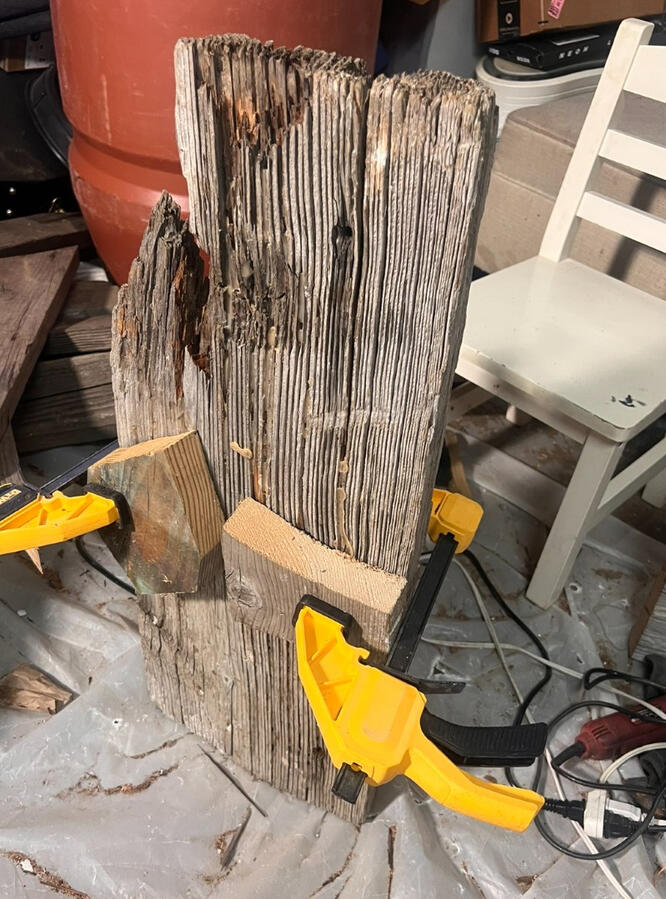
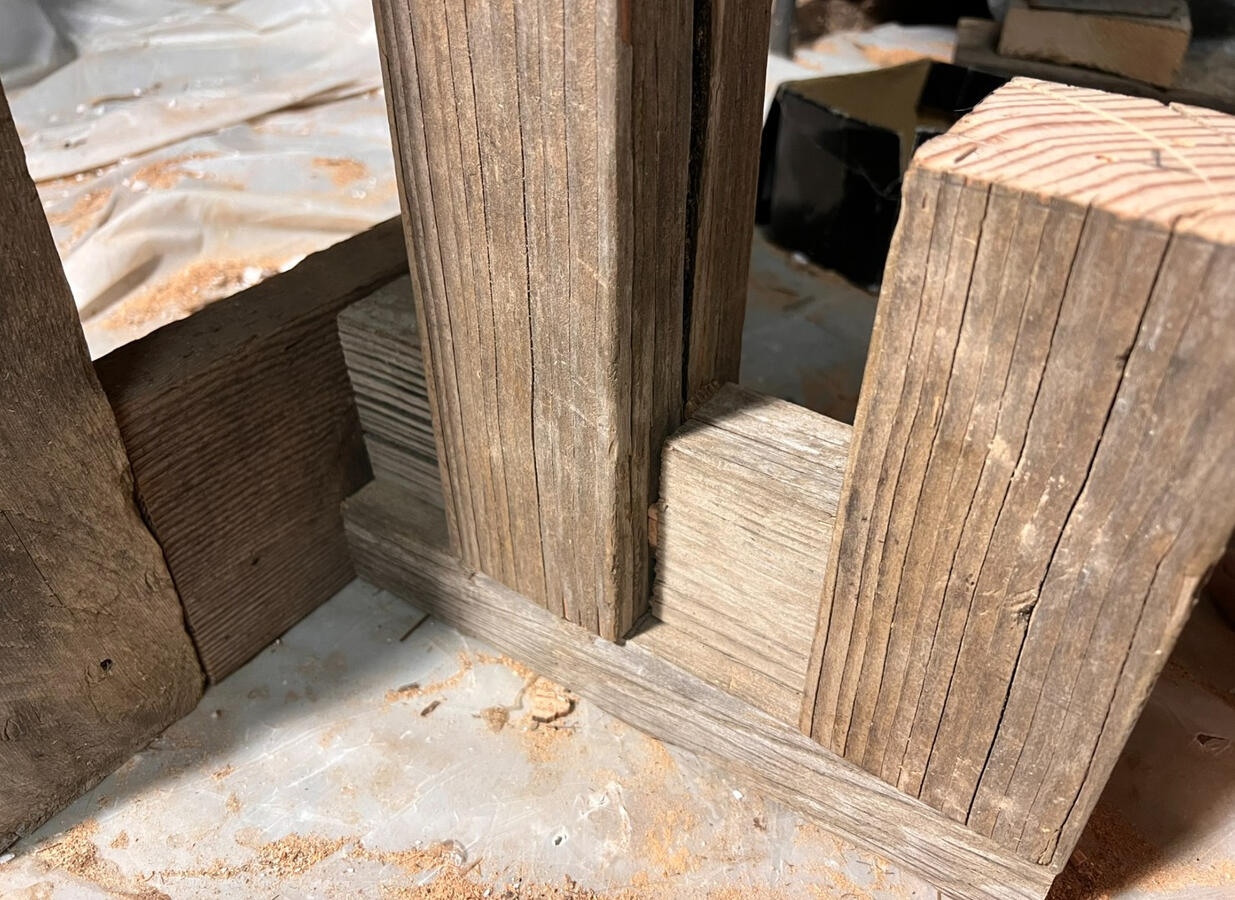
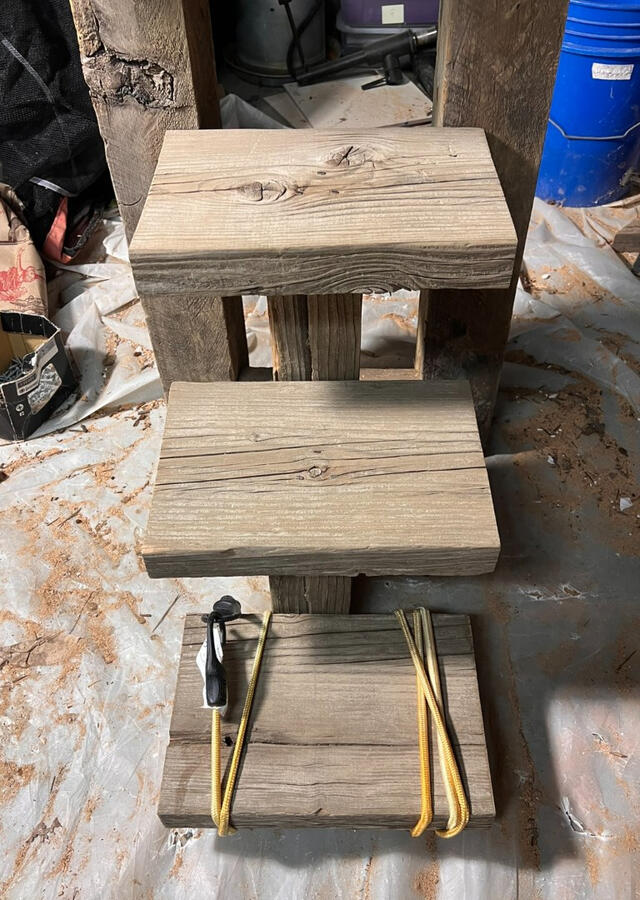
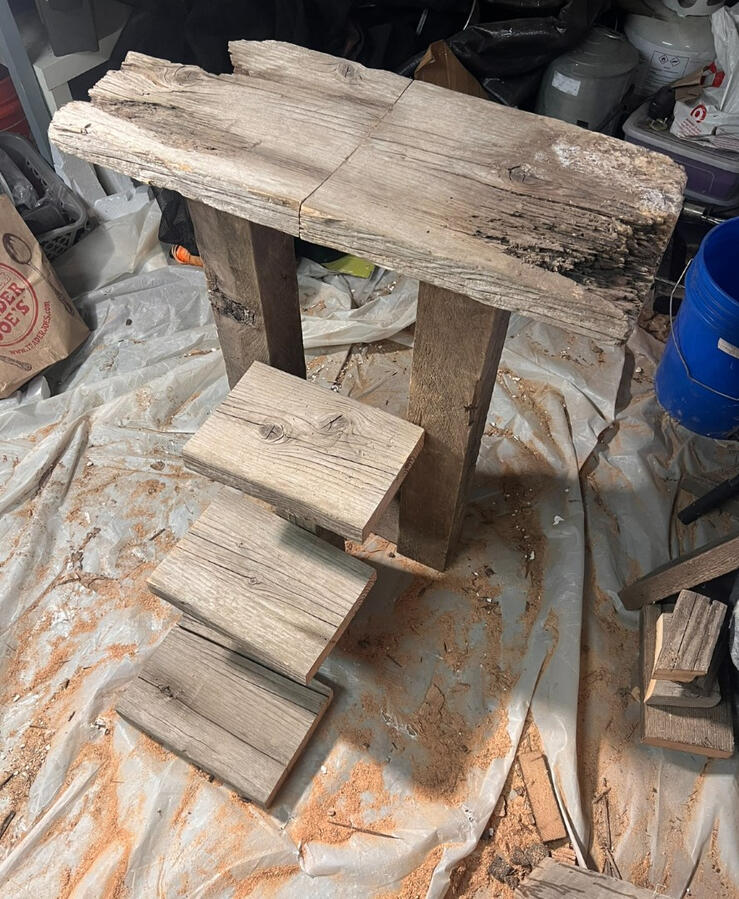
The structure holding all of this became an altar.The main piece of wood came from my parents' property. For years, my dad had used that old board to cross an irrigation ditch while working around the property, turning water on and moving it where it needed to go.Eventually it wasn't needed for that anymore.I used it to support the heart.I loved that history. Before it ever became part of an artwork, that piece of wood had already spent years doing exactly that:
supporting someone as they crossed.I kept it weathered and imperfect.
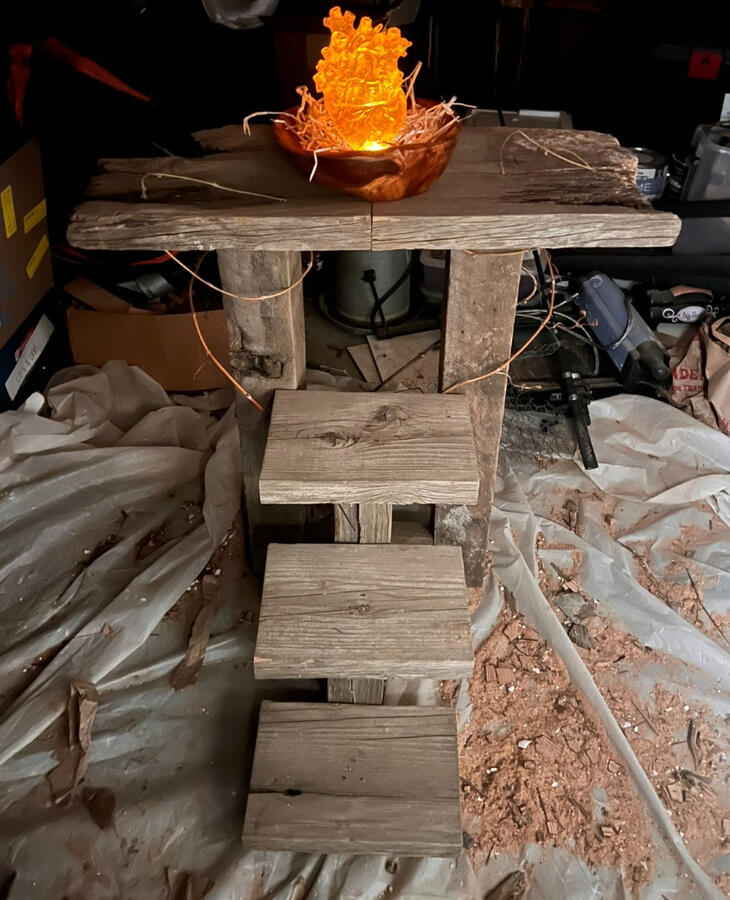
Above it, the heart rested in a small wooden cradle surrounded by pale material almost like a nest.Below it, the vines kept climbing.
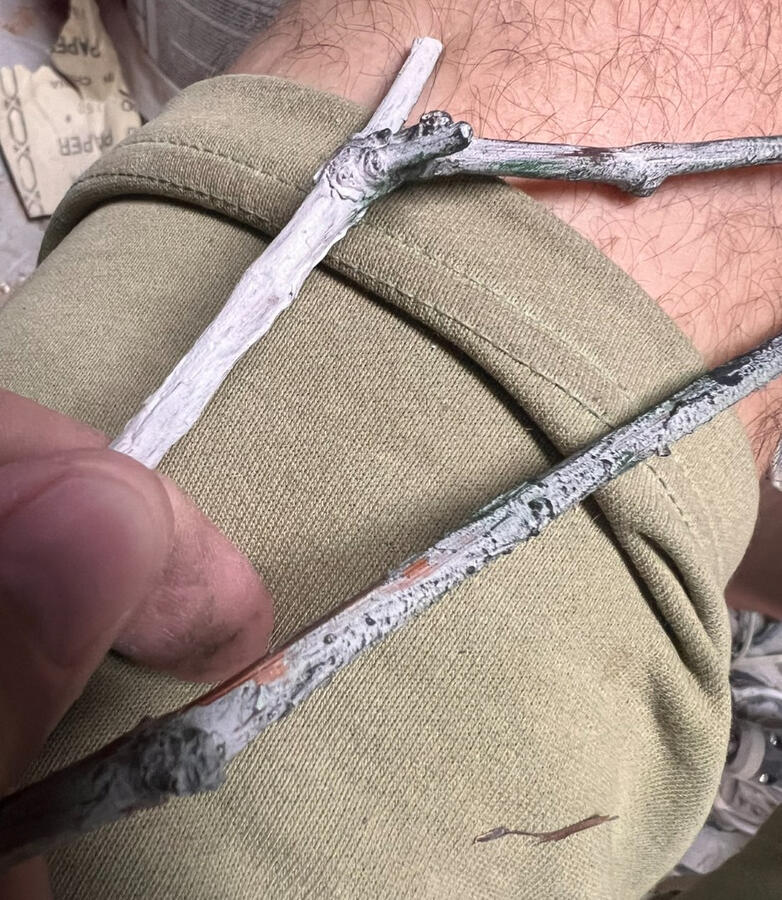
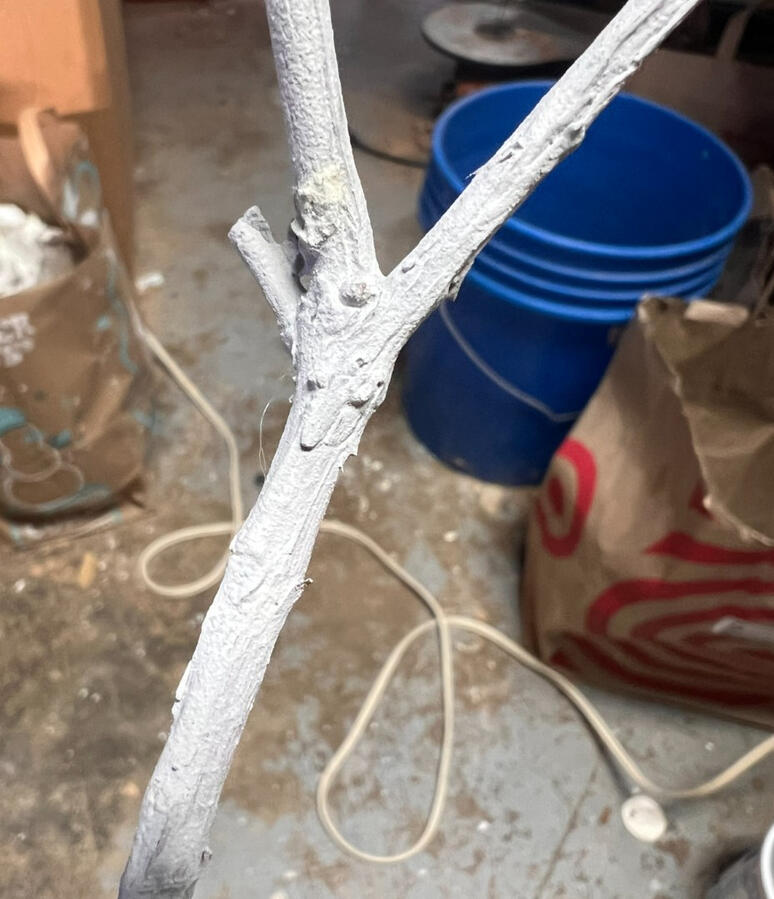
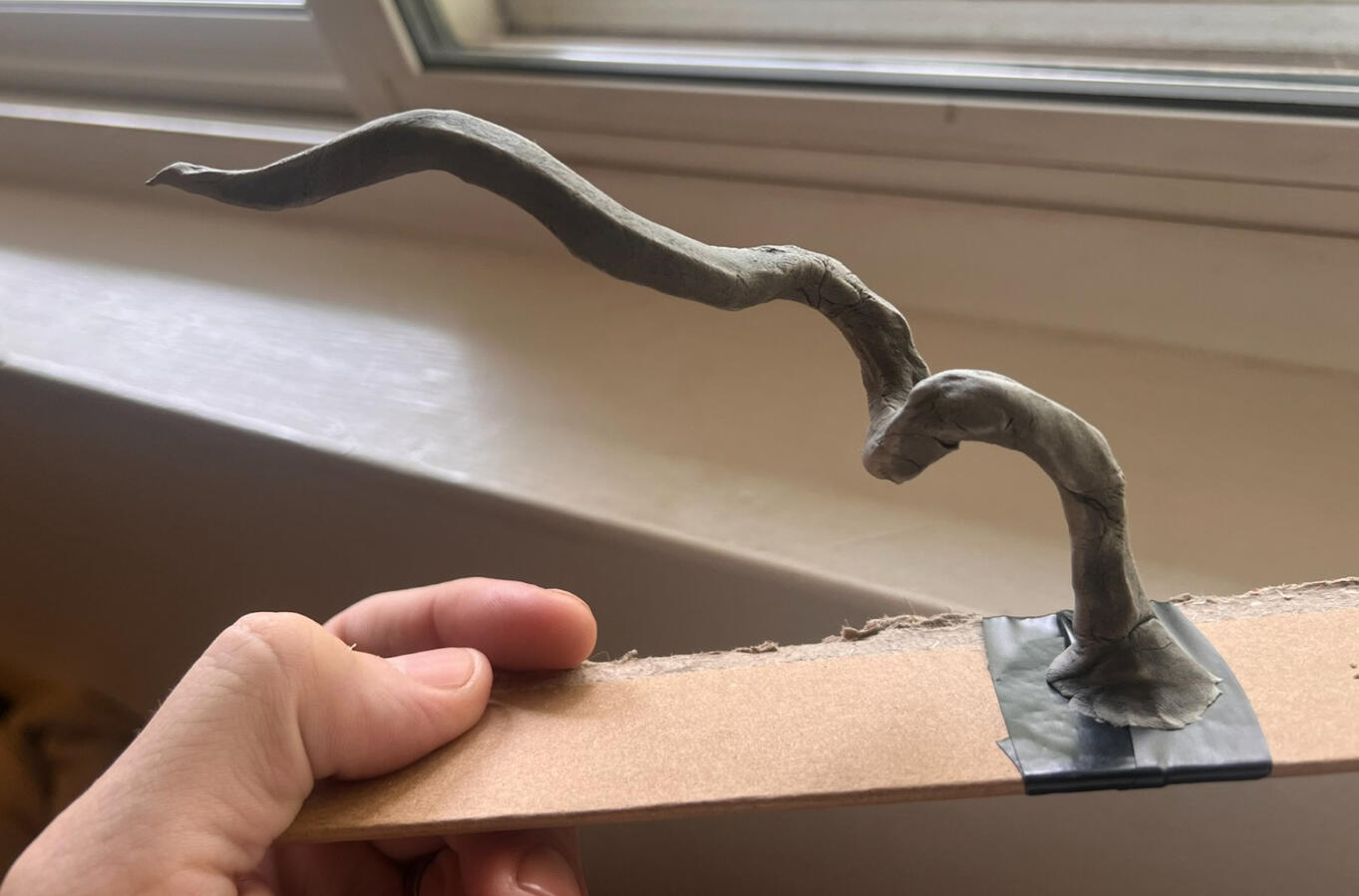
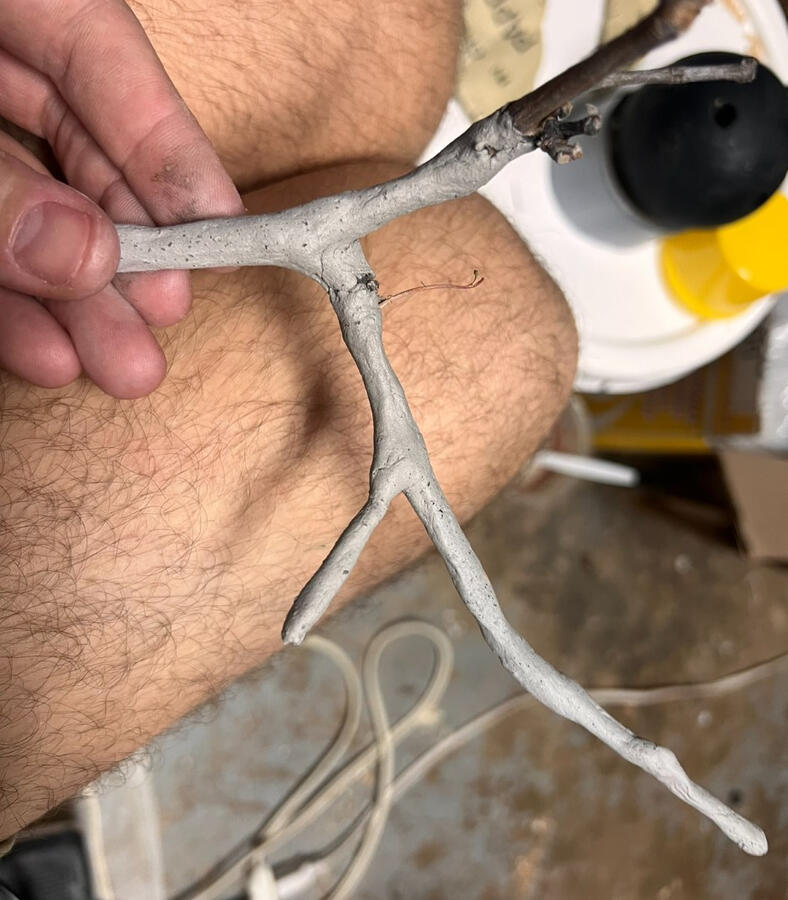
There was just one problem.I couldn't make the stone vines work.I tried joint compound. Sand. Paint. Clay. Different textures and finishes. I kept experimenting with ways to make the vines look as if they were calcifying as they moved toward the heart.In my head, the transformation was clear. You would be able to follow the vines and watch them gradually become stone.Physically, I could never get it to look convincing.I remember thinking:I didn't think making clay vines would be so hard.I considered other versions too. Maybe the vines themselves didn't have to become stone. Maybe the altar could begin calcifying wherever they touched it.But every time I tried to force the idea, it started looking like an effect.
Eventually I had to stop.So if you saw TENDER and didn't realize those vines were supposed to be slowly hardening as they approached the heart, that's because I never completely figured out how to show you.TENDER was probably 95 percent finished when people walked through MARKED.Maybe 97.There was still a part of it that existed more clearly in my head than it did in the room.
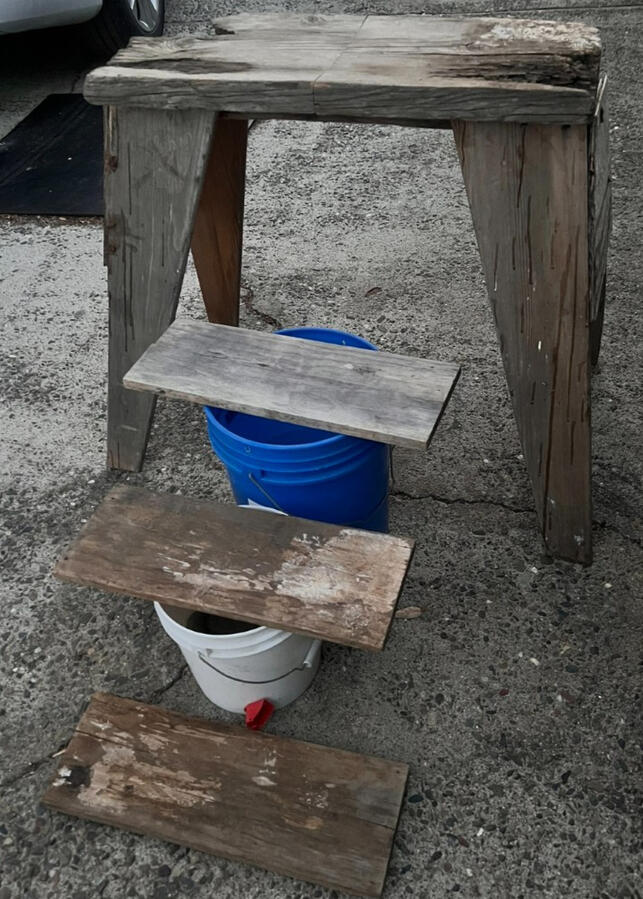
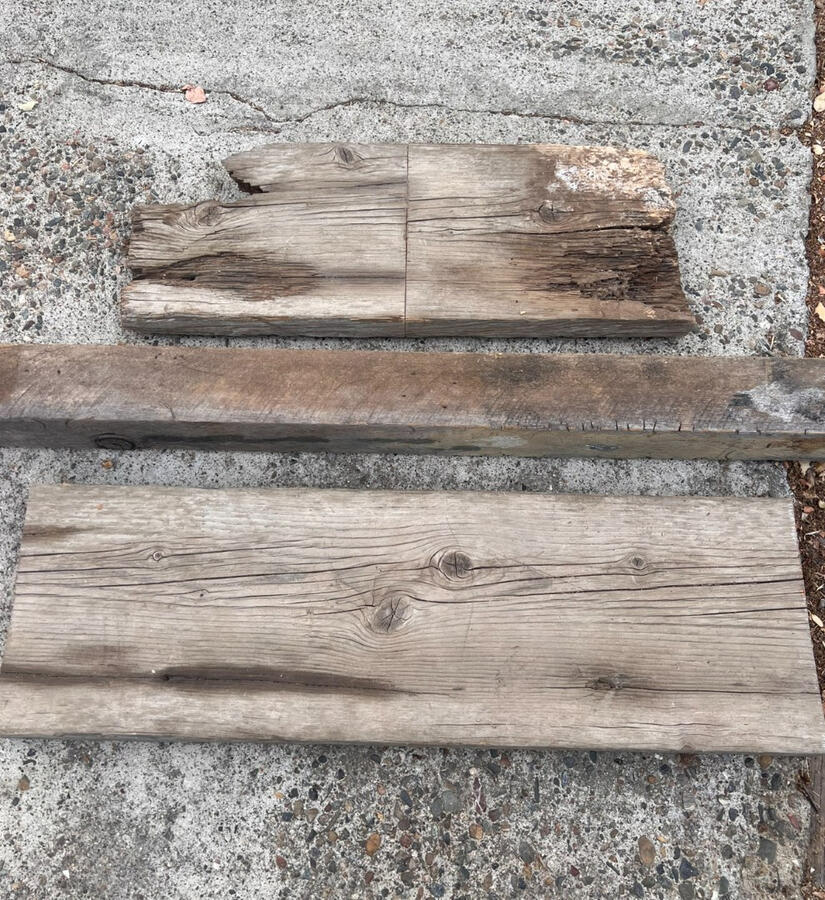
But I also started to wonder whether that unresolved part had taught me something.The heart in the finished piece wasn't stone.The vines had gotten close, but they hadn't reached it.They never actually touched the heart.And maybe keeping a heart tender looks less like dramatically breaking free from something once it has completely hardened and more like paying attention to what is growing toward it.Cutting things back.Noticing what you've allowed to take root.Doing it again when it grows back.Tenderness requires tending.
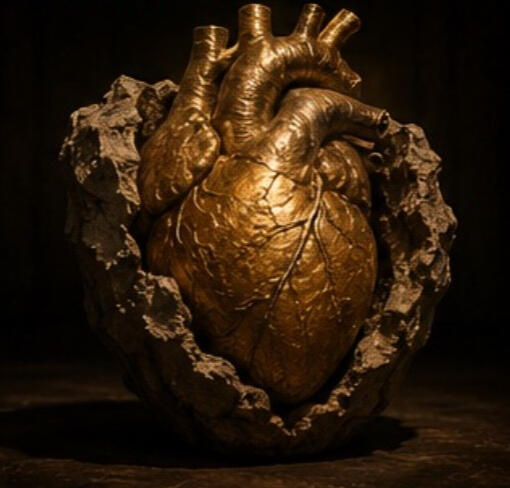
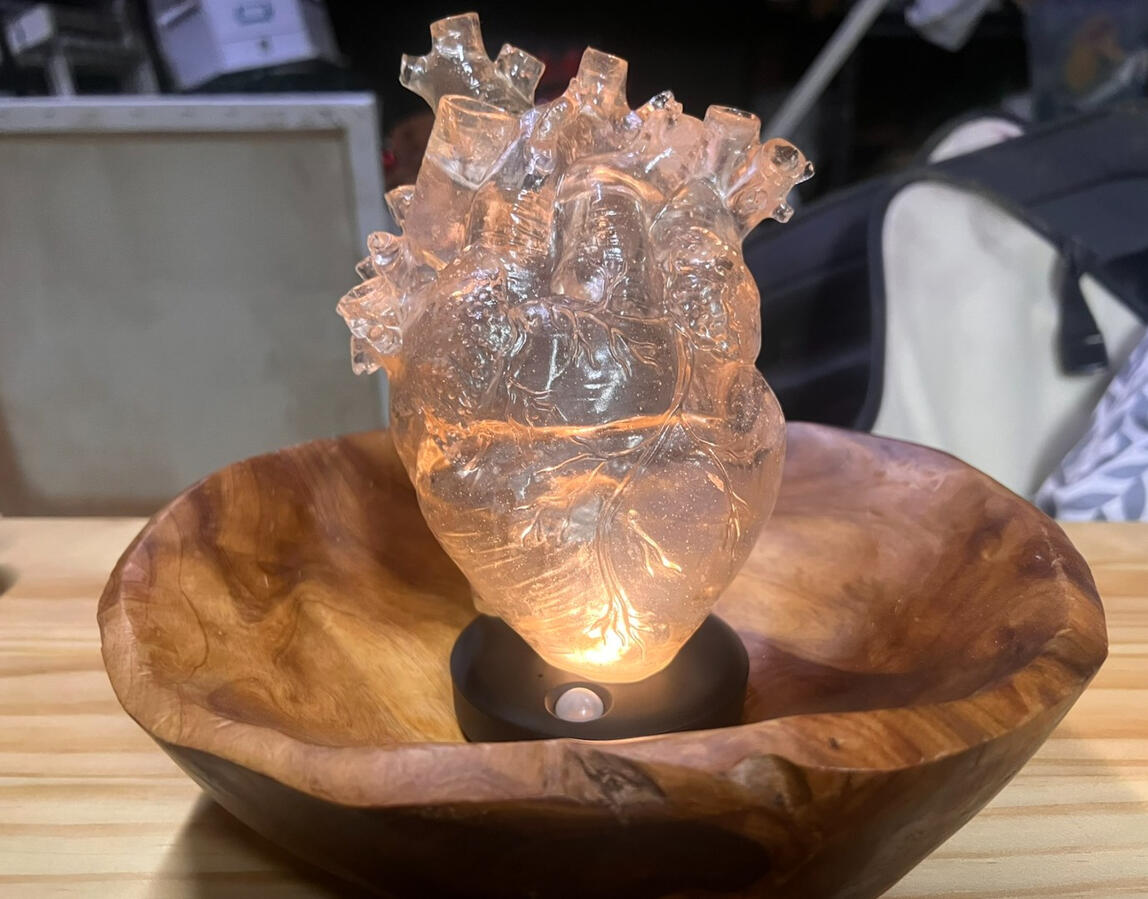
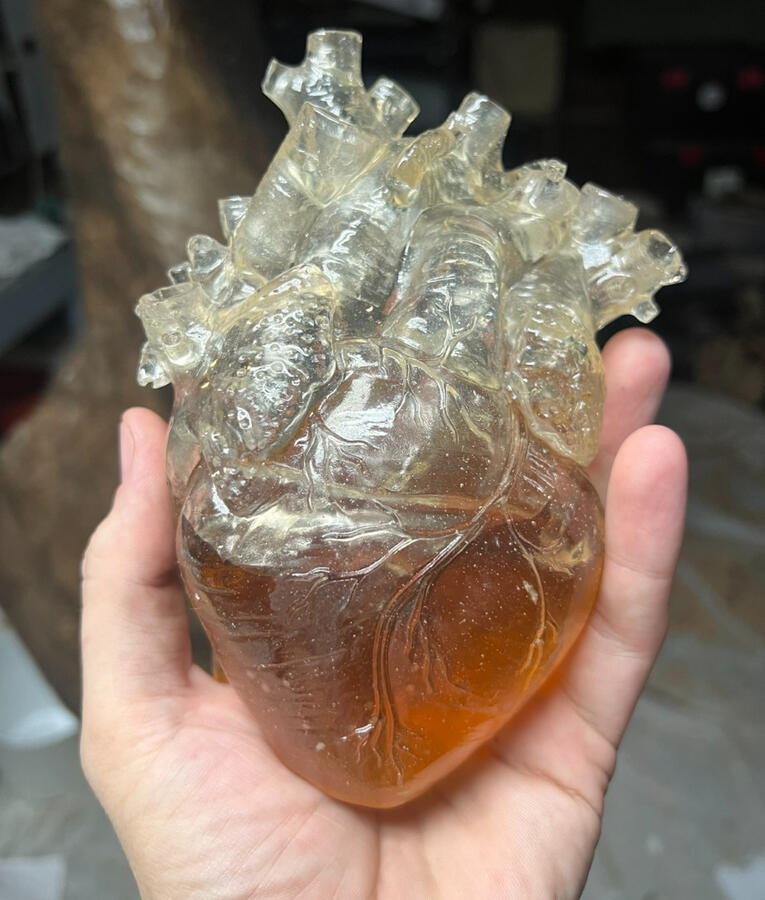
And no, I didn't make the heart.People asked me that several times during the exhibition. Originally, I was going to. I researched how to cast one, figured out the materials I'd need, and was prepared to spend weeks making it.Then, while looking for a mold, I found almost exactly the anatomical heart I was trying to make. It cost about twelve dollars. So I bought it. I could spend a month making something that already existed, or I could spend that month figuring out what to do with it.I lit the translucent heart from inside with a warm amber-gold light and placed it carefully in its cradle. During the exhibition, I overheard a child ask her parents:“Is there honey in there?”There wasn't, but I loved that she thought there was. That was exactly what I wanted the heart to feel like: sweet, warm, alive, tender.The earliest version of this piece had been a massive heart trying to break free from stone. The finished one was small enough to hold, still exposed, still surrounded by things that could eventually reach it.And still glowing.
CHAPTER 6
BOTH / AND
Live within the tension
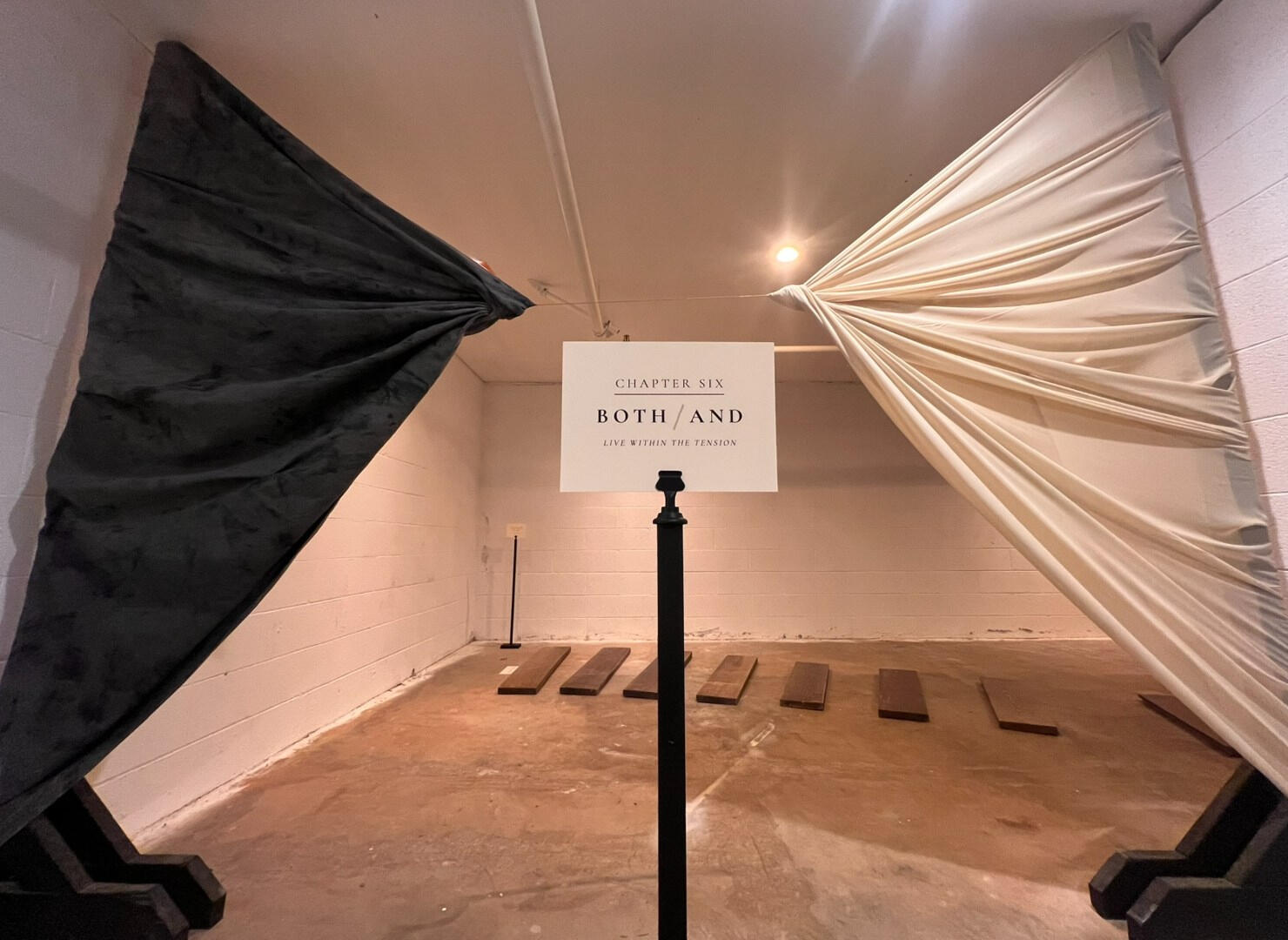
Both/And had been part of my vocabulary for years before MARKED.The idea was simple: two things that seem contradictory can both be true at the same time. You can love being a parent and find parenting incredibly hard. You can be grateful and grieving. Afraid and courageous. You can be okay and not okay.For a long time, I understood Both/And mostly as a useful way of thinking. While making MARKED, it became something more personal.There was a lot of good happening in my life that summer, and there was also a lot that was hard. Marriage. Parenting. Work. Money. Cars. Responsibilities. Two little boys who still needed their dad regardless of what kind of profound artistic revelation he happened to be having in the garage.I kept wanting life to resolve itself into one thing or the other. Good or bad. Working or not working. Happy or unhappy.But life wasn't doing that. Both things were true.That's why Both/And sits exactly where it does in MARKED. Five chapters come before it. Five come after it. It is the hinge in the middle of the exhibition.Something else changes here too.Every chapter before Both/And asks you a question. Then you arrive at Chapter Six, and for the first time MARKED doesn't ask you anything.It tells you something:LIVE WITHIN THE TENSION.And for the first time, you don't just stand in front of the artwork.You have to pass through it.
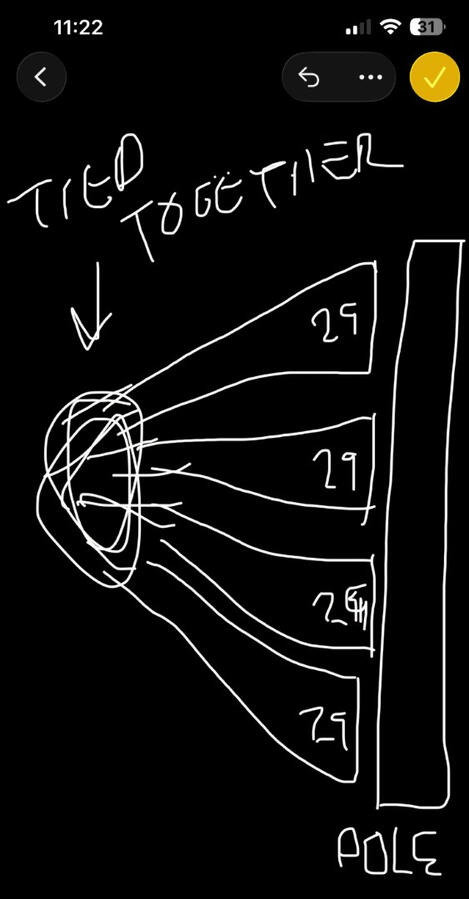
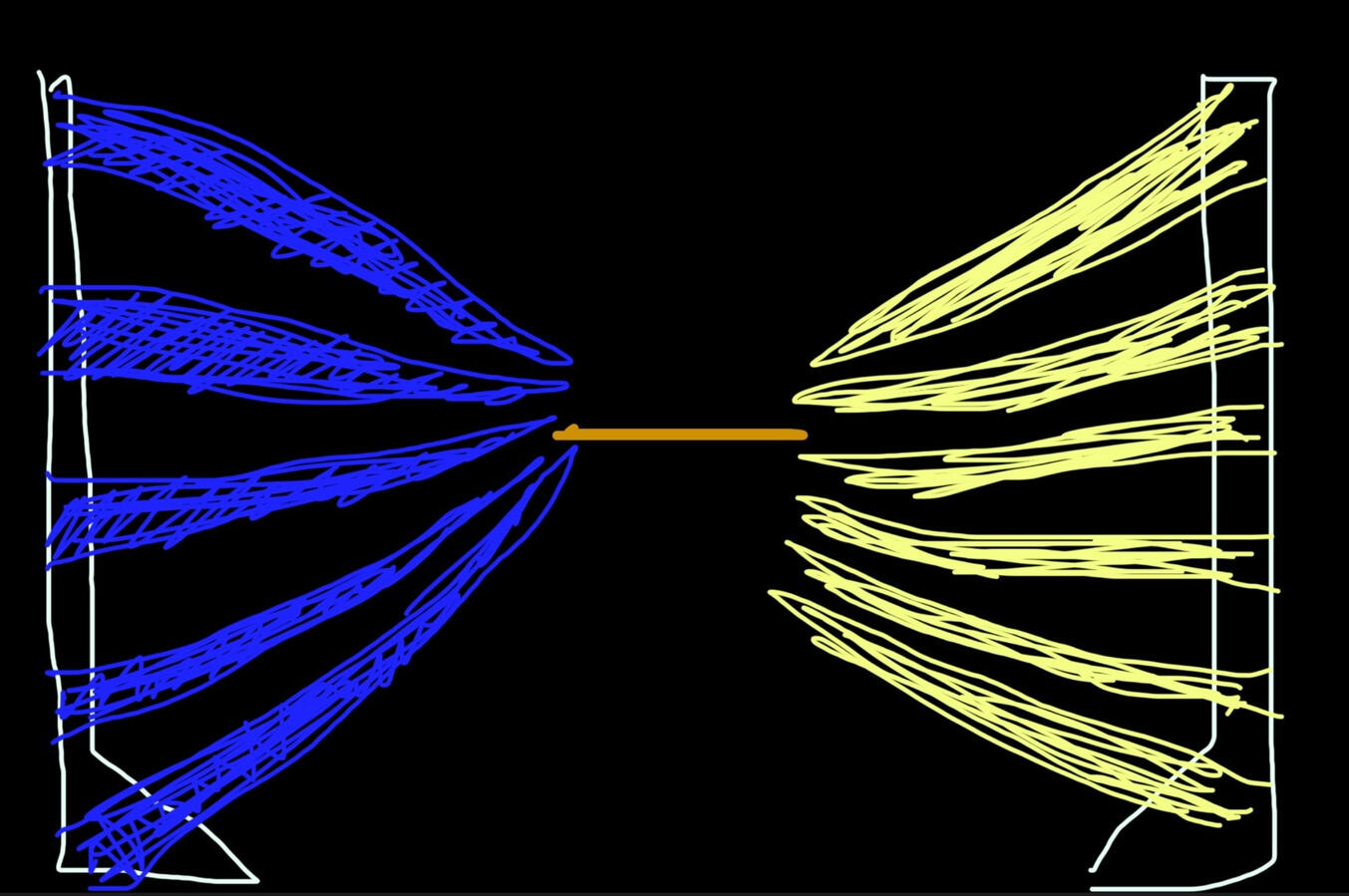
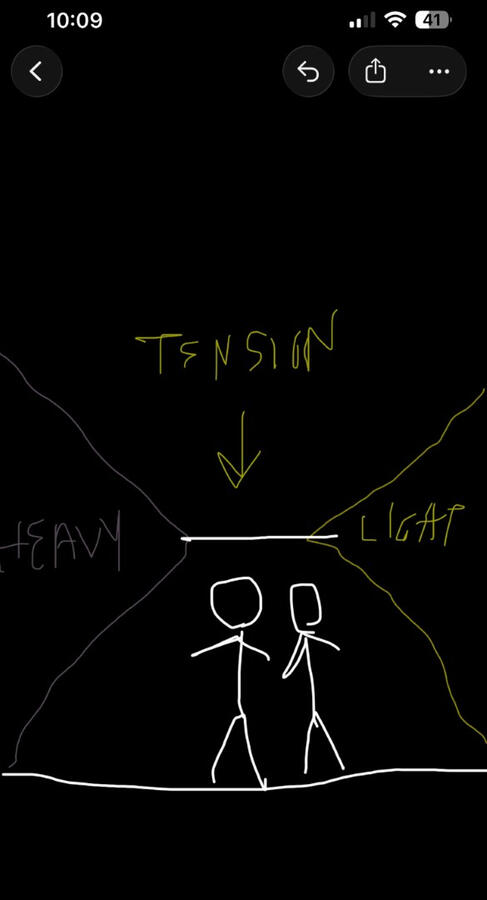
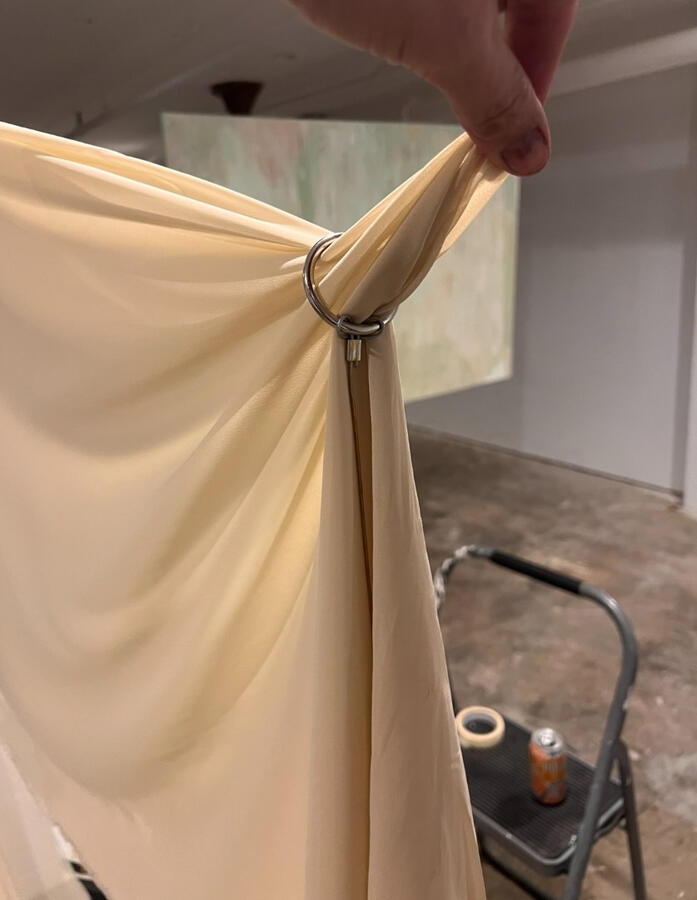
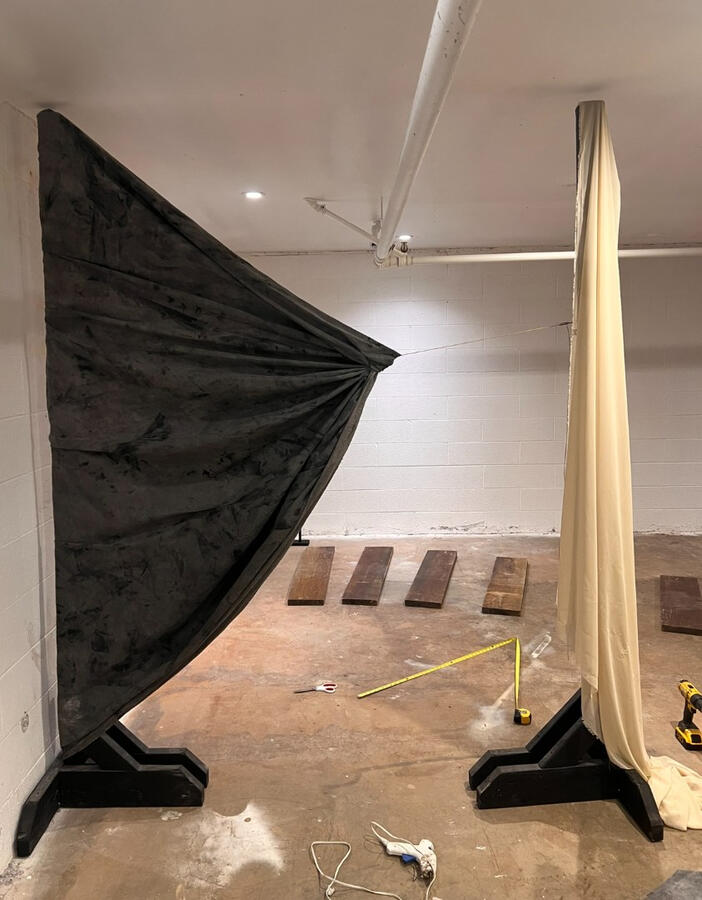
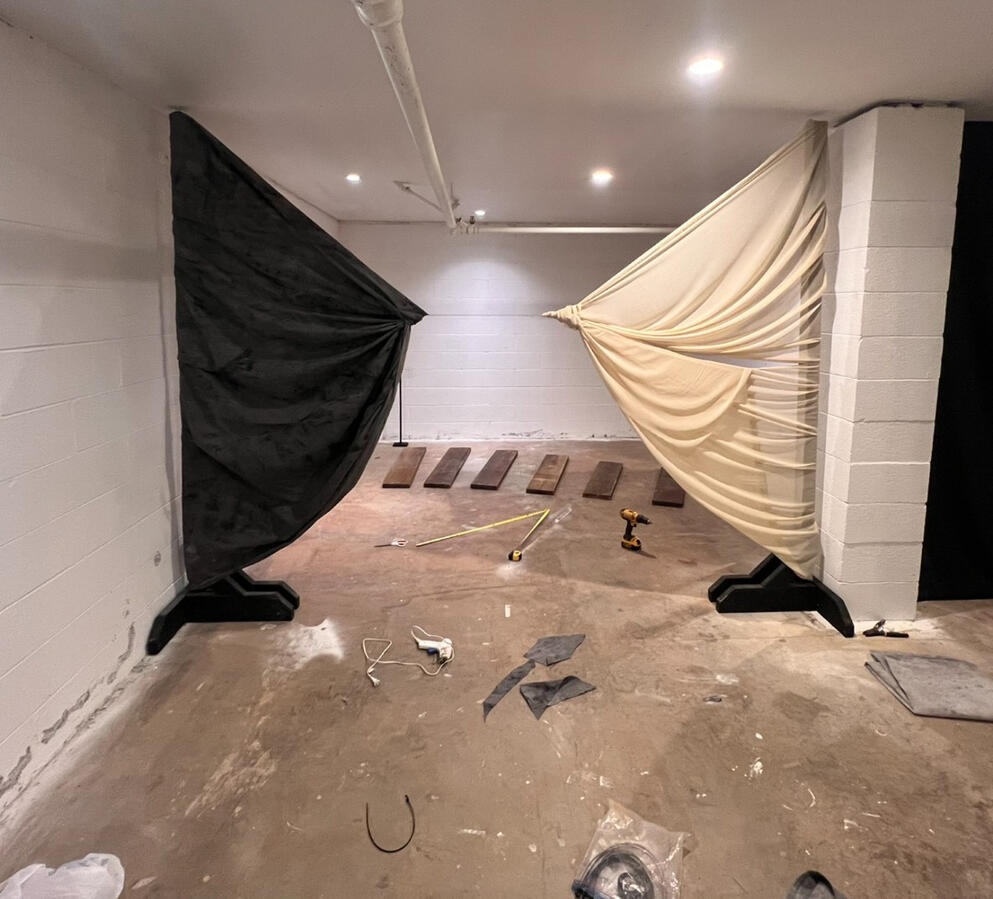
I built Both/And around two old eight-foot posts that had once been part of a swing set. I painted them black, built bases so they could stand on their own, and stretched a thin wire between them that I eventually painted gold.Then came the two sides. One was a light champagne-colored chiffon, translucent and soft. The other was heavier, darker and rougher. I didn't want one side to represent good and the other bad. That would defeat the whole point. They were simply different: light and heavy, transparent and opaque, yielding and resistant.My first attempt was much more complicated. I spent about $60 on fabric, cut it into strips, and started running those strips toward rings near the center, creating all these individual lines of tension.It looked terrible.More spiderweb than sculpture.
Which also meant I had just cut up $60 worth of fabric for a version I wasn't going to use.So I went back to buy everything again. The chiffon was easy enough to replace. The charcoal fabric wasn't. It was gone.I ended up buying a heavy canvas work cloth instead and making the color myself. One night, my oldest helped me stain the whole thing with a wash of black paint. Then, because apparently this piece needed one more problem, it rained, and I had to move the fabric somewhere else so it could finish drying.But the replacement actually gave me something better. The heavier canvas had more weight and resistance than the original fabric, which made the contrast between the two sides even stronger.
And somewhere in all of that, I finally understood what wasn't working about the first version.I had been trying to draw tension.What I needed was to make the materials actually experience it.So I abandoned all those individual strips and started working with larger planes of fabric, physically pulling the two sides against each other.The object started doing what the idea was about.
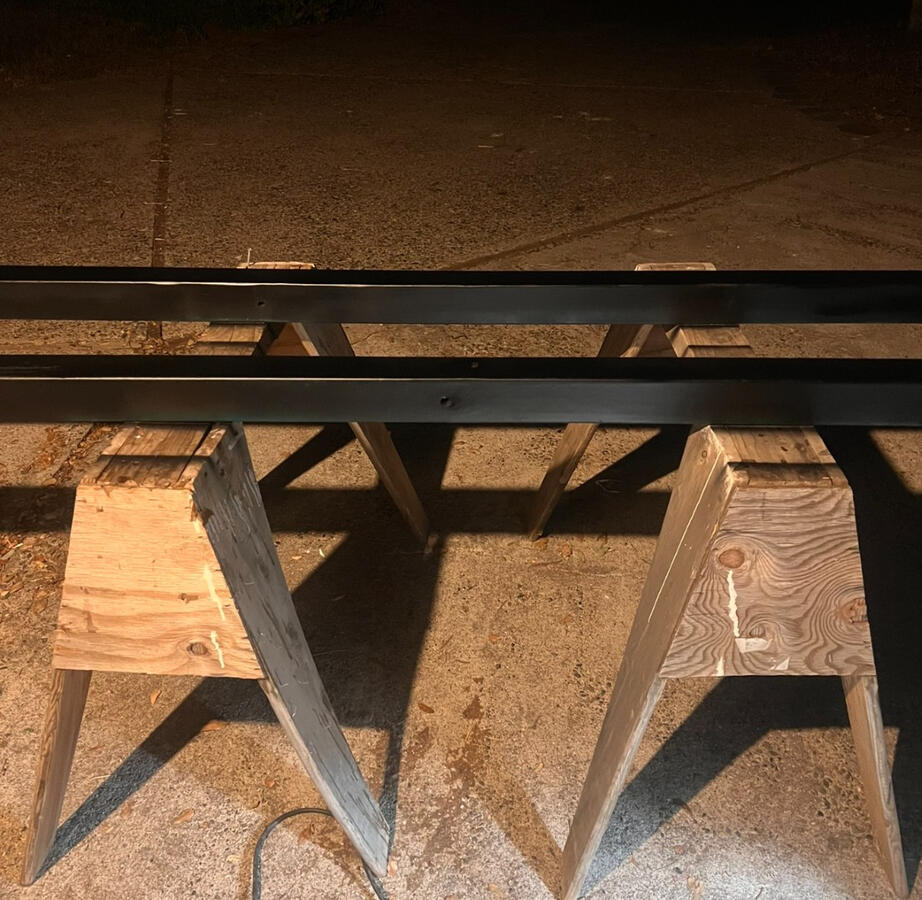
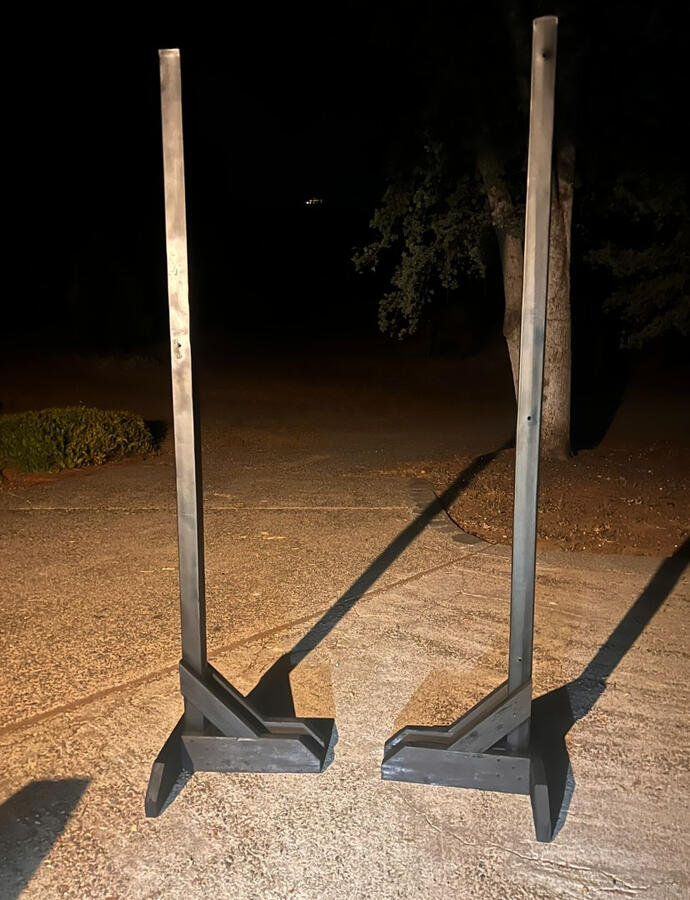
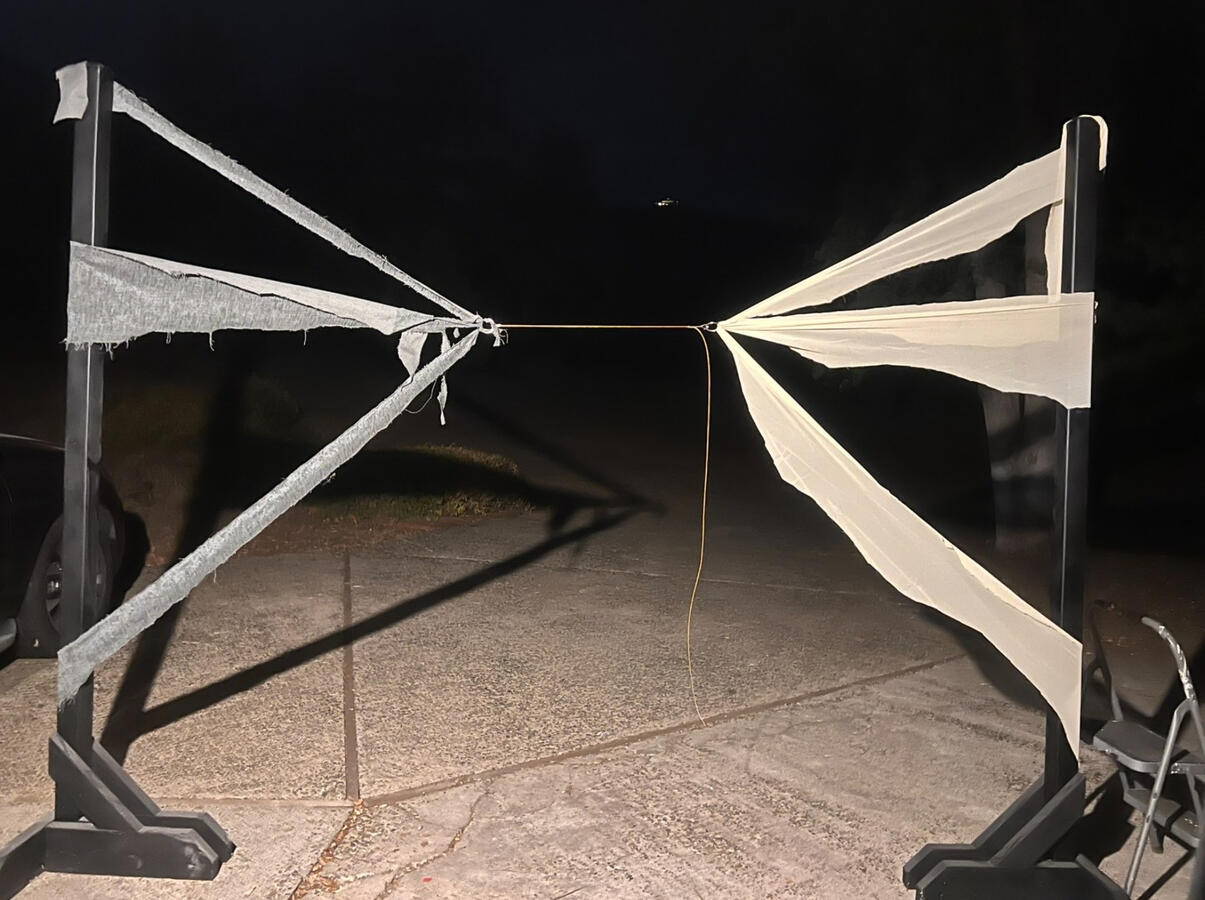
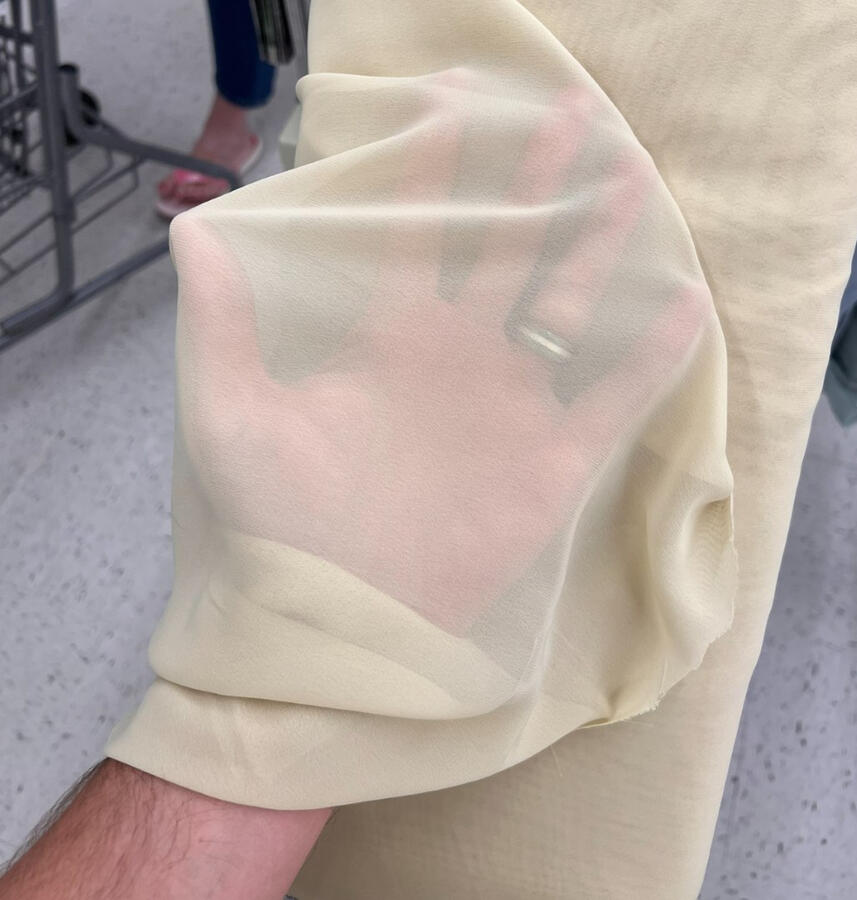
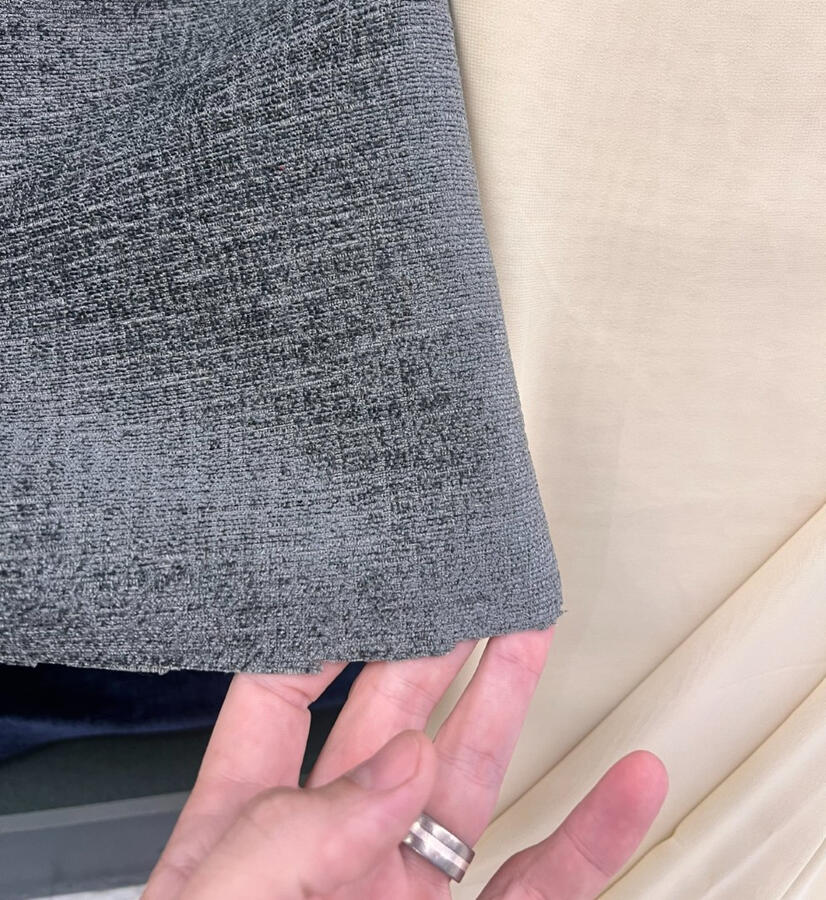
The light side behaved beautifully.The gray side became my enemy.I moved it. Tightened it. Loosened it. Changed the geometry. The center wouldn't sit where I wanted it. The wire wasn't level. The posts even started leaning inward from the force of everything pulling against them.At one point I stood there looking at them and thought, Man, tension is strong. That pull, huh?Which was almost annoyingly appropriate.The opening was only days away, and I was still working on this thing late at night. At one point I genuinely looked at it and thought,Is this even art?Eventually I added another hidden wire to help hold the light side where it needed to be. Behind the fabric were rings, zip ties, wire, hot glue and all the little pieces of engineering required to make something that looked simple stay in tension. The backside wasn't particularly beautiful.But no one said living within tension was supposed to be clean.Eventually, sometime around one in the morning, I stopped fighting it. It still wasn't exactly what I had imagined, but I remember reaching this point where I thought:
I'm happy enough to stop fighting it.
And then I realized what had happened.I had spent all that time trying to make a sculpture about Both/And while refusing to accept any Both/And in the sculpture itself.I wanted resolution.The piece required tension.So I left it.
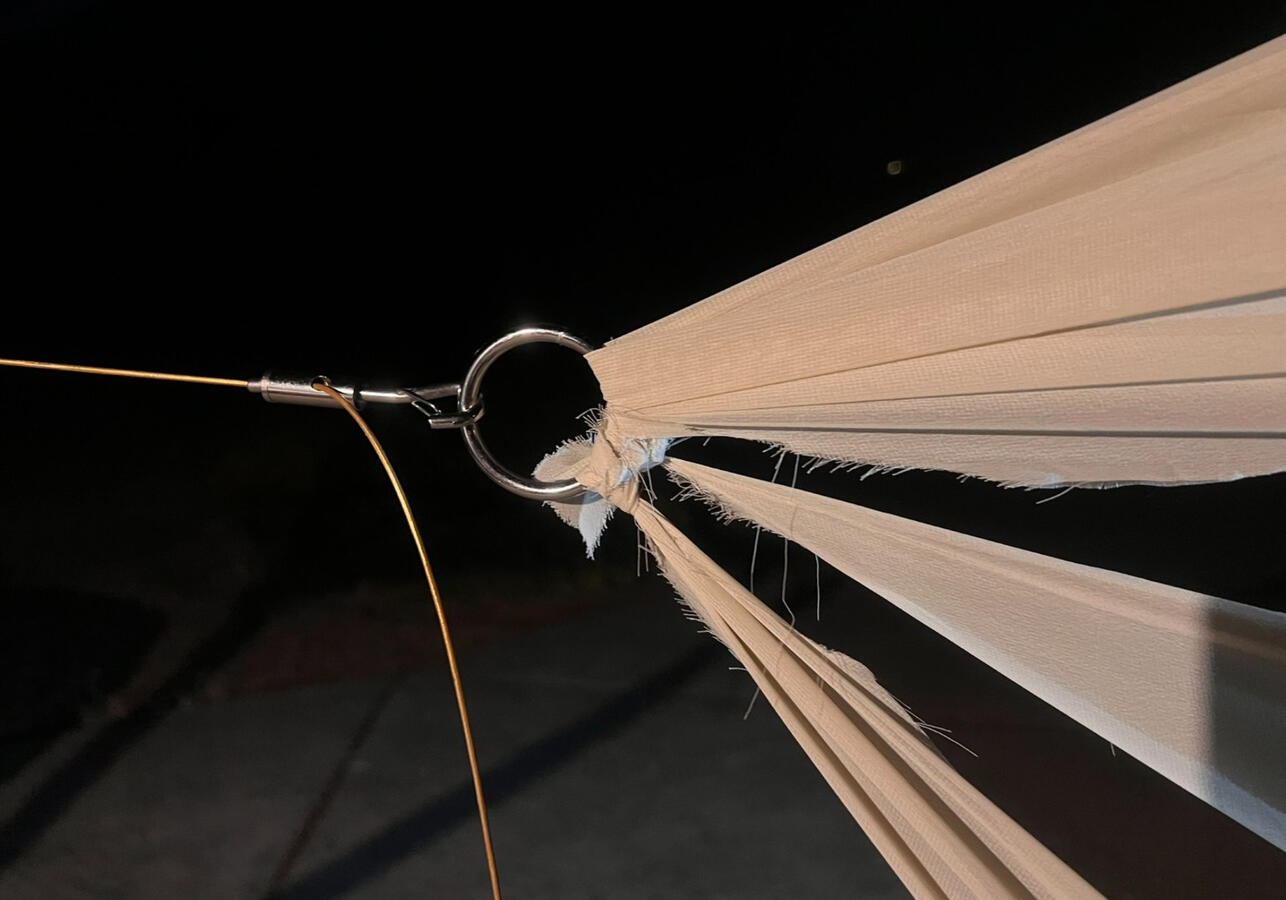
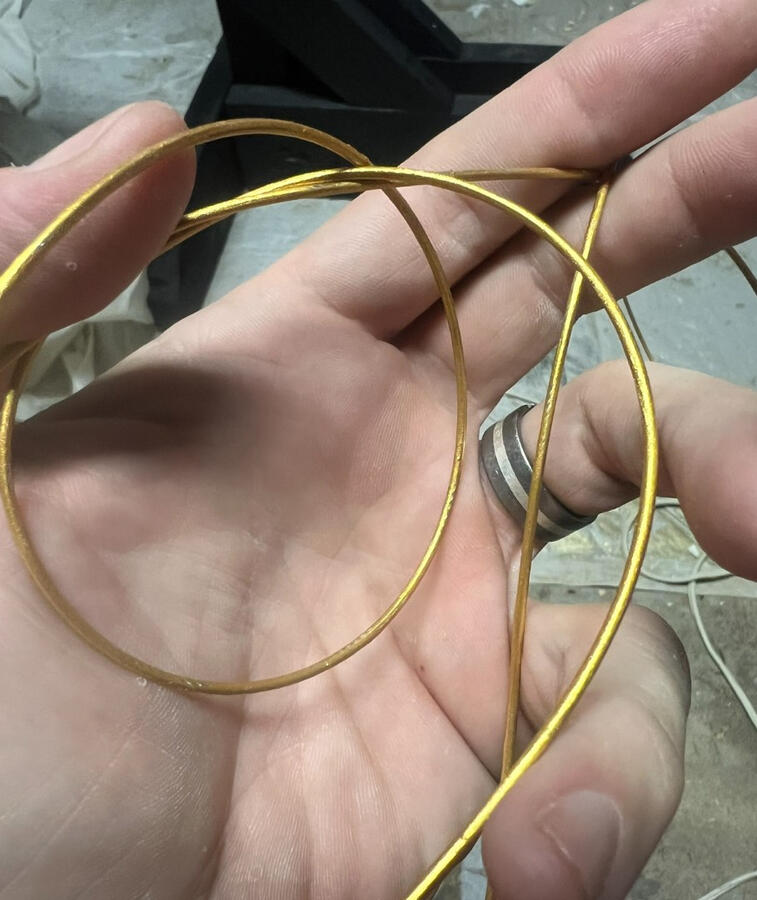
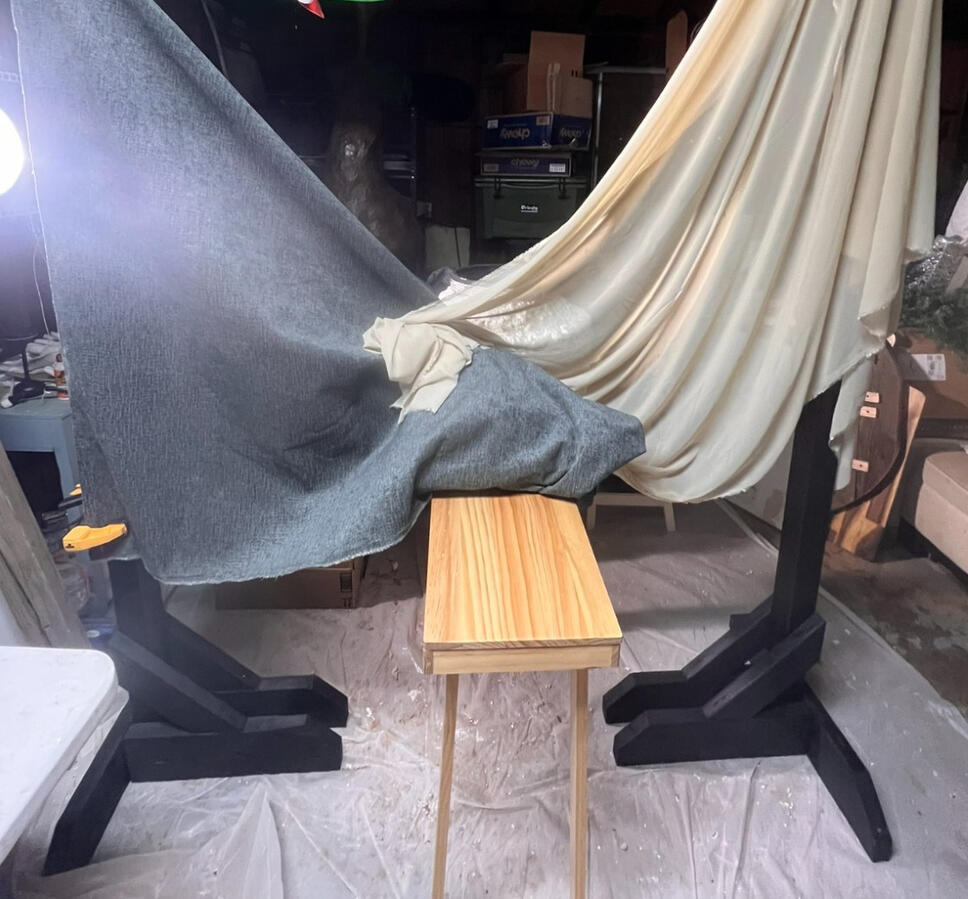
There was another detail I didn't plan.The gray fabric moved down and underneath the center while the chiffon moved upward and over it. Once the whole thing was standing, the two sides started looking almost like wings.One dark and heavy. One light and translucent.A few chapters earlier, there had been a cocoon.Now, at the exact midpoint of MARKED, there was something that looked a little like a butterfly.I didn't design that connection. I noticed it after it was already there.When you walked through Both/And, the two sides converged above and around you. The gold wire ran through the unresolved space between them, and you had to duck slightly beneath it to continue.That gold 'thread' mattered to me.The gold wasn't on one side. It wasn't saying this is the right one and that is the wrong one.It ran between them.That became one of the biggest things MARKED was teaching me.Life was really hard that summer.And life was beautiful.Both were true.I didn't have to wait for the hard times to be over before the good times could begin.You can fight for your life without fighting against your life.Sometimes the only way forward is through.
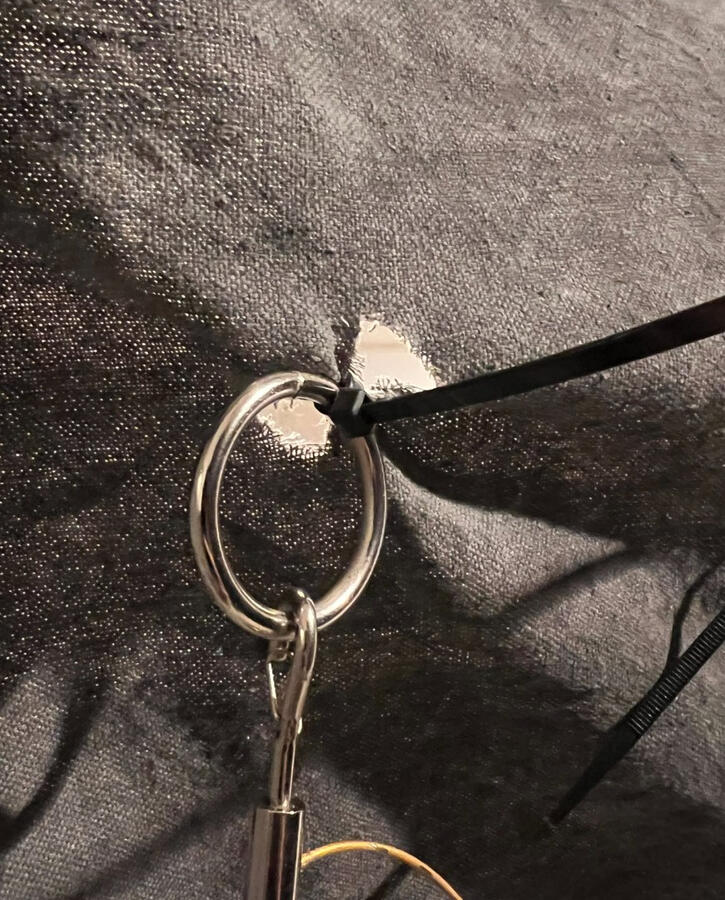
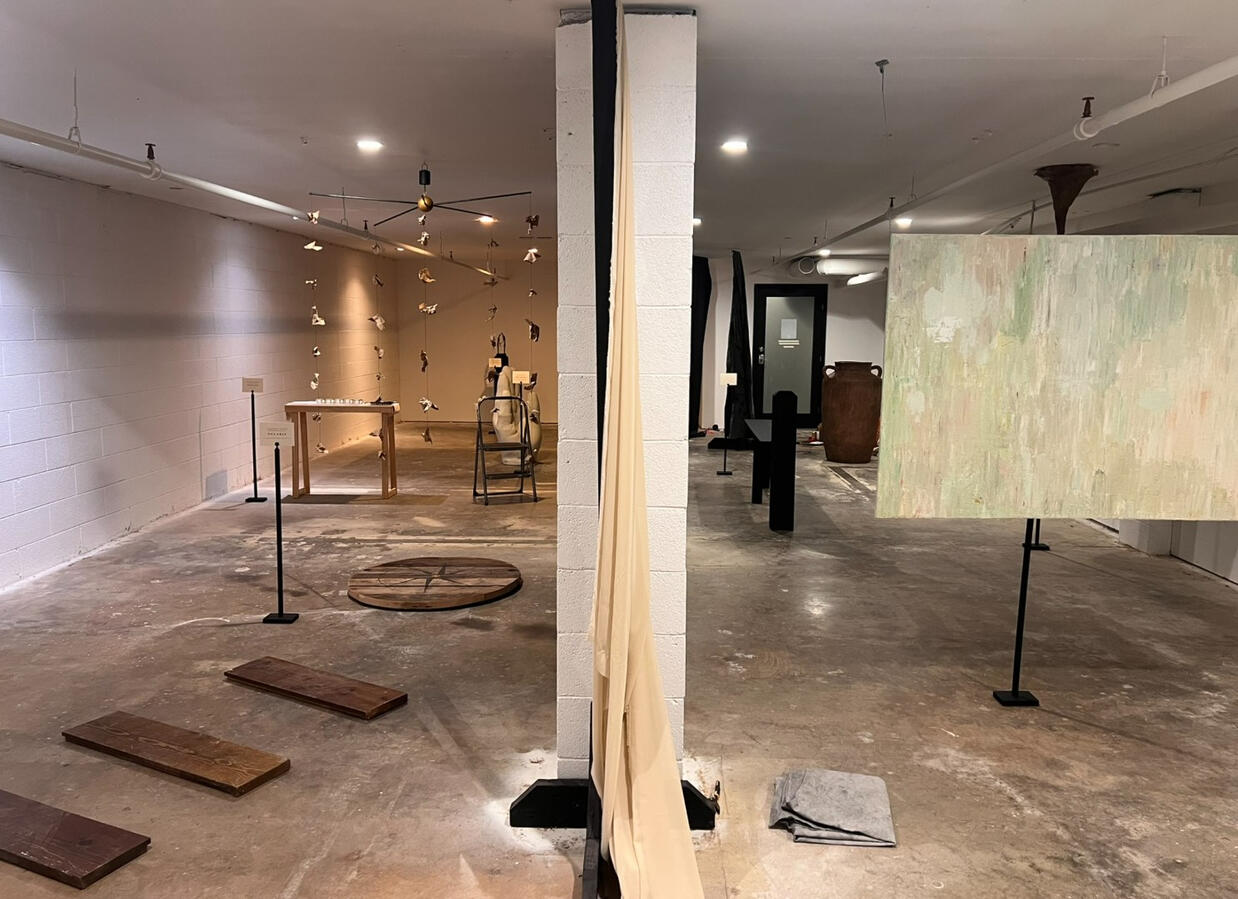
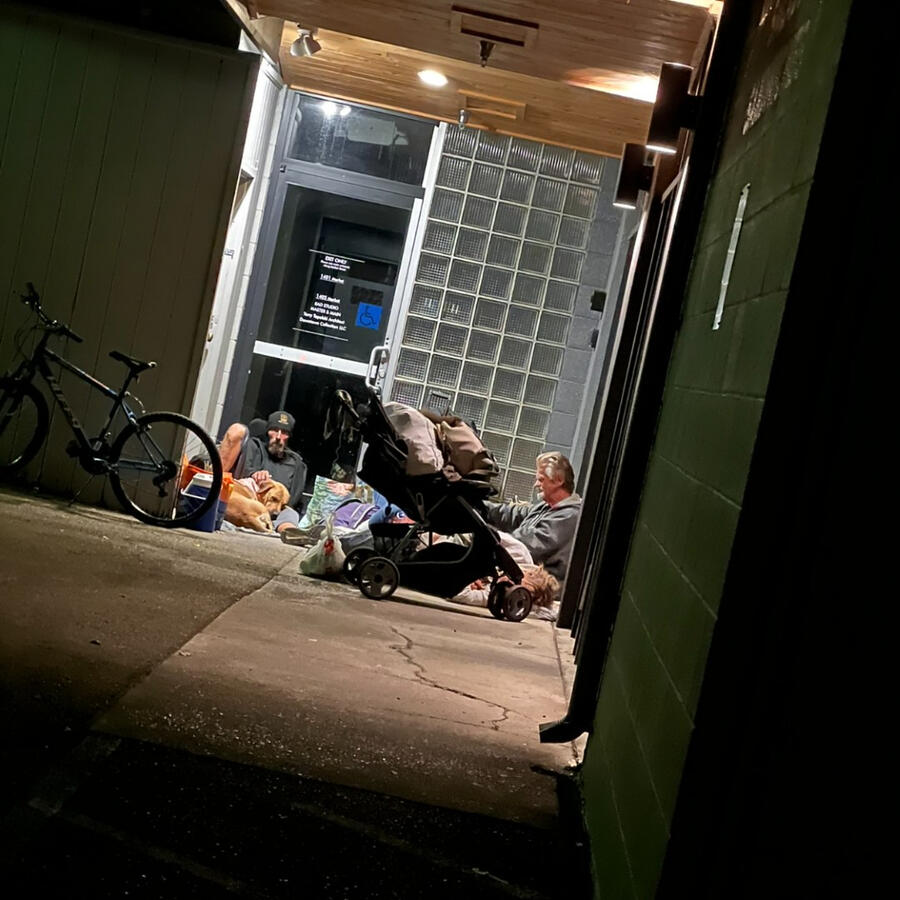
I finished working on Both/And very late one night downtown.When I went to leave, there were four homeless men outside the exit, and one of them was sleeping against the door I needed to open. I apologized and explained that I needed to get out, but told them they didn't have to leave afterward.I had some cans I was going to throw away, so I gave them what I had, probably six or seven cans. As I walked away, one of the men said, “Have a blessed night.”Then I got in my car and drove home.I remember feeling grateful I was going home to Amy and my boys.And I remember feeling sad that they were sleeping on the concrete outside the building.Both of those feelings came with me.
CHAPTER 7
TRUST
JUST TAKE THE NEXT STEP
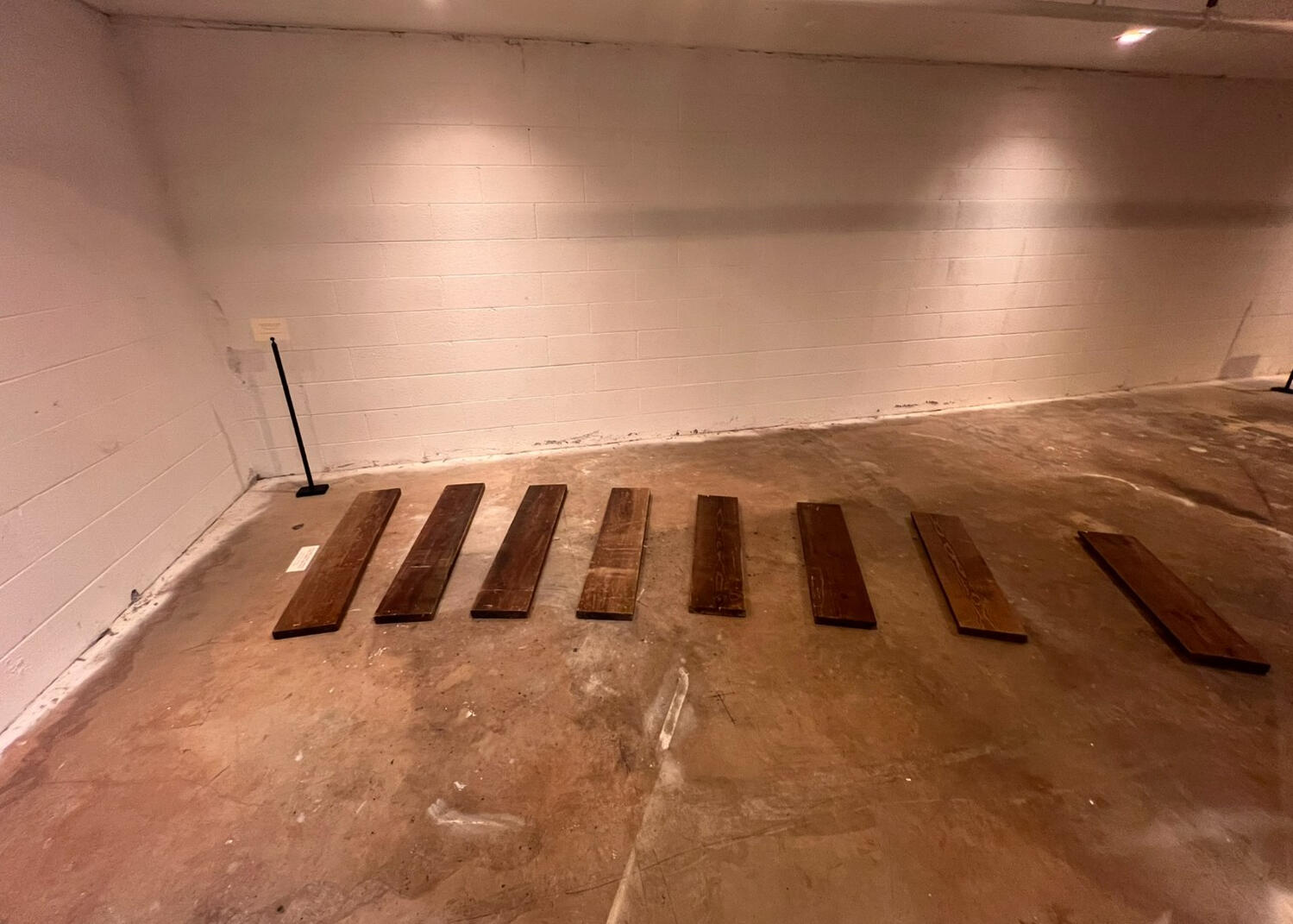
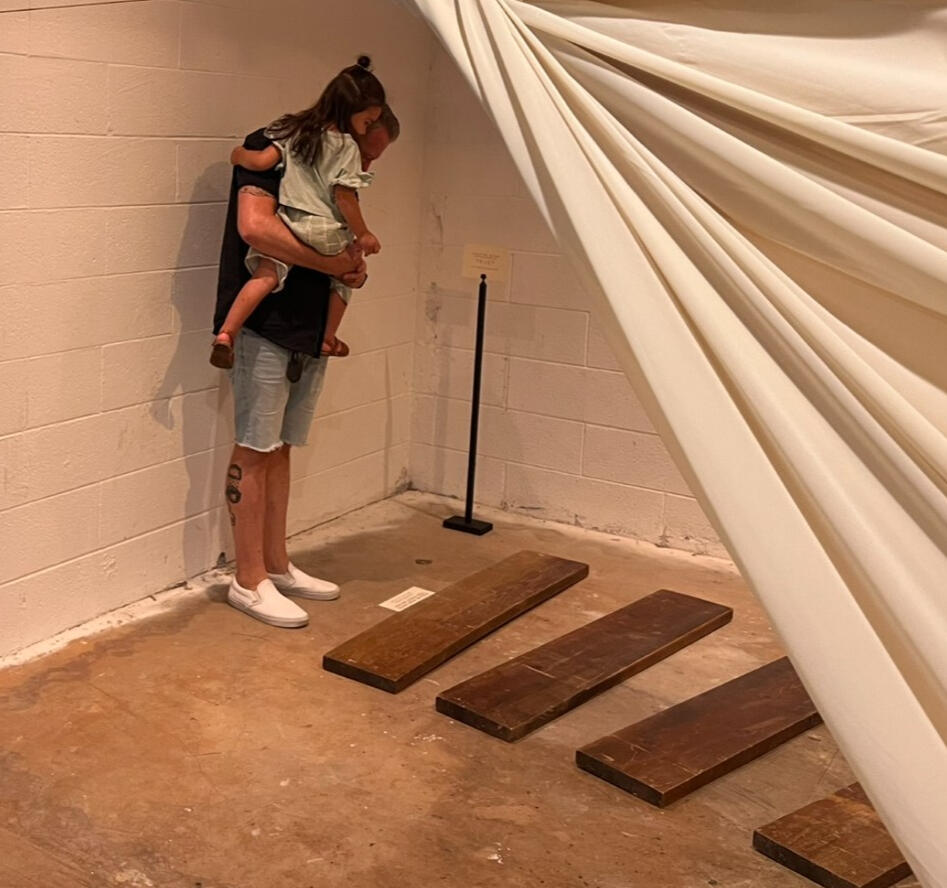
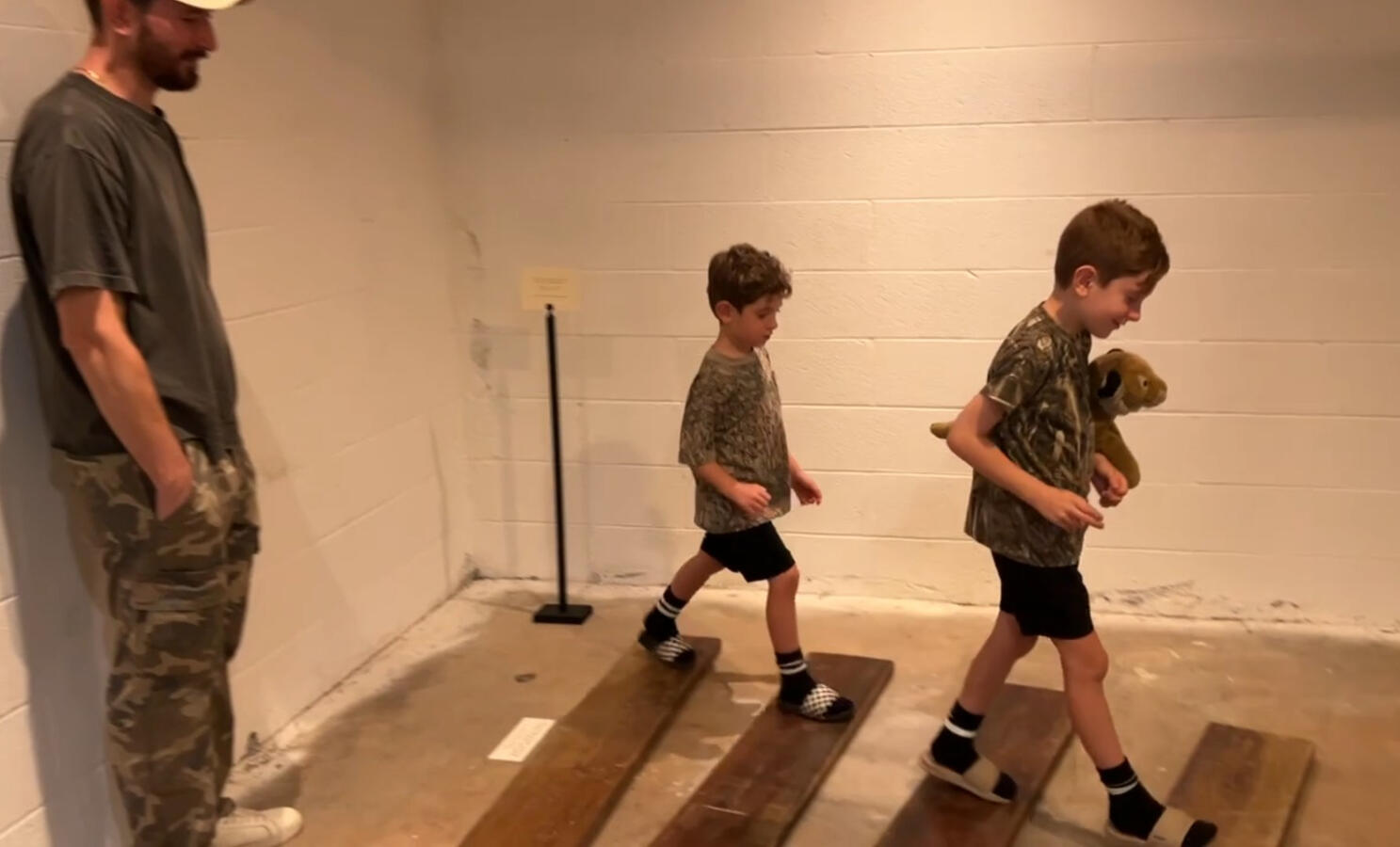
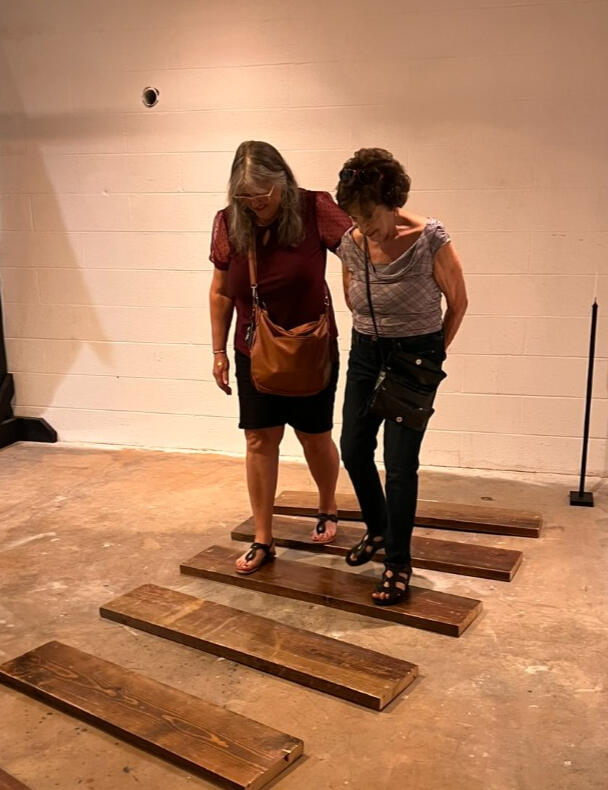
TRUST began with an image Amy gave me during a difficult season of our life.She described a path across water made from individual boards. You couldn't see the whole way across. You could only see the board you were standing on.The next board wouldn't appear until you started moving toward it.That image stayed with me because I have spent a lot of my life wanting to see the entire path before I'm willing to take the first step. I want to know where something is going. I want to know it's going to work. I want some assurance that if I move, there will actually be something there when I put my foot down.But that's not usually how life works.Sometimes you get one board.And then you have to move.By the time I started designing TRUST, I knew I didn't want to make a sculpture of that idea.I wanted you to actually do it.
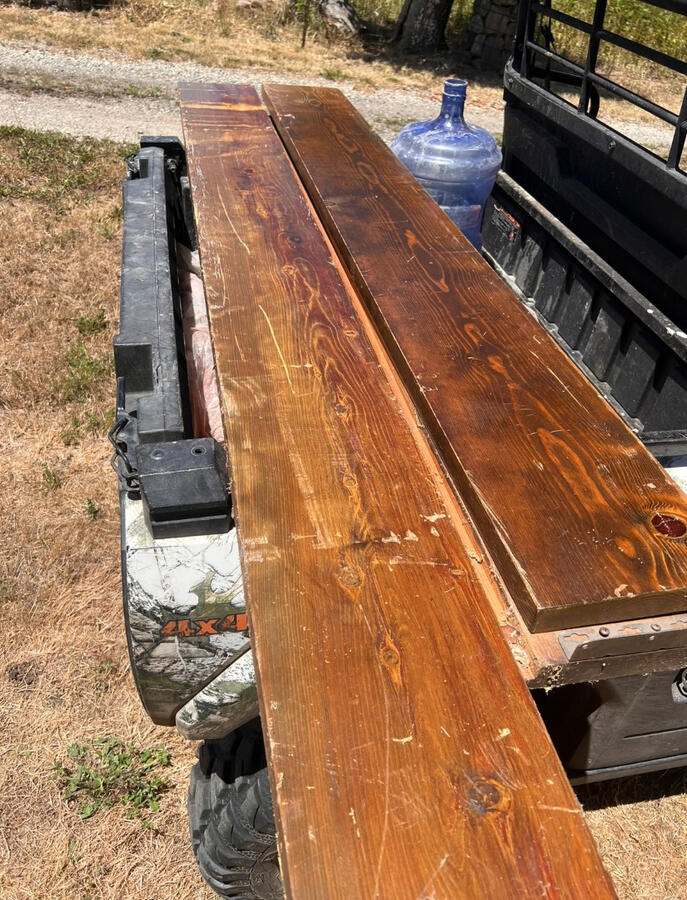
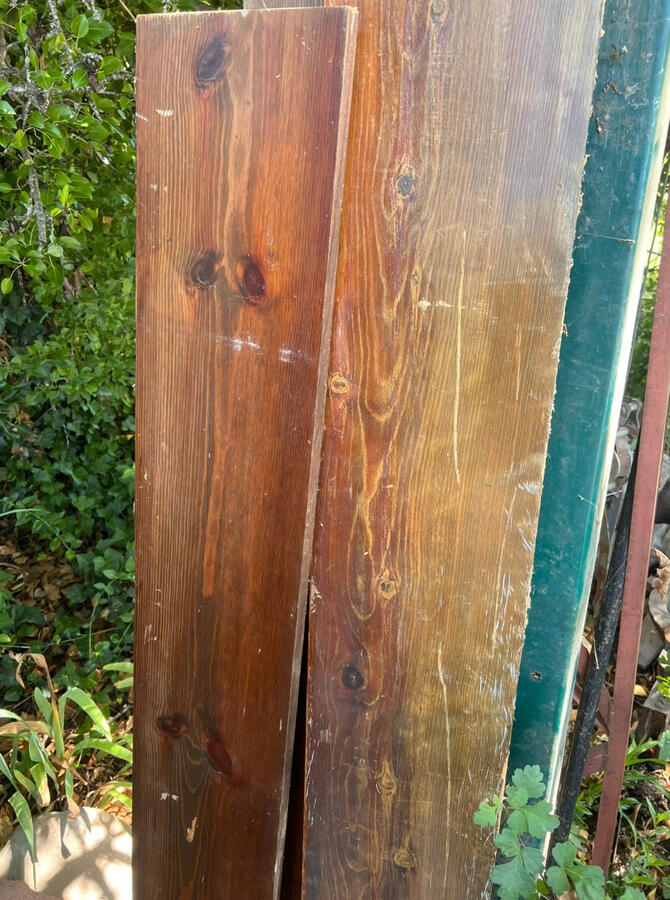
I found the material at my parents' house.There were four long wooden boards that had once been part of an old waterbed frame. They'd been sitting around for years, some of the original hardware still attached.As soon as I saw them, I knew.I found them. This is them.There was something I loved about where they came from. Before those boards became an artwork about trust, they had spent years doing something incredibly ordinary: supporting the bed where my parents slept and built a life together.And now I was going to cut them apart and ask strangers to trust them with their weight.The waterbed connection made me smile too. Amy's original image had been a series of boards carrying someone across water.Years later, the boards I found for it had literally come from a waterbed.I definitely hadn't planned that.
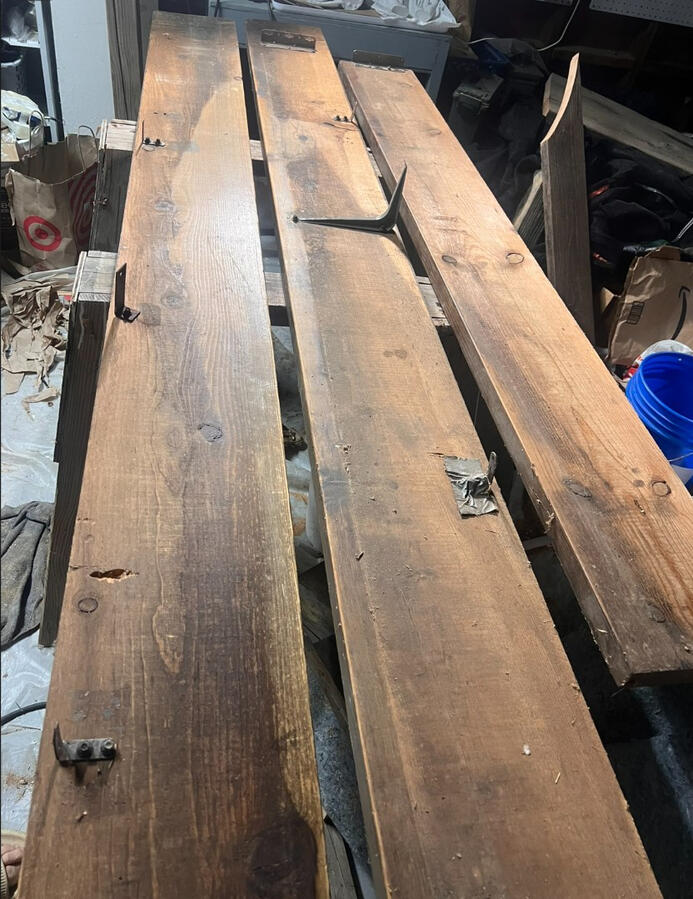
I had four original boards, and I made one deliberately offset cut in each of them. That gave me eight pieces, all slightly different lengths.Then I started arranging them.The first board was the largest. I wanted the first step to feel easy.Almost obvious.From there, the boards gradually became shorter from side to side while the spaces between them increased. The path became less generous as you moved through it.But I didn't want it to become a stunt.This wasn't about making somebody afraid they were going to fall. The boards needed to be stable. The gaps needed to be manageable. The difficulty was supposed to happen mostly in your head.You could stand there and calculate every distance if you wanted to.Or you could take the next step.That was the entire piece.
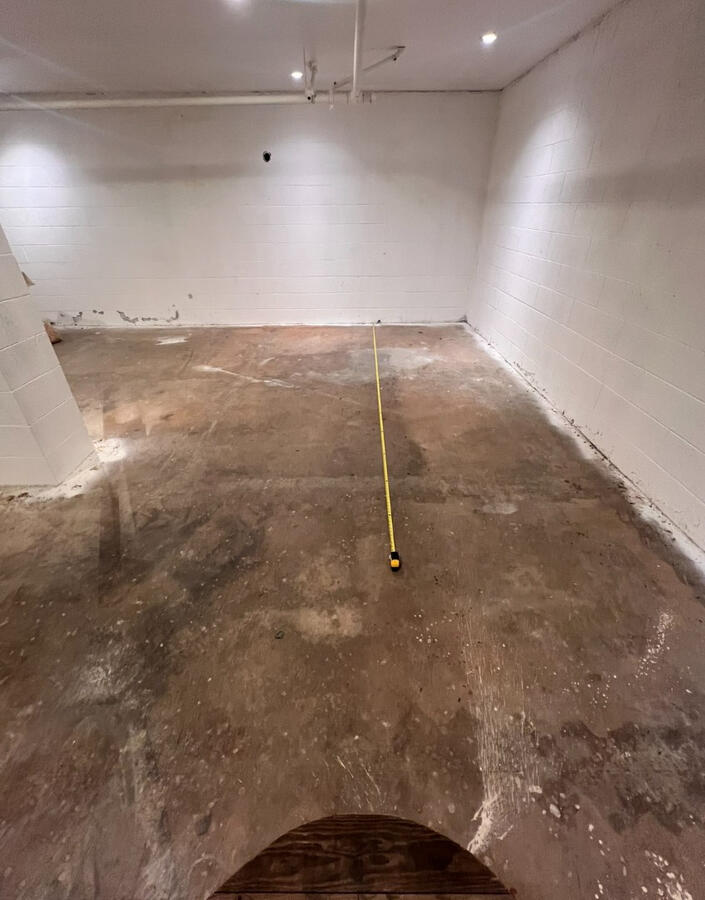
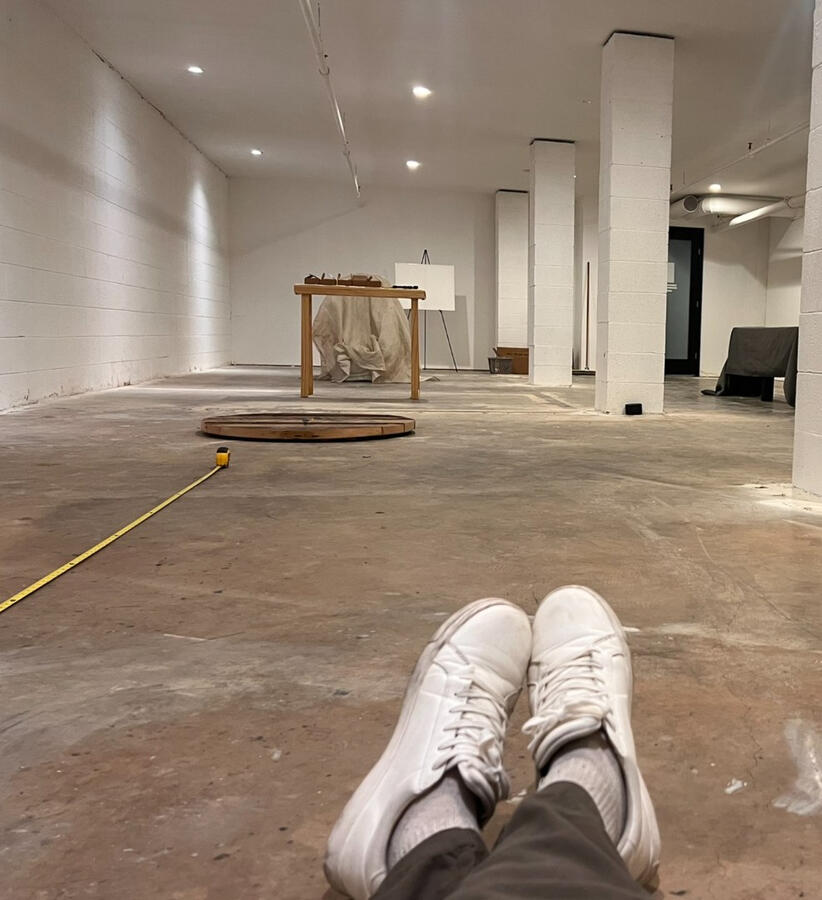
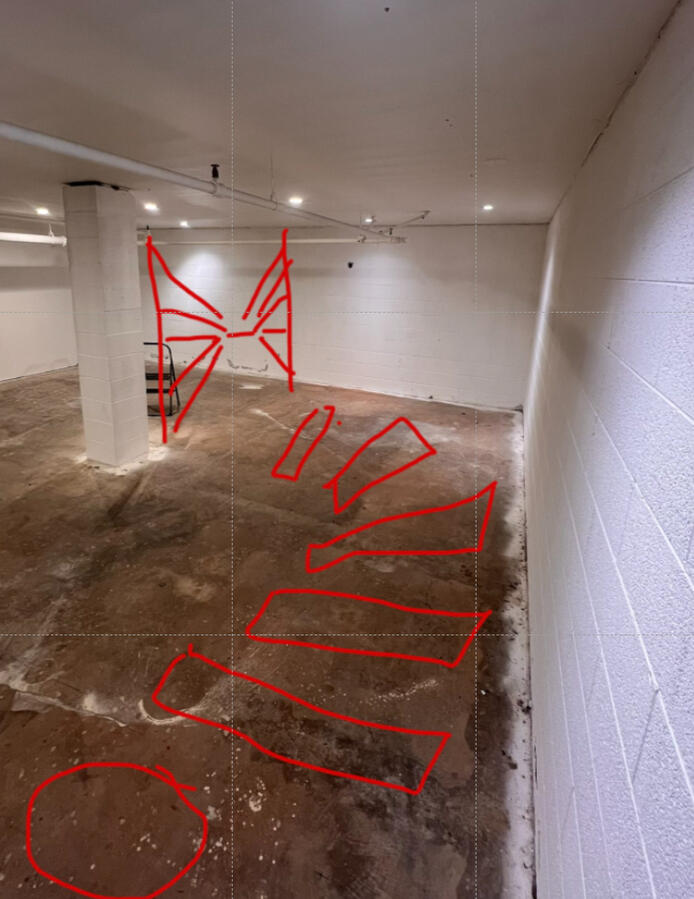
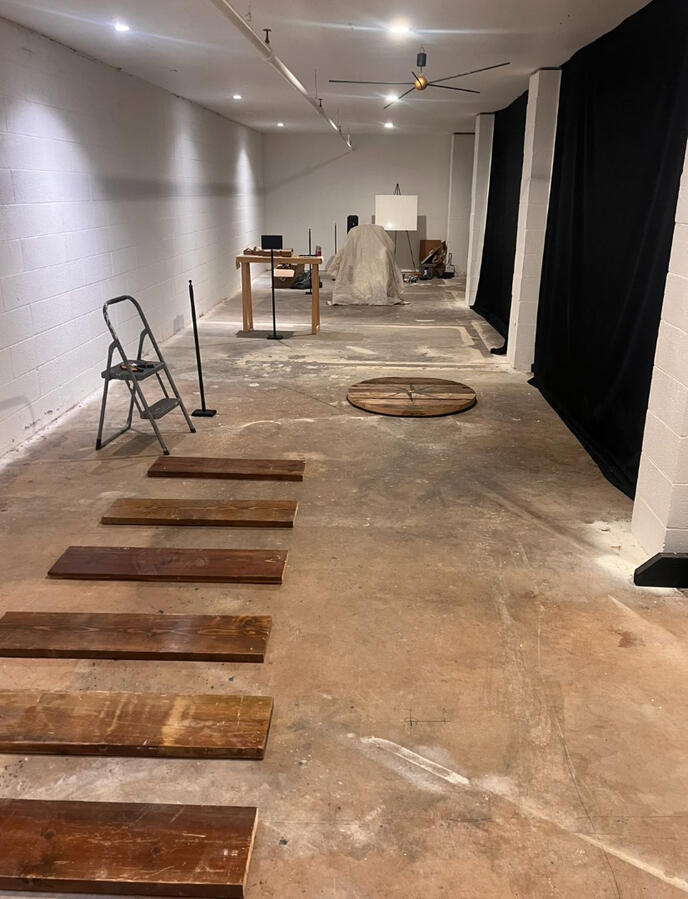
The instruction on the floor said:PLEASE STEP ONTO THE FIRST BOARD
CONTINUE ACROSS
ONE STEP AT A TIMEI think the most important word in the chapter, though, was actually in the title card:JUST TAKE THE NEXT STEPEspecially the word just.Not figure out the entire path.Not know where everything is going.Not guarantee the outcome.Just take the next step.And that meant the boards themselves weren't really the artwork.You were.TRUST only became complete when someone stepped onto the first board and moved their body across the gaps. The thing I had been trying to express wasn't sitting there waiting to be understood.You had to enact it.
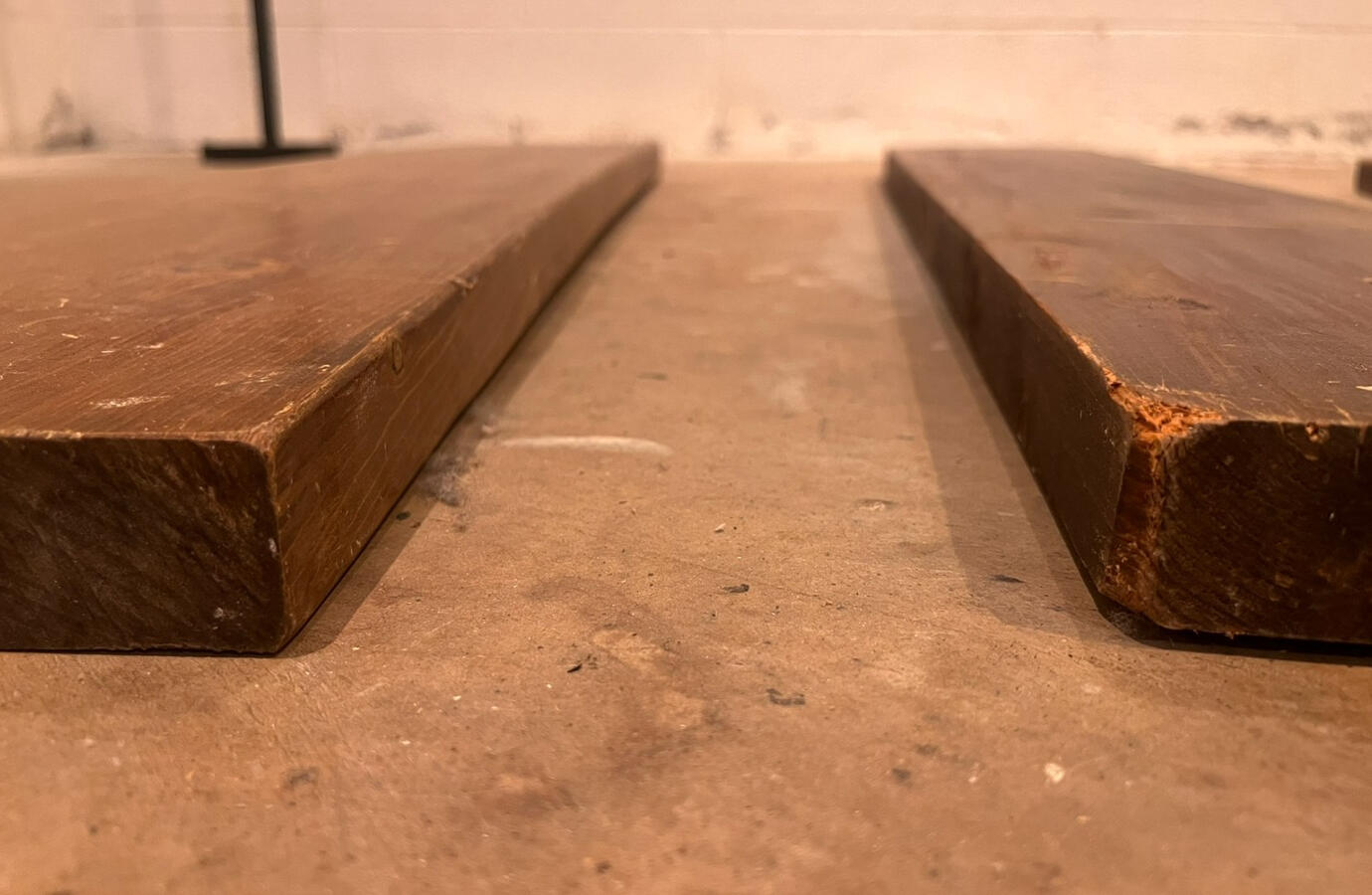
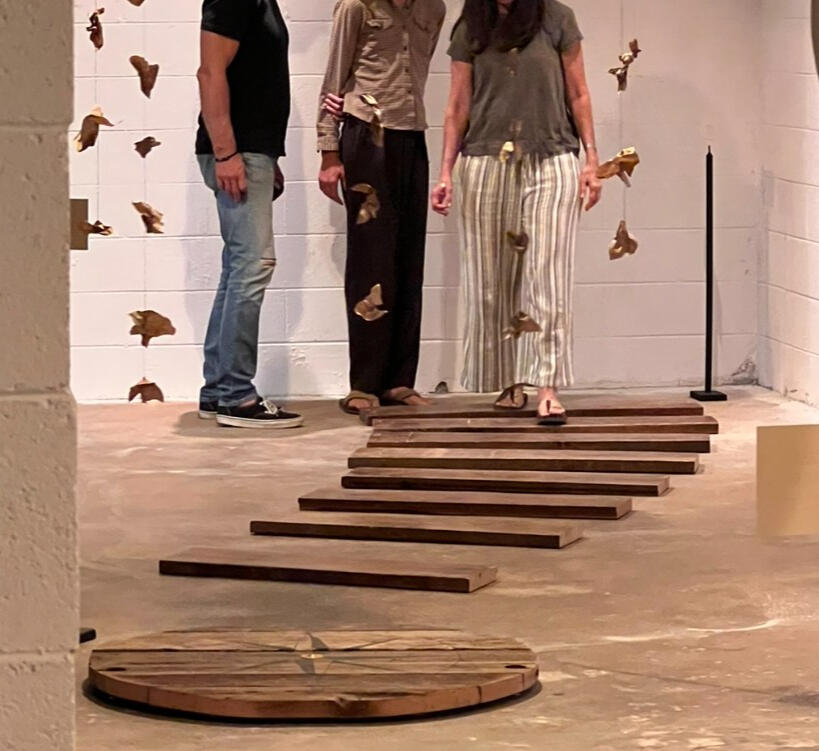
There was one final decision that mattered to me.I arranged the boards in a gentle curve rather than a perfectly straight line, and I positioned the last one so that when you stepped off it, you arrived directly in front of the next chapter.POLARIS.You had just crossed something without being able to stand still and understand the entire experience first.Now there was a compass waiting for you.That relationship between the two pieces became one of my favorite transitions in MARKED.Trust gets you moving.Polaris asks what you're moving toward.
CHAPTER 8
POLARIS
LET THE STORM MOVE AROUND YOU
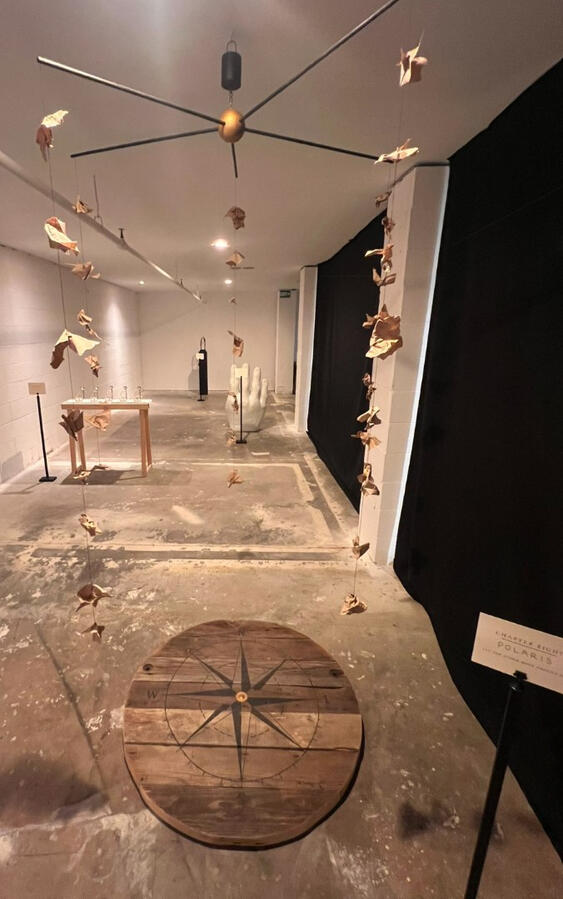
POLARIS didn't begin as a compass.It began with a word:Immovable.There was a stretch while I was making MARKED when life felt like it was pushing from a lot of different directions. I remember reaching this point internally where I thought, This is my life. I'm in charge here.Not because I suddenly had control over everything happening around me.I didn't.I was trying to understand how to stop letting everything around me determine where I was going.For a while, I imagined the piece as a tree. Something rooted deeply enough that it couldn't be moved.But trees do move.They bend. They sway. Their branches get thrown around in storms.And eventually I realized I was asking the wrong question.Maybe the goal wasn't to become something that couldn't move.Maybe it was to move without becoming lost.That's when the tree became a compass.
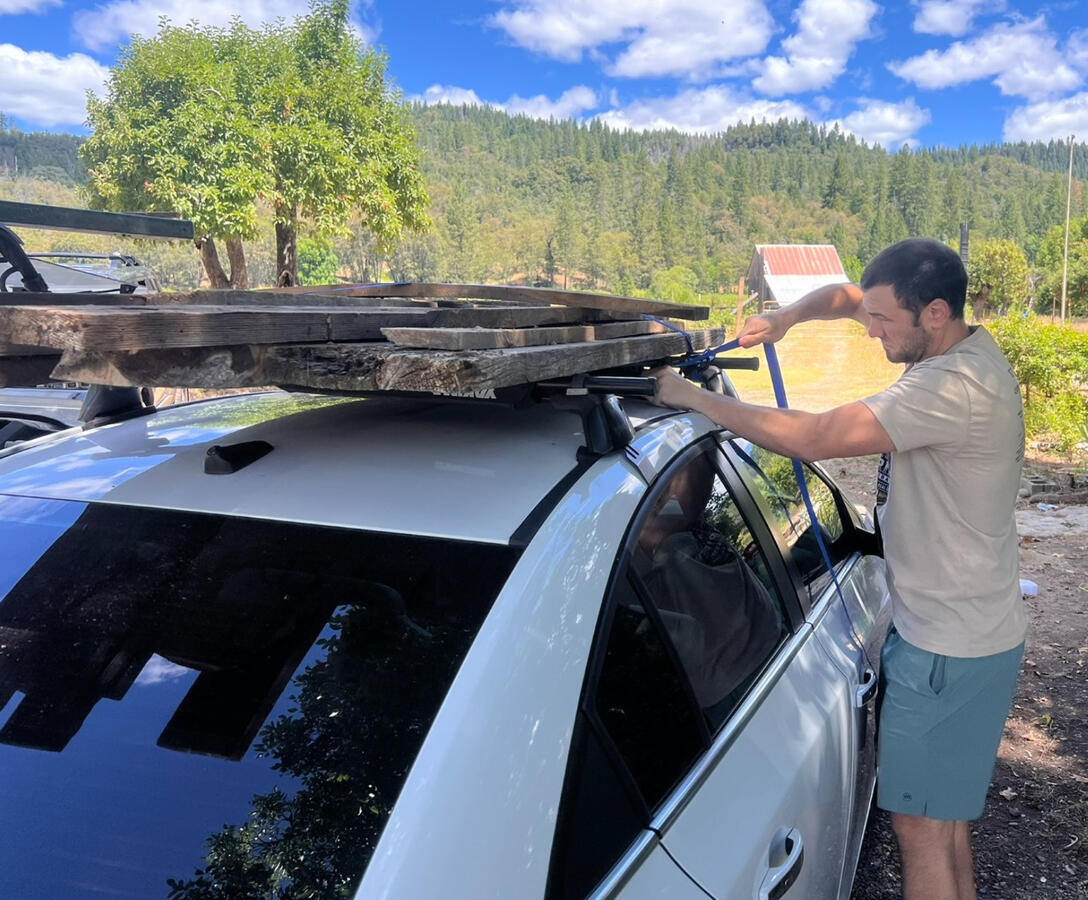
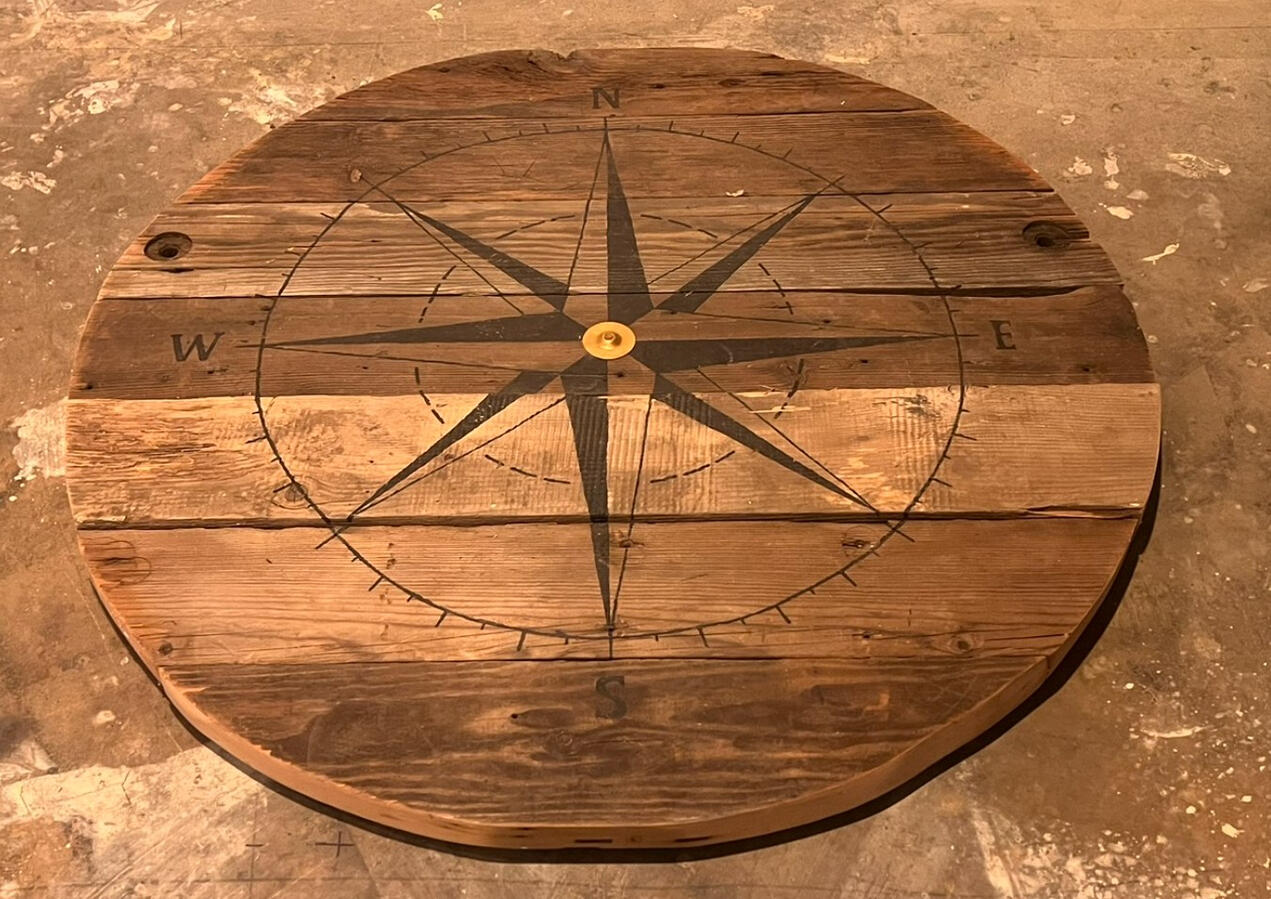
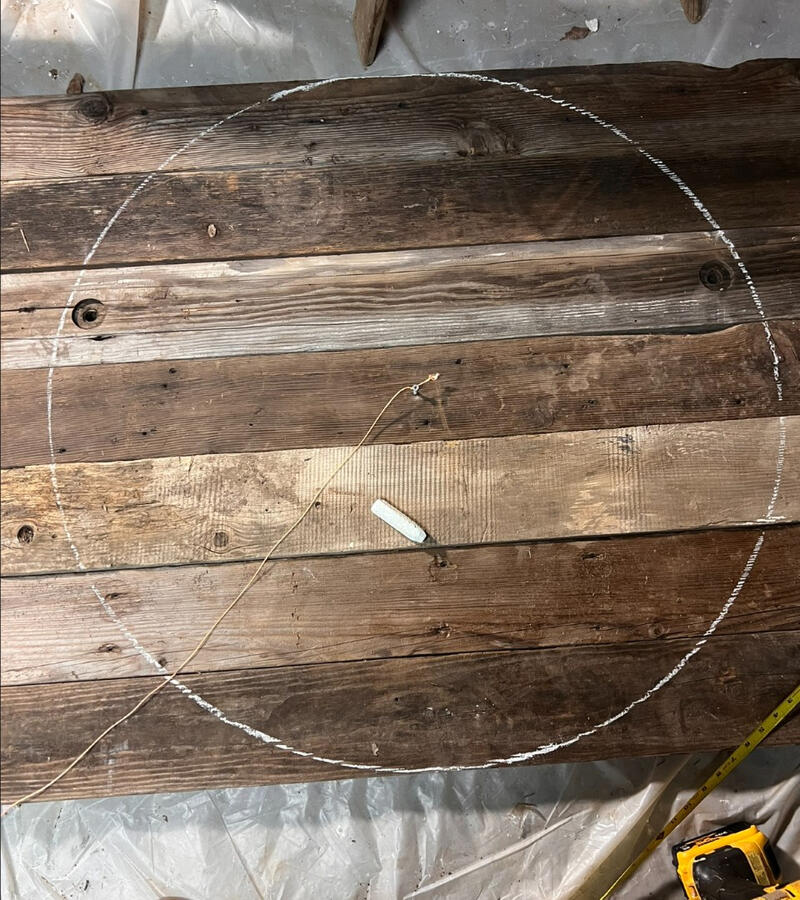
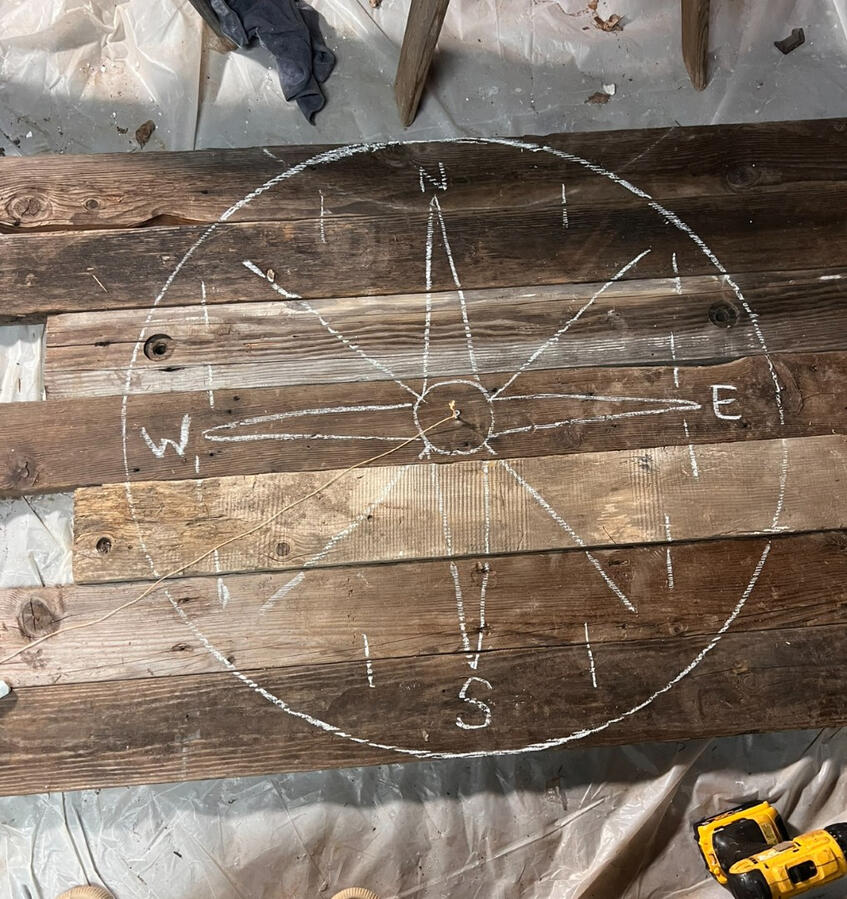
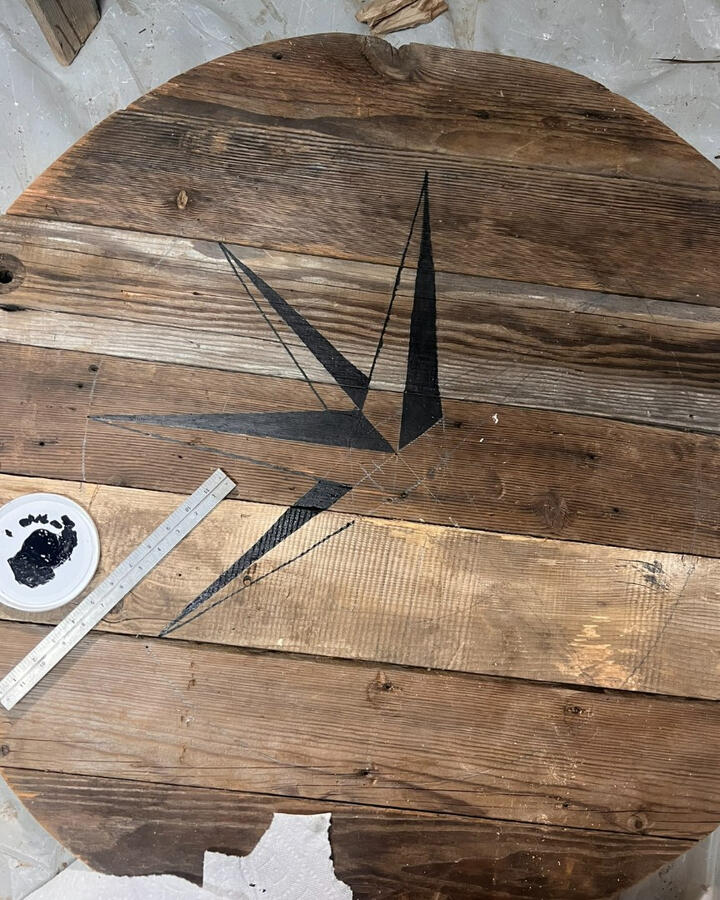
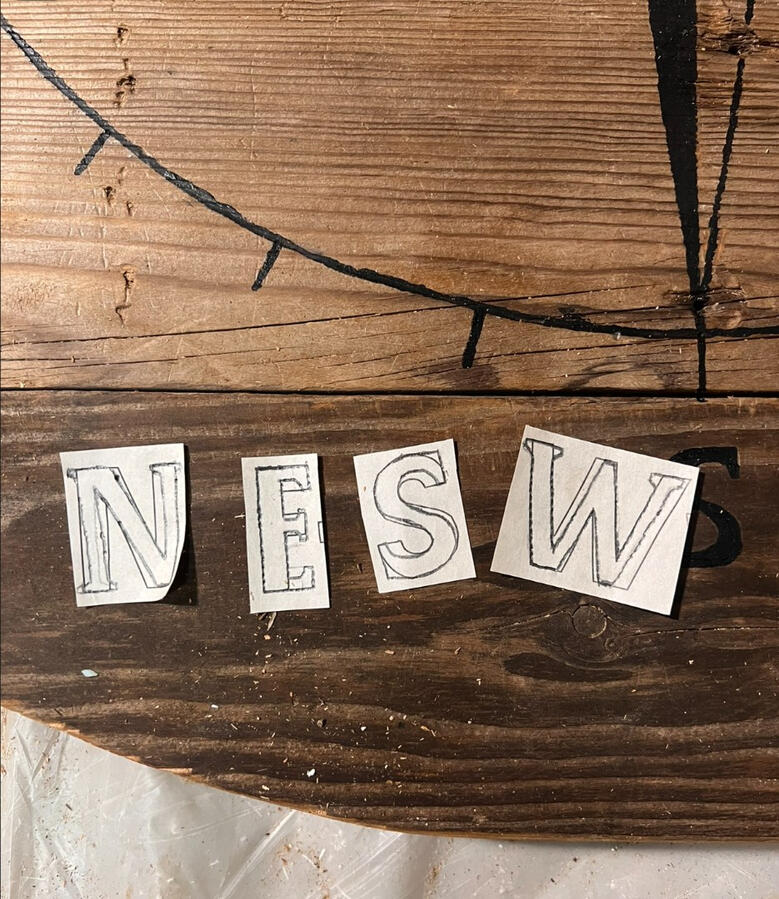
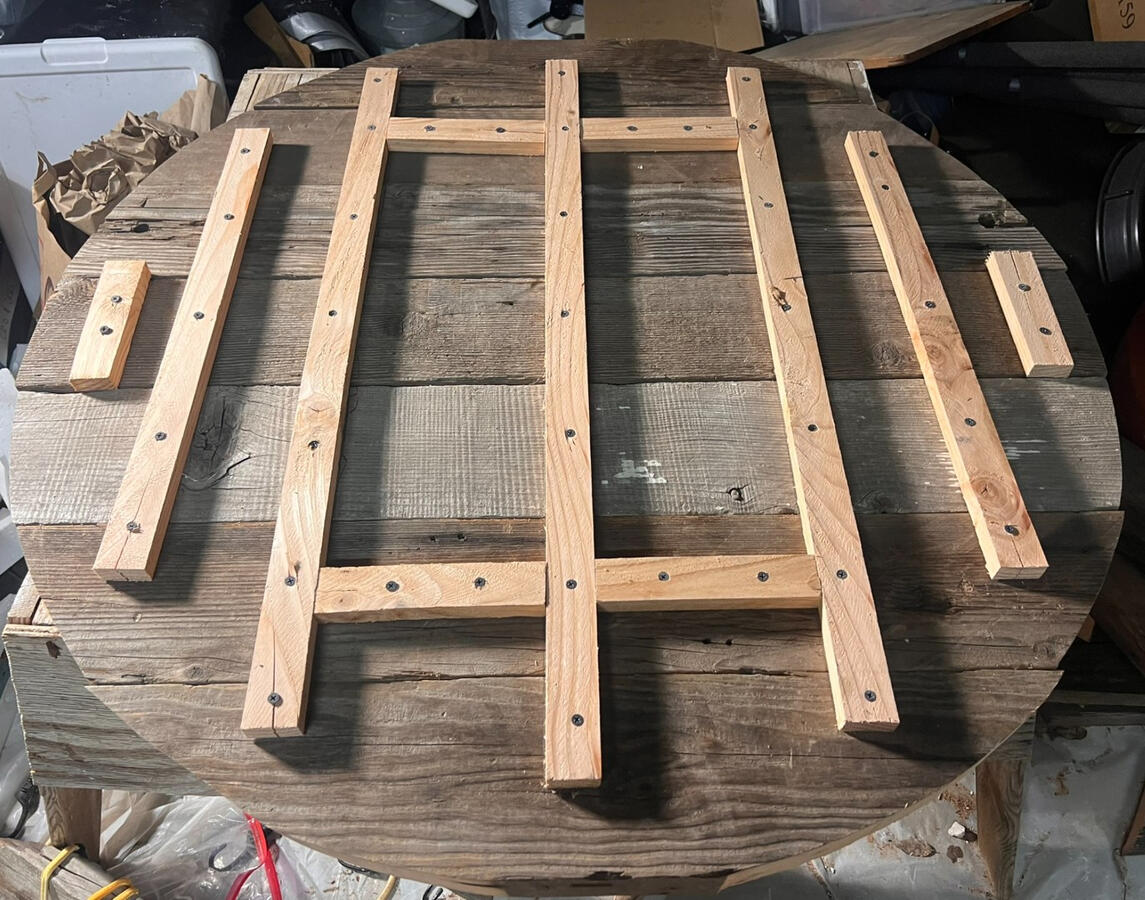
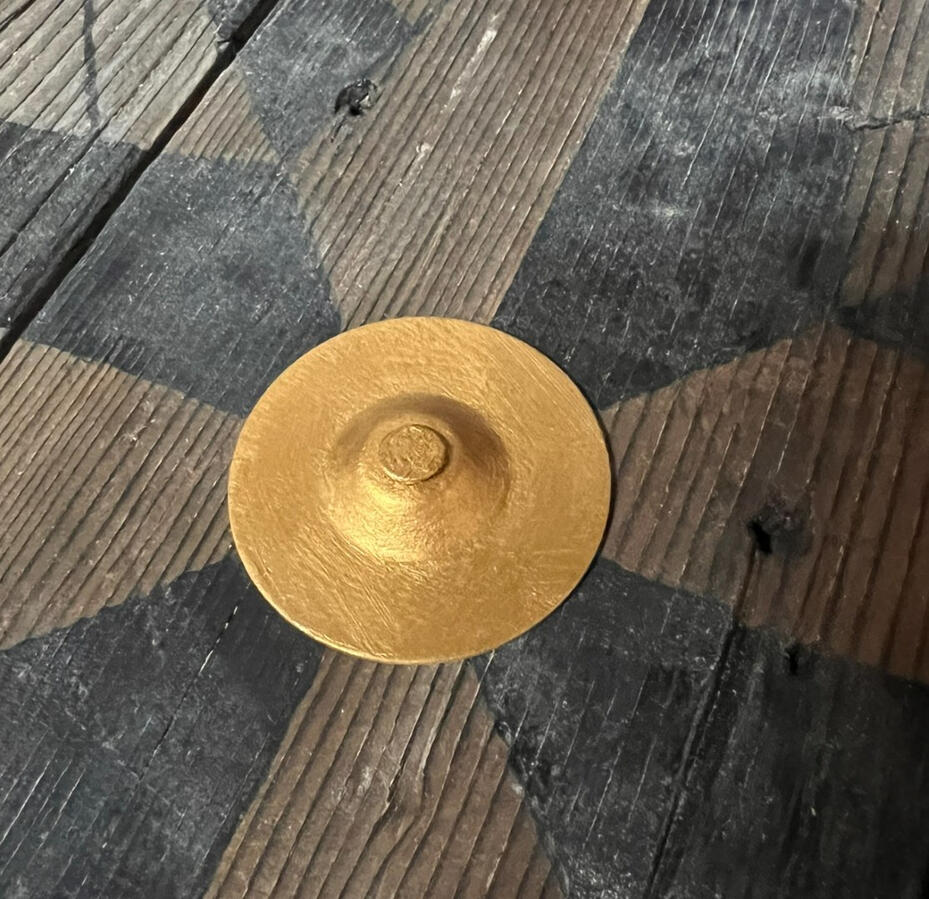
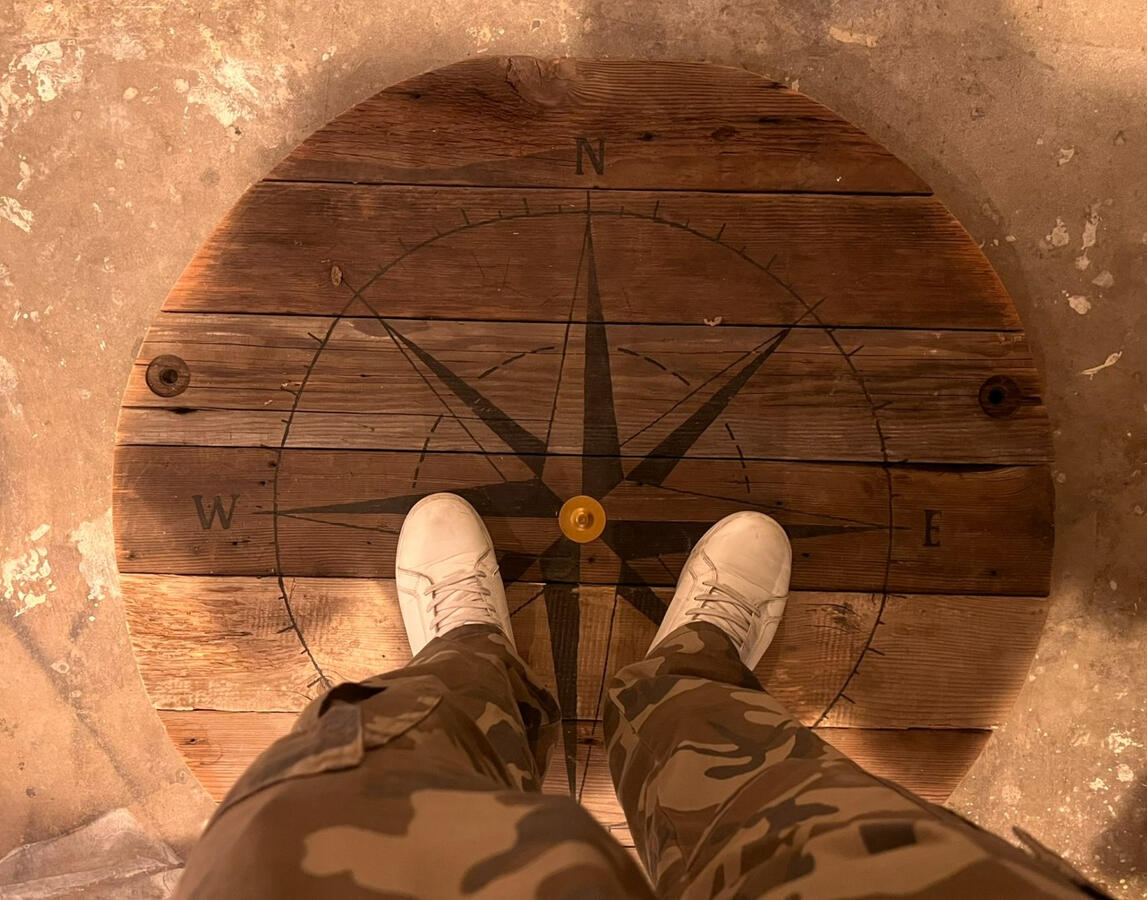
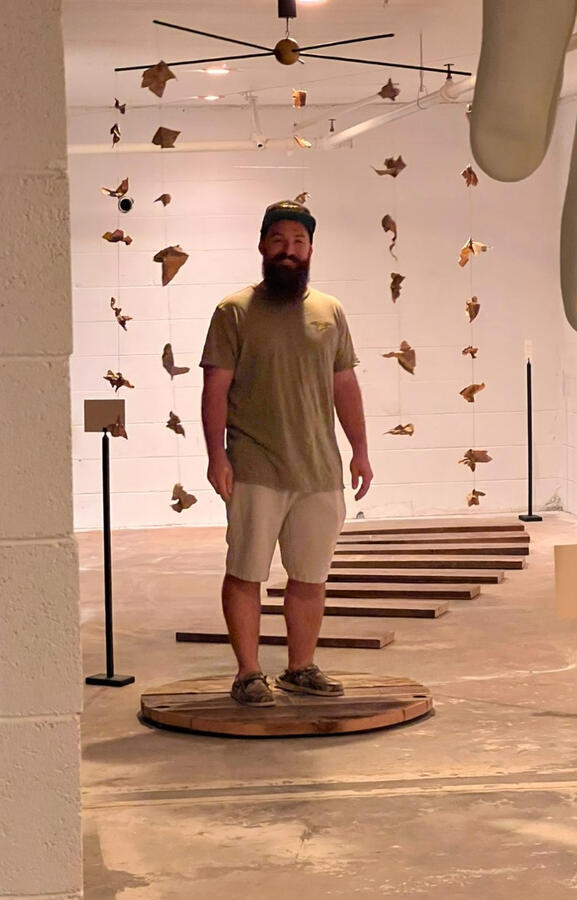
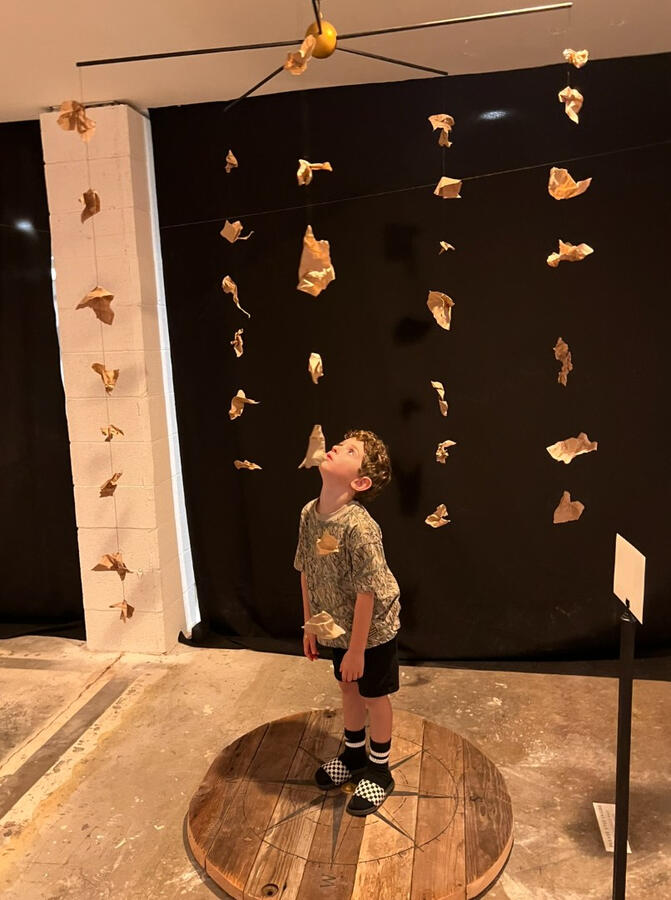
Once the idea became navigation, I kept thinking about the North Star.Polaris isn't useful because nothing around it moves. It's useful because it gives you something to orient yourself toward while everything else appears to move around it.That was much closer to what I was trying to say.Both/And had been about allowing opposing realities to exist at the same time. TRUST asked you to move without seeing the entire path.POLARIS became the next question:How do you keep moving when everything around you is moving?I built a large compass rose from old wooden planks from my parents' ranch. My dad and I spent the whole afternoon searching for wood for me to use, and my brother helped me get it home.I painted the cardinal directions onto it by hand. At the exact center, I placed a tiny metal disk I'd found in my garage and covered it in gold.It was an almost laughably ordinary object.But once it sat at the center of that compass, everything else in the piece began revolving around it.
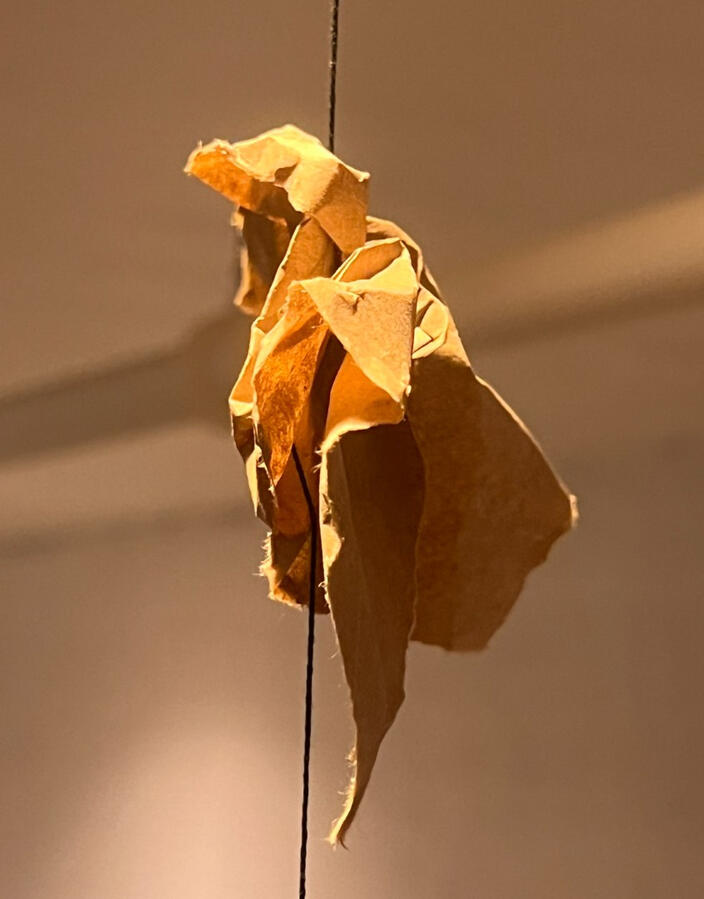
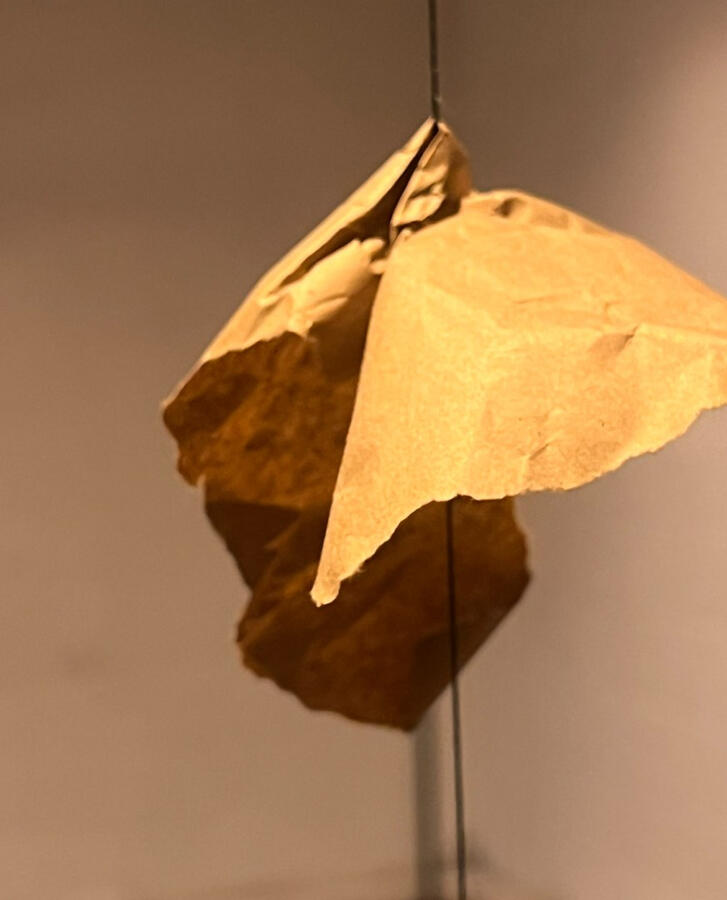
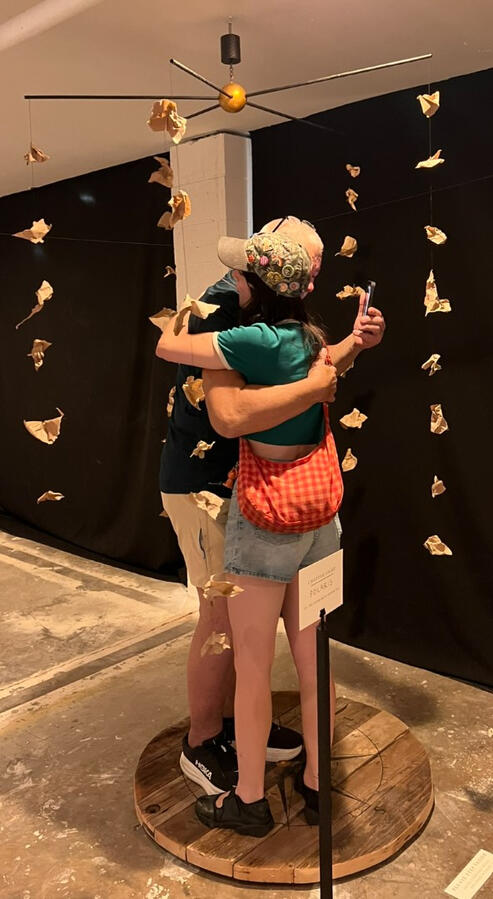
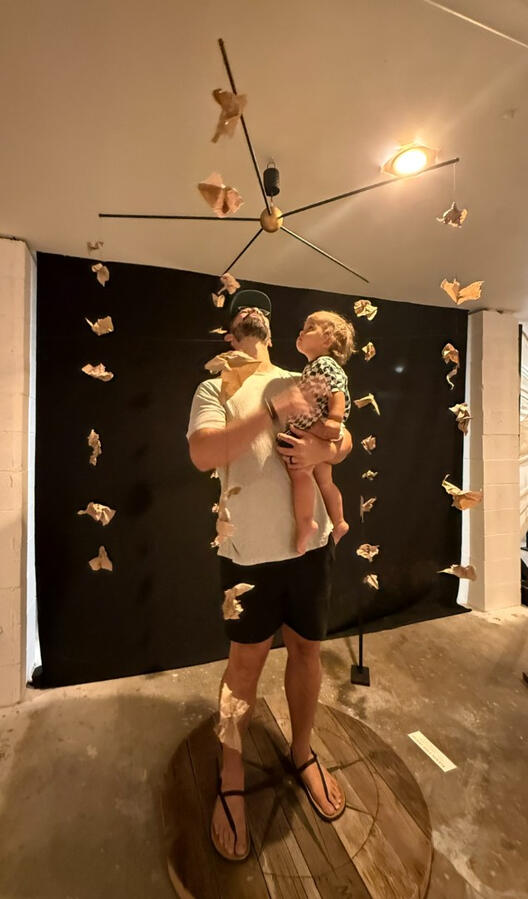
Then I needed the storm.And the storm was made out of packing paper.I had piles of the brown paper that comes stuffed inside shipping boxes, and I started folding and shaping individual pieces. Some became tight and compressed. Others opened outward. Some almost looked like flowers or birds.I didn't want it to look like I had crumpled up a bunch of trash and hung it from the ceiling. Each piece was intentionally shaped, but I still wanted the material to remain recognizable as something ordinary.Because that's what the storm represented to me.Not some enormous catastrophe.Life.Responsibilities. Noise. Pressure.Things demanding attention. All the ordinary stuff that can slowly pull you away from whatever you thought mattered.I suspended those pieces independently around the compass so they could actually move. Air in the room, people walking past, tiny changes around them could make the whole storm shift.But I deliberately left open space around the center.Everything could move.The center remained clear.
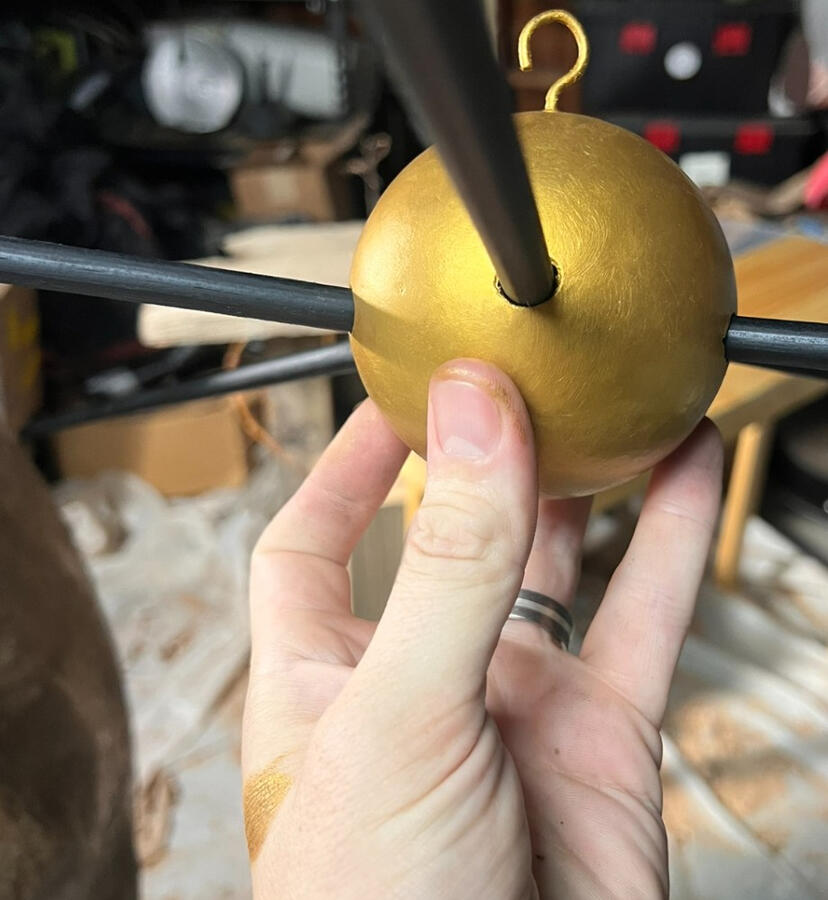
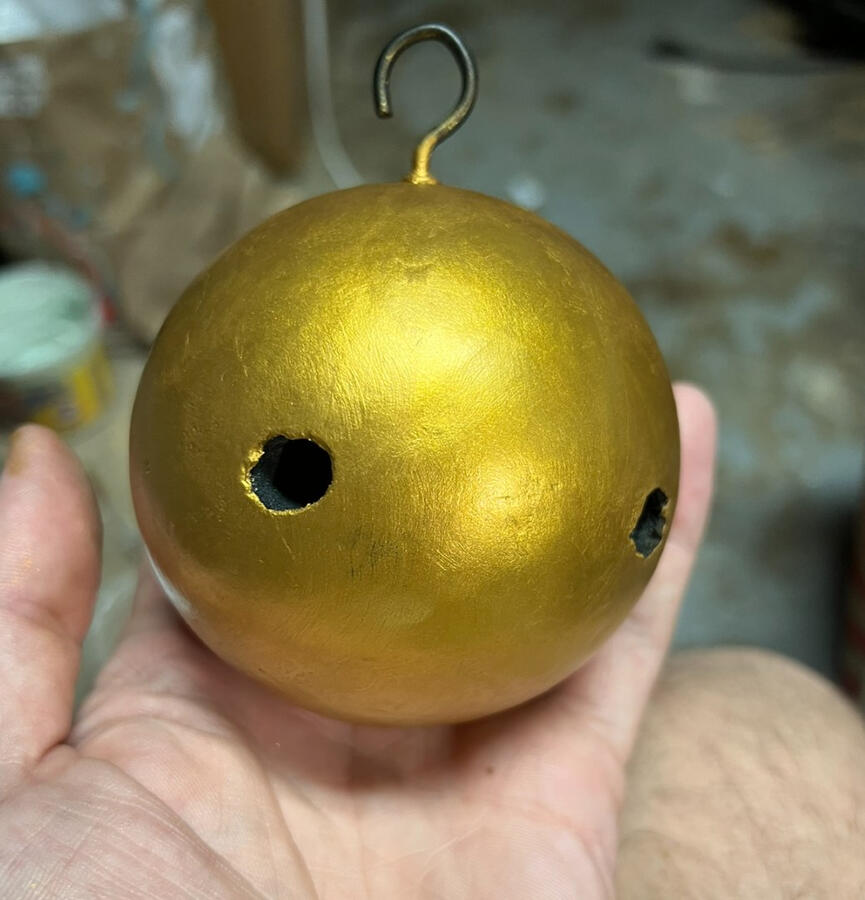
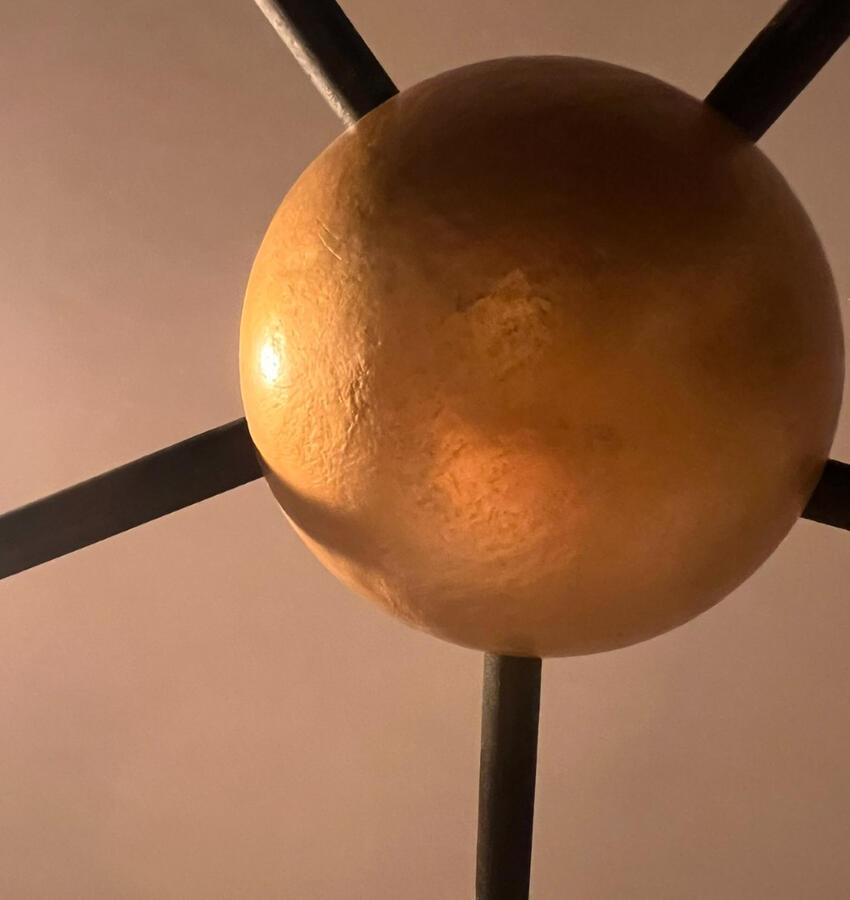
Above the compass, I suspended a gold sphere with thin black spokes extending from it. I mounted the whole thing to a small motor designed to slowly rotate something like a disco ball.Which is one of those sentences that makes the finished piece sound considerably less profound.But it worked.The gold form turned slowly while all those individual pieces of the storm moved independently around it. The black thread almost disappeared in the room, so from a distance the paper seemed to hang in space.On the floor, the instruction read:PLEASE STEP INSIDE
ENTER CAREFULLY WHEN
THE SPACE IS CLEARThat mattered.You weren't supposed to observe the storm from a safe distance.You had to wait for an opening and step into it.Once you were standing there, the compass was underneath you. The storm was around you. The gold center was above you.The piece wasn't asking you to stop everything from moving.It was asking whether you could remain oriented while it did.
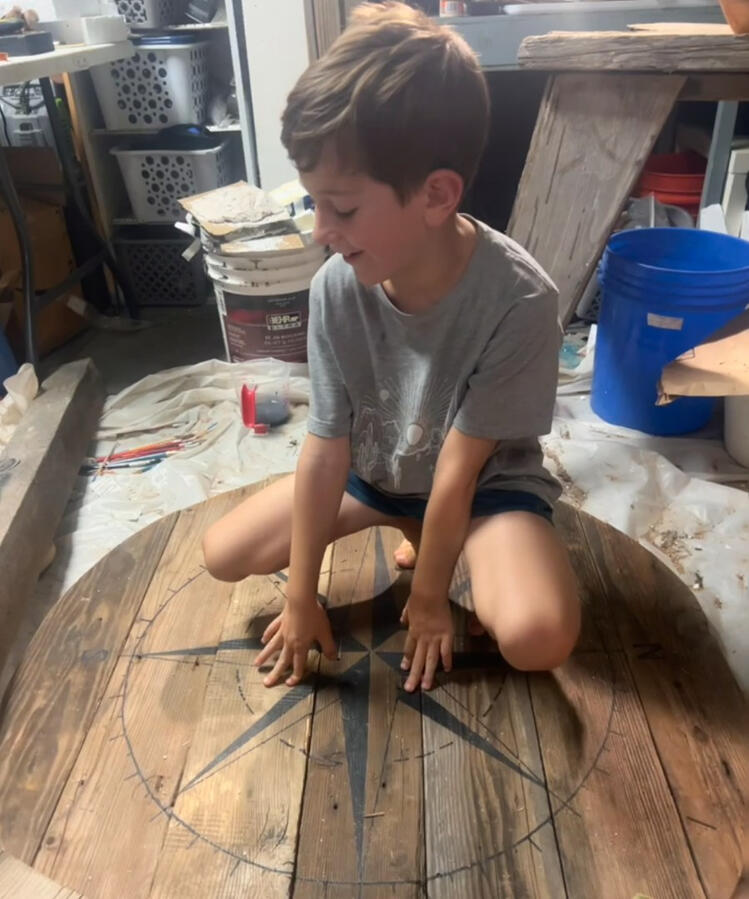
One night while I was still building POLARIS in the garage, my oldest was supposed to be asleep.Instead, he ended up barefoot on the unfinished compass, asking me questions about what I was making. At some point he asked what it meant.I told him:“It's how to find where you're going when you're lost.”Then he started telling me about the art exhibition he was going to make someday. His would have mysteries and surprises. A golden river. Fish. A tree. He kept adding things, completely awake now, because apparently imagining an art exhibition is not particularly helpful when you're supposed to be going to bed.I've already told you part of that story.What I couldn't have known then was where POLARIS would eventually sit.At the exhibition, you arrived at it immediately after TRUST. You had just crossed a path one step at a time. Then you stepped inside a compass surrounded by a moving storm.Trust gets you moving.Polaris asks what you're moving toward.Maybe being immovable was never about standing still.Maybe it was about knowing what you refuse to lose sight of.
CHAPTER 9
WONDER
LOOK CLOSER
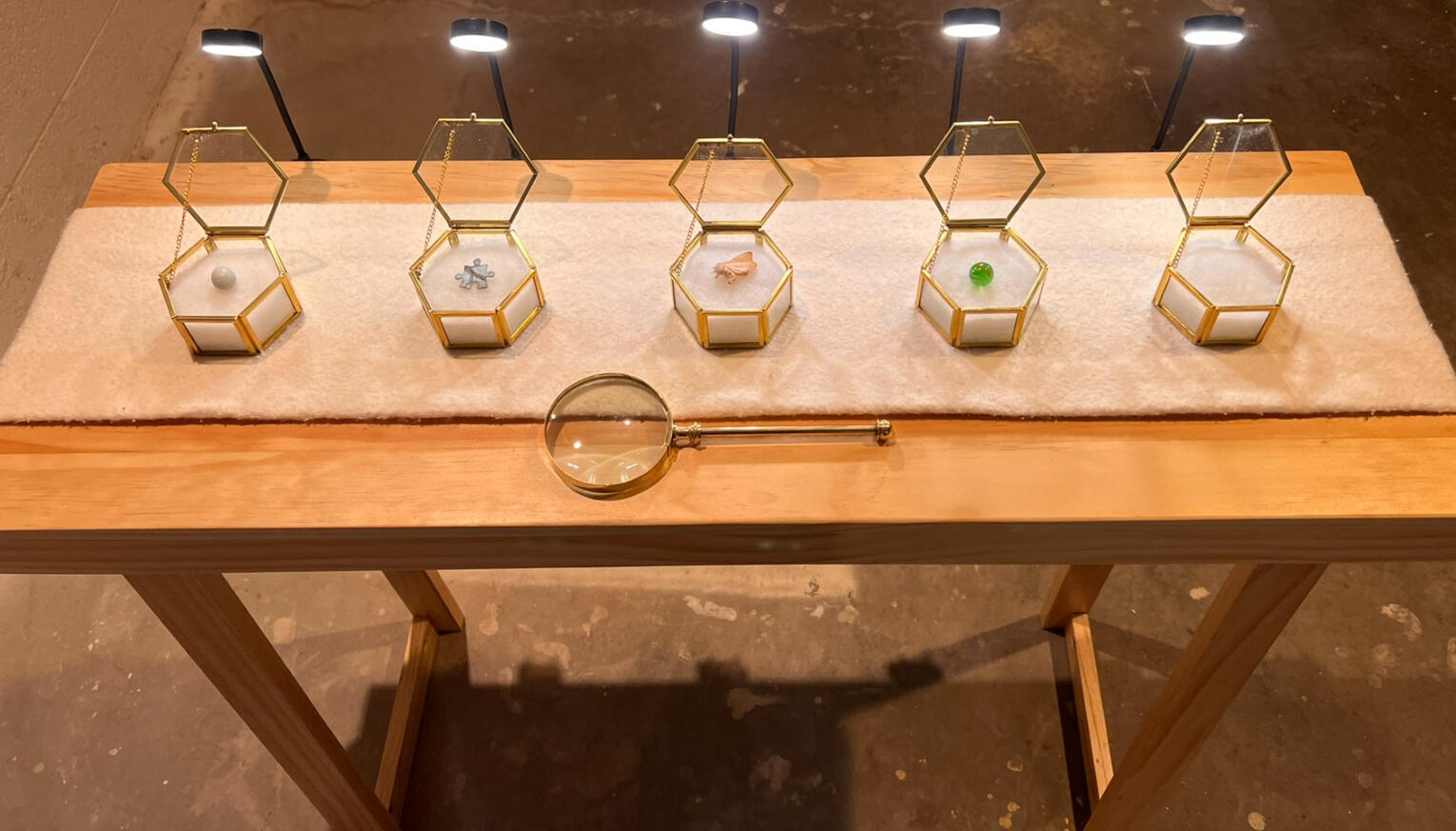
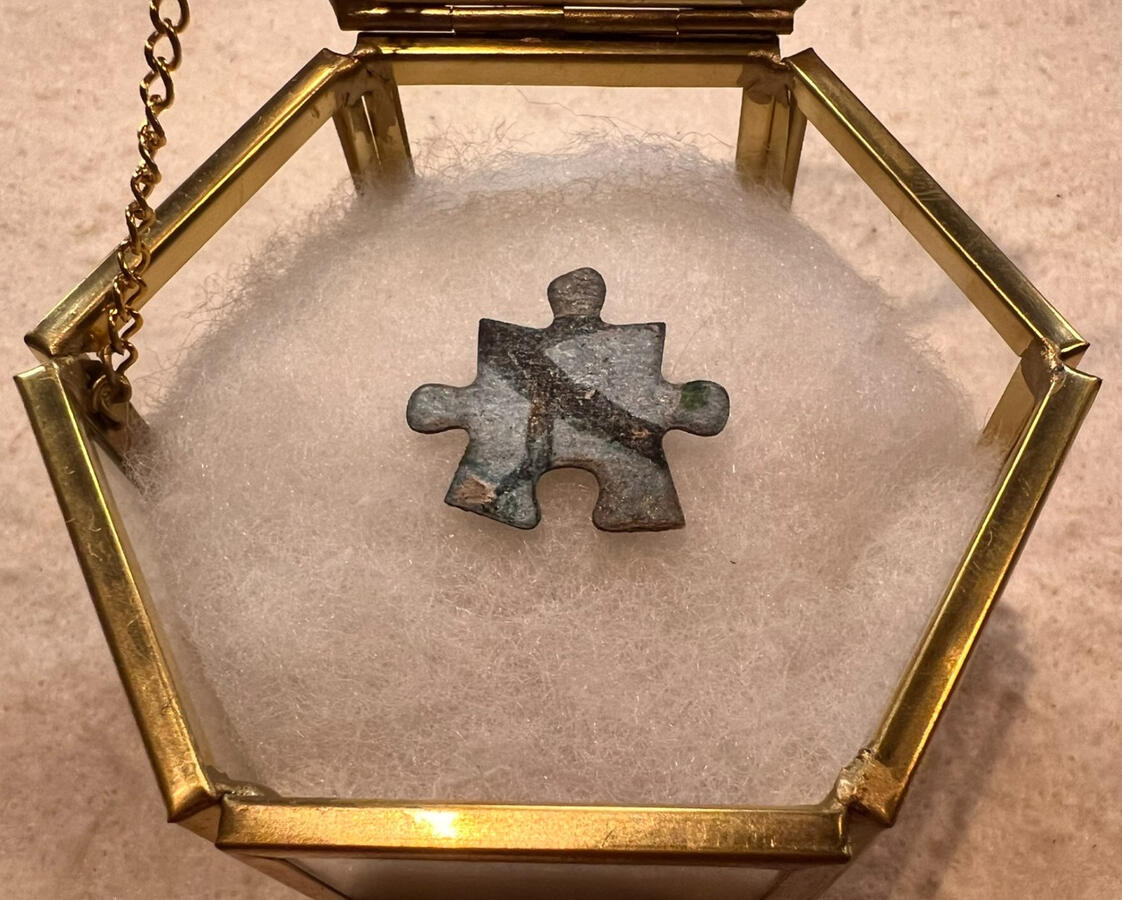
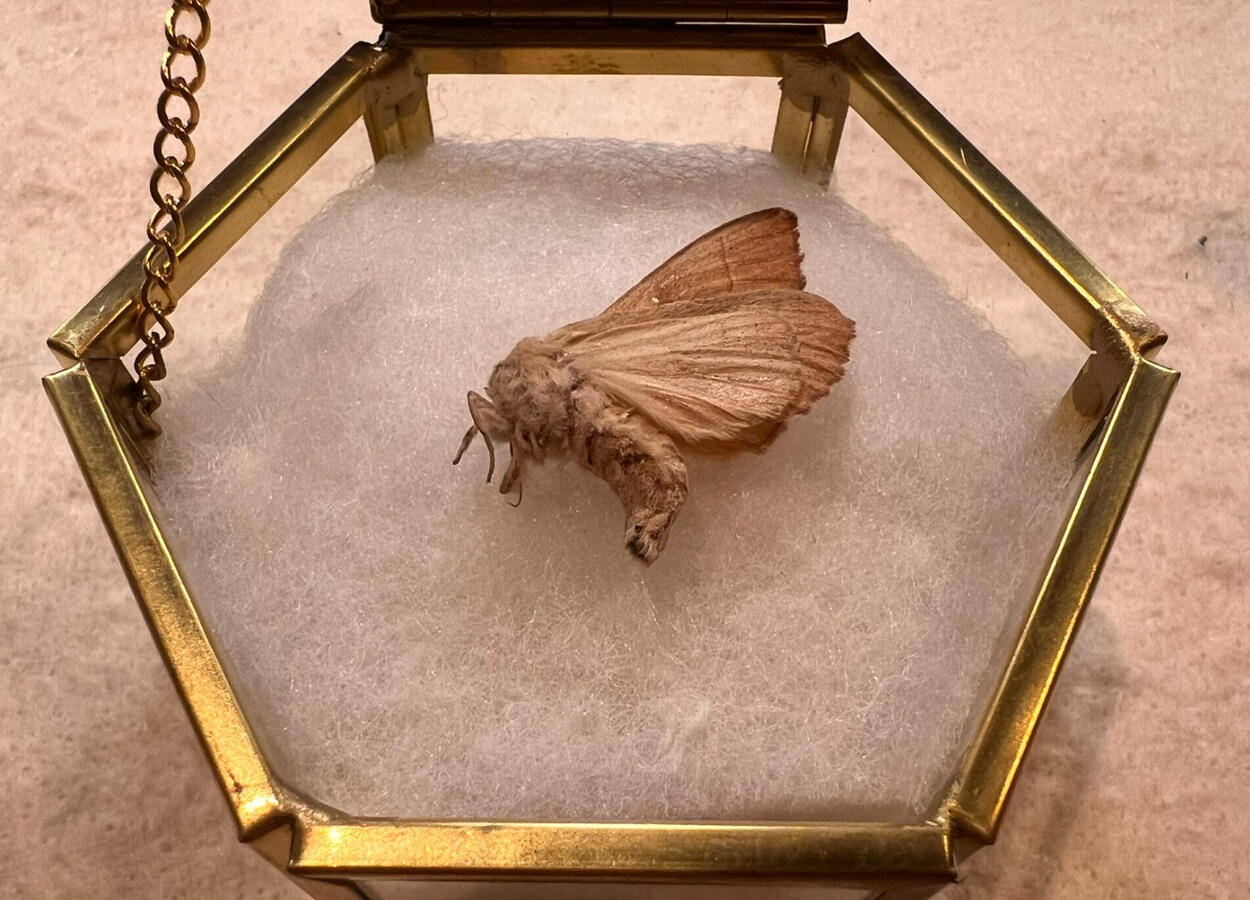
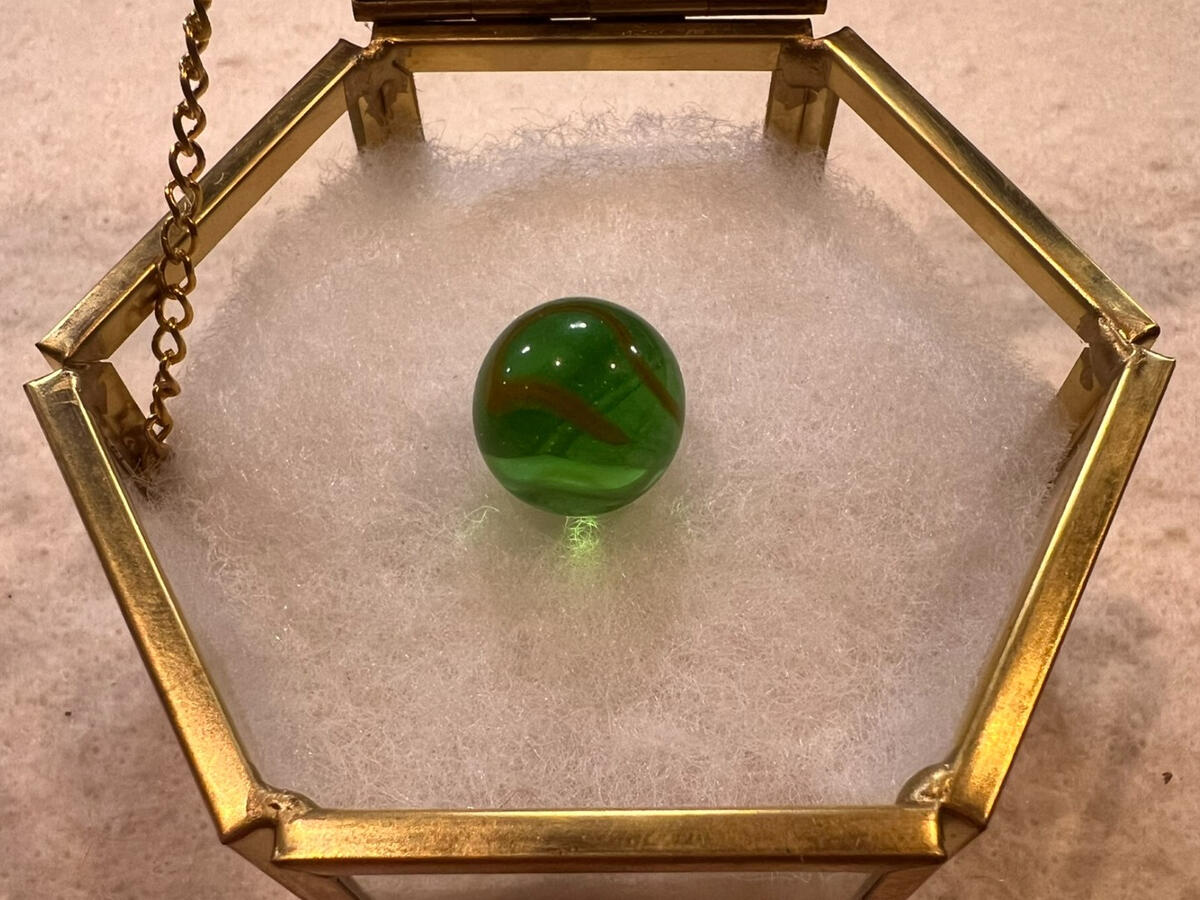
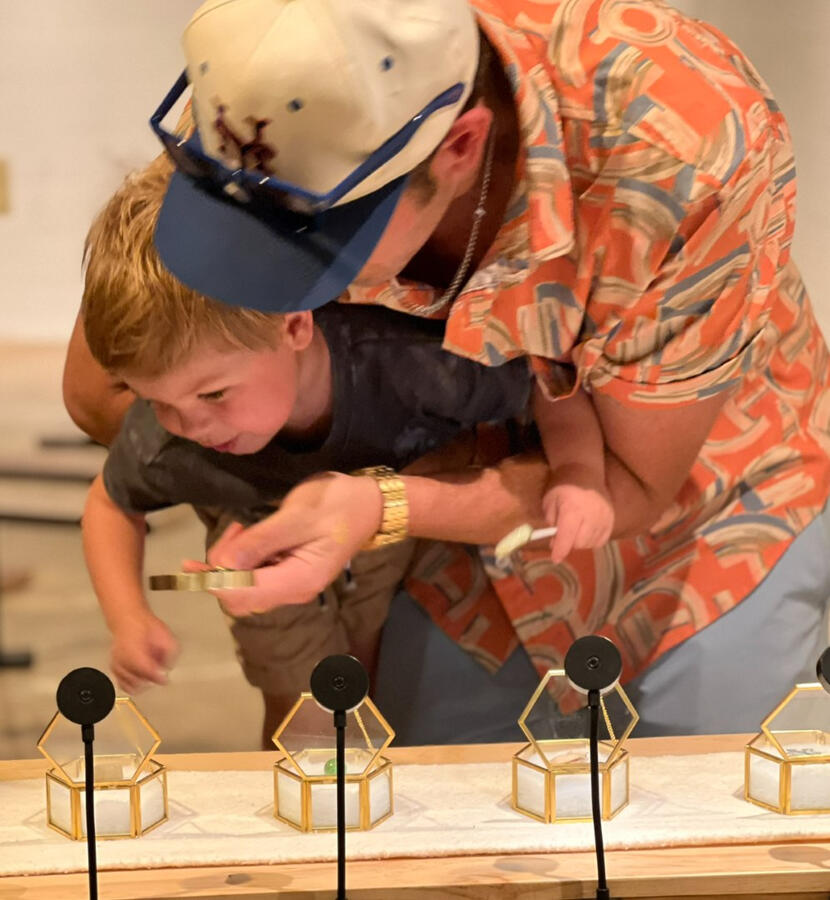
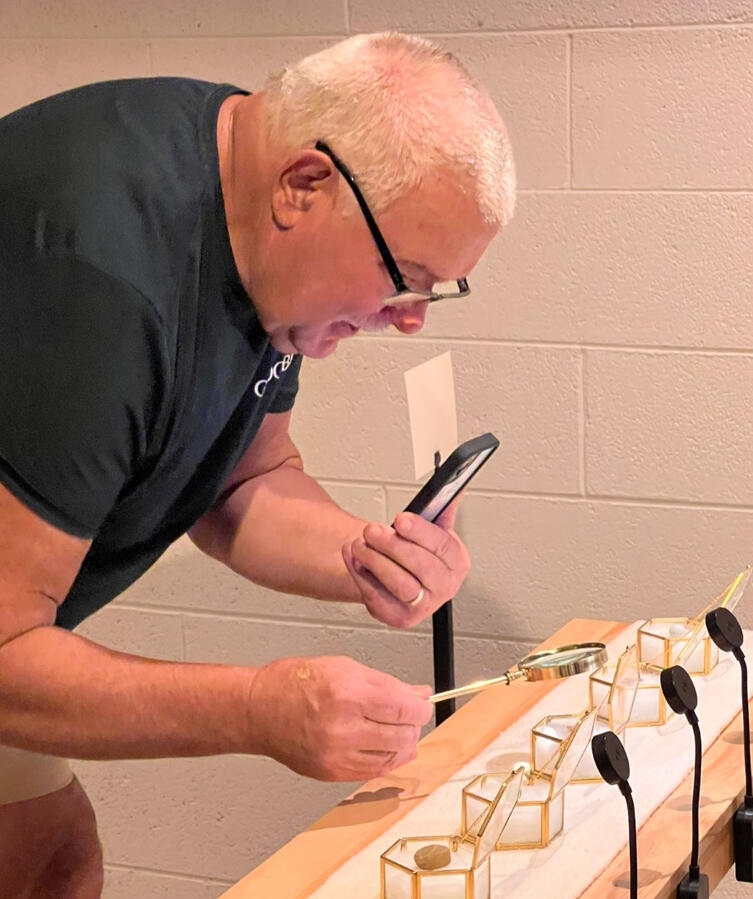
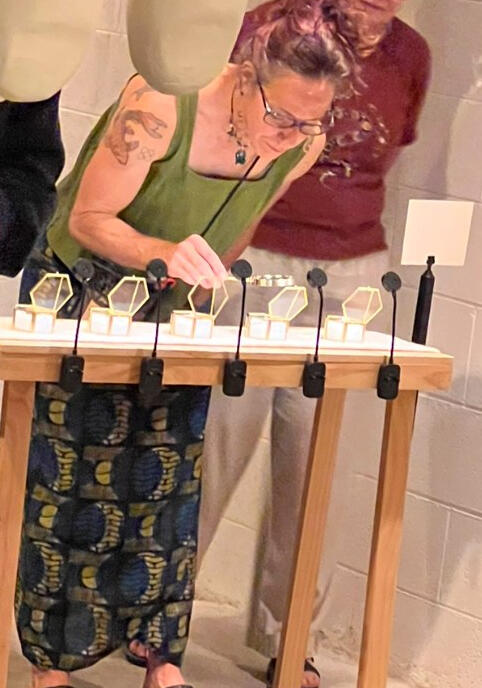
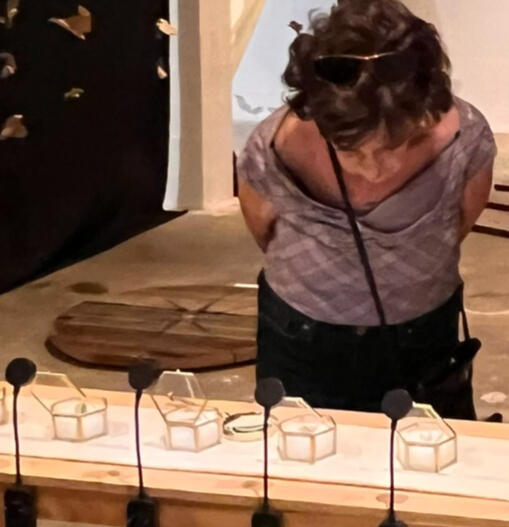
WONDER started with a rule.I wasn't going to go looking for five meaningful objects.I wanted them to come from moments when I had actually stopped and noticed something.Things I encountered while making MARKED that might normally have been ignored, stepped over, swept away or forgotten.Then I wanted to present those things with an almost ridiculous amount of care.I found a narrow natural wood table and ran a strip of soft ivory material down the center. On top of it, I placed five small gold hexagonal cases, each with its own light. Beside them was a magnifying glass.It looked a little like a museum display.Except almost nothing inside it would normally belong in a museum.That was the point.What happens when you give something ordinary your complete attention?
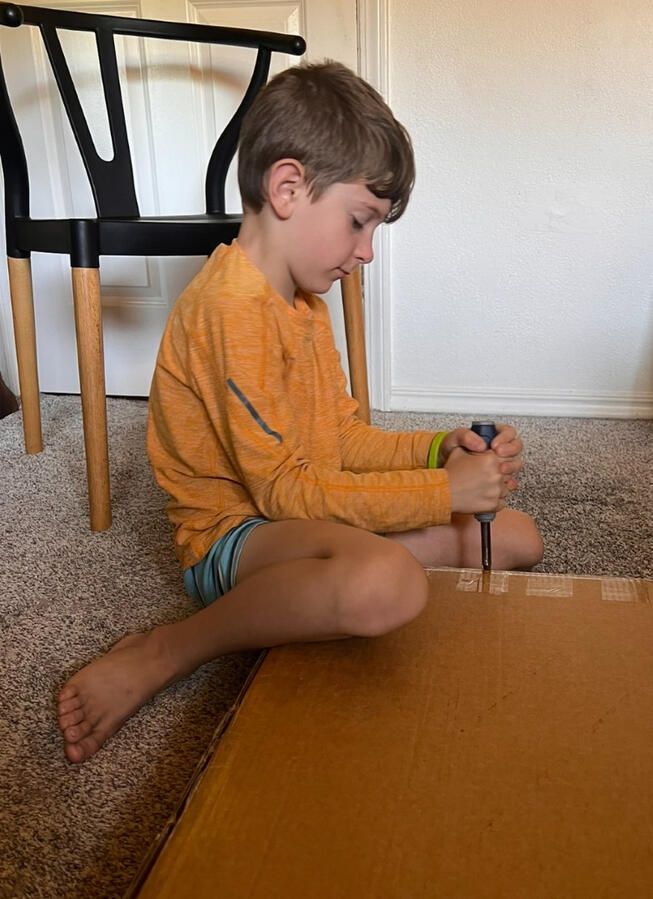
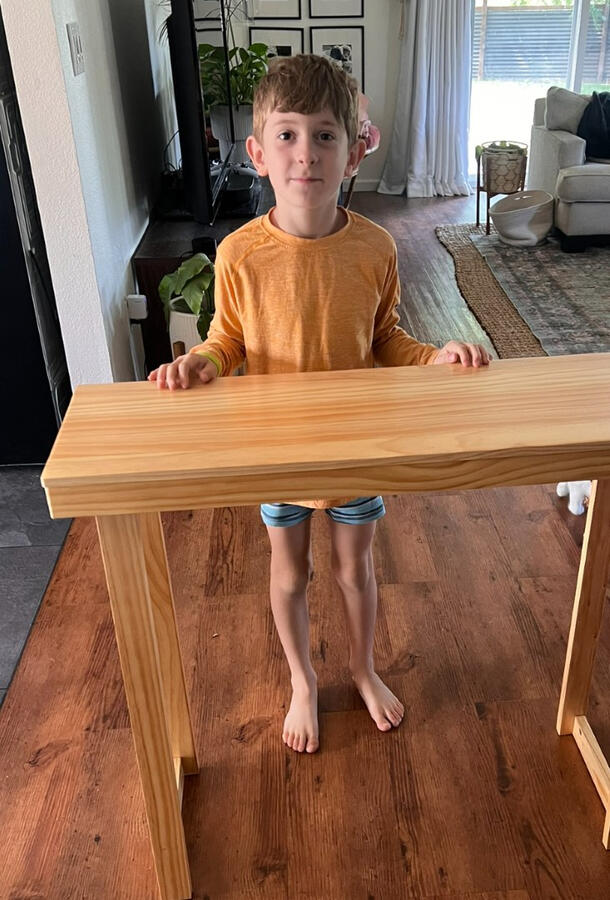
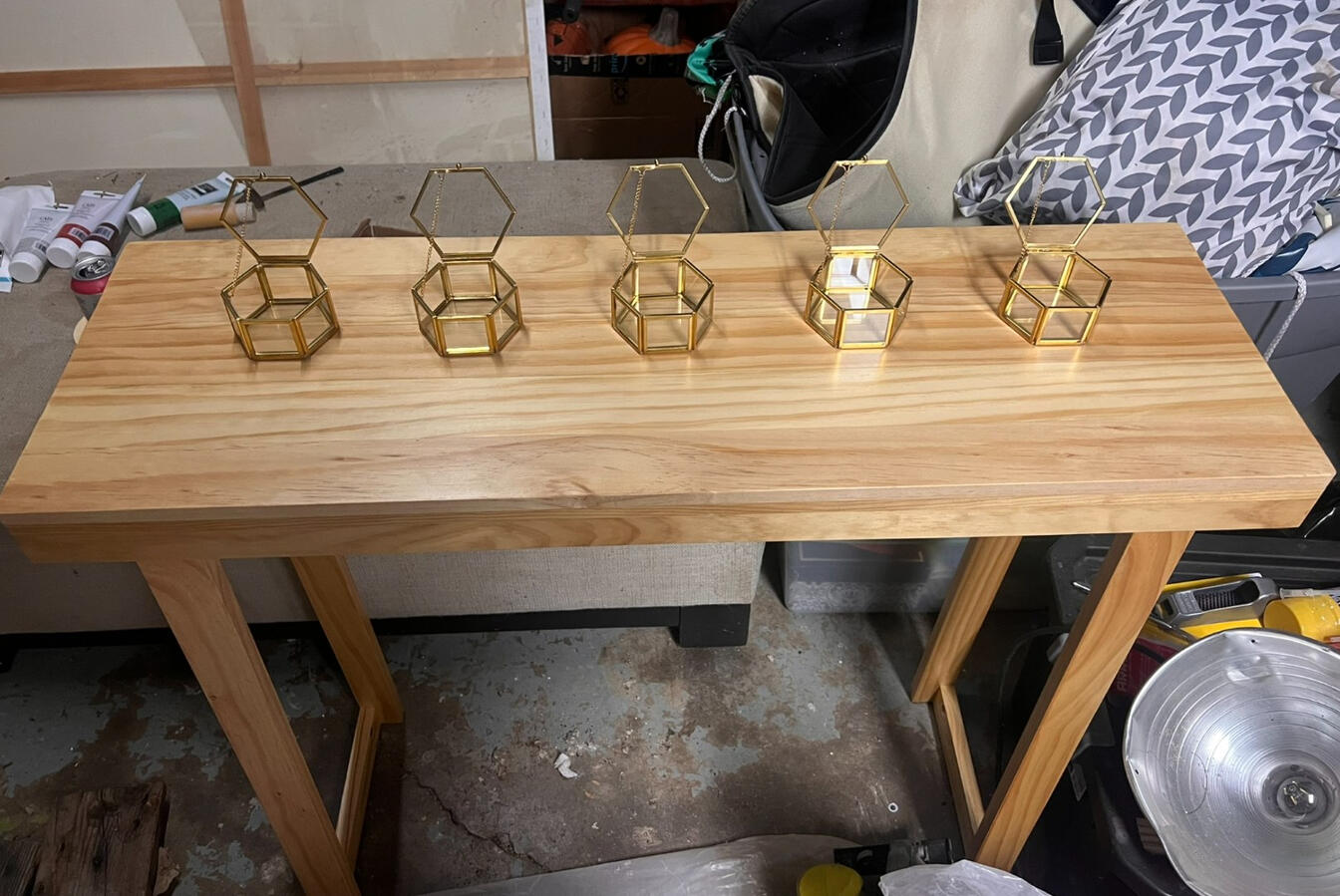
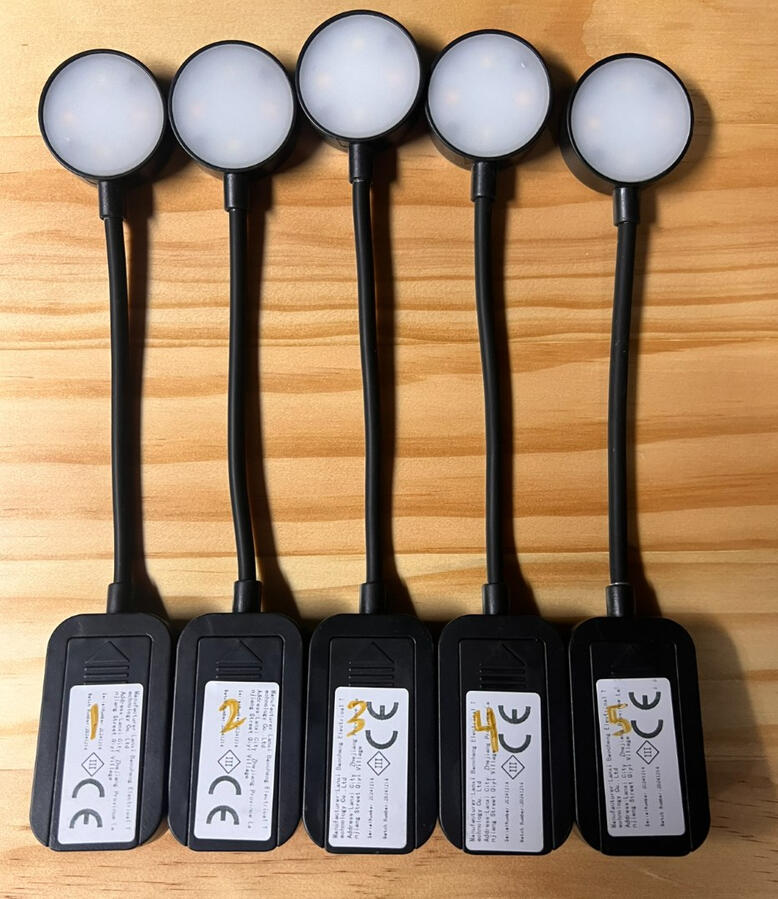
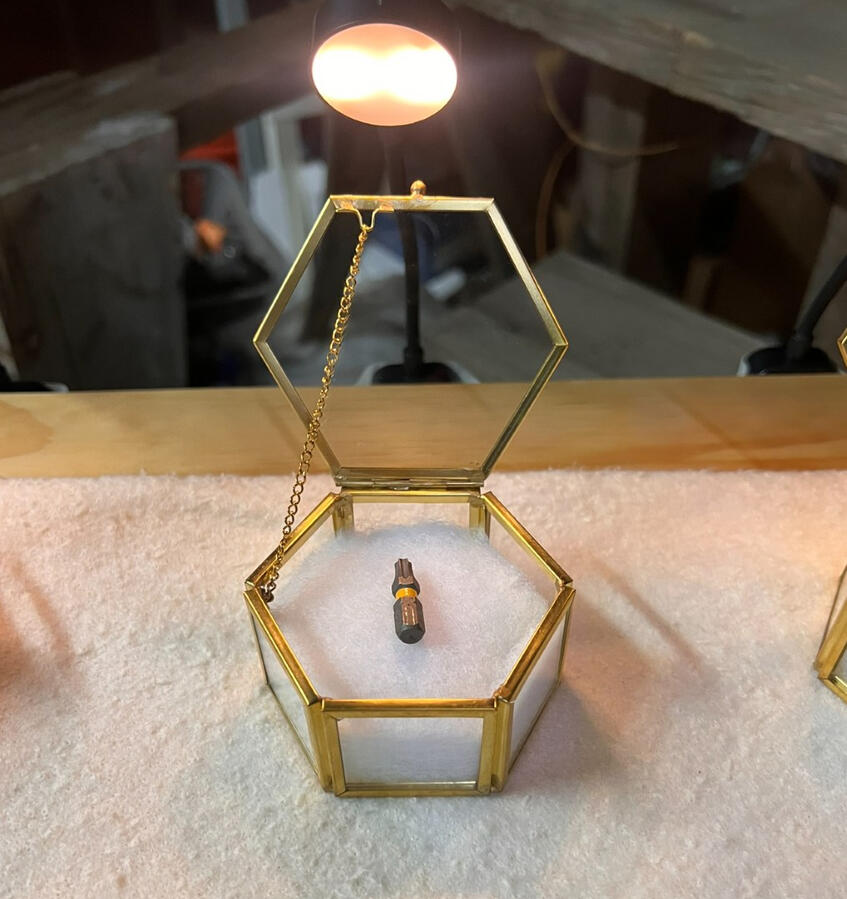
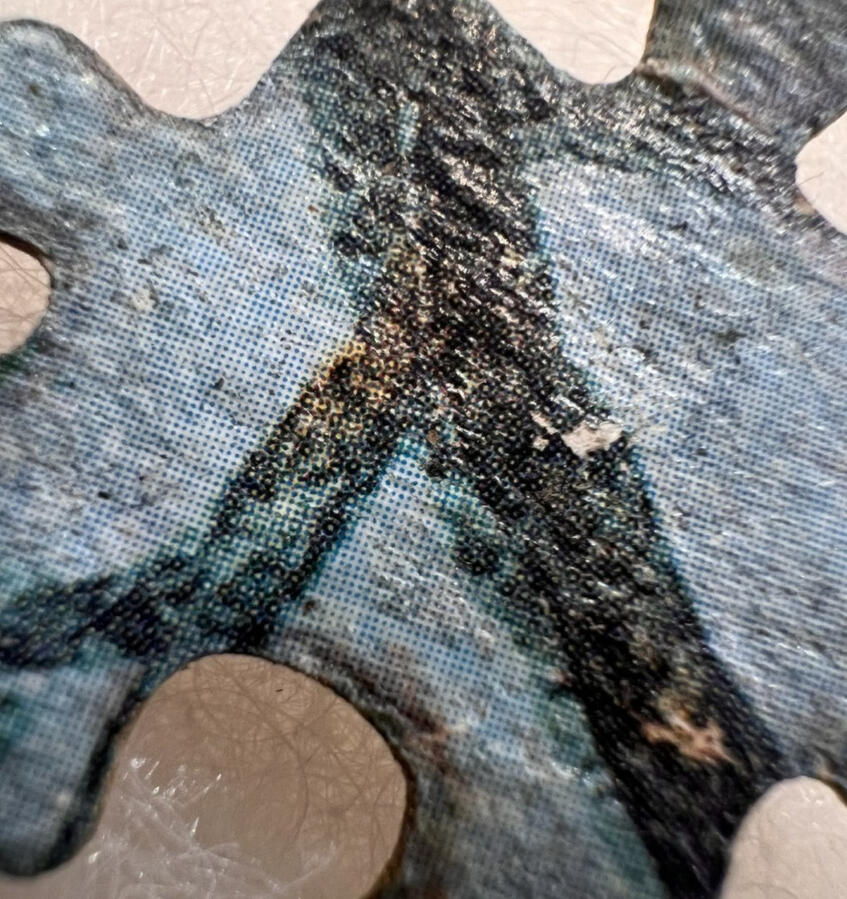
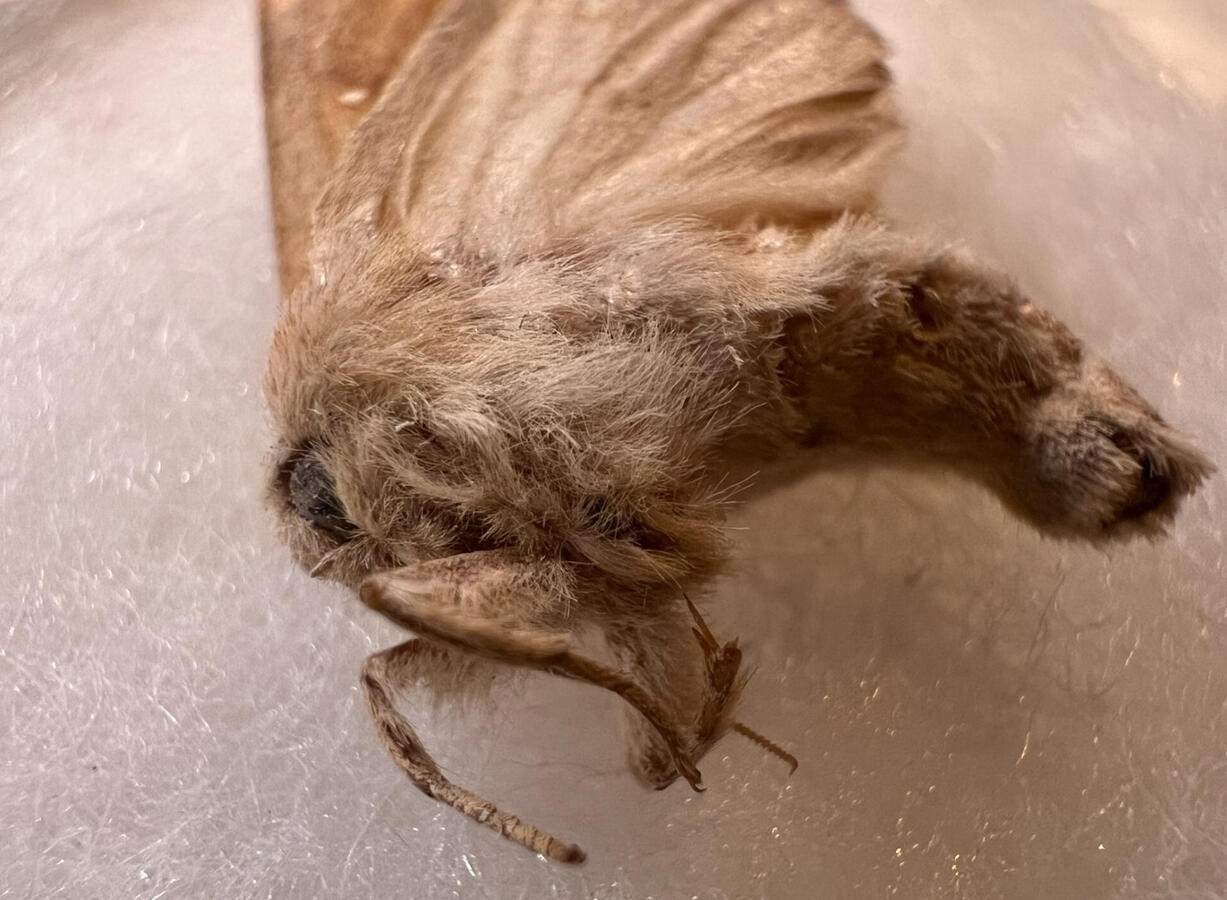
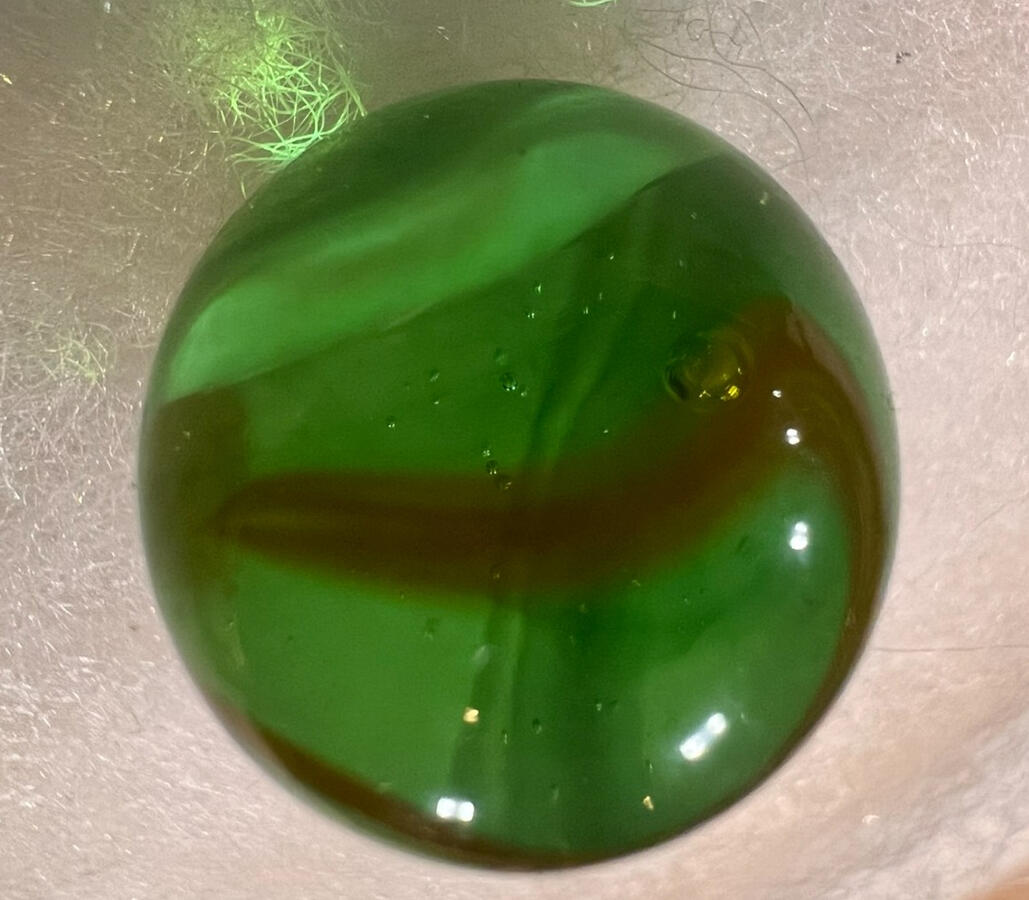
One of the first objects was a tiny puzzle piece.Early in the process of making MARKED, I was thinking through some of the visual language for the exhibition, including an idea involving a black puzzle and a small gold mark.Then I looked down.There was a tiny puzzle piece on the ground.I remember thinking, No freaking way.So I picked it up.Another object found me in the garage. It was a dead moth, pale and almost golden, still remarkably intact. I nearly swept it away before stopping myself.Wait. This is beautiful.That became part of WONDER too.The green marble came from my grandfather's workshop. He had kept a huge jar of old marbles, and I chose one from among them.None of these things had become more valuable because I put them under lights.I was just finally treating them like they were worth seeing.
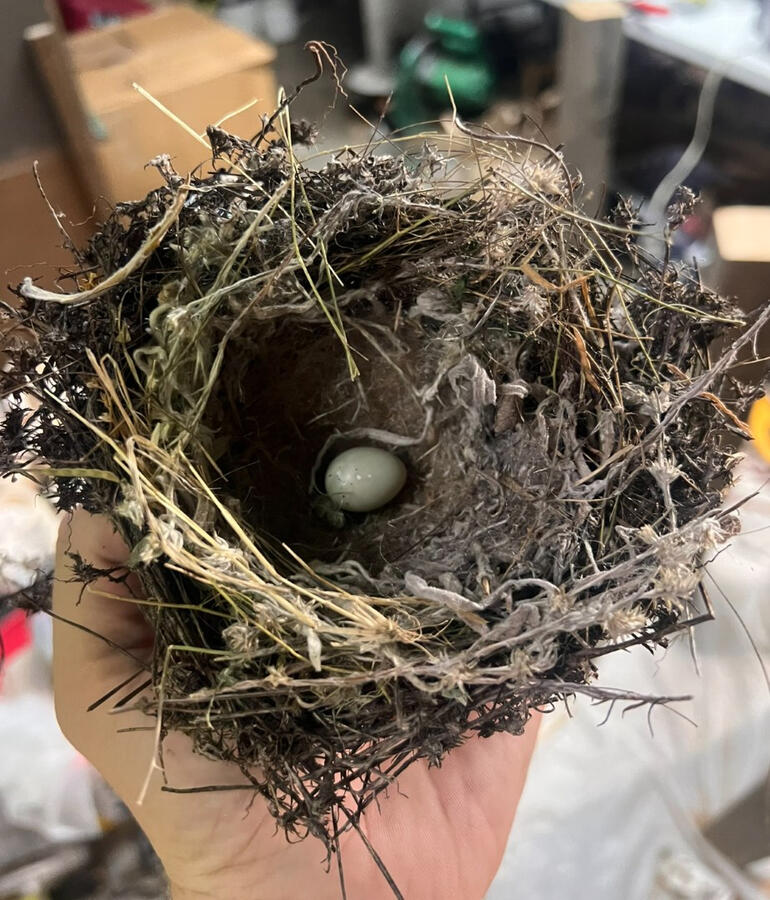
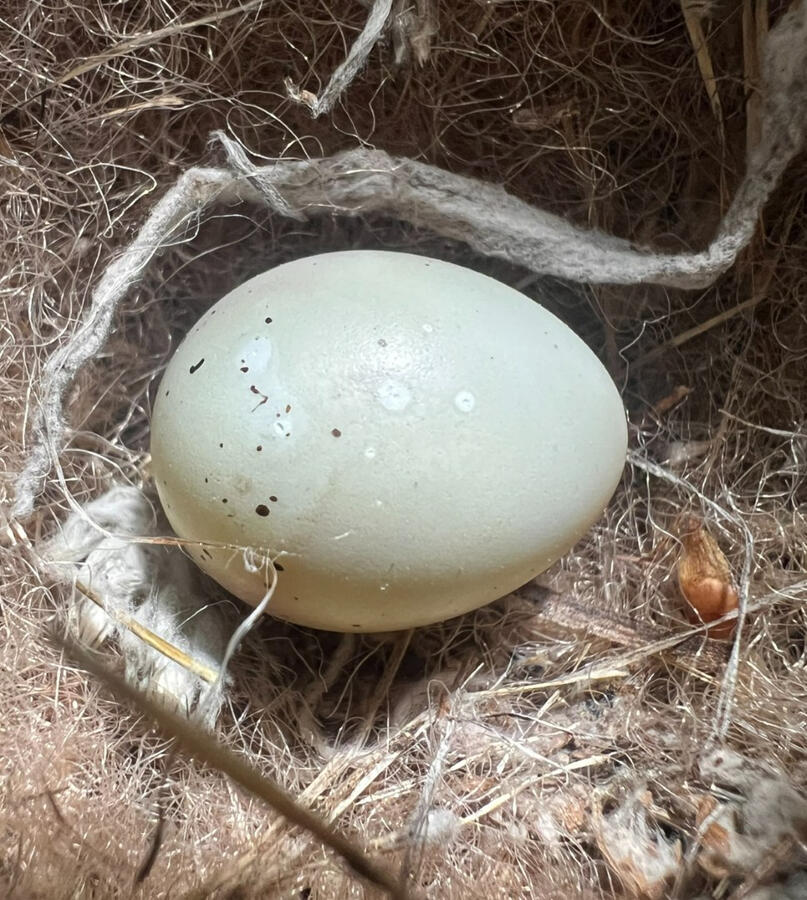
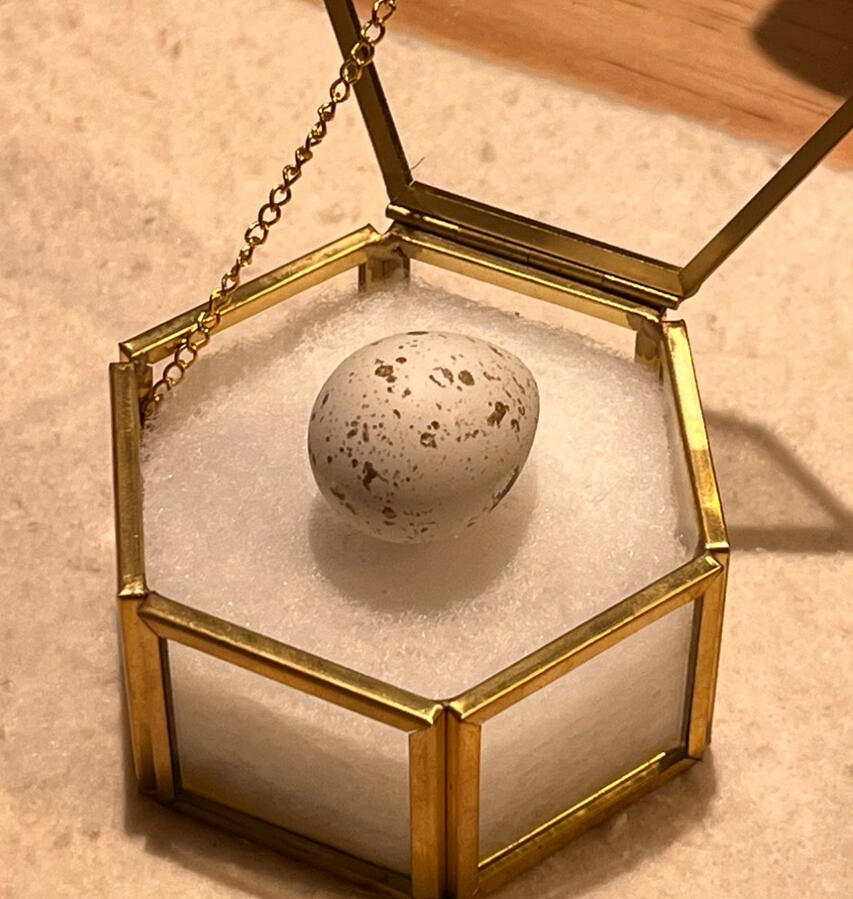
The egg had its own story.Outside our bedroom window, a small bird had built a nest with three tiny eggs inside. My family and I watched it for a while, but eventually the bird stopped returning. One egg remained.
I left it there for weeks before finally bringing the nest and egg into the garage.That tiny egg became one of the first things you saw in WONDER.And somehow it survived.
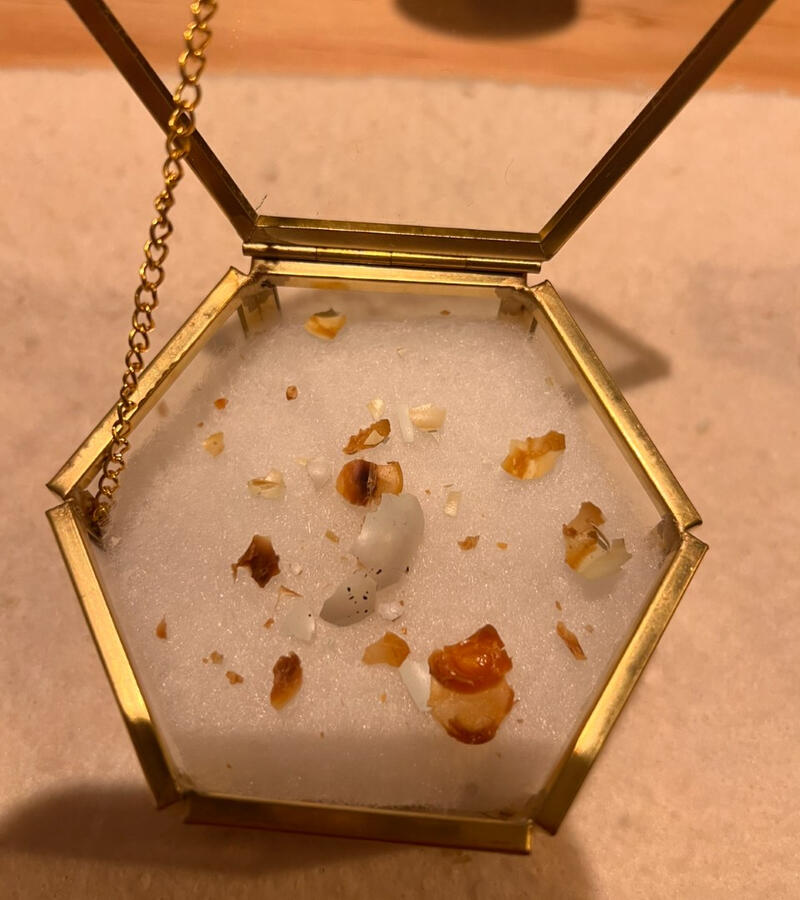
It survived being moved. It survived installation. It survived the first weekend and almost the entire second weekend of MARKED.Then, on the second weekend, a little boy accidentally broke it.He was about four and a half.I wasn't angry. It was an incredibly fragile egg sitting in an exhibition where I had deliberately invited people to come close. Eventually, something like that was probably going to happen.So for the final few hours that Sunday, I replaced the broken egg with a small feather I had found.The documentary crew happened to be there that day. Later, a woman looking at the feather interpreted it as if the egg had hatched and something had finally grown wings.I loved that the piece had changed and immediately created another story.
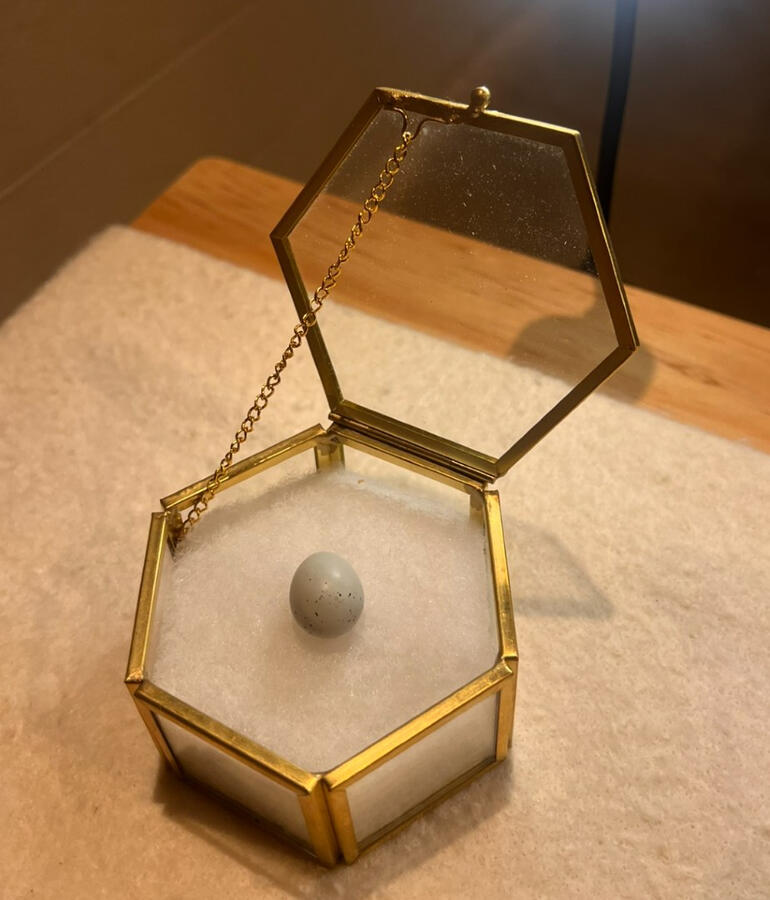
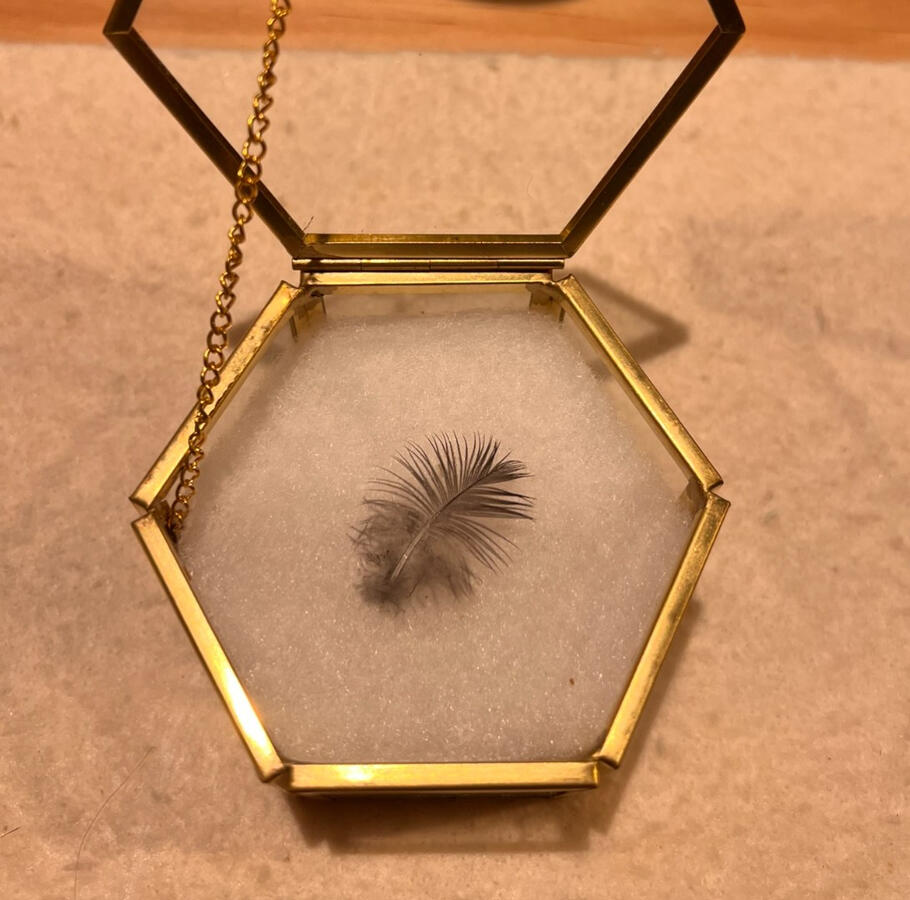
WONDER kept changing even after the exhibition opened.By the final weekend, the feather had been replaced too. I found a small quail egg on a path near our home. We knew there were quail around, so I left it alone for a day or two before bringing it inside. I carefully emptied it through tiny holes so I could preserve the shell, and an egg returned to WONDER.But there was another object I still hadn't gotten right.For the first two weekends, one of the five cases held a small golden, translucent rock I'd found at a creek. It was beautiful, and it followed the rule. I really had stopped and noticed it.But sometime after MARKED opened, I remembered something I had forgotten.
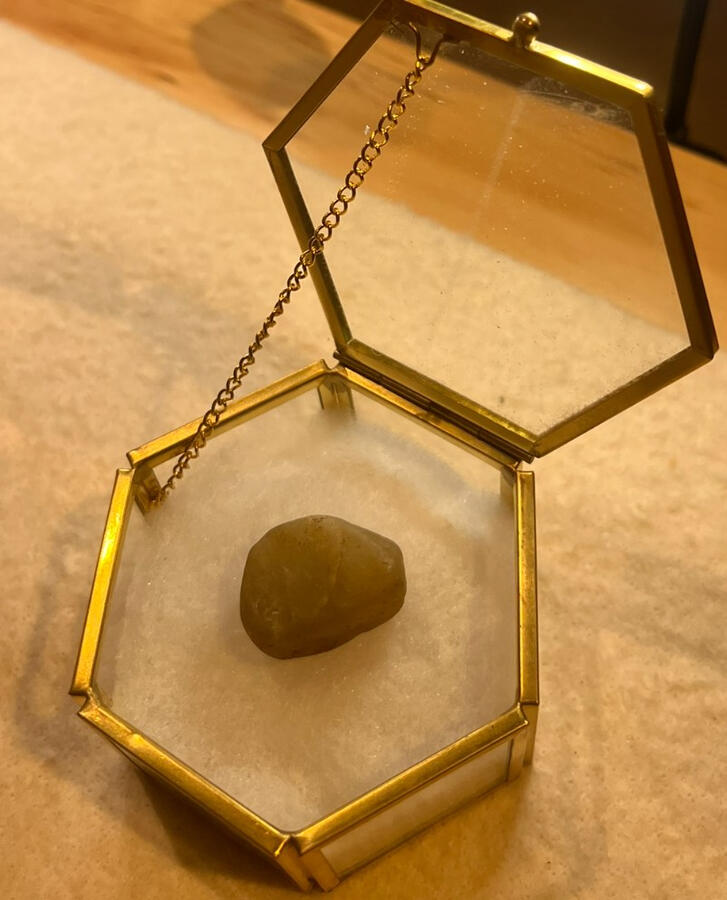
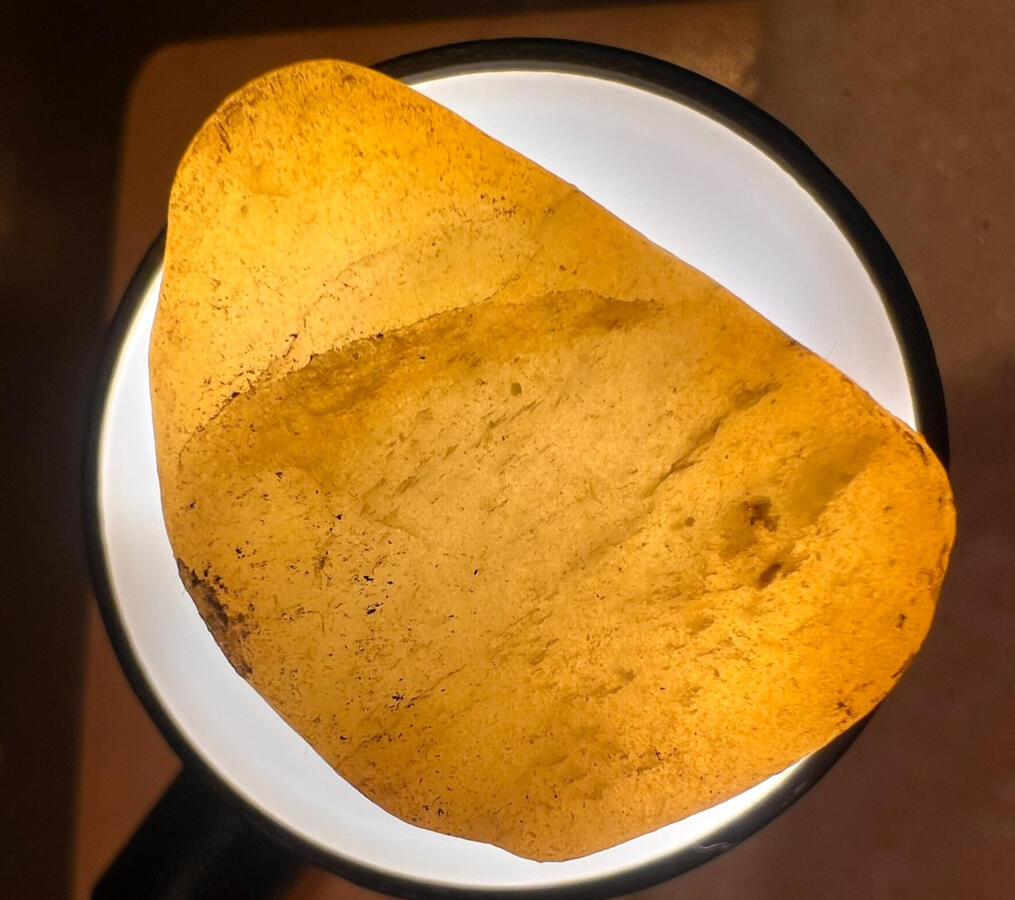
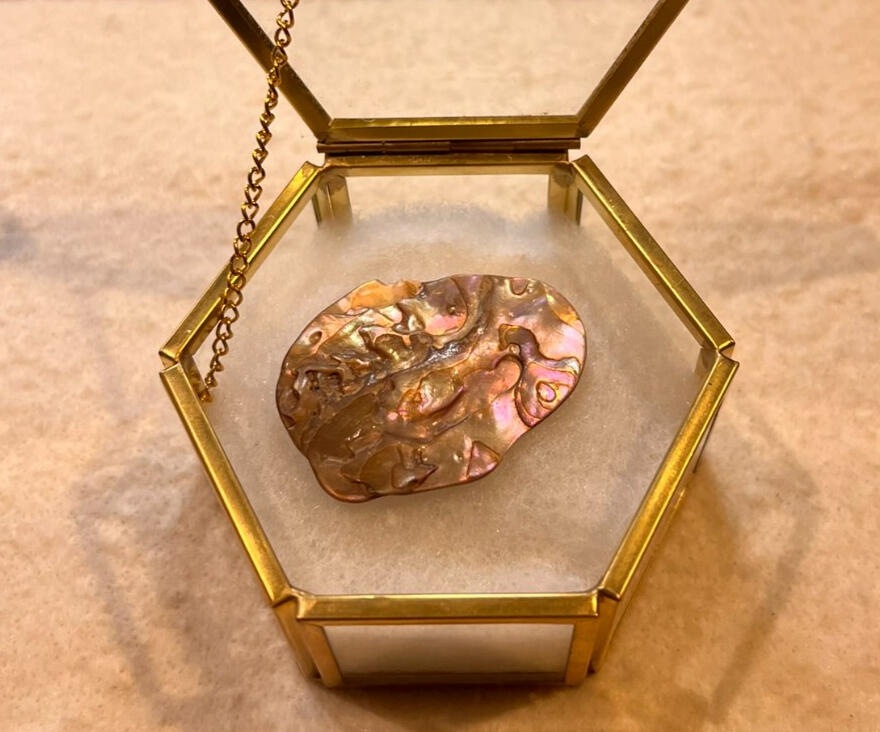
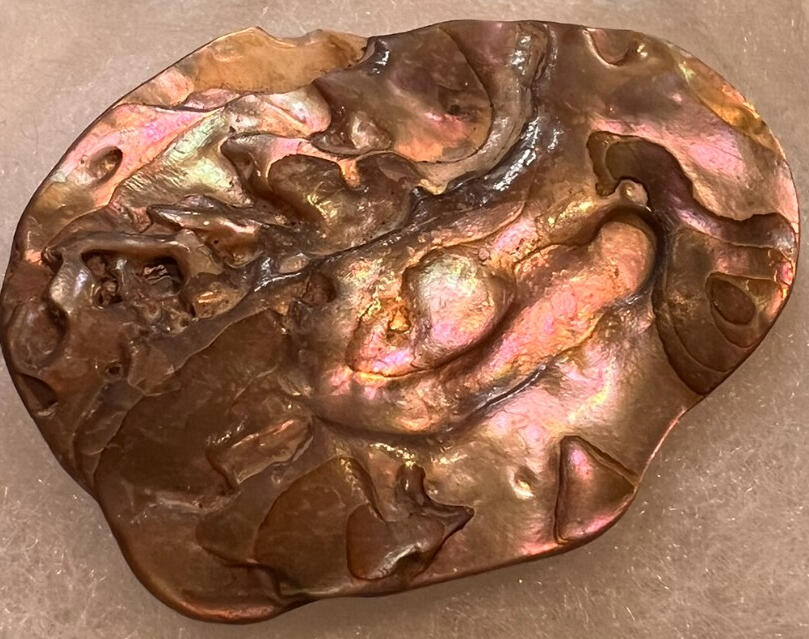
At a completely different time from finding the marble, I'd come across a small fragment of abalone shell in an old dusty box among my grandfather's things.I don't even remember exactly when I found it. It may have been before I was physically making MARKED. I wasn't looking for an object for WONDER. I just saw it.The surface caught the light with flashes of blue, green, pink and gold. It was irregular and broken and beautiful.So I kept it.Then I put it somewhere safe and completely forgot about it.When I found it again after MARKED had already opened, I knew immediately that it belonged in WONDER. I removed the creek rock and put the abalone shell in its place.But what I love most about that little shell isn't that I eventually noticed it.
It's that apparently, at some point in his life, my grandfather had noticed it too.I don't know where he found it. I don't know why he kept it. Maybe it meant something to him. Maybe it didn't. Maybe he simply saw the way it caught the light and thought it was beautiful.I'll never know.I just know that somewhere along the way, my Nanu looked at this strange little broken piece of shell and decided:I'm keeping that.Years later, I found it among his things and did the same.He noticed it.Then I noticed it.
CHAPTER 10
PRESENCE
LEAVE ROOM FOR WHAT YOU CANNOT EXPLAIN
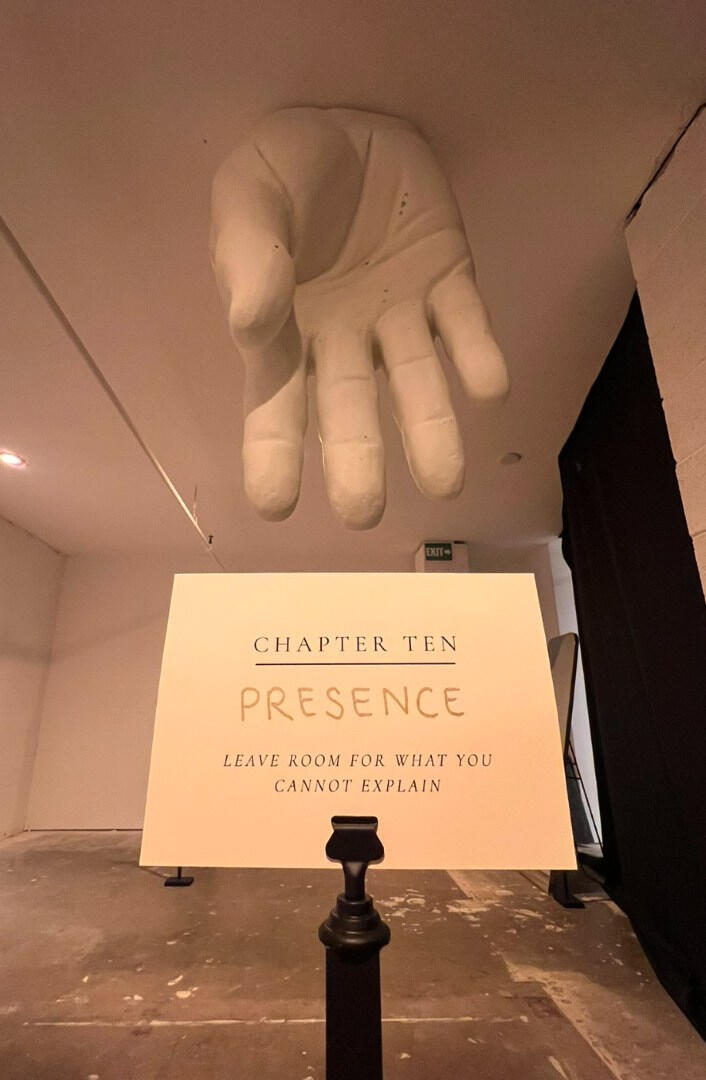
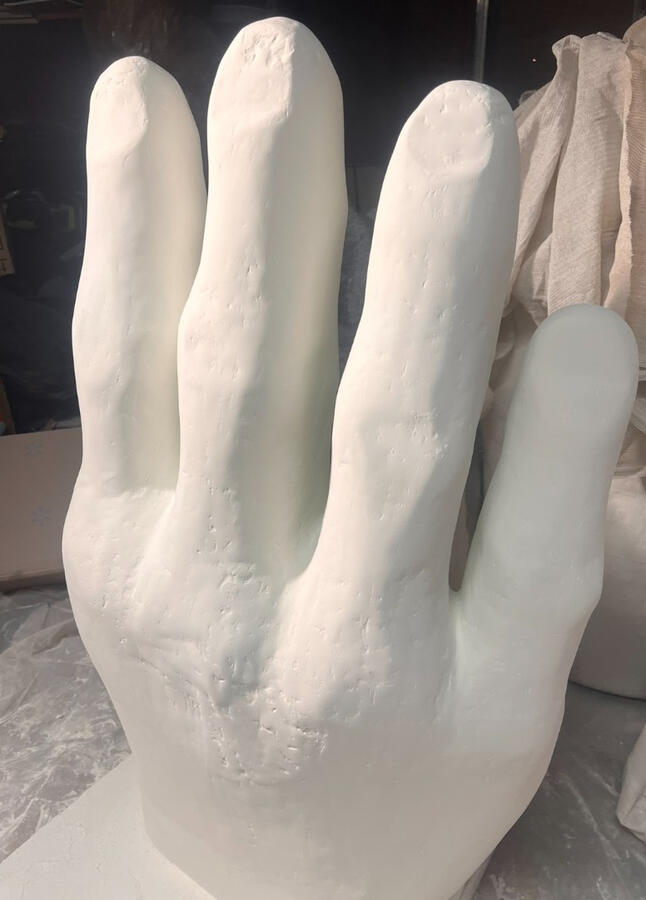
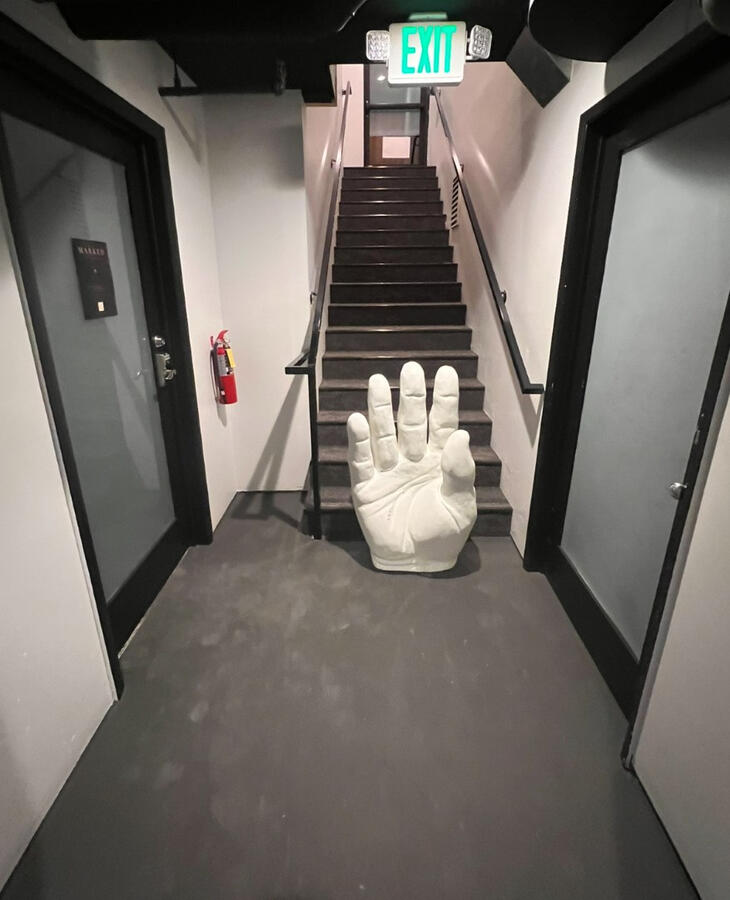
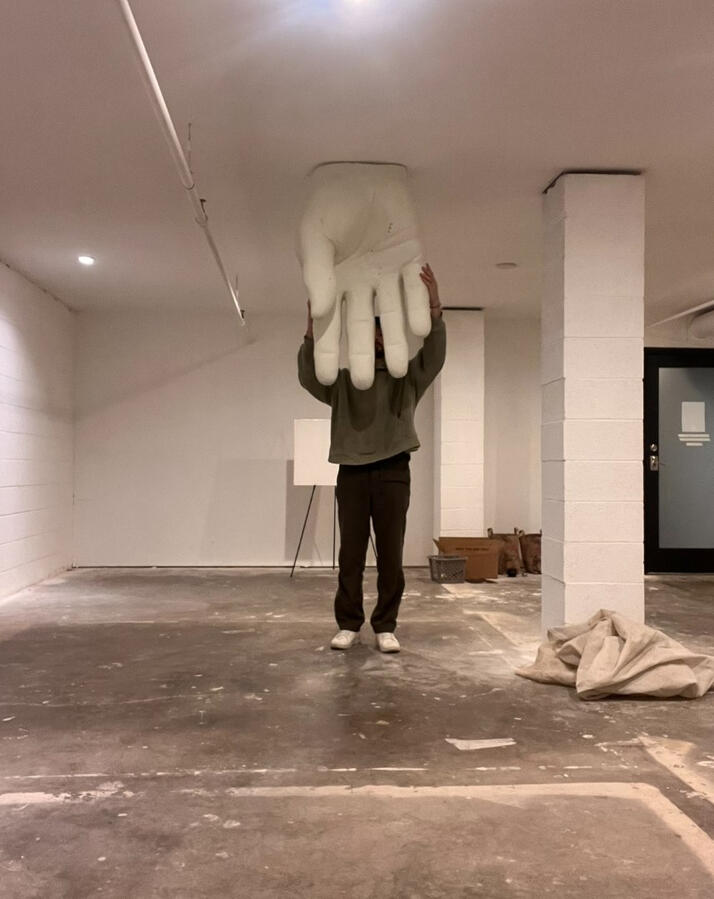
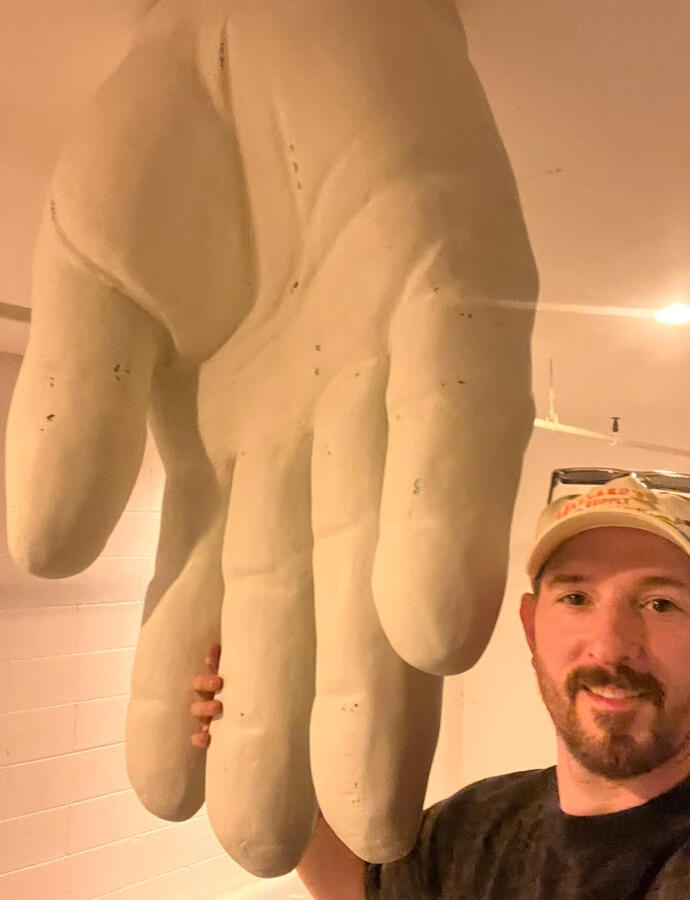
PRESENCE started much less profoundly than some of the other pieces in MARKED.I just thought a gigantic hand coming out of a wall, floor or ceiling would look incredibly cool.Hands had already become such an important part of the exhibition, and I loved the idea of making one at a scale that felt almost impossible. Eventually the ceiling won.The meaning took shape as I made it.There are things in our lives whose effects we experience even when we can't completely see or explain what is happening. For me, that ultimately became about God.About the moments that feel like coincidence but somehow arrive at exactly the right time. A stranger says something you needed to hear. Something falls into place that shouldn't have. Years of disconnected experiences suddenly reveal themselves as parts of the same story.I felt that repeatedly while making MARKED.Things I had carried for years suddenly belonged together.Objects I'd saved without knowing why found a purpose. People appeared at the right moment.Problems somehow found solutions.I couldn't explain all of it.Eventually I stopped feeling like I needed to.
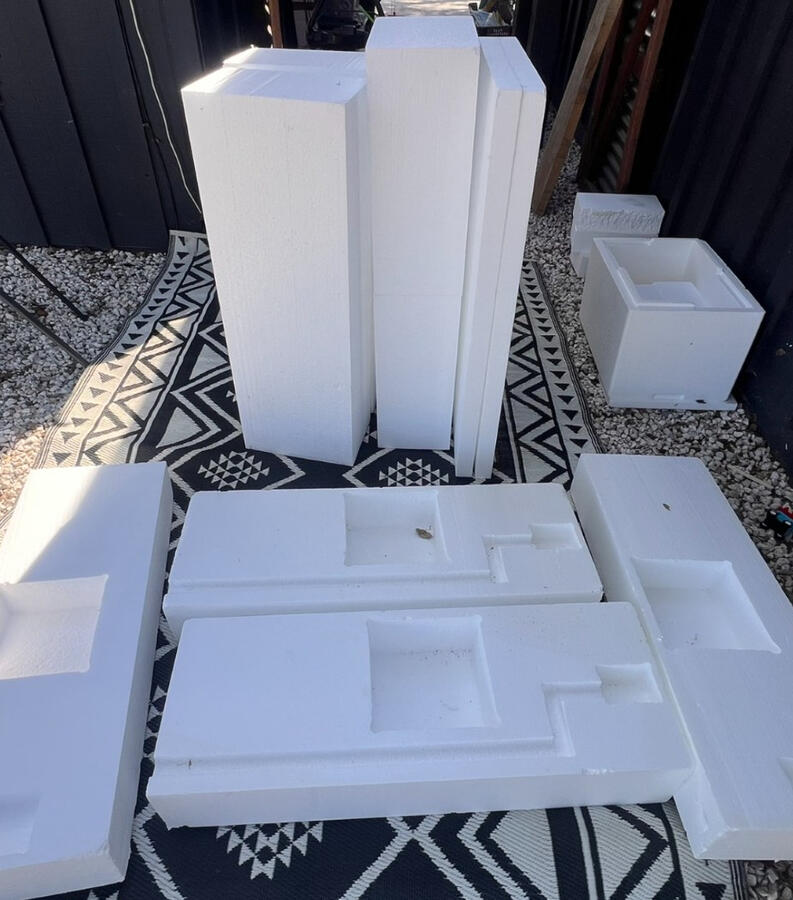
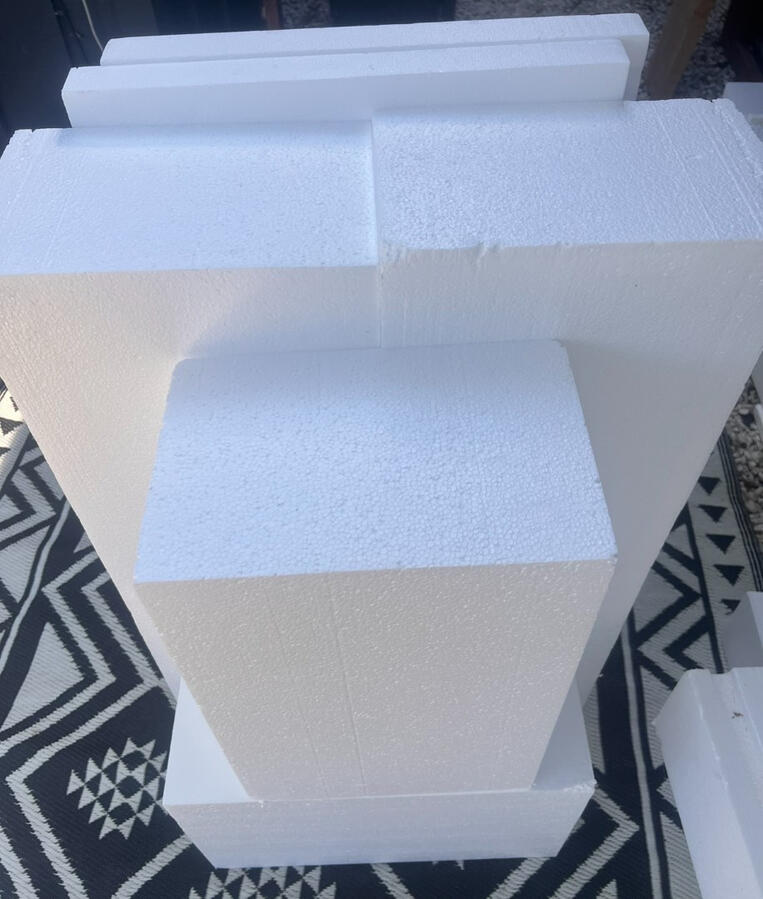
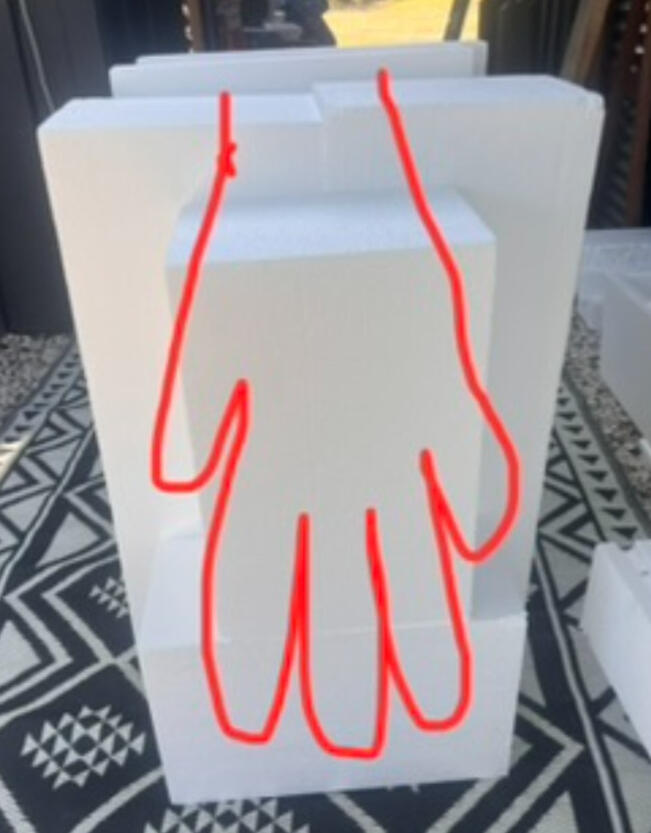
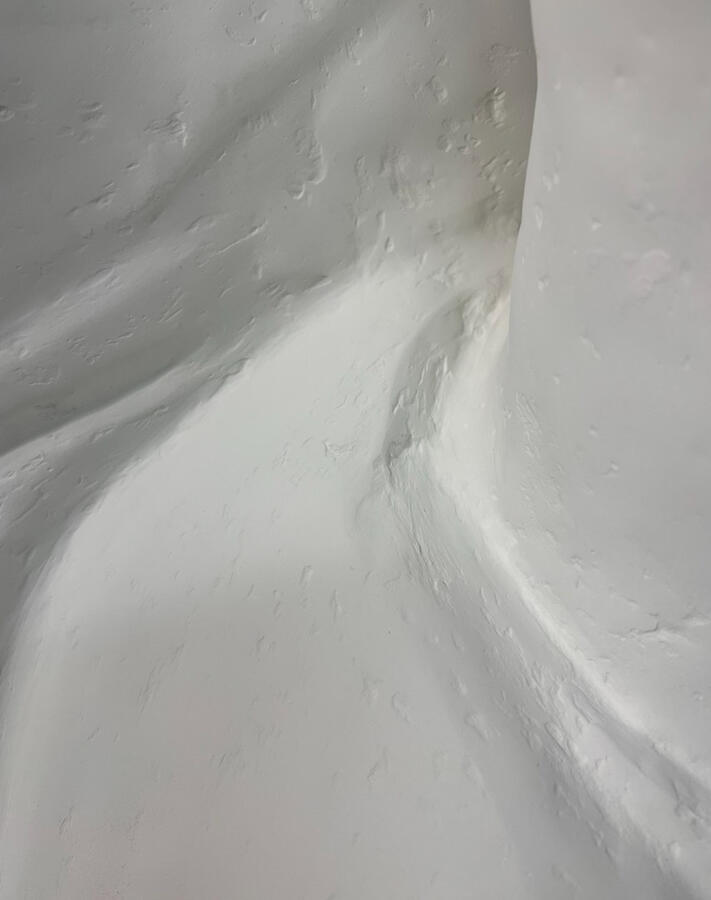
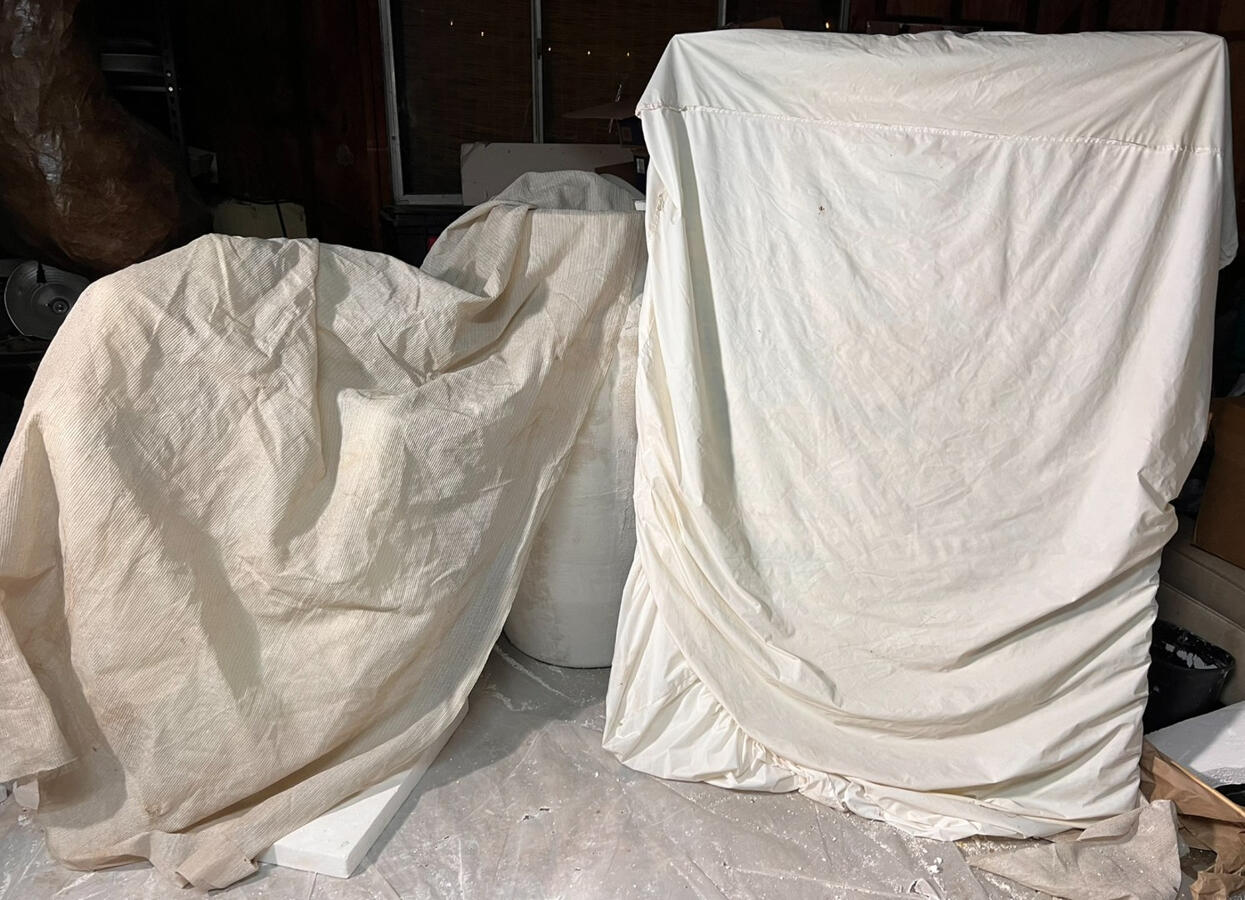
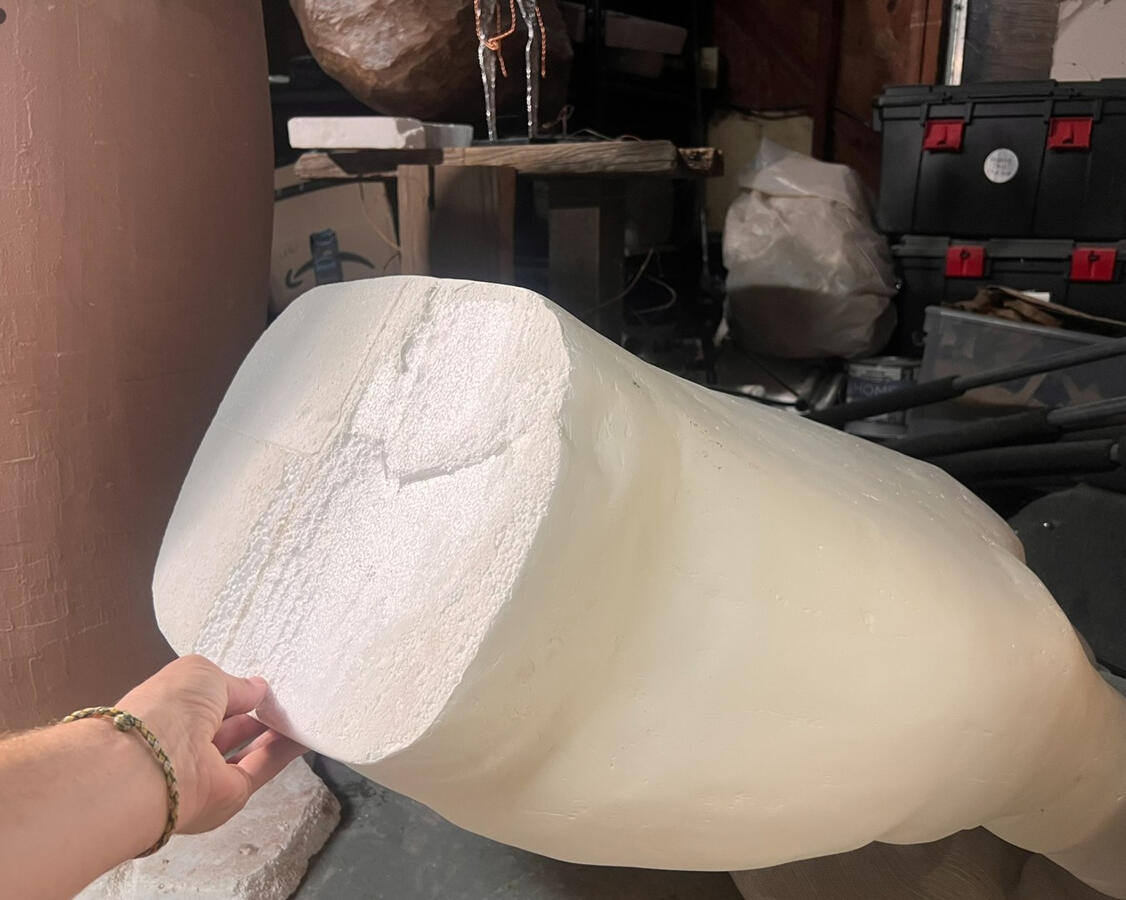
The hand itself began as five or six enormous pieces of Styrofoam that Bob had given me after I called around town looking for discarded foam. I glued them together using some of the clear glue I still had from making BECAME and ended up with one massive block.Then I had to find the hand inside it.I remember thinking about that old idea associated with sculptors like Michelangelo:The form is already inside the material, and your job is to remove everything that isn't it.That sounds beautiful until you're standing in your garage around midnight holding a hot knife over an enormous block of foam you've spent days assembling.Because once I removed something, putting it back was going to be considerably harder.I used my own hand as the model. More specifically, I kept the final cast of my hand from IMPRINT nearby while I worked. I tried all kinds of ways to translate it to that scale. I drew it. I experimented with light and shadow. At one point I even considered trying to create a 3D scan.Originally I wanted the giant hand angled forward, almost reaching into the room. But I couldn't make my brain translate that pose into the giant rectangular block in front of me.Finally, I let that go.I carved the hand in the orientation I could actually understand.And once I started, I slowly got braver.
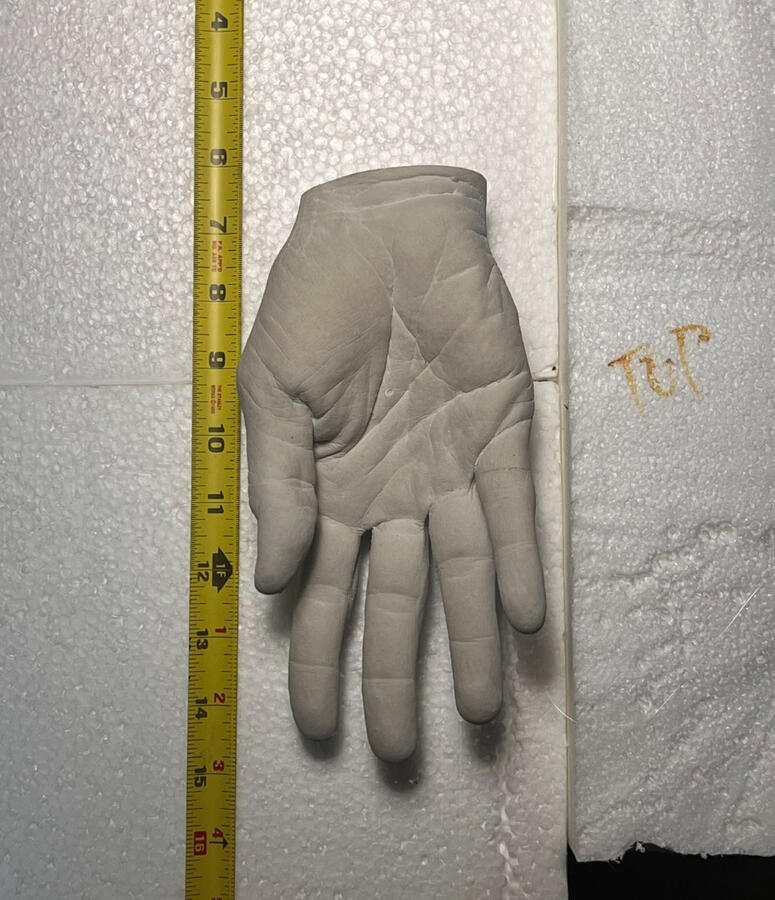
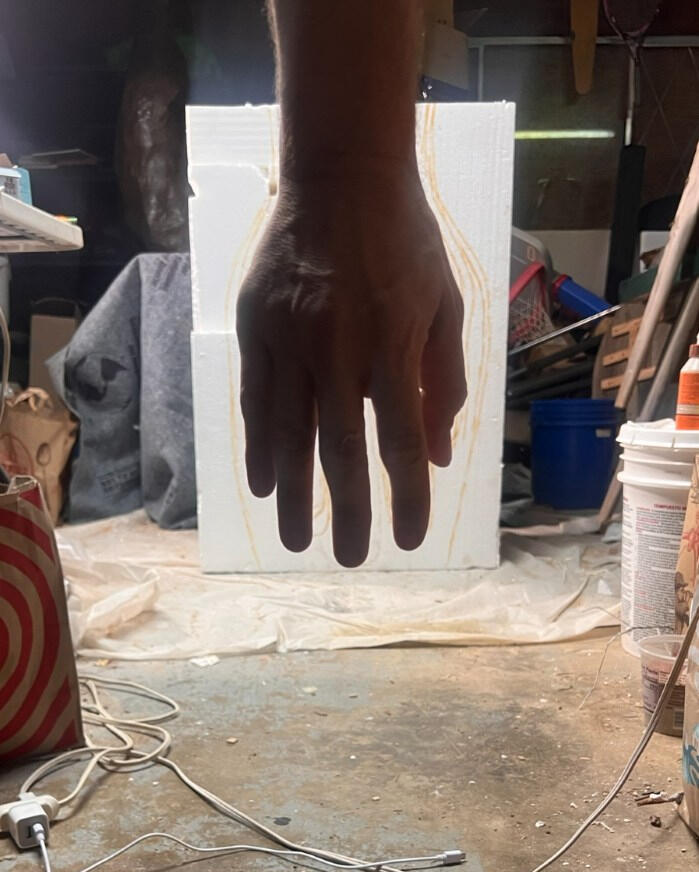
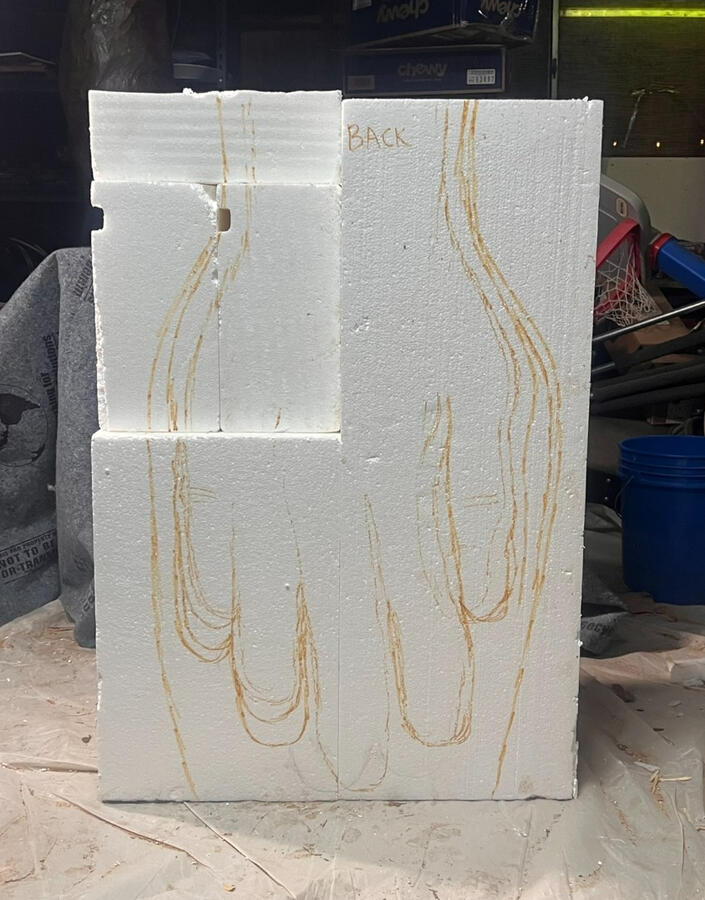
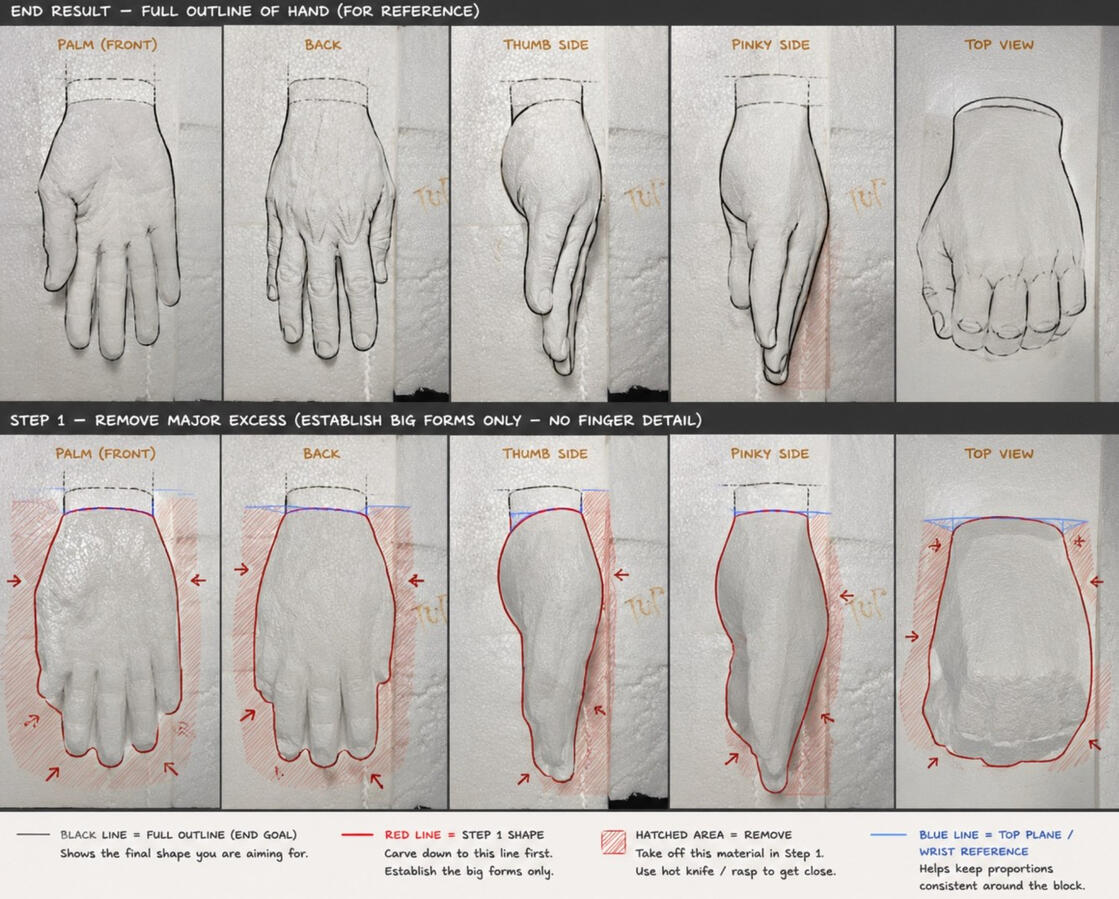
Most of the rough carving happened very late at night.
I used a hot knife I'd ordered online, along with a serious respirator because melting Styrofoam produces fumes I had absolutely no interest in breathing. A serrated knife helped me reach places the hot tool couldn't, and then came the rasp.So much rasping.Styrofoam went everywhere.There were stages where the proportions looked wrong and the whole thing looked kind of ridiculous. I knew it would eventually become a hand, but there were plenty of moments when it definitely didn't look like one yet.At first I removed tiny amounts because I was terrified of going too far. As the form emerged, I became more confident and started taking away much larger pieces.A couple of fingertips needed extra length, so I built them out with spray foam and carved them back with a serrated blade.
Once I finally had the shape, I covered the entire sculpture with a thin skim coat of joint compound mixed toward a pale gray-green.Then I sanded.And sanded.And sanded.I wanted the finished surface to feel like an old ivory or mineral sculpture, with just a hint of green in it. I couldn't make it quite as smooth as I had imagined. If I made PRESENCE again, I'd probably use a thicker coat and spend even longer sanding it.But the imperfections also gave it age. Small cracks and irregularities made it feel less like a pristine new object and more like something that had been there for a very long time.Then, when I thought I was completely finished, I sprayed on a clear coat.It ate through the foam anywhere the joint compound was too thin.Of course it did.So I repaired it, matched the exposed areas back into the gray-green surface, and kept going.
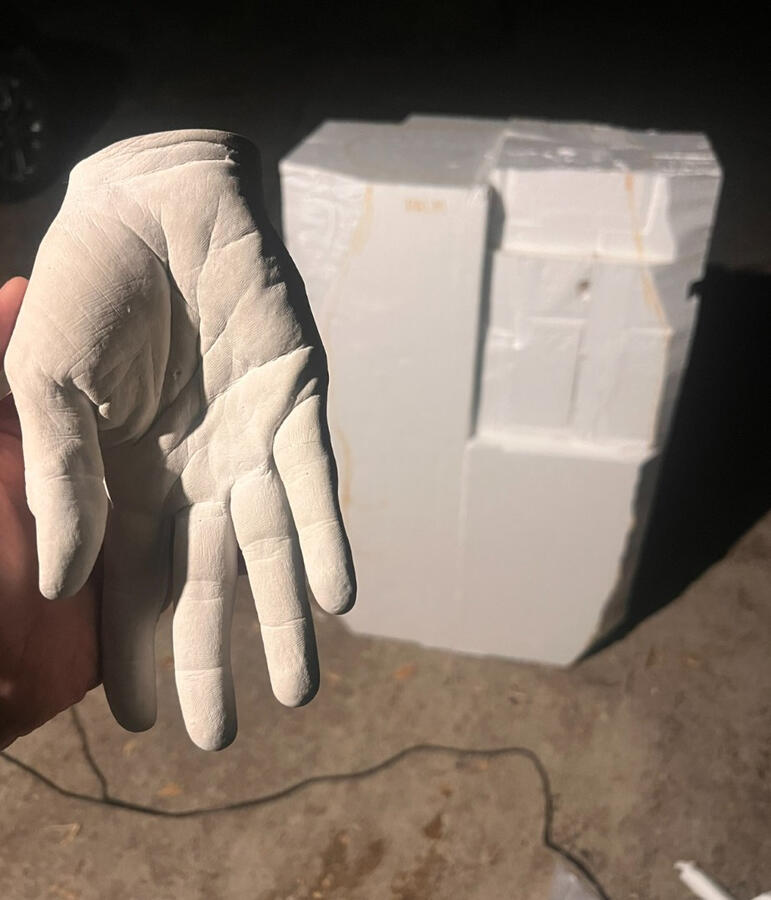
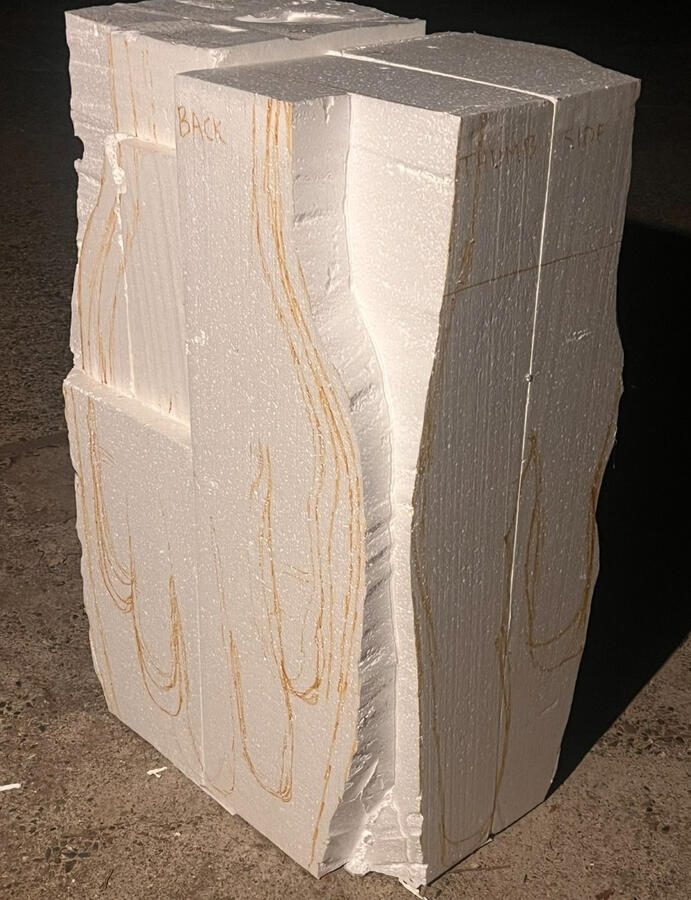
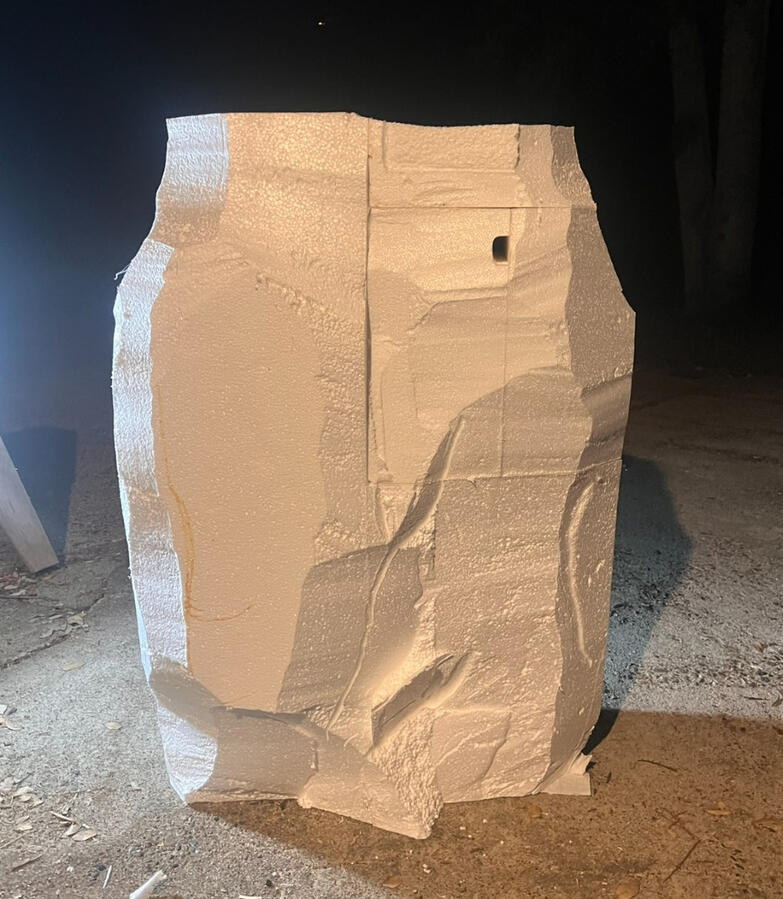
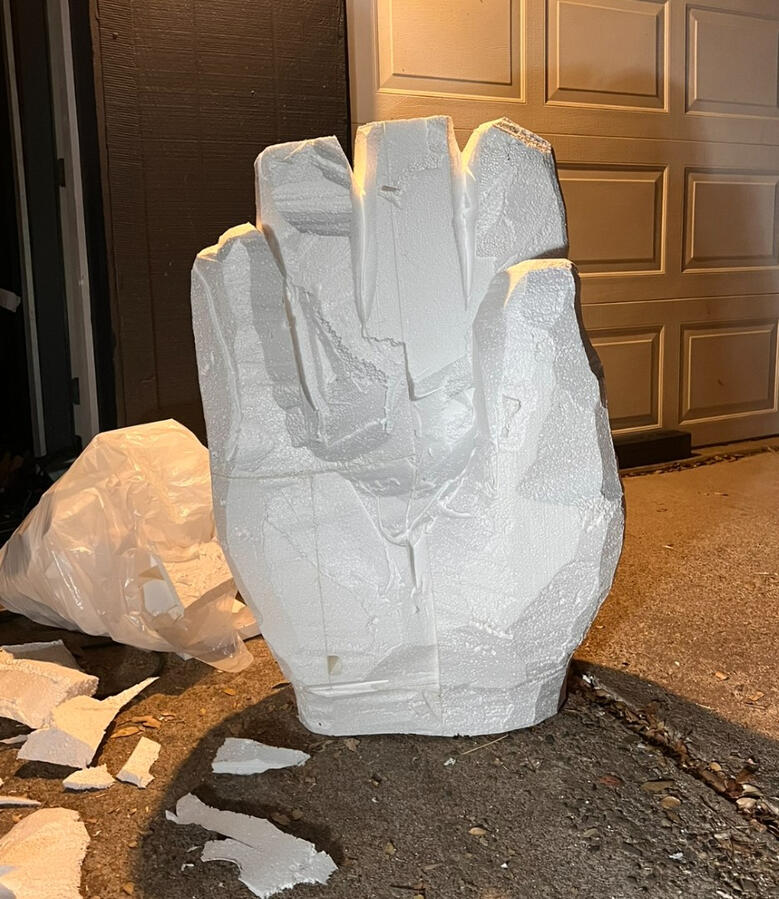
Getting an eight-foot ceiling to convincingly grow a giant hand presented another problem.
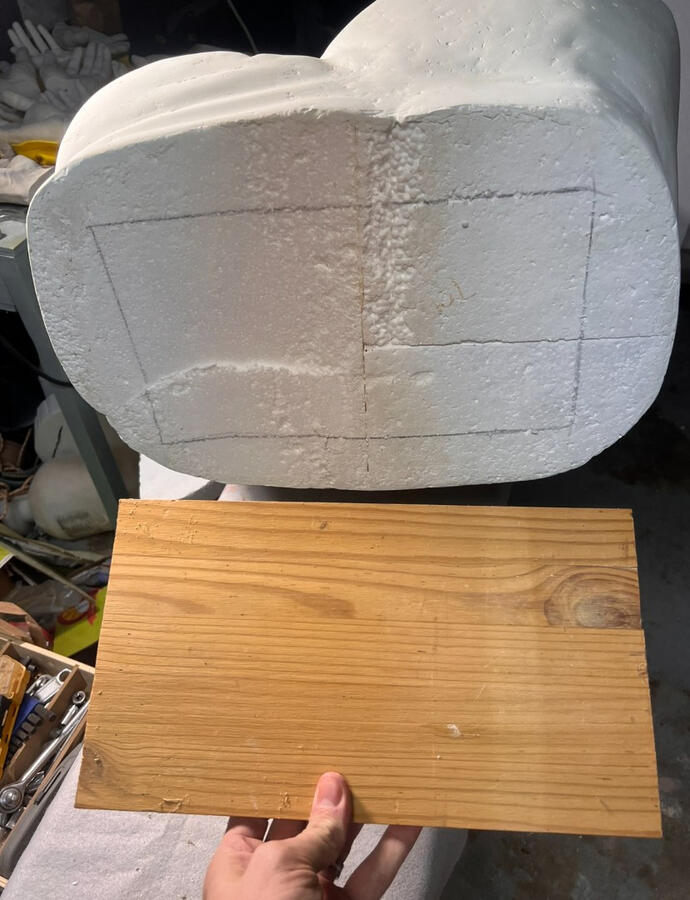
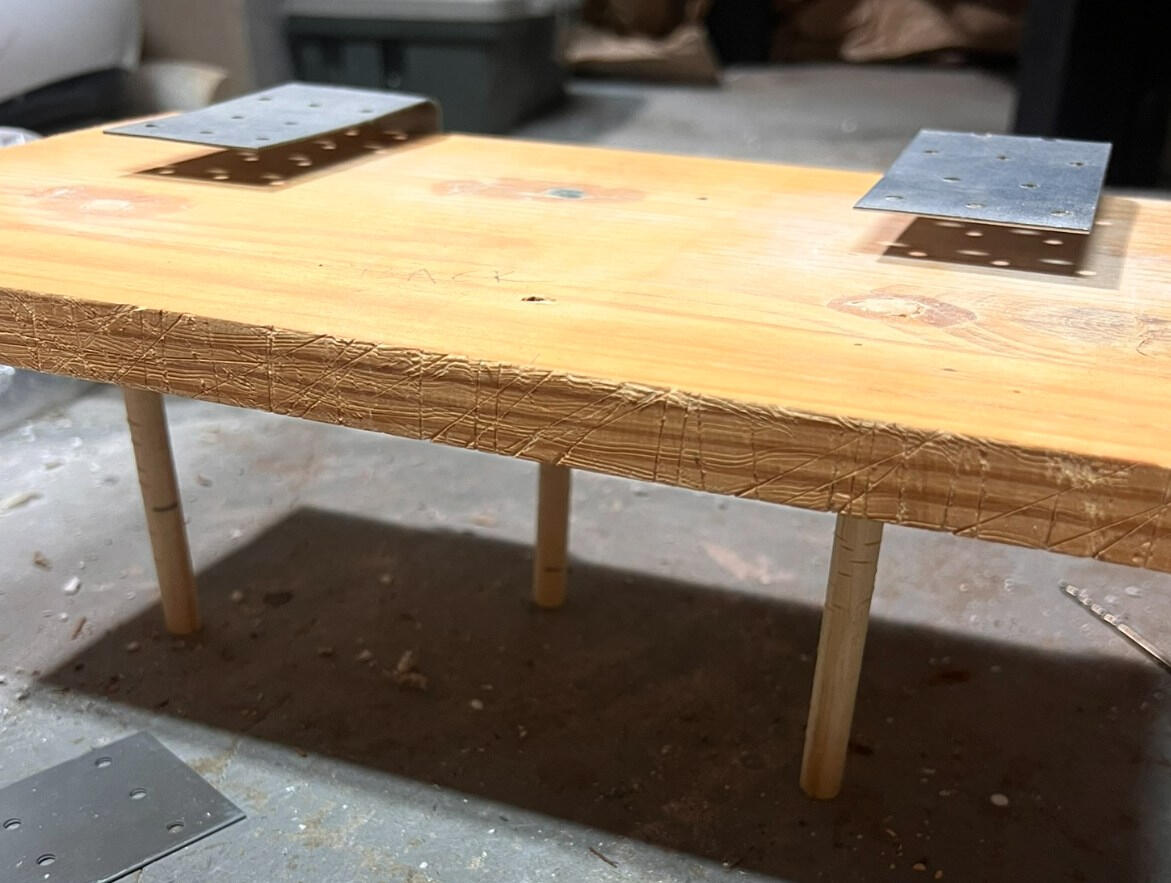
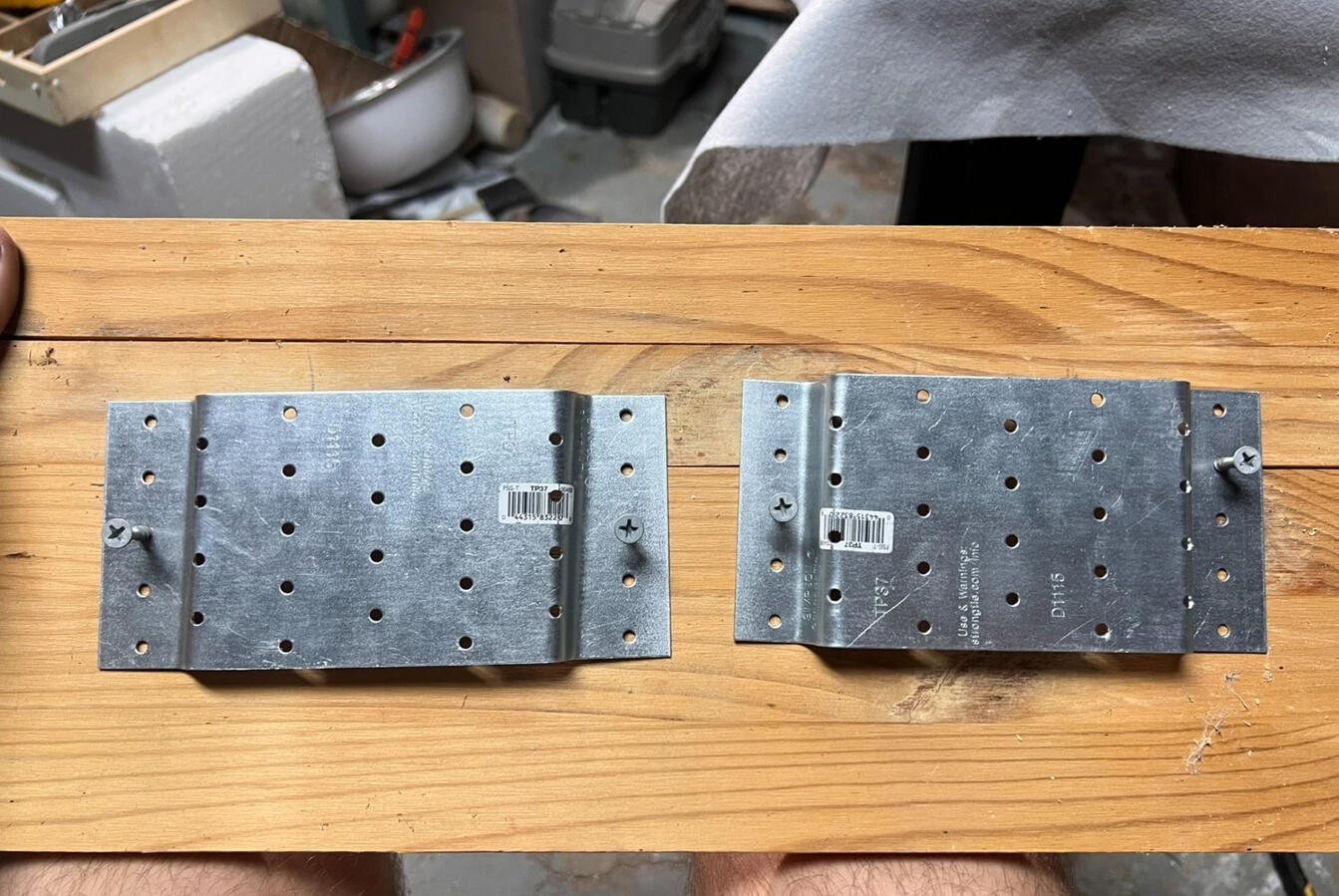
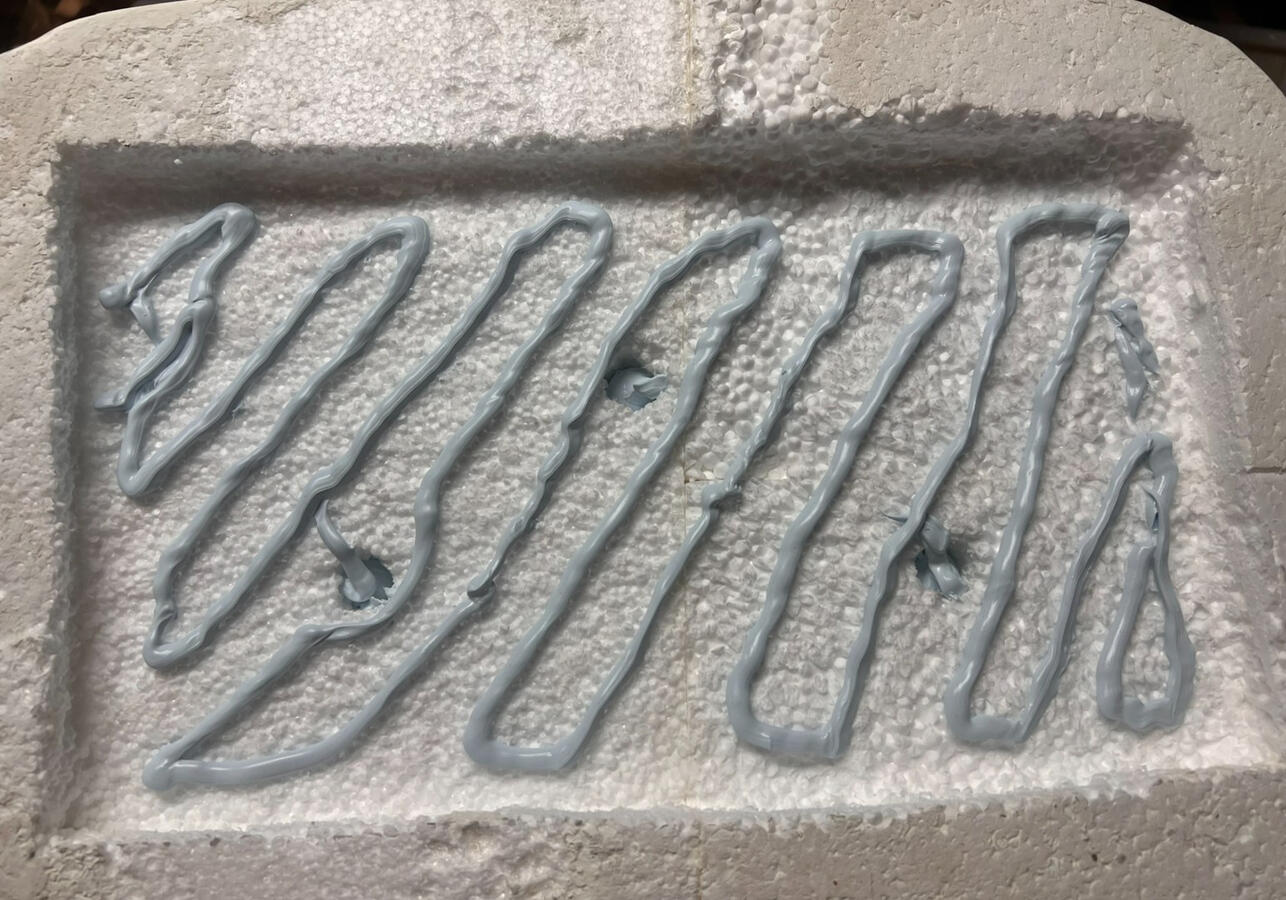
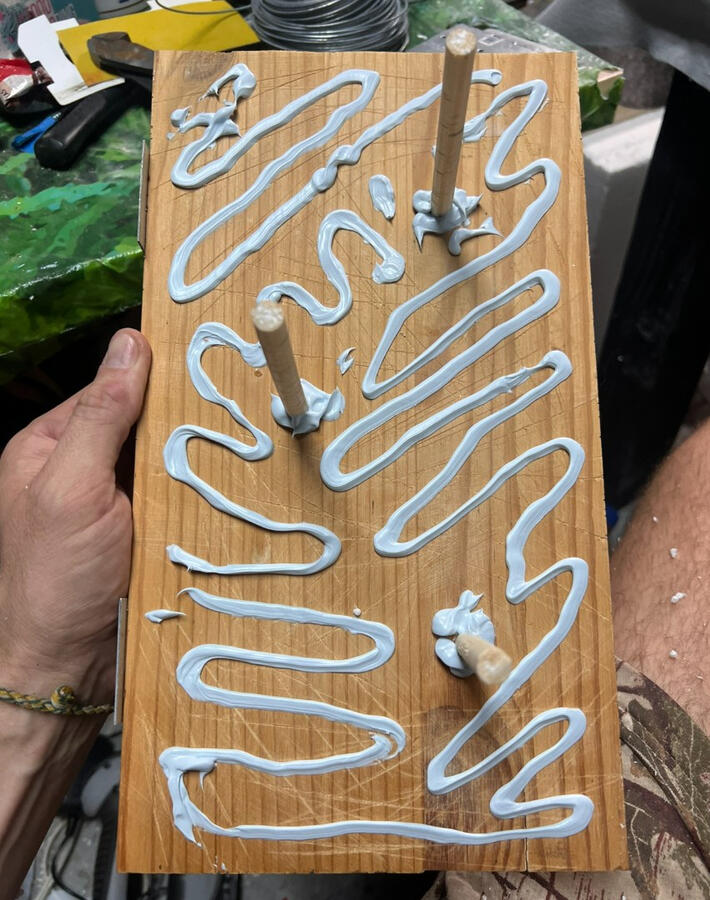
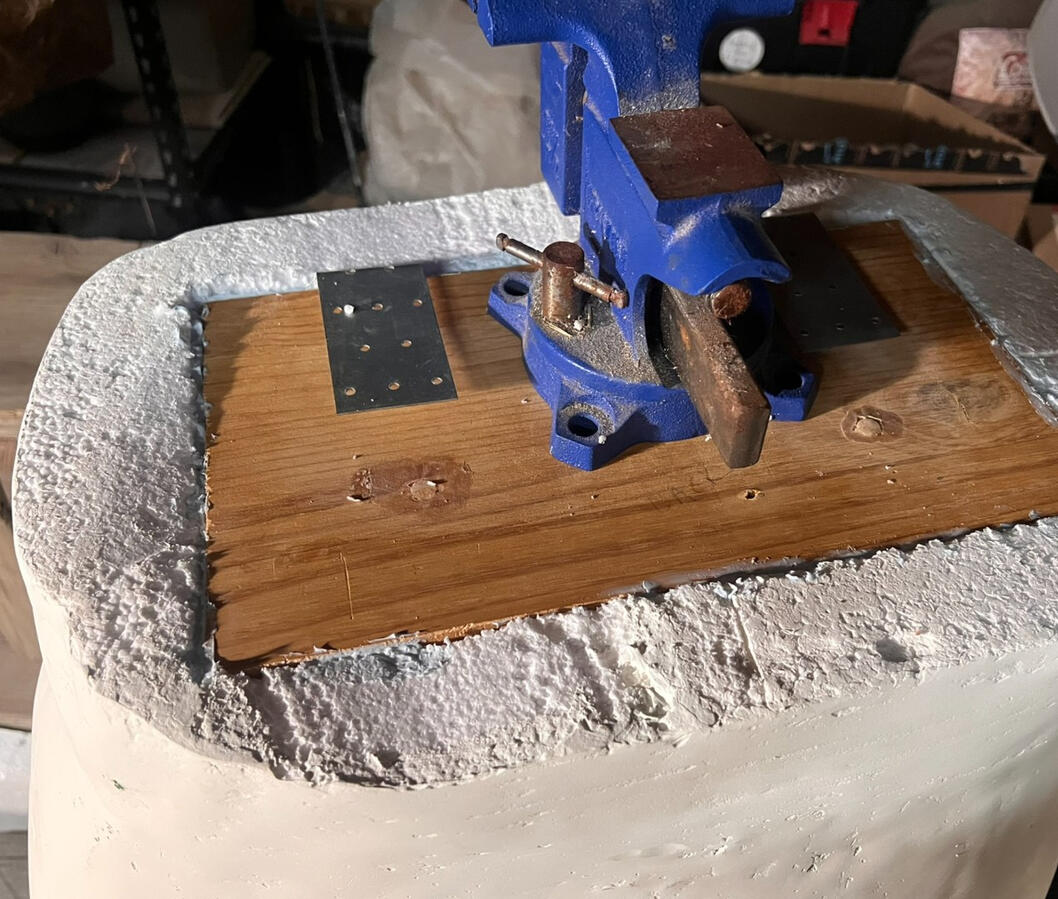
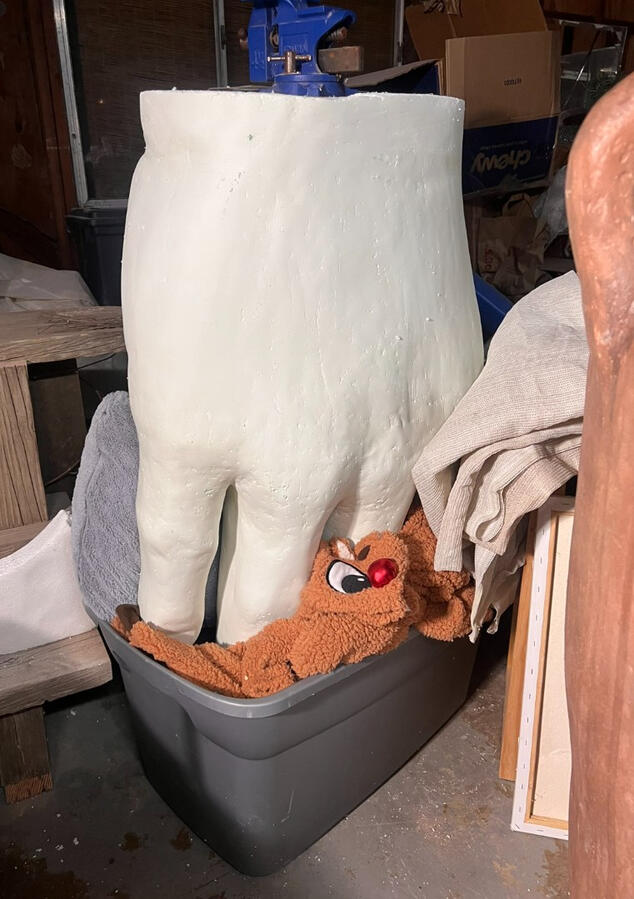
The sculpture was enormous, but surprisingly, it only weighed about eight pounds. Still, I wasn't going to trust eight pounds of giant foam hand to a sketchy mounting solution above someone's head.So I built one.I carved a rectangular recess into the back of the finished sculpture and embedded a small wooden plate with three offset dowels extending deep into the foam. I used an adhesive specifically made for Styrofoam and left the whole thing upside down for about a week while it cured, with a heavy vise sitting on top to keep pressure on it.The difficult part was figuring out how to rest a finished giant hand upside down without destroying the fingers.The solution involved a large plastic tub, blankets and one of my kids' fuzzy Rudolph Christmas costumes. There are parts of art history nobody prepares you for.From that embedded plate, I built two metal tabs that slid into matching receivers attached to the ceiling. That meant I could carry the sculpture in, climb a step ladder, slide it into place and have the mounting hardware almost completely disappear.I transported it downtown in the back seat of my dad's truck and carried it down the stairs myself.Then I hung it.And every night after the exhibition closed, I took it back down and set it safely on the floor.Just in case.
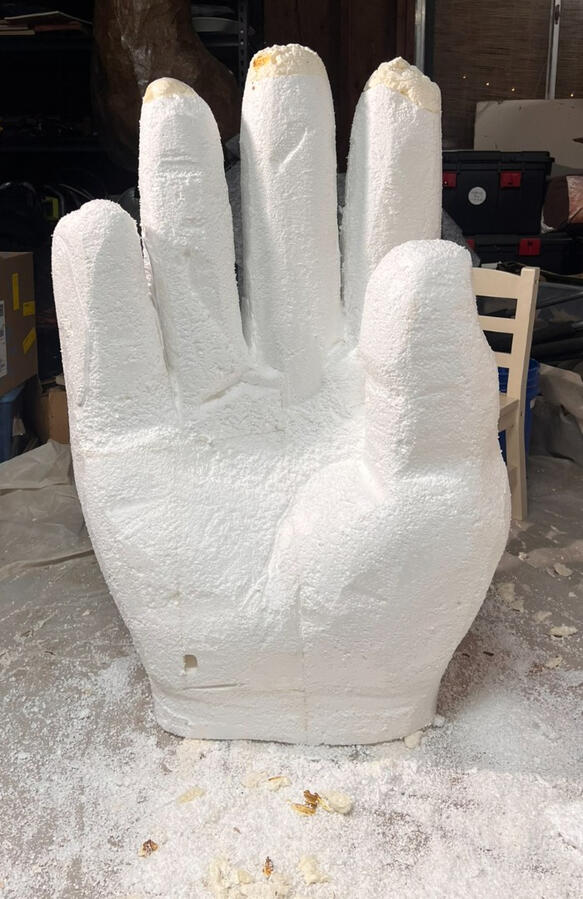
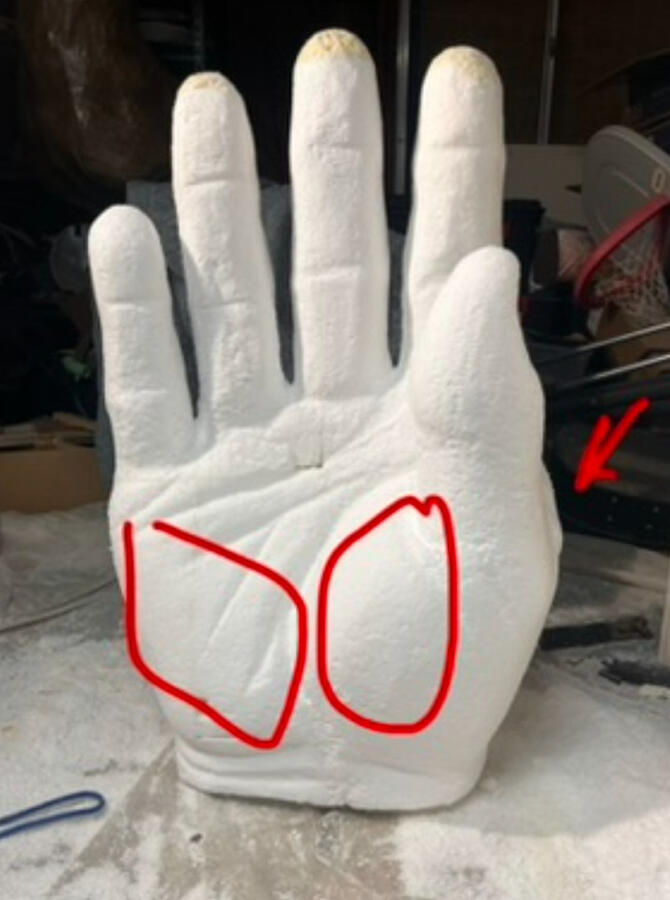
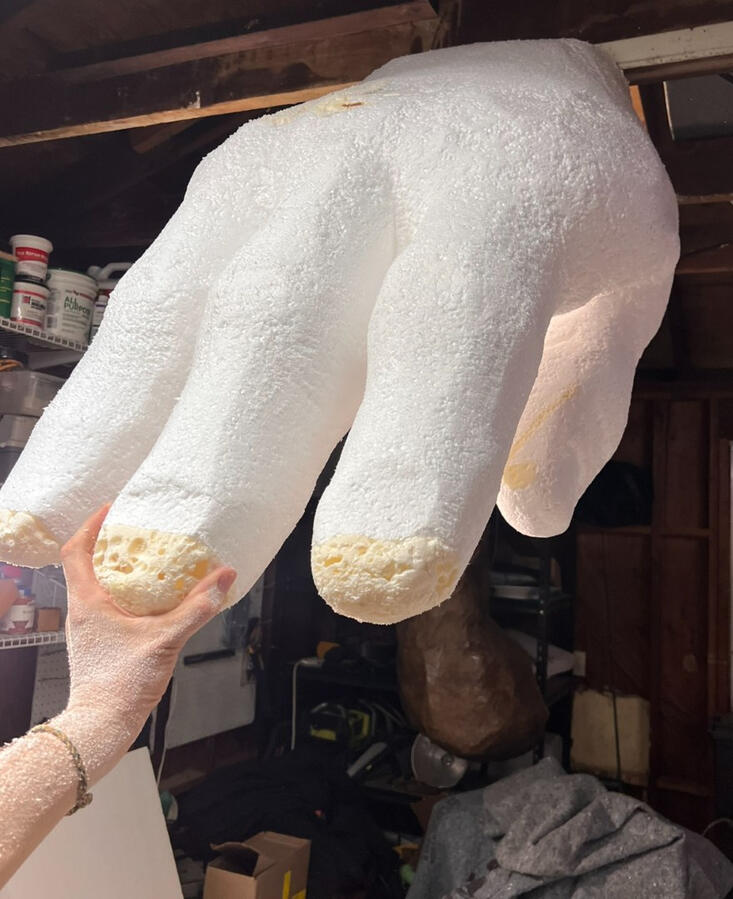
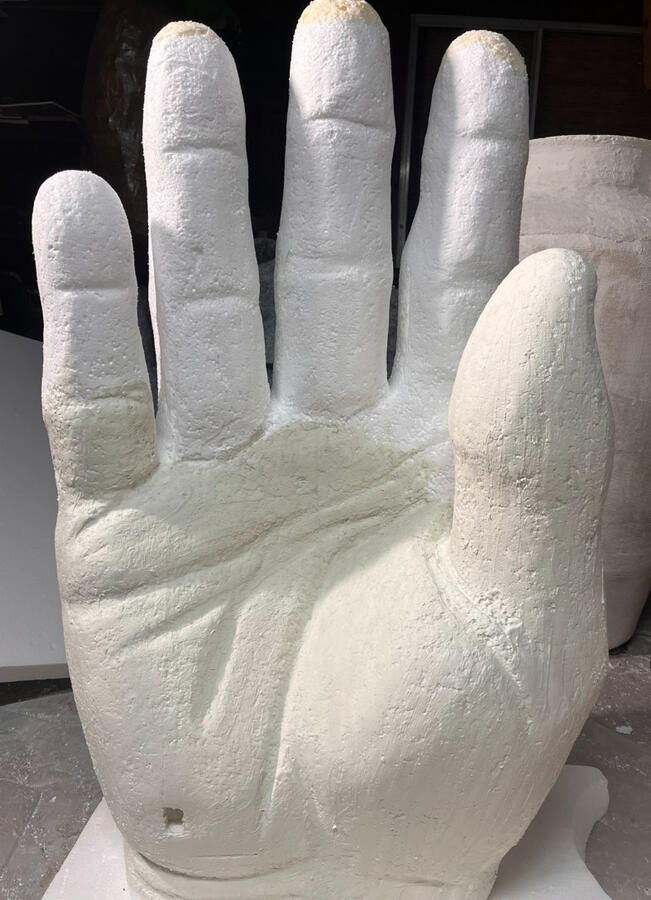
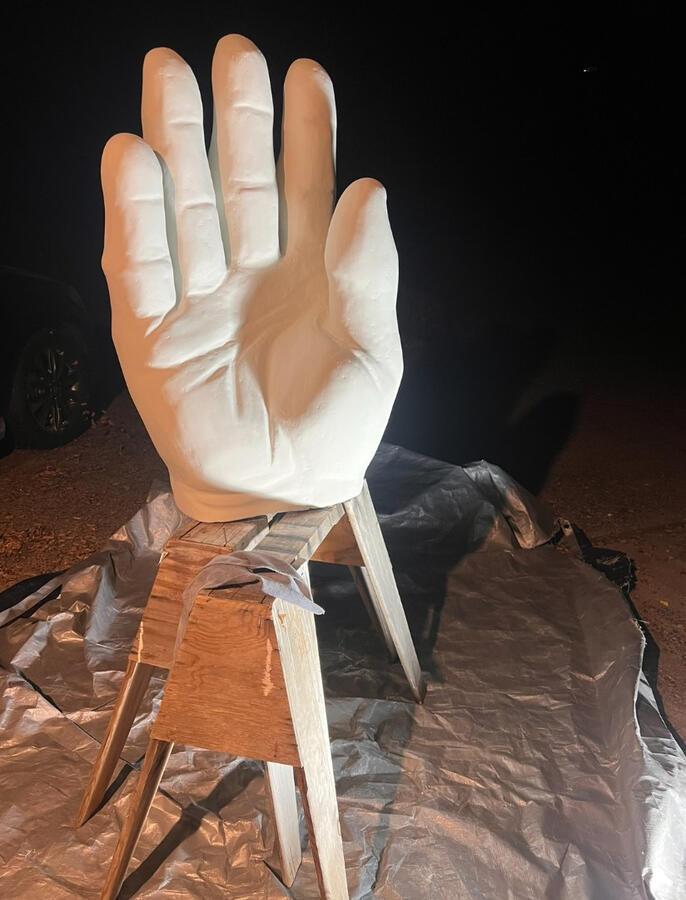
Once PRESENCE was hanging, people kept wanting to touch it.
Something about the scale of the hand made people want to reach back. They'd talk about touching it or start to reach toward it and then remember they weren't really supposed to touch the artwork.I'm sure a few people did.That's okay.What interested me more was something they couldn't touch.There is no gold anywhere on PRESENCE.That was intentional.By Chapter Ten, you had spent an entire exhibition learning to notice gold. Then you arrived beneath this enormous hand and there wasn't any.Because this time, the presence was the gold.And in a strange way, the hand had already demonstrated the idea before you ever saw it.When you first entered MARKED, PRESENCE was already hanging on the other side of the divider. You couldn't see it from Chapter One. You couldn't see it while you moved through the early pieces.But it was there.WONDER had just asked you to look closer at what was already around you. PRESENCE asked you to leave room for something else:
The possibility that you still wouldn't see everything.That you wouldn't understand everything.That not every part of your life would make sense while you were standing inside it.A lot of MARKED had been years in the making, even though I didn't know I was making it. Experiences, people, ideas and ordinary objects that seemed completely disconnected somehow converged into one story.For me, I can't completely explain that without God.You don't have to understand it the same way I do.But I think there is something freeing about admitting that maybe we don't have to have everything figured out.Maybe some things are already at work before we know they're there.
Leave room for what you cannot explain.
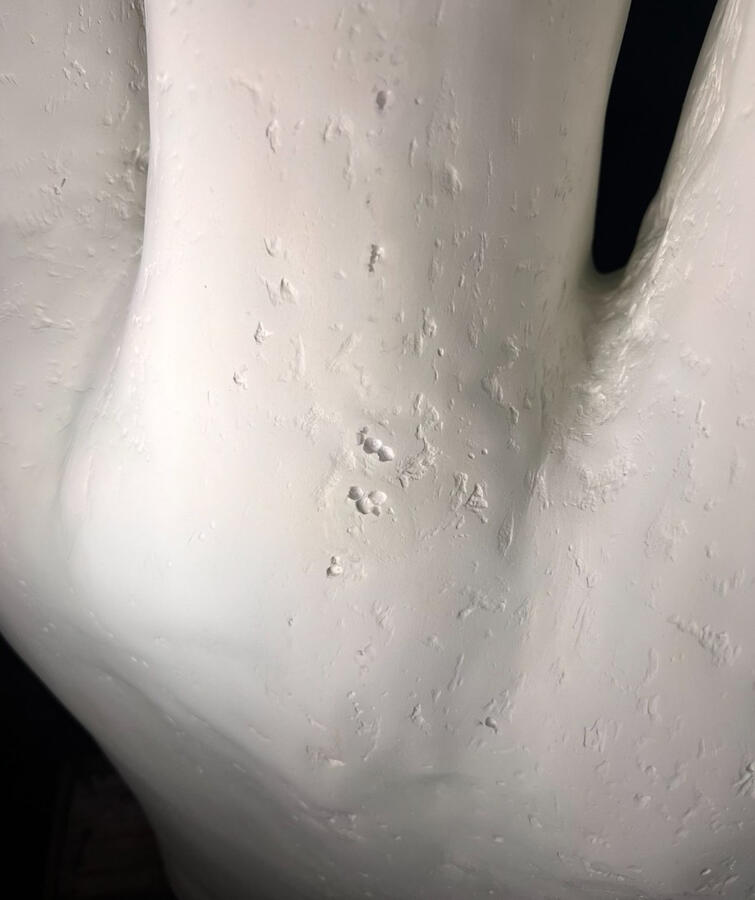
CHAPTER 11
MY BELOVED
HOLD ON TO WHAT MATTERS
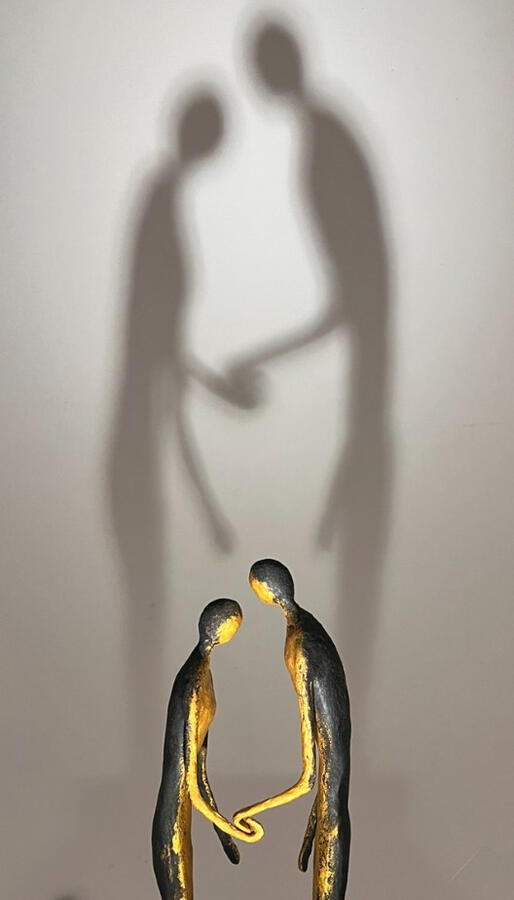
I always knew the final chapter would be about Amy.I just didn't know what it would look like.Amy and I have been together for eighteen years. She has known almost every adult version of me.She has seen me confident and lost, successful and uncertain, hopeful and exhausted. Through all of it, she has been the person beside me, encouraging me, believing in me, picking me up when I needed it and reminding me who I was when I had a harder time seeing it myself.The three years leading up to MARKED had been especially difficult for me. There were stretches when I felt genuinely lost. Looking back, one of the clearest things I could see was that she had stayed beside me through all of it.So I knew Chapter Eleven was about love.I knew it was about her.And for most of the summer, that was basically all I knew.I tried to turn love into an object and couldn't do it. I imagined abstract forms twisting together. I considered two hands rising and locking into each other. At one point I thought the entire sculpture might simply be radiant gold.Nothing felt right.So I kept putting it off.Not because it mattered less than the other pieces.Because it mattered too much.
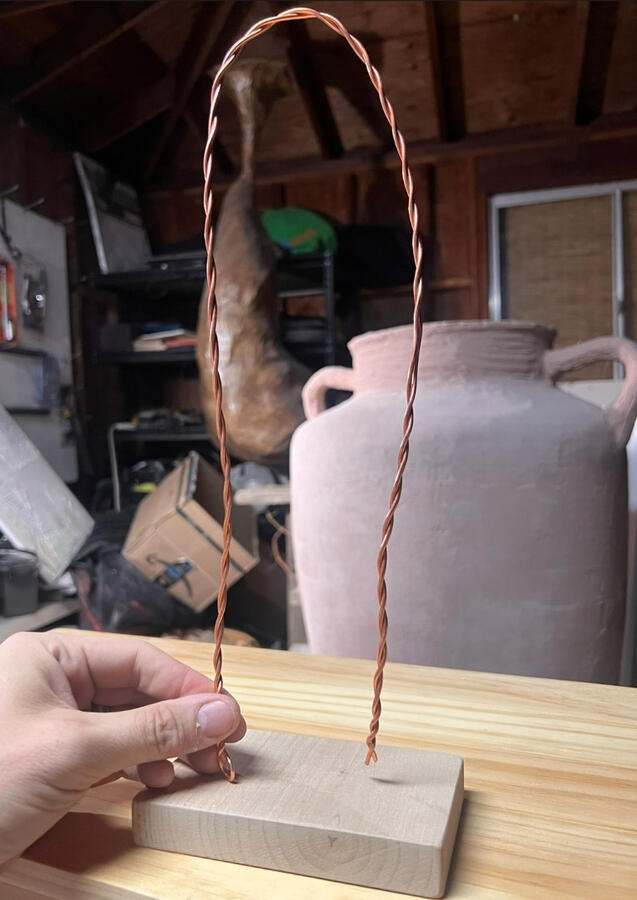
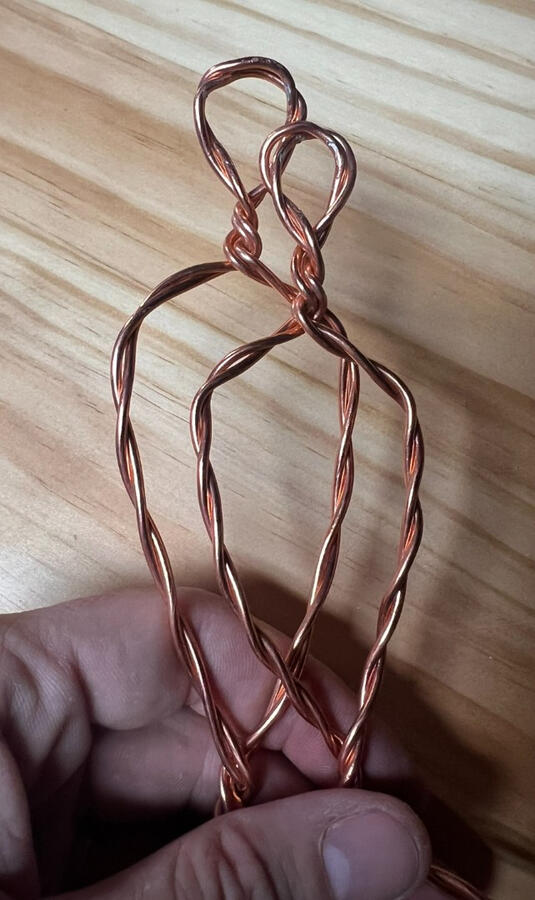
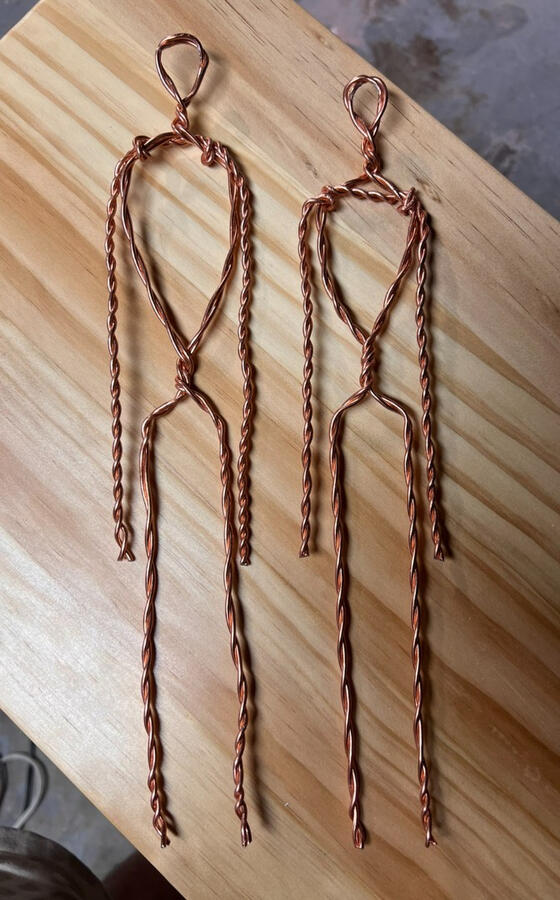
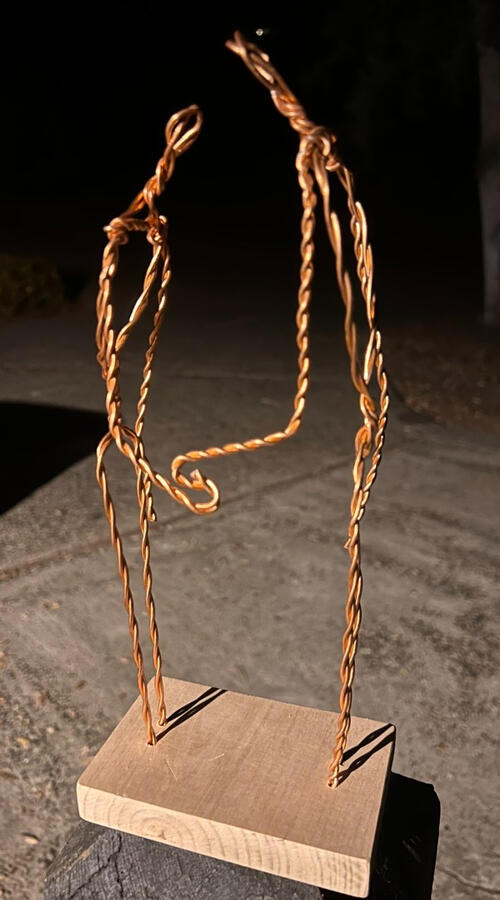
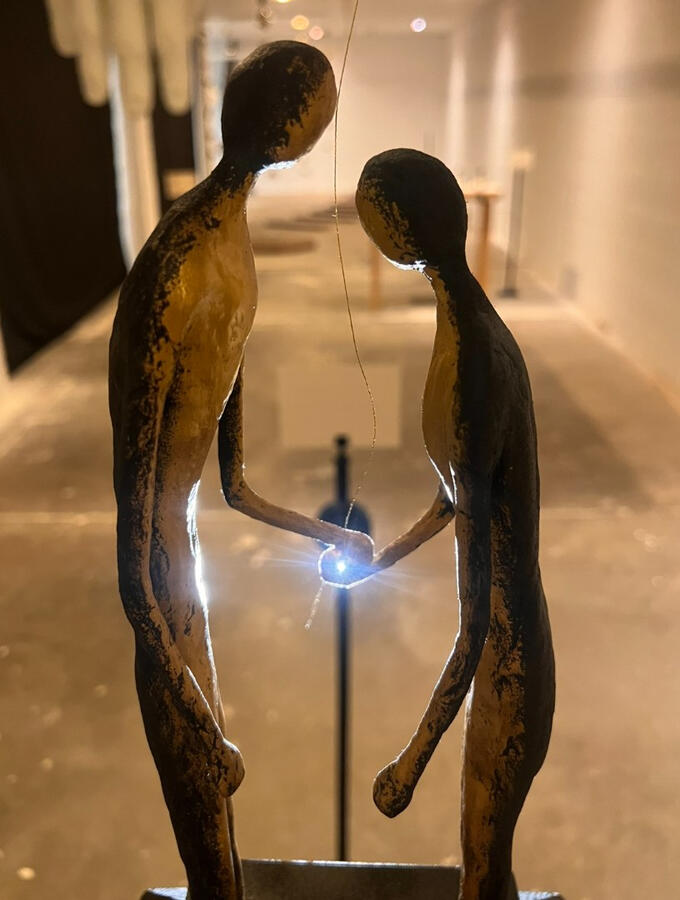
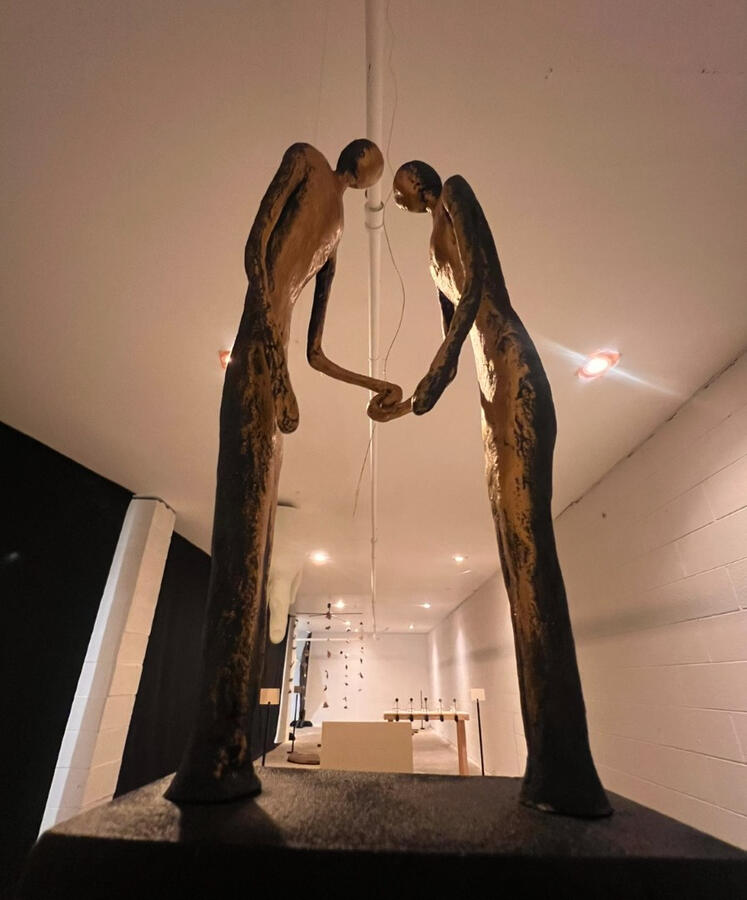
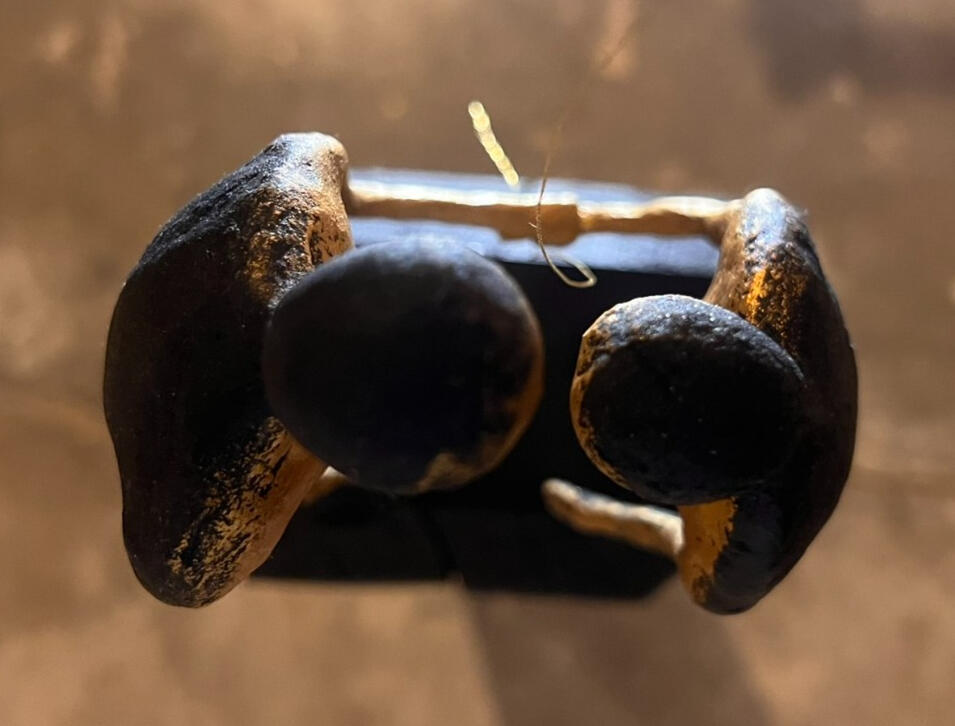
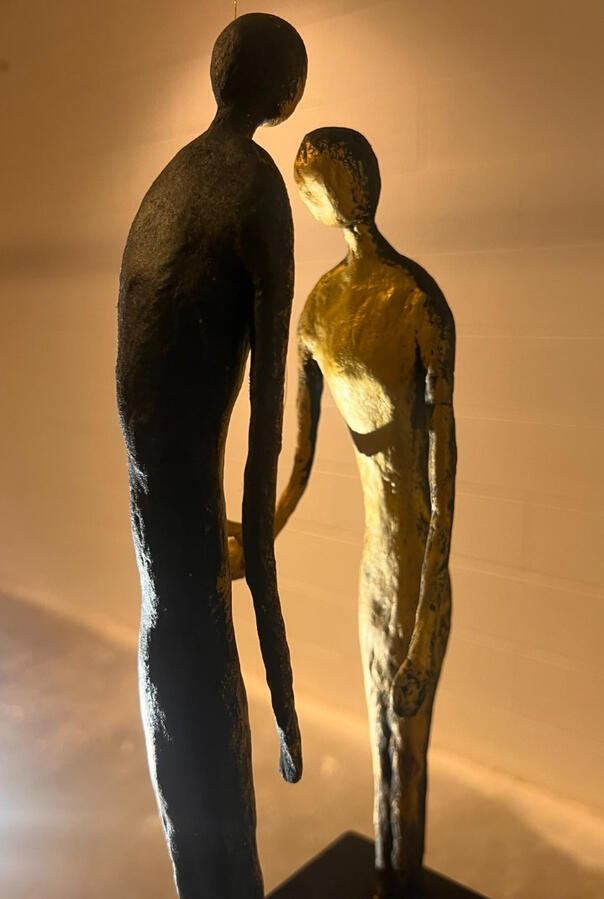
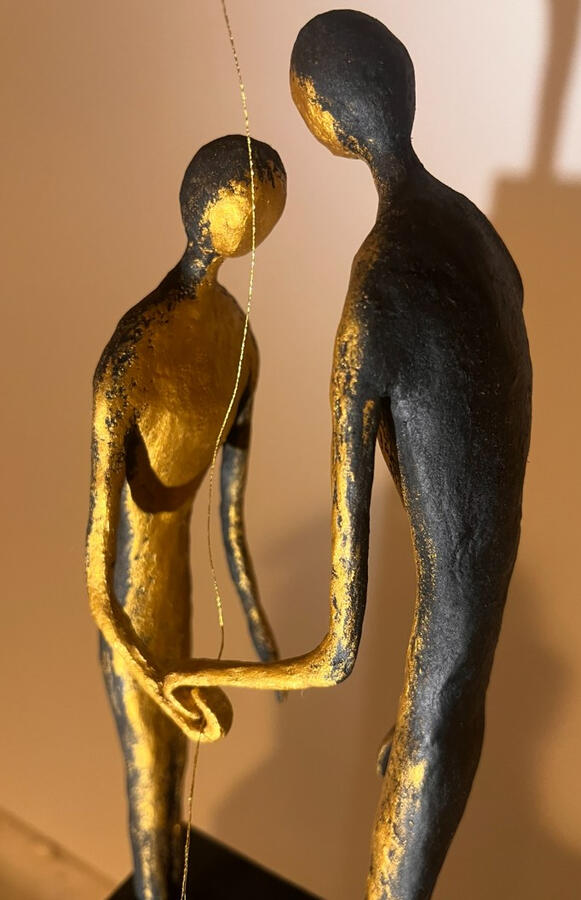
About three weeks before the exhibition, I couldn't put it off anymore.And eventually the answer became almost embarrassingly obvious.Us.If I was trying to make something about love, I didn't need to invent some universal symbol for it. I already knew what love looked like in my own life.So I made two people.Each began separately. I formed two individual armatures from aluminum wire, doubling and twisting the wire together with a drill to make it stronger. I added aluminum foil for volume, then built the bodies with terracotta-colored air-dry clay that I'd had sitting around from a previous job.The clay was strange to work with. The outside would begin drying while the inside remained soft, so shaping it sometimes felt like sculpting a bag with something still moving inside it.But slowly, two figures emerged.
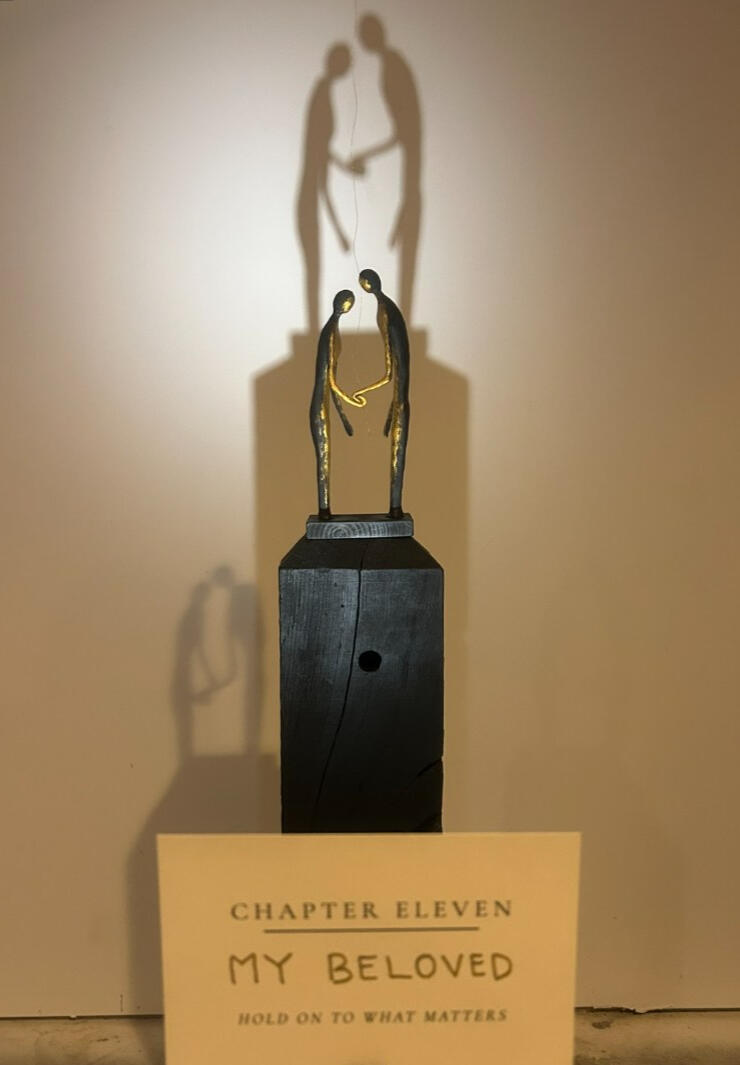
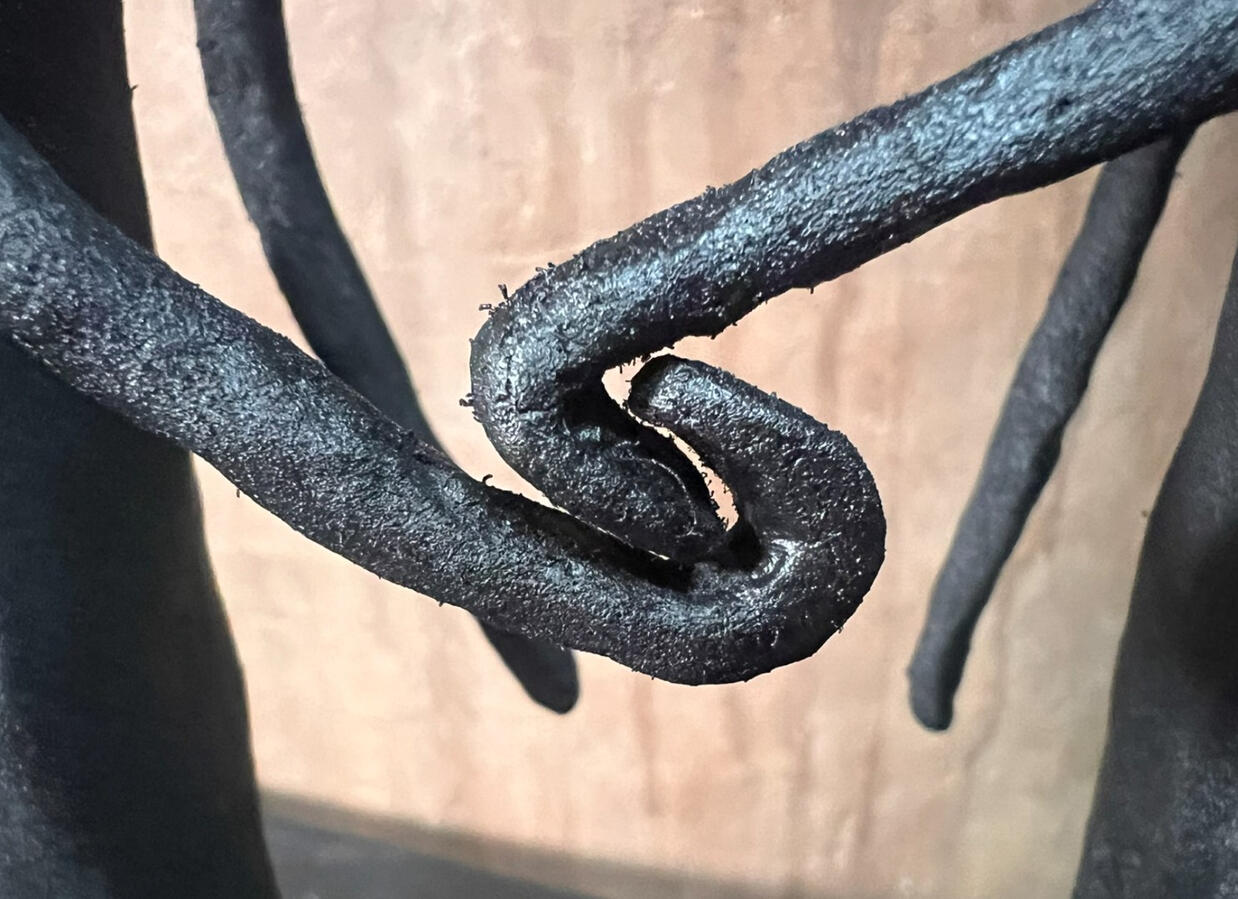
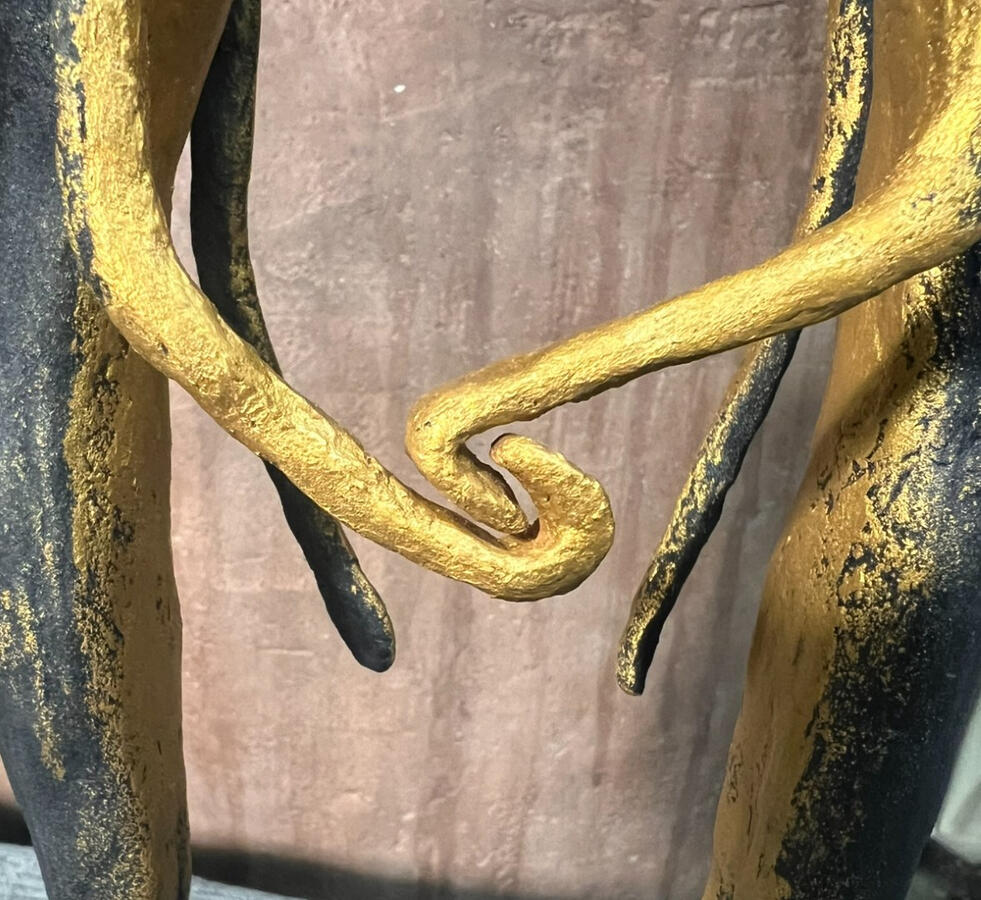
They aren't embracing. They aren't kissing. They aren't melting into one another.They're still two people.They simply turn toward each other and choose to hold on.Their hands are doing something very specific. Amy and I have this little way of holding hands where one of us reaches out in a certain position and the other completes it. We do it when we're stressed. We do it when one of us needs the other. Sometimes we do it simply because we love each other.The hands in MY BELOVED lock together the same way.
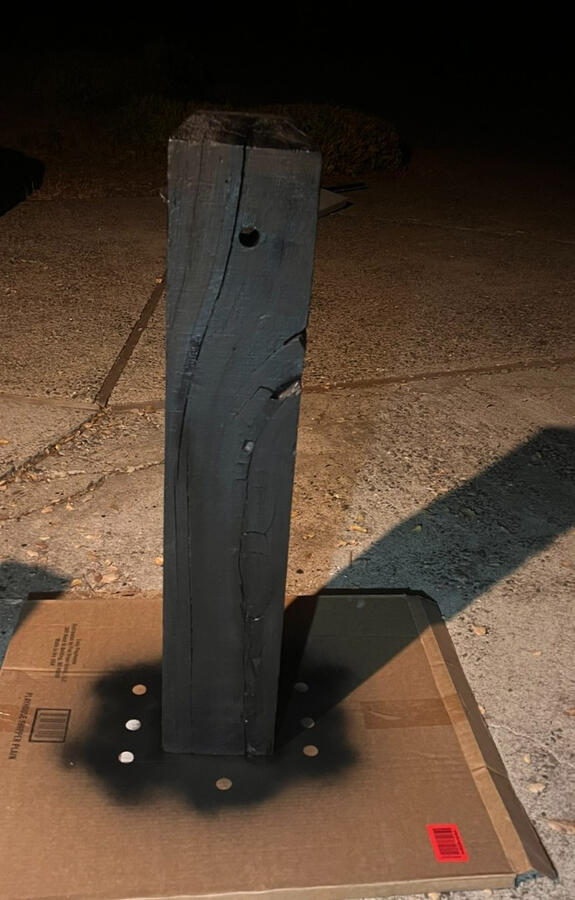
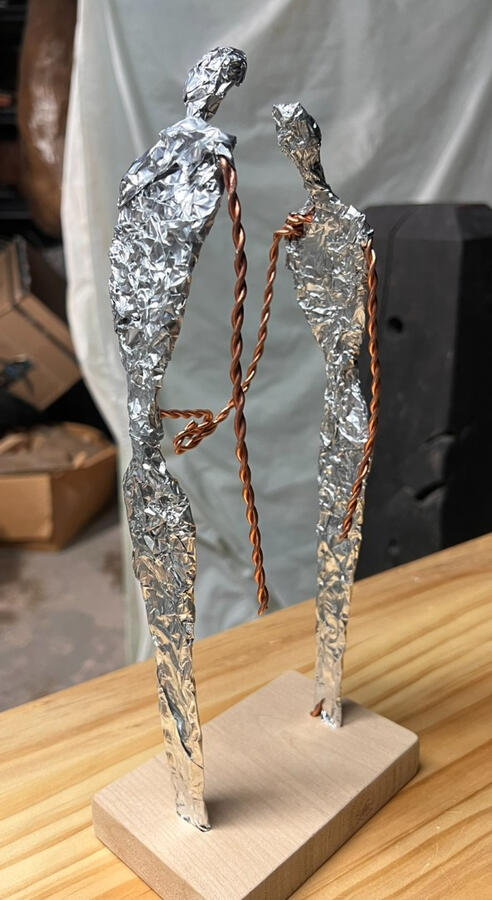
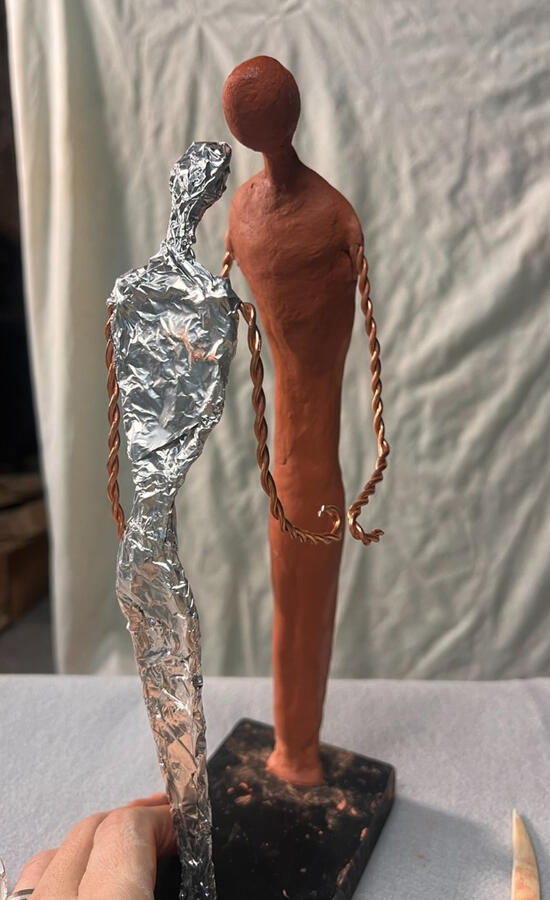
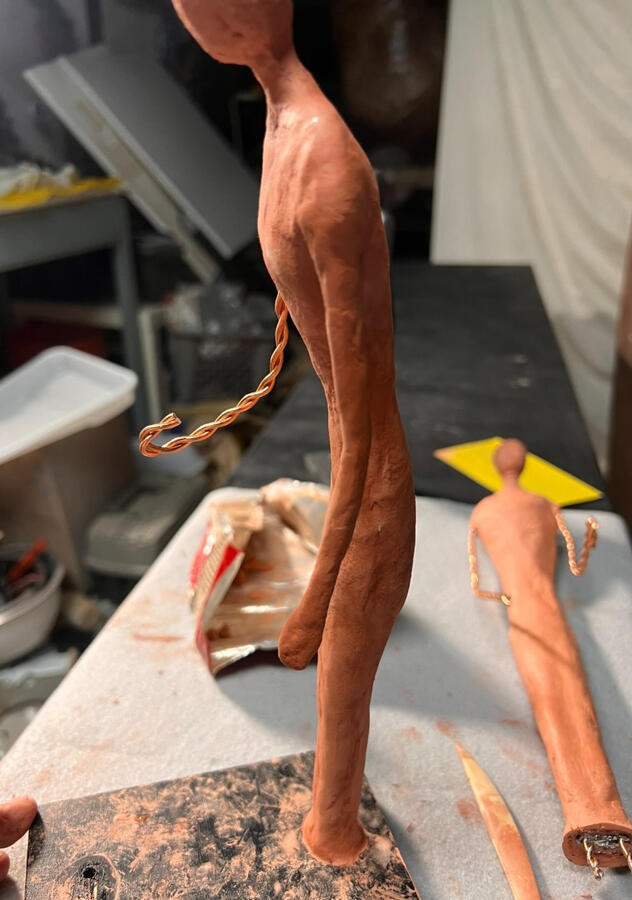
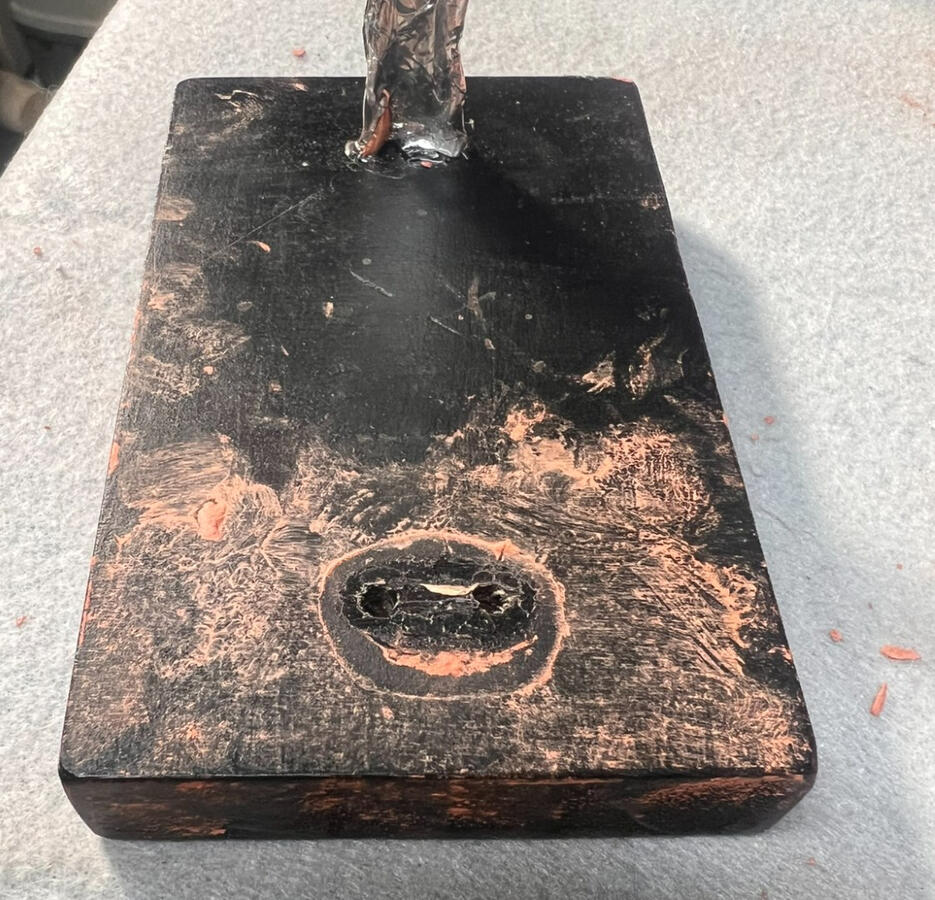
Once the clay dried, I painted both figures completely black.Then I started revealing the gold.Not everywhere.Their backs remained black. The gold appears primarily on the surfaces facing each other. It moves across their bodies, their faces and their arms until it becomes brightest where their hands meet.That mattered to me.The gold wasn't meant to suggest that either person was incomplete without the other. They're two separate figures. Two lives. Two people who can stand on their own.The gold appears in the place between them because that's where the relationship exists.Where they turn toward one another.Where they choose each other.Where they hold on.Amy and I have another phrase we've used for years:Old and gray.It's our shorthand for the promise underneath everything else.Whatever seasons come, we're doing this together.Until we're old and gray.
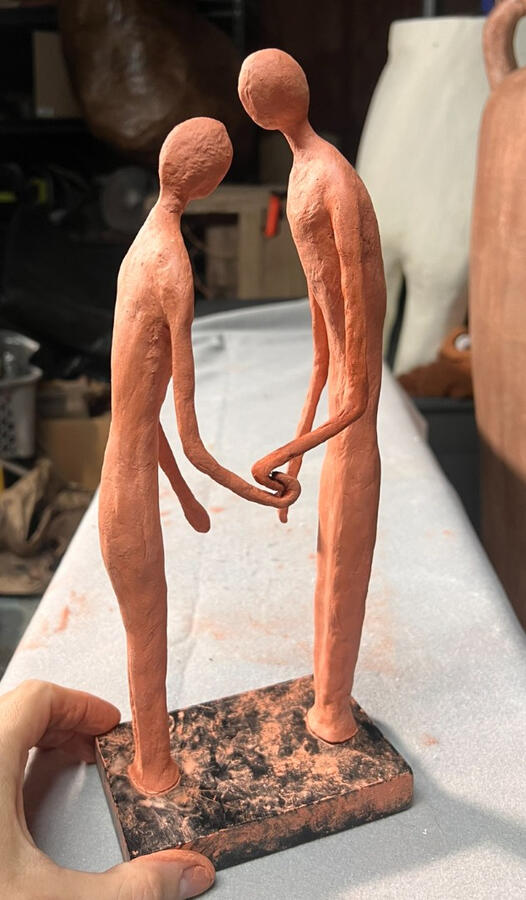
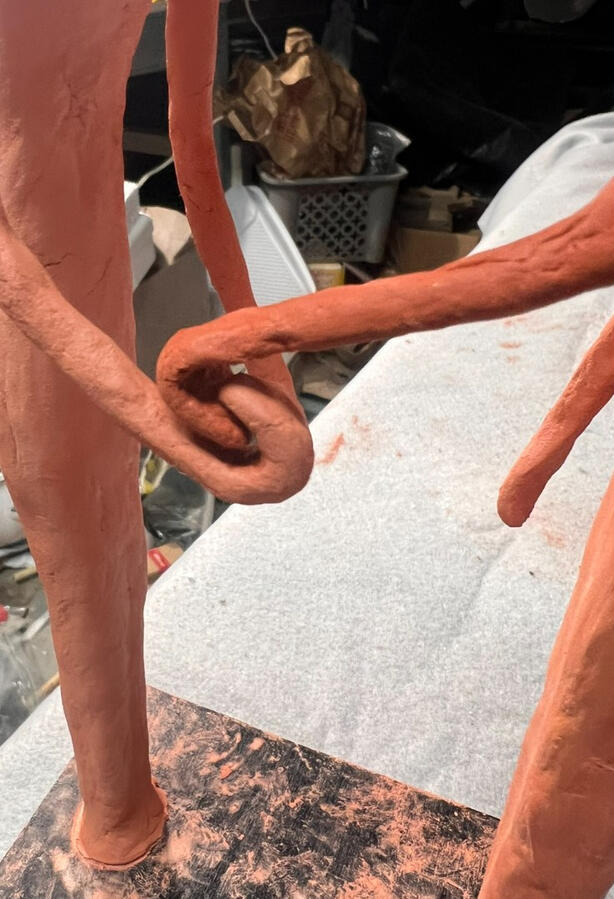
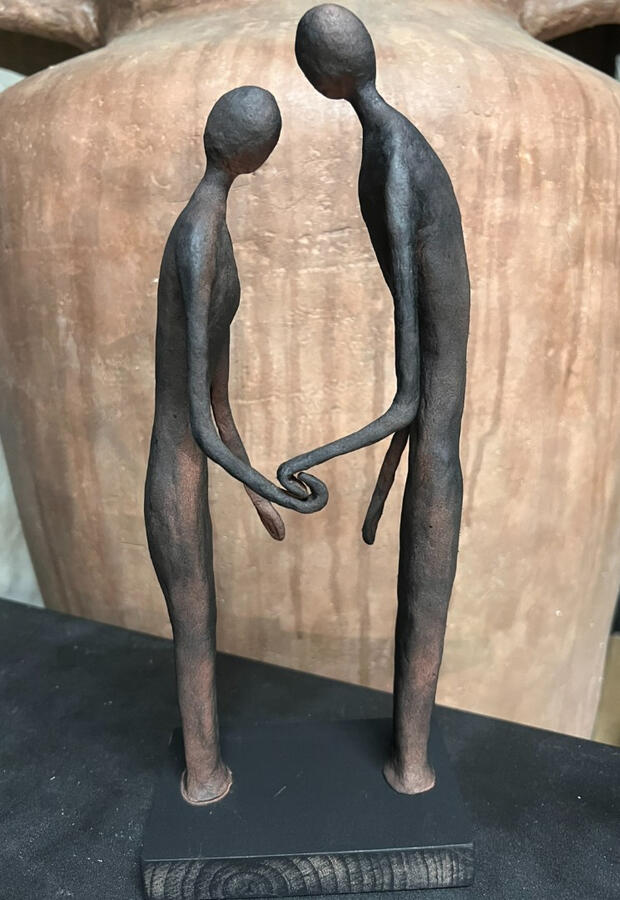
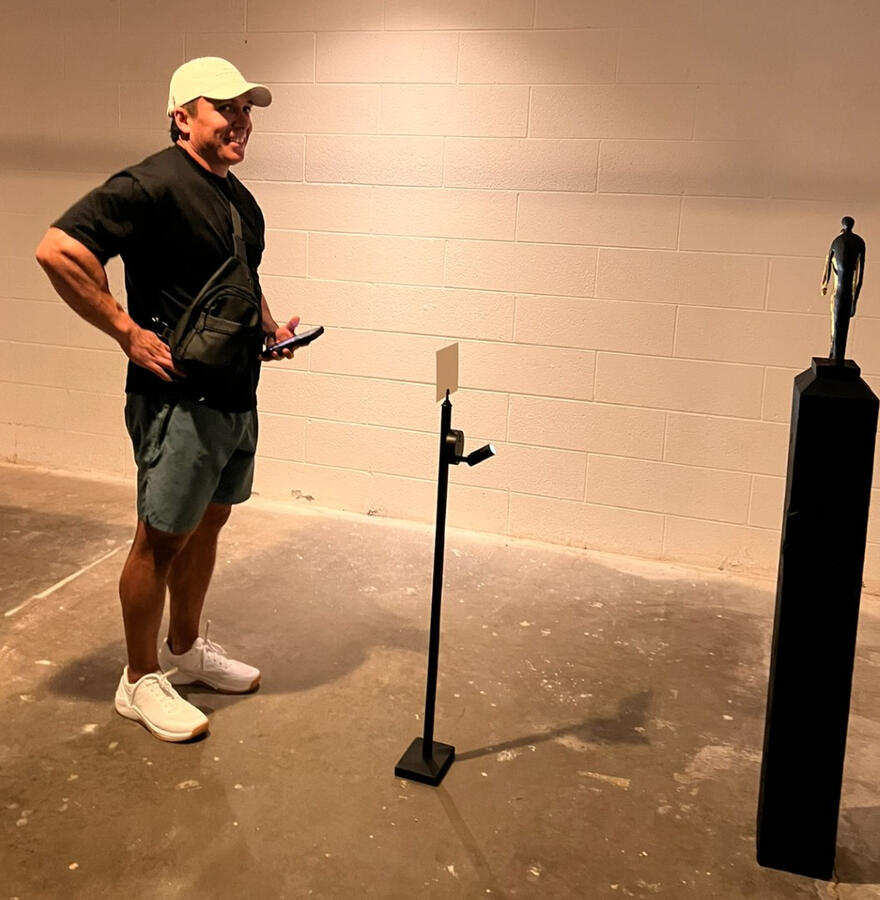
Even the title belonged to her.The name Amy literally means 'beloved'.So she became:MY BELOVED.It's also the only chapter title in MARKED that really breaks the pattern. Almost every other chapter is a single word. Then, near the very end, there are two:MY BELOVED.And it's Chapter Eleven.11.Two ones standing beside each other.Two individual marks. Neither disappears into the other. Put them beside one another and they become something else.I mounted the finished figures onto a small plinth, which I attached to a much larger black pedestal that had once been part of one of my dad's old haunted-house setups. Like so much of MARKED, something from another life became part of this one.
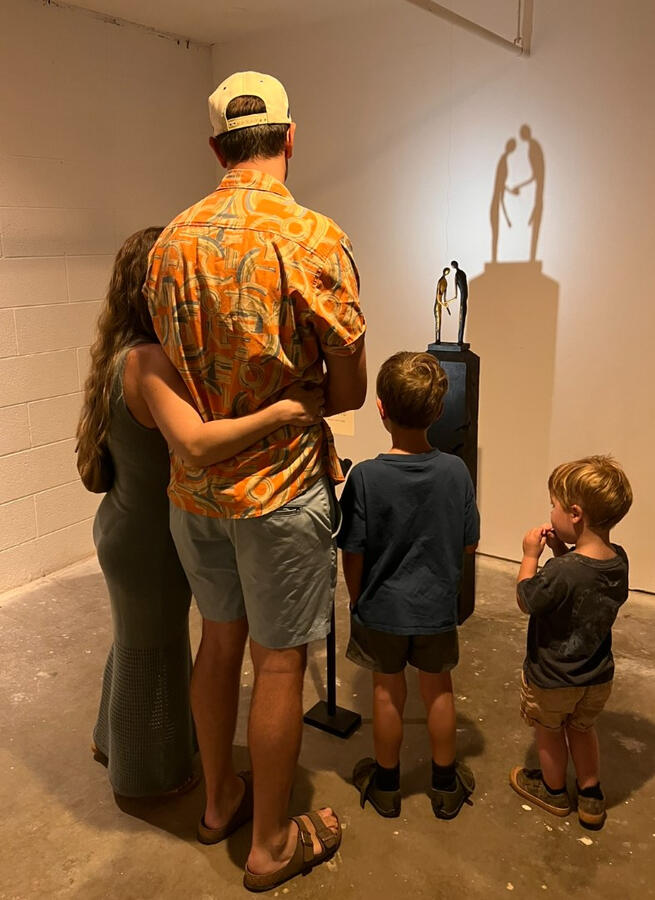
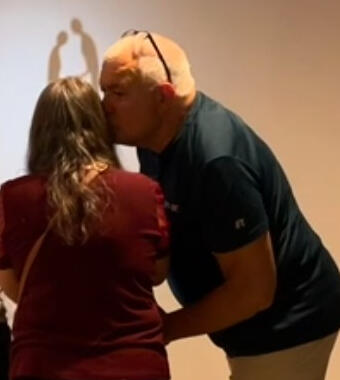
Then I placed a light in front of the sculpture.And that's when something happened that I hadn't completely planned.The two small figures cast an enormous shadow onto the wall behind them.Suddenly this little sculpture, only about a foot tall, became huge.The figures were still standing there quietly, holding hands.But what their love cast into the room was much bigger than either of them.
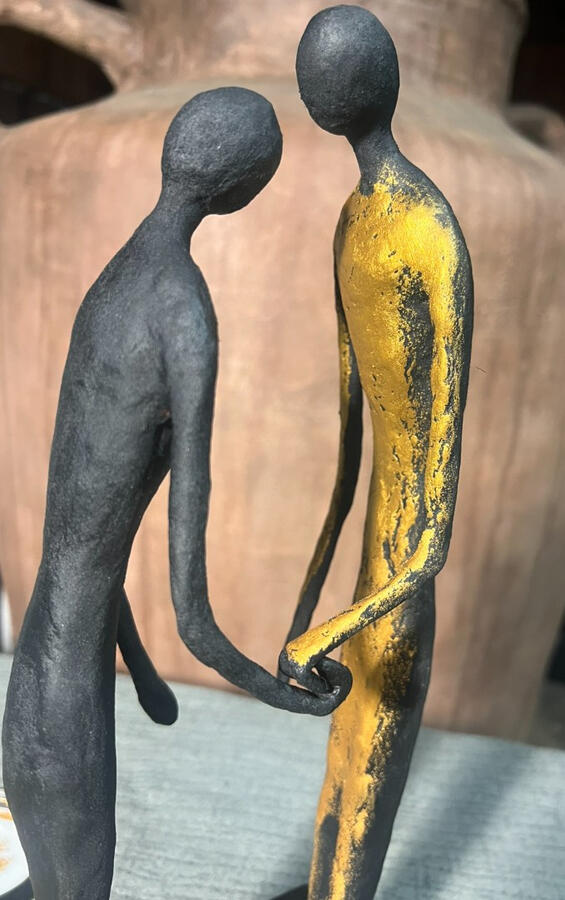
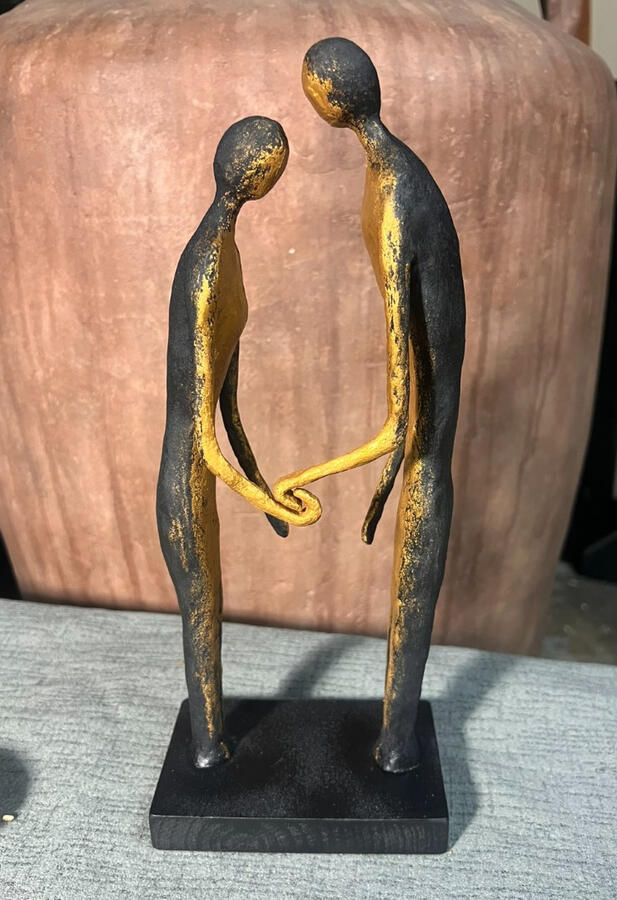
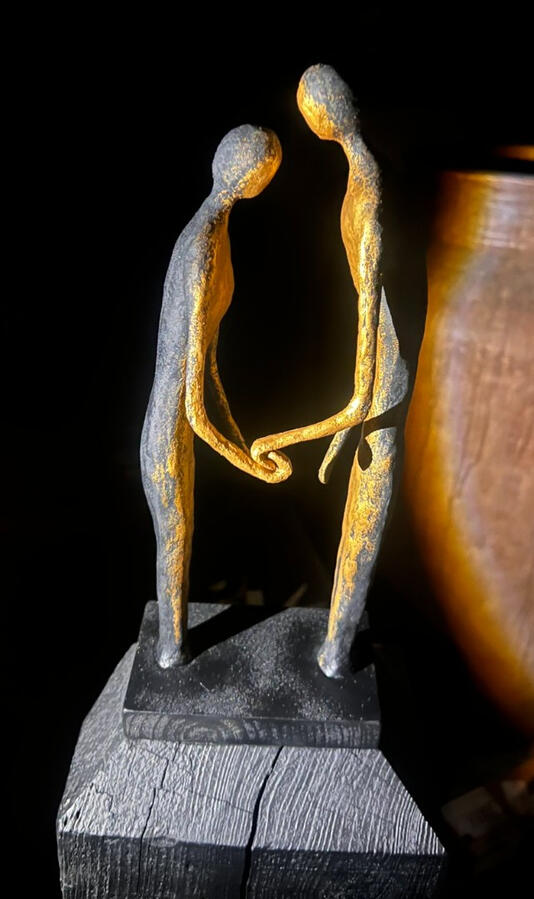
When Amy saw MY BELOVED, she cried.
We stood there together for a while.We hugged. And eventually, we did our little hand hold.There was one final part of the sculpture I haven't told you about yet.Between their hands was a thin golden thread.If you saw MARKED, there's a good chance you didn't notice it until this moment.The thread actually began above the entrance to the exhibition. From there, it traveled through the entire room. Sometimes it ran high along the ceiling. Sometimes it dropped lower. But through every chapter, from the moment you entered, it had been there.Then, at MY BELOVED, it finally came down.The thread wasn't tied around the figures. It didn't bind them together. It simply arrived between their hands, and they held it together.That mattered to me because Amy hadn't suddenly appeared at the end of this story.She had been there through all of it.Through every version of me. Through the years when I knew where I was going and the years when I didn't. Through the difficult seasons that eventually became part of MARKED. And through every late night, strange idea, problem, breakthrough and ridiculous thing I dragged into our garage while making it.She was already part of the story long before I understood where the story was going.Most visitors didn't notice the thread until they reached this point. Then something wonderful would happen.They'd look up.They'd start following it backward.Sometimes they'd retrace it through the room. Sometimes they'd finish the exhibition, turn the corner, and suddenly notice it again above the beginning.It had been there the whole time.The entire exhibition was dedicated to Amy.My beloved.Still two people.Still choosing each other.Still holding on.Old and gray.
YOU
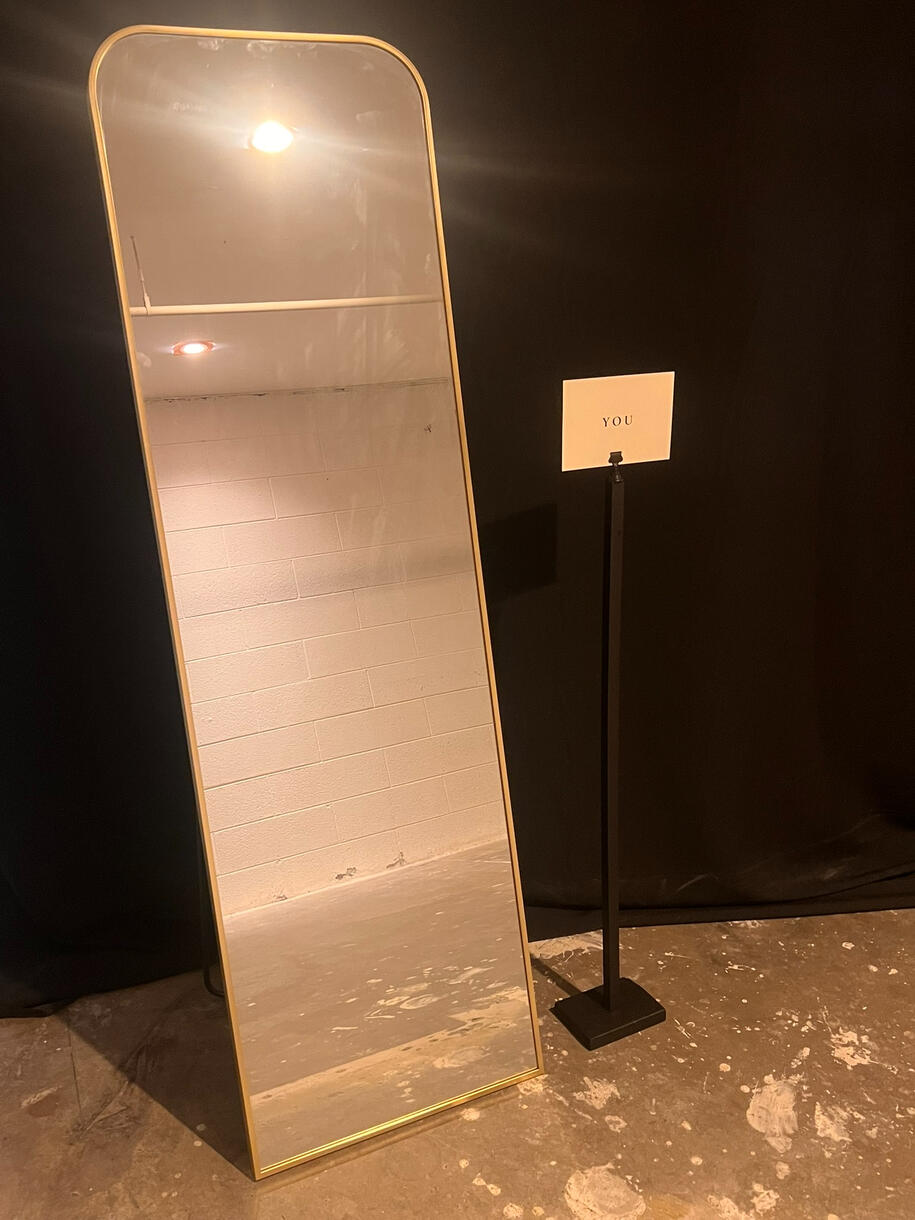
There is no Chapter Twelve.That was intentional.The eleven chapters before this were mine. My memories. My relationships. My questions. Things I had carried, struggled with, learned, noticed, trusted and loved.Then the chapters ended.At the very end of MARKED was a mirror.Its title card didn't give you a question.It didn't give you an instruction.It didn't even give you a chapter number.It said one word:YOUBecause I had told you my story.What happened next belonged to you.
I didn't want to tell anyone what they were supposed to see in that mirror.Maybe something from the exhibition followed you there.Maybe you thought about the people who have marked you, the things you've carried, the names you've accepted, the steps in front of you, the things you love, or the things in your own life you still can't explain.Maybe none of that happened.Maybe you just saw yourself.That was enough.There wasn't another object waiting to give you an answer. There wasn't another piece of my story to interpret.There was just you.And after an entire exhibition filled with gold, there wasn't any painted onto the mirror either.I didn't want to put it there for you.
One of the ideas underneath MARKED from the beginning was:Gold is not added. Gold is revealed.For a long time, I had looked outside myself for things that might finally tell me who I was or what I was worth. The right opportunity. Success. Purpose. Recognition. Some missing piece that would finally make everything click.
MARKED didn't give me that missing piece.It helped me see what had already been there.And that's why I couldn't answer the final chapter for you.I don't know what has marked you. I don't know what you've carried, what you've lost, who has loved you, what you're becoming, or what parts of yourself you're still learning to see.That's your story.But I do know why there was no gold on the mirror.I didn't need to add it.It was already there.
MOVEMENT IV
OPENING THE DOOR
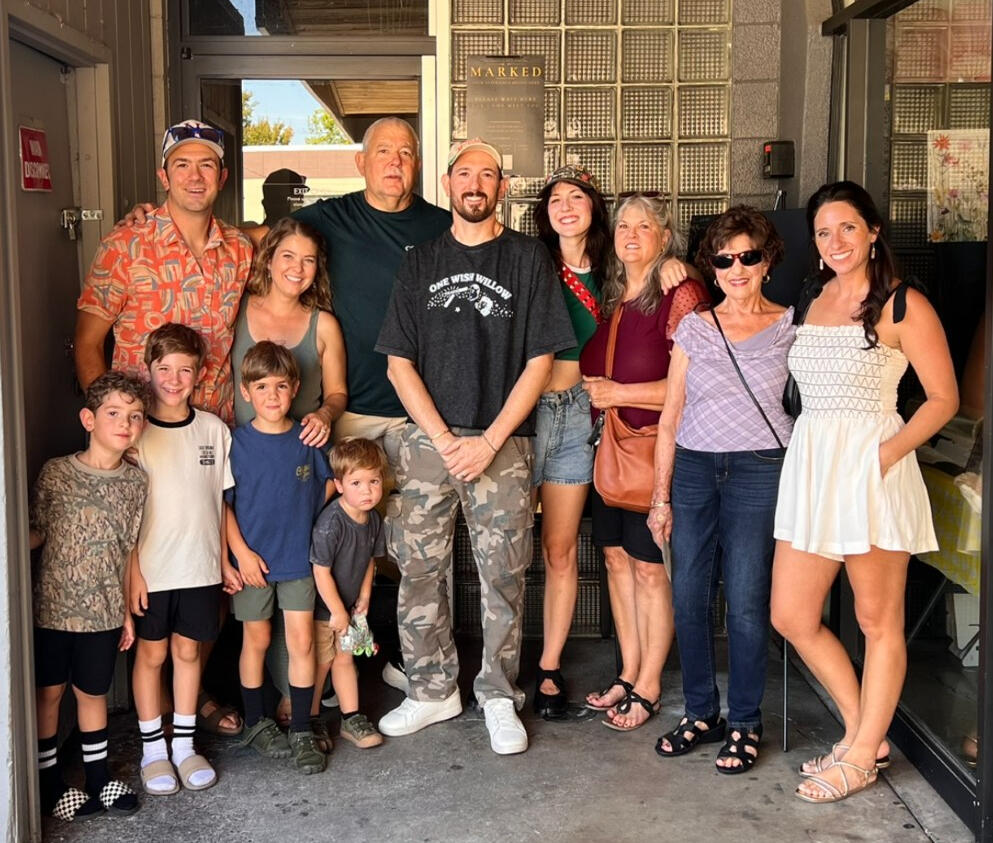
The first person to experience MARKED wasn't technically a visitor.It was Amy.I had promised her she would be first. A local news station was coming Friday morning, so on Thursday night we dropped the boys off with my grandma and went downtown together.For three months, Amy had watched me disappear into the garage night after night. She had heard the ideas, lived around the materials, watched pieces slowly leave our house, and supported me through all of it.But she hadn't seen MARKED.Not like this.For the first time, I got to take someone through the entire thing exactly as I had imagined it. Just the two of us.She cried. We hugged. And she kept telling me how proud she was of me.Afterward, we brought the boys through. They ran across TRUST, stood inside the storm of POLARIS, discovered things I'd been hiding from them for months, and had those little wide-eyed moments I'd hoped people might have inside the room.By the time September 11 arrived, I'd already had my warm-up.That morning, Devin Herenda from KRCR came through before turning on the camera. Later my brother and his family came, then my parents, grandma and sister. My brother hugged me near the hands in IMPRINT. My mom and grandmother crossed TRUST together. My dad and sister hugged inside the storm.Then we went next door for pizza.I opened some birthday presents.Because somewhere in the middle of all of this, I was also turning 40.At 5:00, I opened the door.
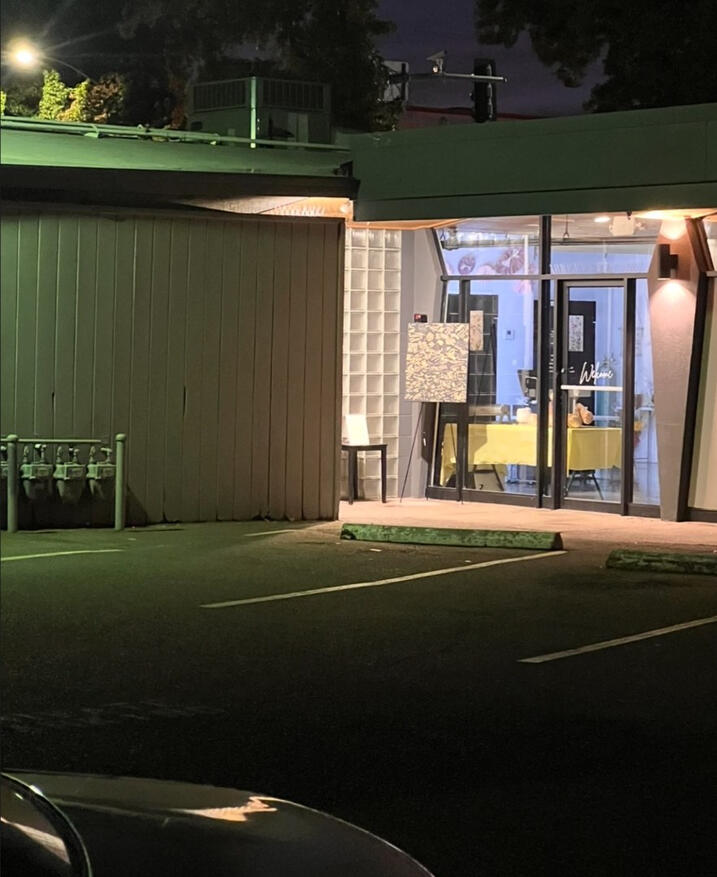
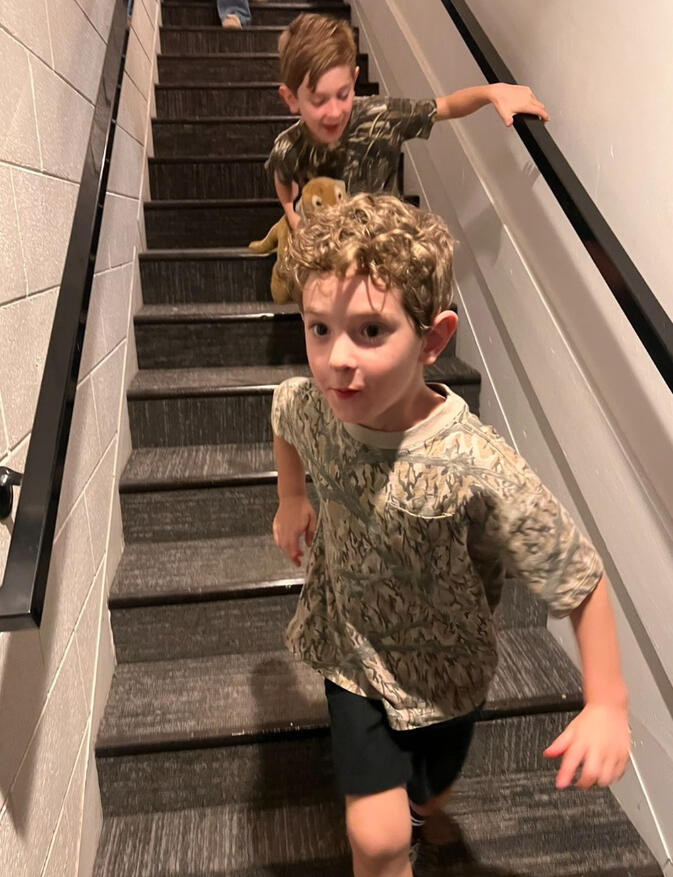
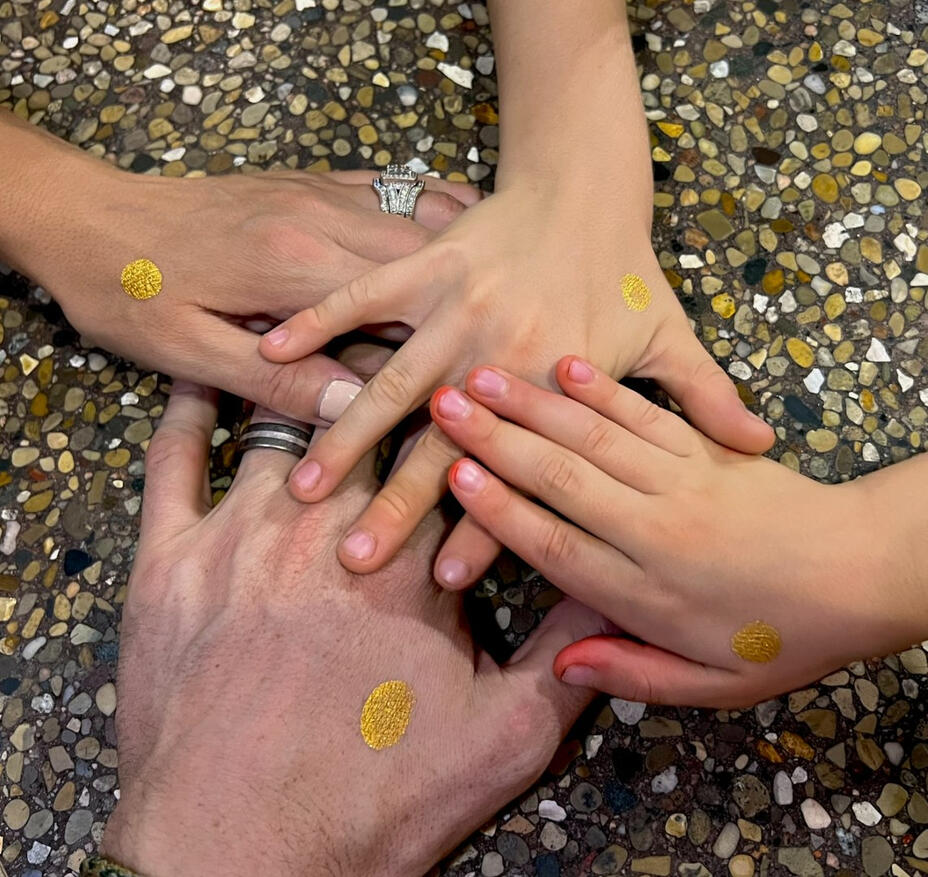
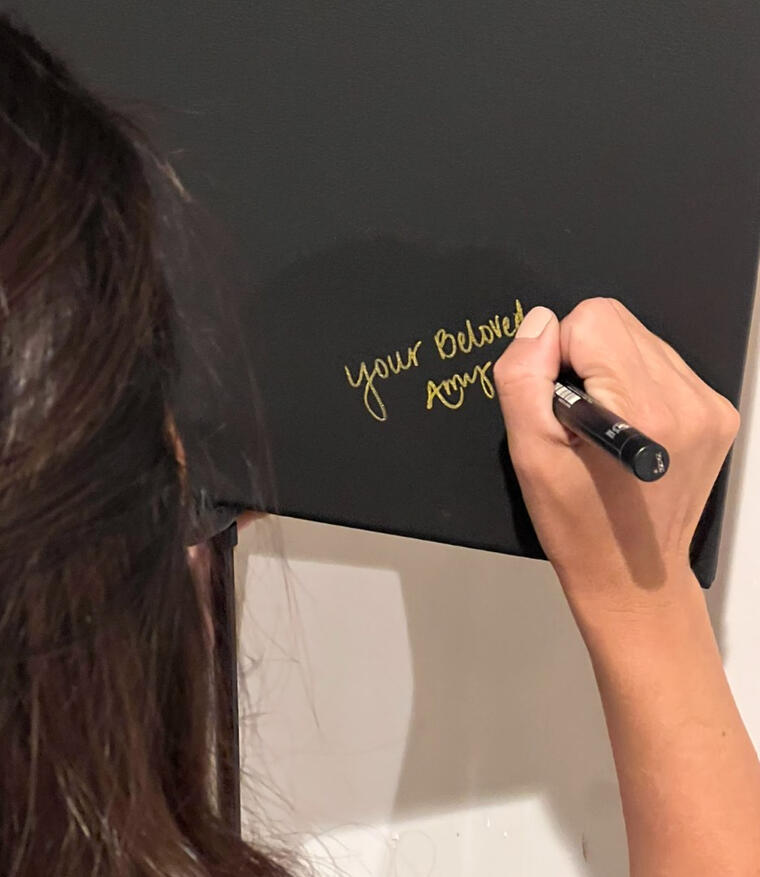
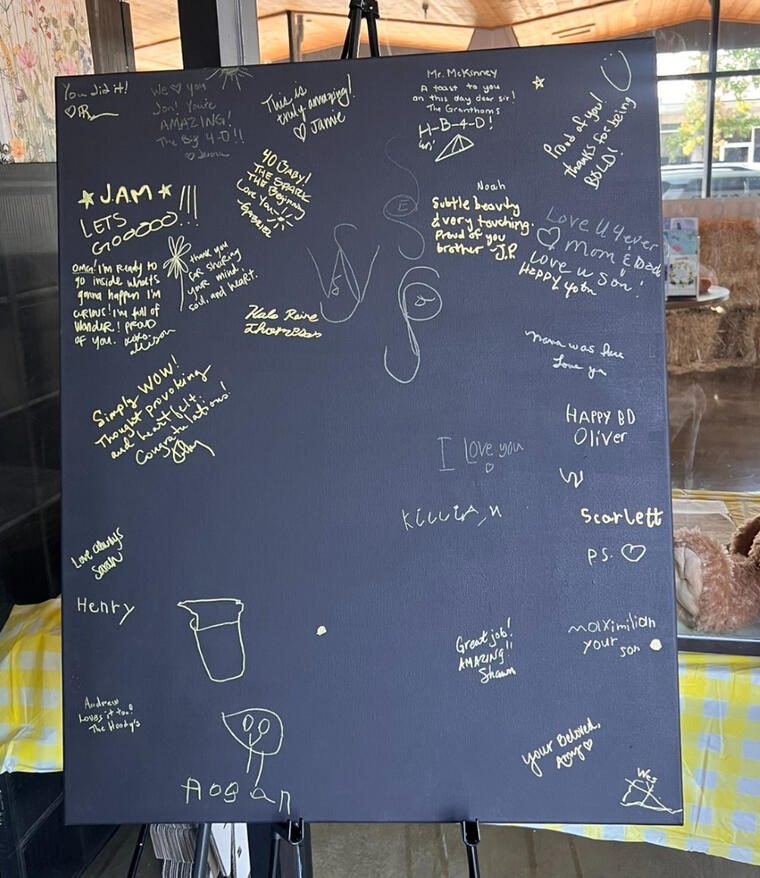
Finding MARKED was intentionally a little strange.The entrance wasn't on the main street. It was around the back of the building, down an alley, through a nondescript door that didn't look much like the entrance to an art exhibition.That mystery had actually started weeks earlier.I had been leaving little black puzzle pieces around town. On one side was a single gold dot. On the other was a QR code.That was basically it.If you found one, first you had to notice it. Then you had to be curious enough to pick it up. Then curious enough to scan a QR code without really knowing where it would take you.Even the website didn't explain much.Then, if you actually showed up, you found me.I'd bring you inside and lead you down the stairs without explaining what was about to happen.At the bottom, I'd open a small black container covered in gold fingerprints.Then I'd ask:“Are you ready?”And:“Can I borrow your hand?”Almost everyone hesitated.Usually only for a fraction of a second.Then they'd give me their hand.I'd dip my finger into gold paint and leave one small mark on their skin.I never explained why.Then I'd turn toward the exhibition door.
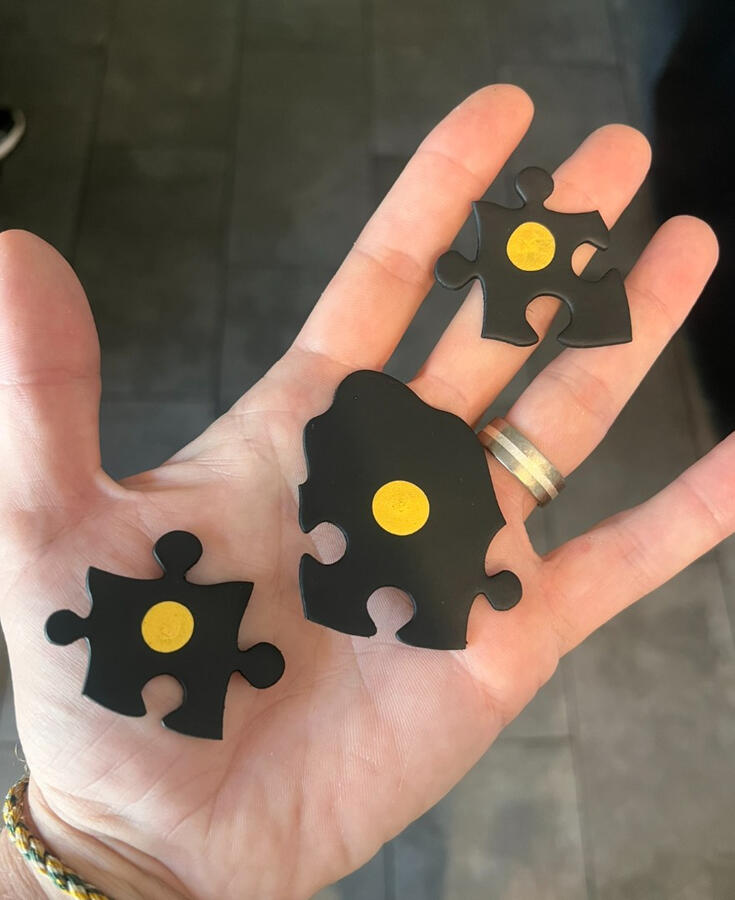
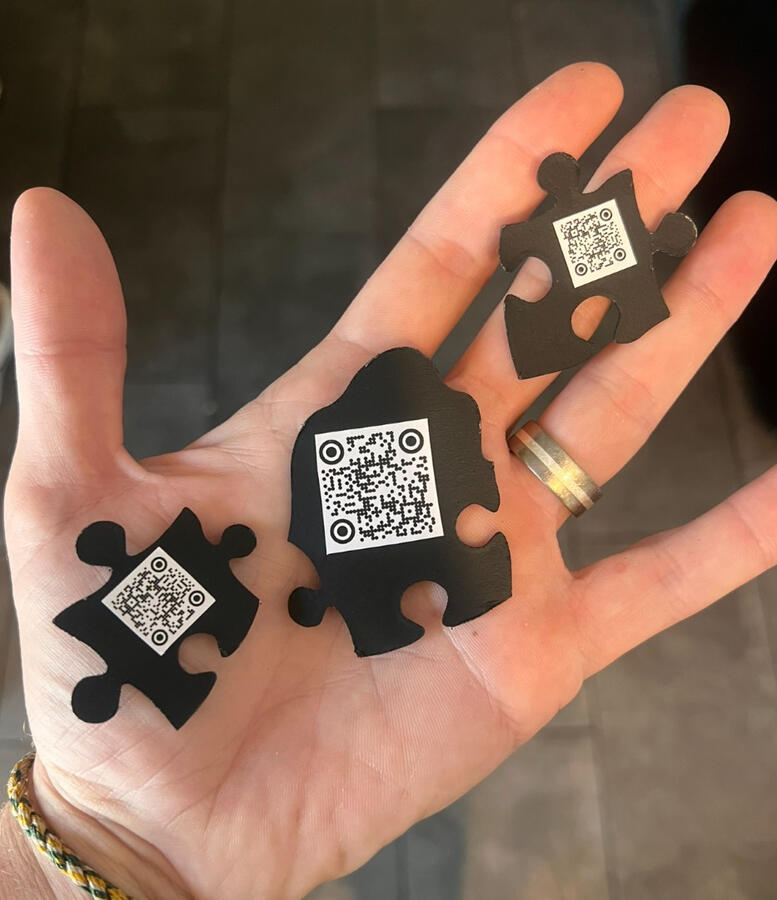
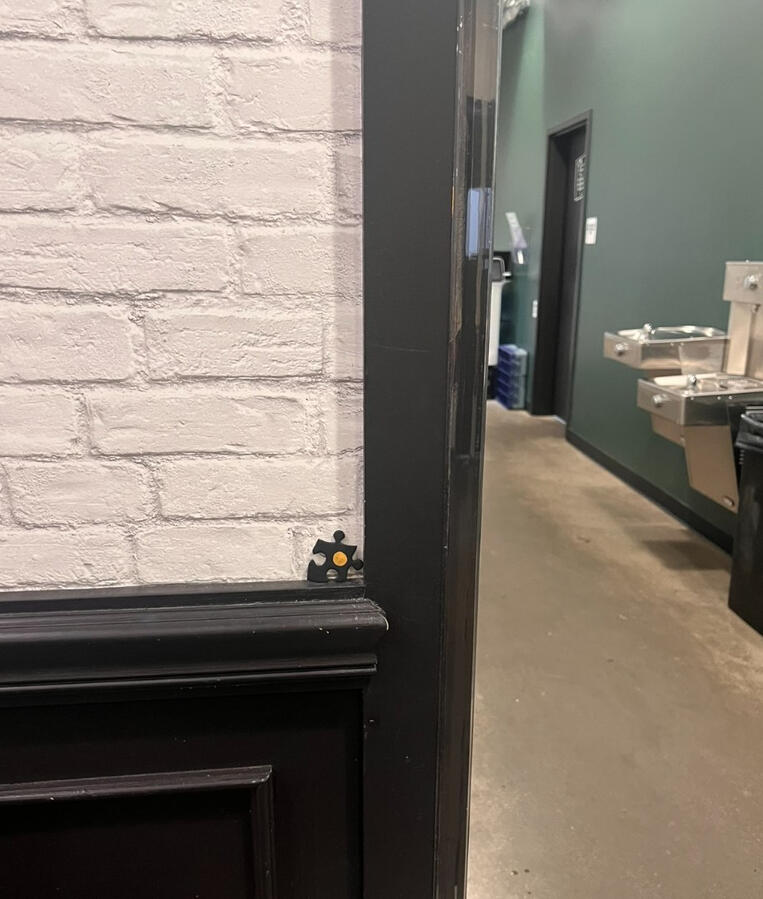
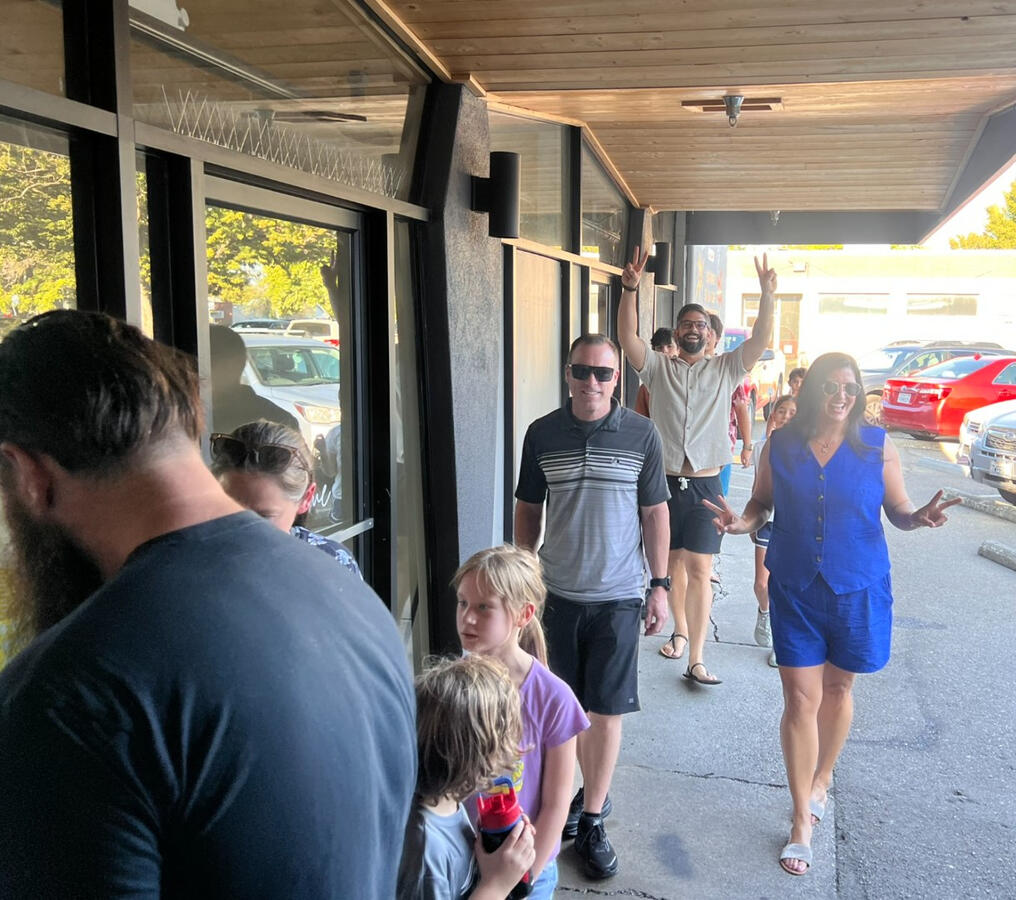
Opening that door became one of my favorite parts of the entire exhibition.I opened it slowly.Every time I did, I got to see MARKED again too.I would position myself so my body blocked the view toward MY BELOVED and the end of the exhibition. Then I'd let the visitor step past me. Their first sightline opened toward REMEMBRANCE, IMPRINT and BECAME.I'd gesture into the room.“Chapter One.”And then I'd leave.Over three weekends, I started noticing that I got to meet three versions of almost everyone who came through.The first was the person who arrived at the outside door. They were usually friendly, curious and a little confused.The second was the person at the bottom of the stairs. They were quieter. More uncertain. They didn't know why this stranger had just asked to borrow their hand or what was behind the door in front of them.Then there was the third version.The person who came back out.Sometimes they were smiling.Sometimes they were quiet.Sometimes they were crying. A few were weeping. Some simply said, “That was really cool.”But something about them often felt different.And then I got what became one of my favorite parts of MARKED.They told me what happened inside.
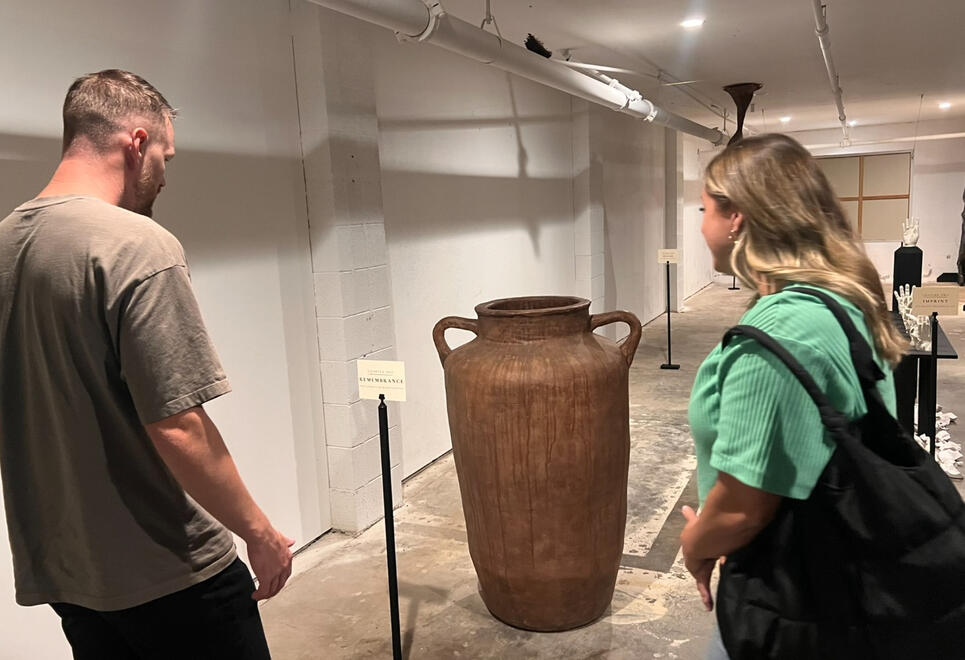
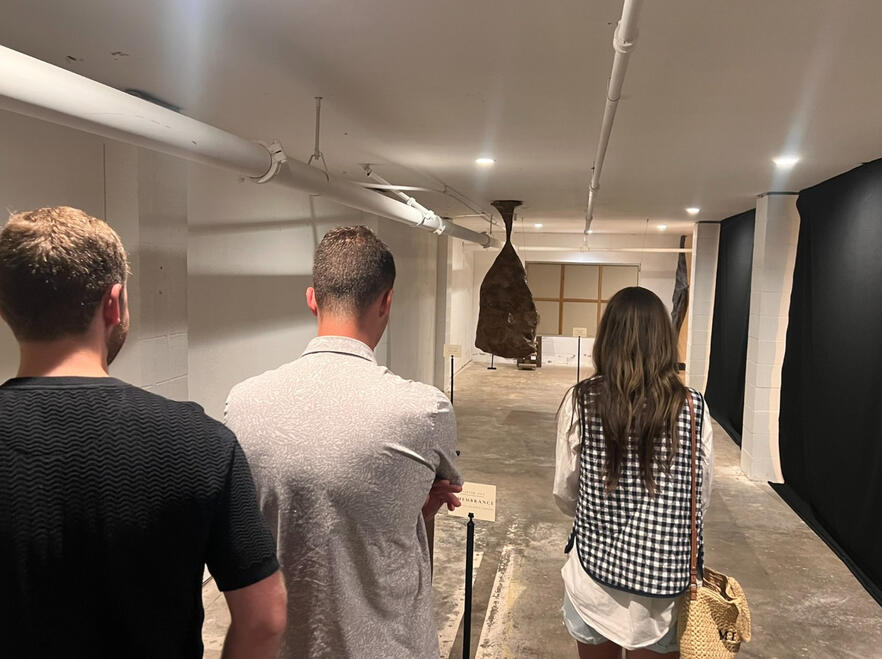
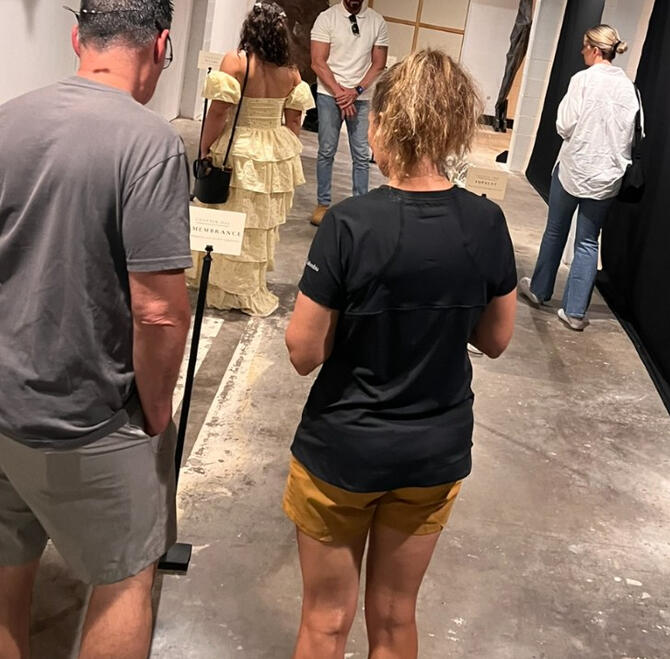
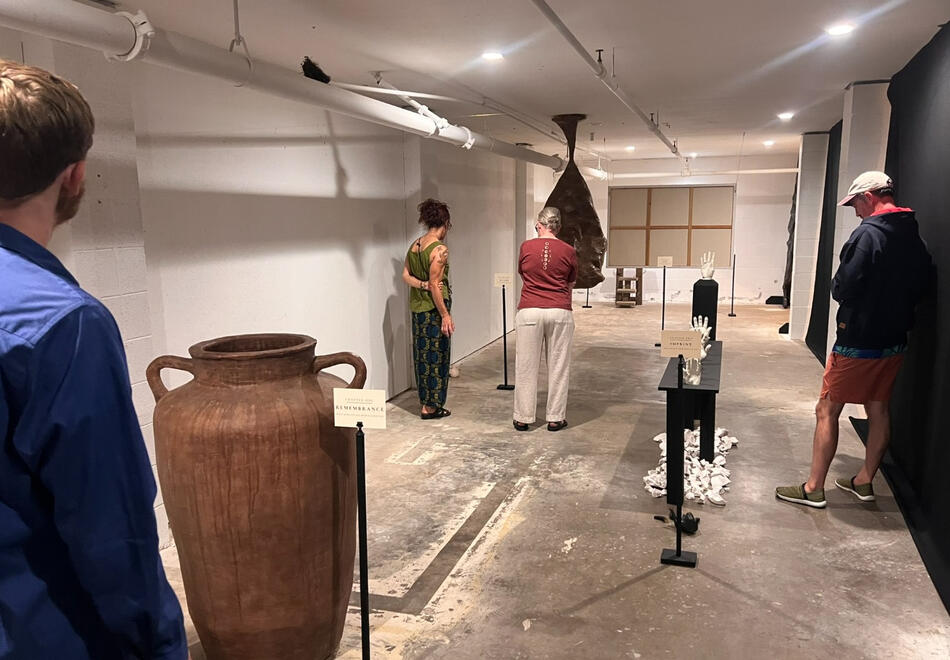
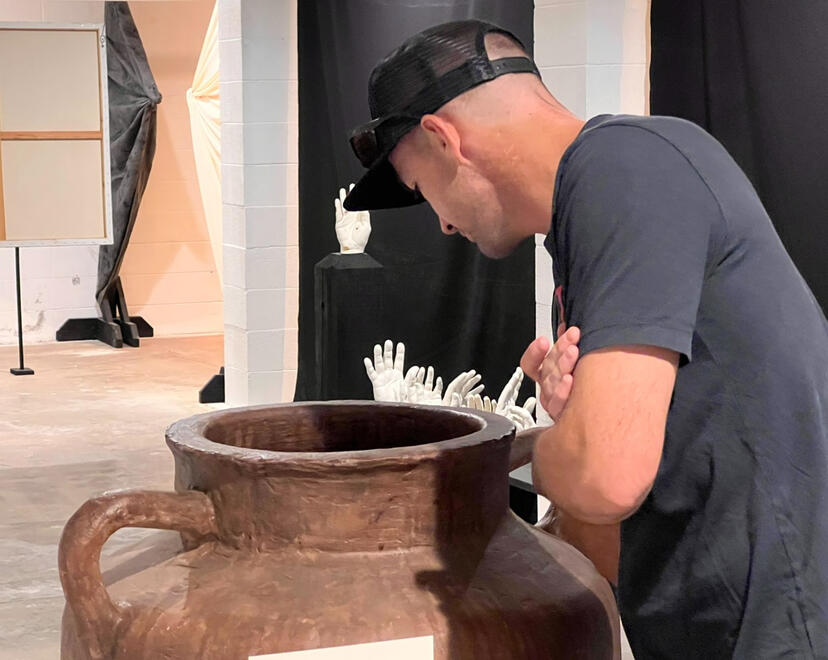
• BETWEEN THE DOORS •There wasn't a chair in the stairwell, and I couldn't stand all day, so I spent an unbelievable number of hours sitting on the stairs.
Most of the time I was looking in one of two directions.Up, toward the outside door, watching to see whether someone had arrived.Or down, listening for the exhibition door because someone was coming back.I spent most of MARKED sitting somewhere between the two.
Between someone who hadn't experienced it yet and someone who just had.When people came out, they often had questions. They wanted to know what something was made from, what a piece meant, why something was there, or whether what they thought they had seen was actually what I intended.I'd tell them stories.Some of those stories are the ones you've just read.That's actually part of why this Epilogue exists. I love stories that leave enough unanswered that you keep thinking about them afterward.Sometimes understanding how something was made, or discovering one detail you missed, makes you want to experience the whole thing again.And people did.They came back.They brought spouses, children, friends and parents.My mechanic, and friend, came through around four times. The first time, he wept and I hugged him. Then he kept returning with other people, noticing things he hadn't seen before.Another man walked out and the first thing he asked was:
“Can I give you a hug?”Every time someone came back through that door, I got something I hadn't put into the room myself.Their story.
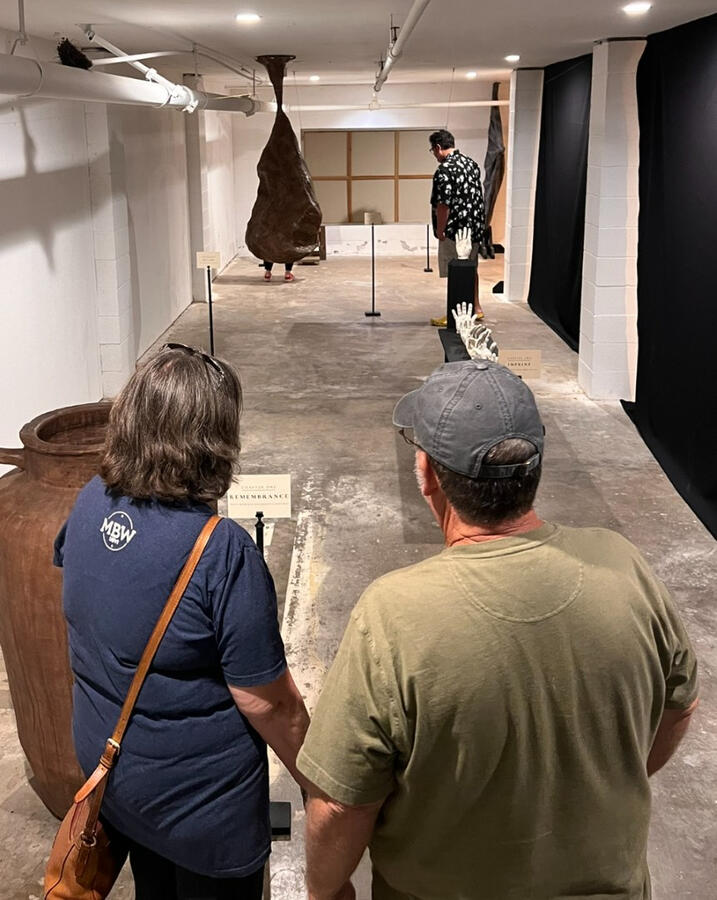
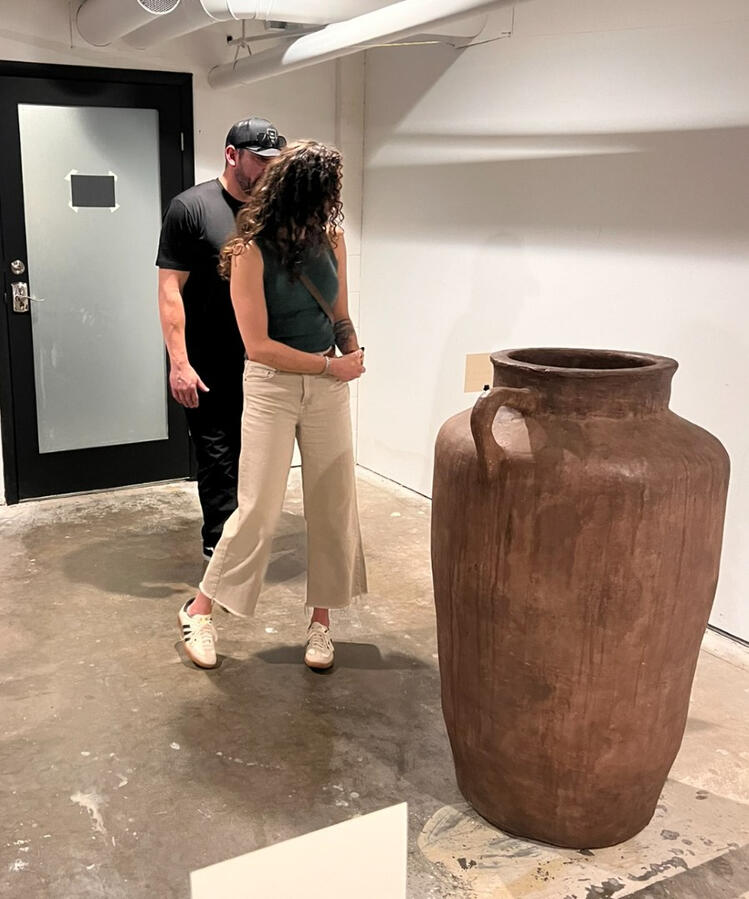
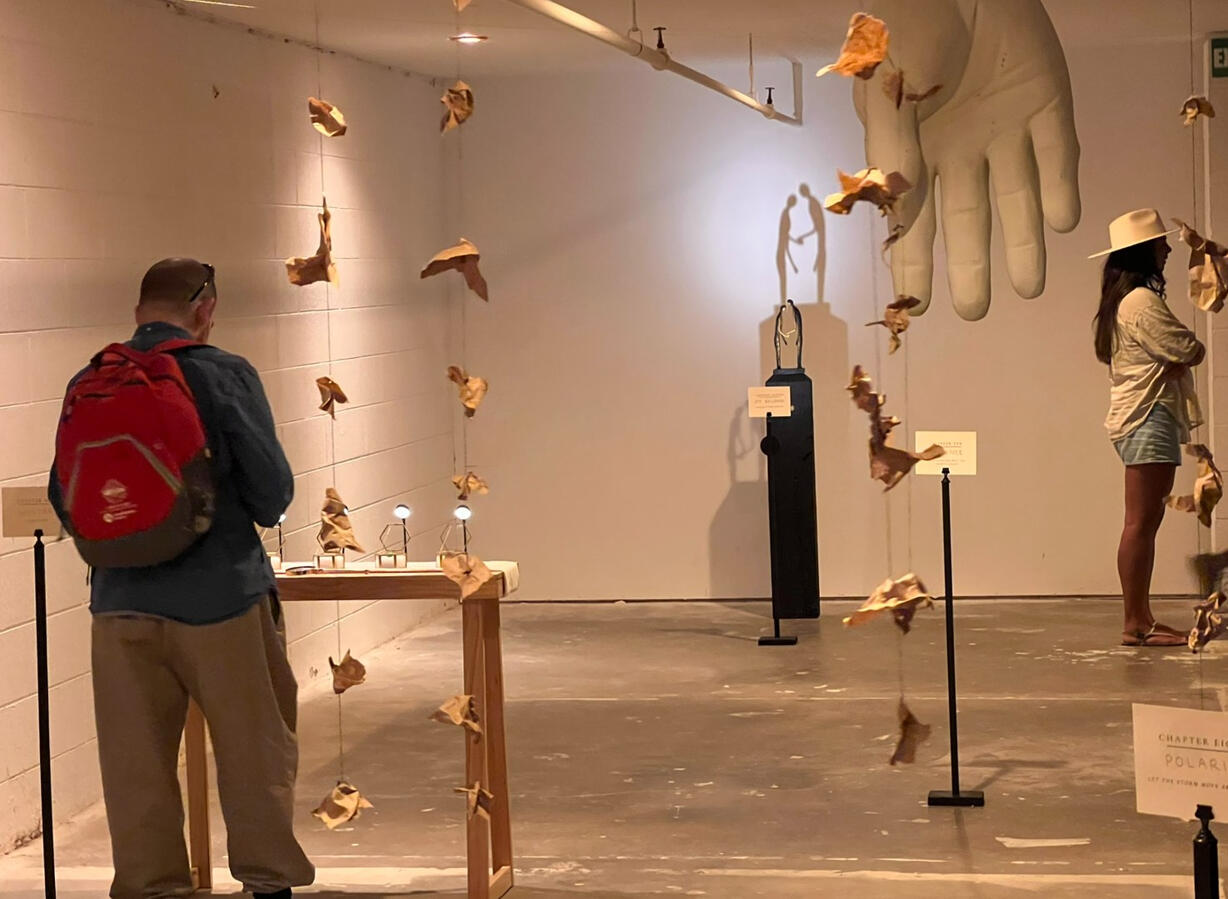
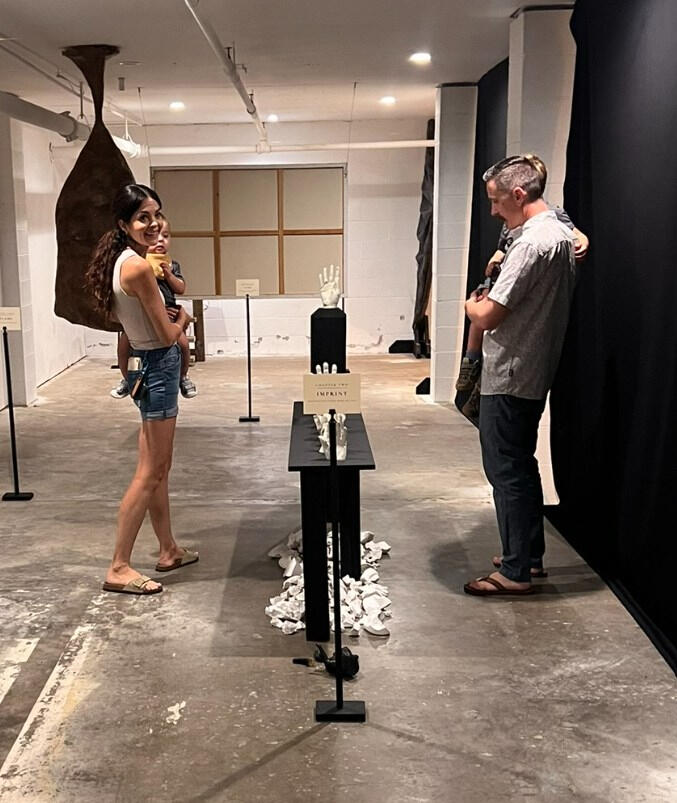
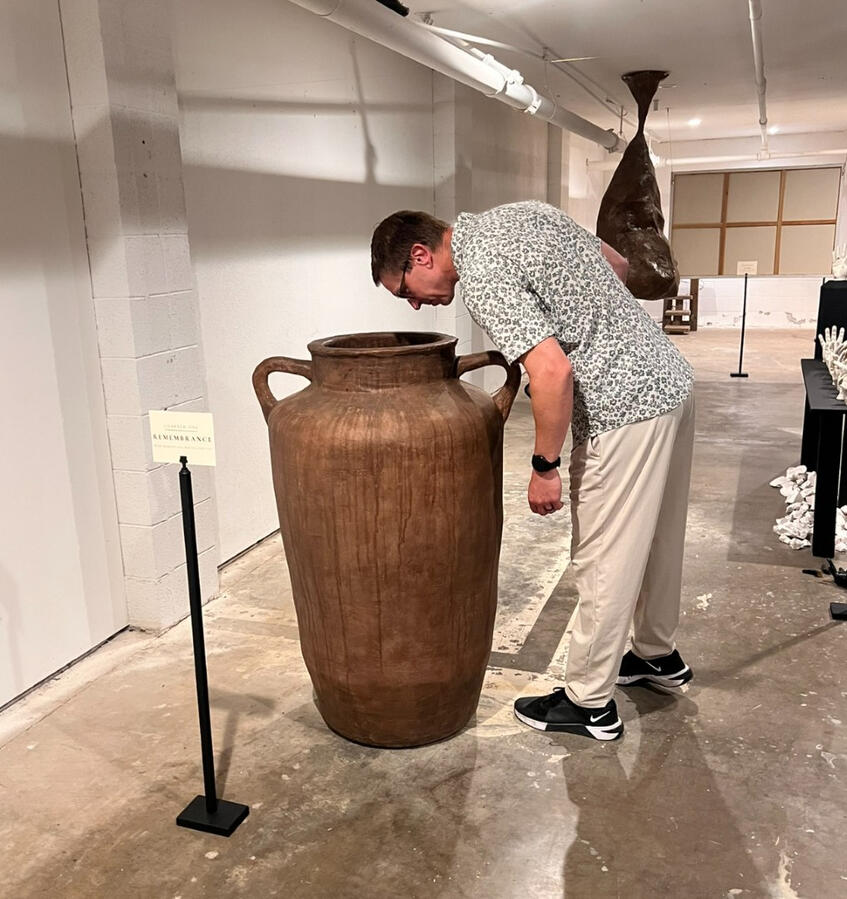
• IT KEPT GOING •MARKED was supposed to end that first weekend.Then my friend Stephen came through.He had somewhere else to be and told me he couldn't stay long. When he came out, he told me he needed to cancel his plans.He went home, got his wife, and brought her back.They spent a long time inside together. When they came out, both of them were crying. Stephen told me he thought the experience had changed him, that he thought he would remember that moment forever.Then they started telling people.One of those people was Dave Ward.Dave came through with one of his daughters and asked how long the exhibition would be open. I told him that, unfortunately, it was ending.
He told me that if I could keep it open, he had hundreds of students he wanted to tell about it.
So I asked.And MARKED stayed open another weekend.Dave emailed his students and announced it publicly. Then he came back himself, more than once, bringing different daughters with him. I remember hearing him explain pieces to them inside the room and thinking:What a great dad.By the end of the second weekend, hundreds of people had walked through MARKED, and something that had begun as my strange 40th-birthday art show was moving almost entirely through word of mouth.So we extended it again.By the time the final weekend ended, somewhere around five hundred+ people had walked down those stairs.I had planned one weekend.MARKED gave me three.
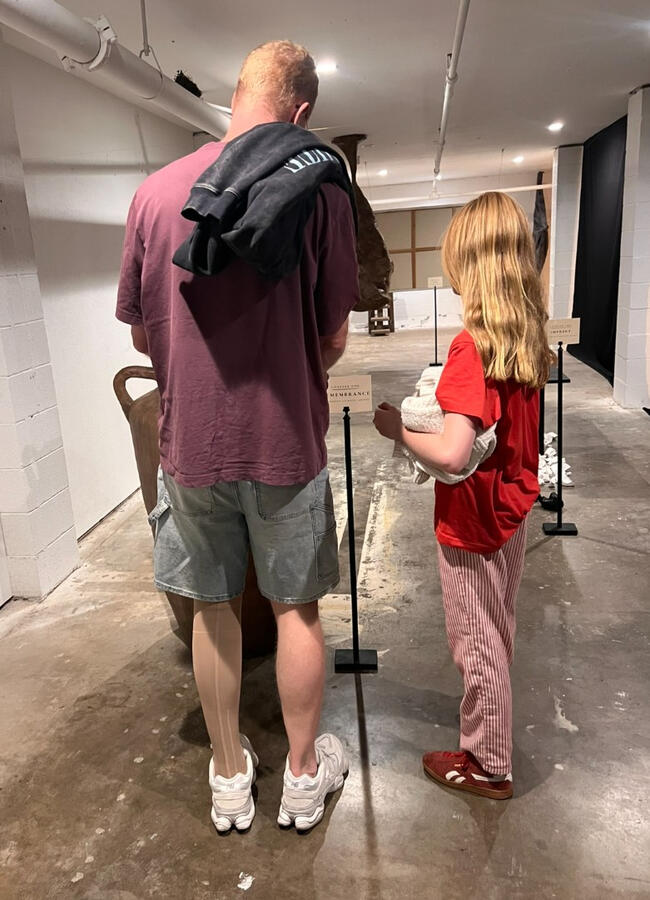
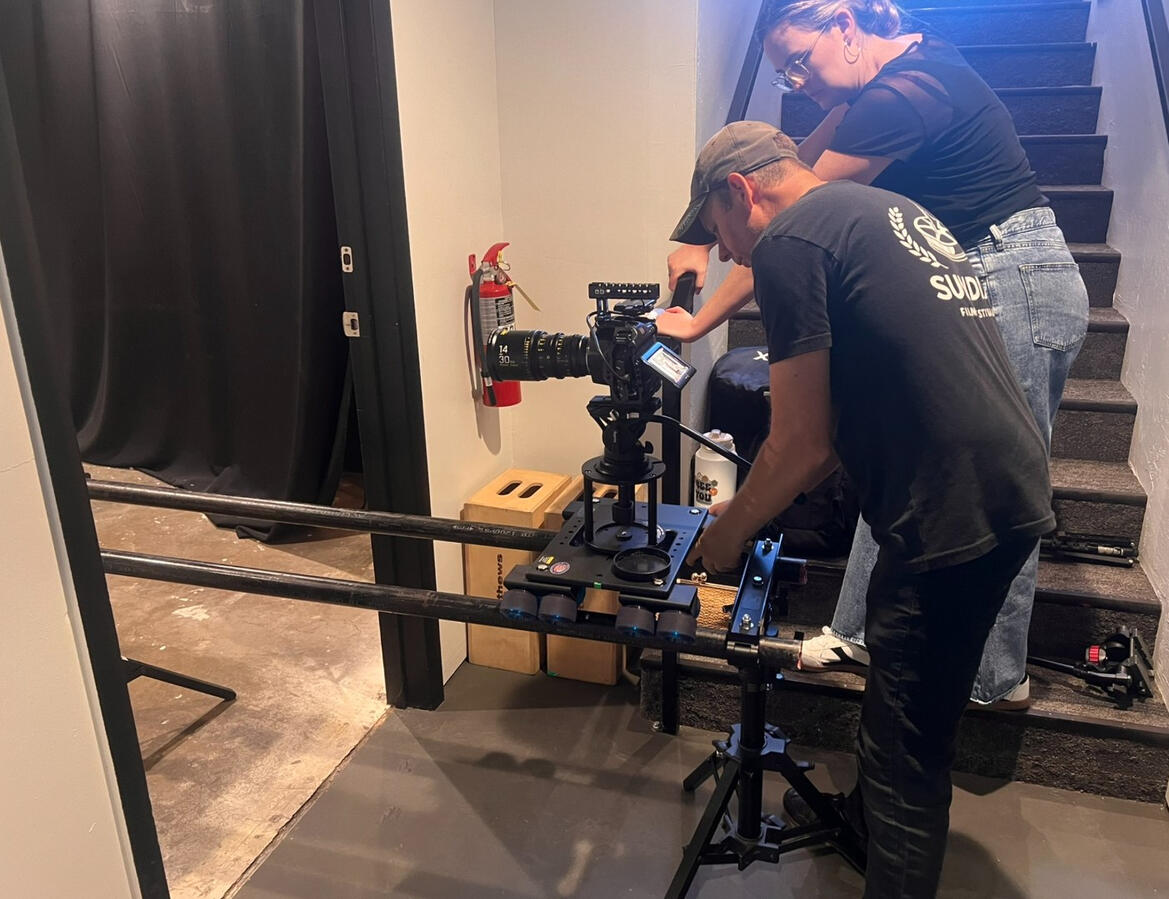
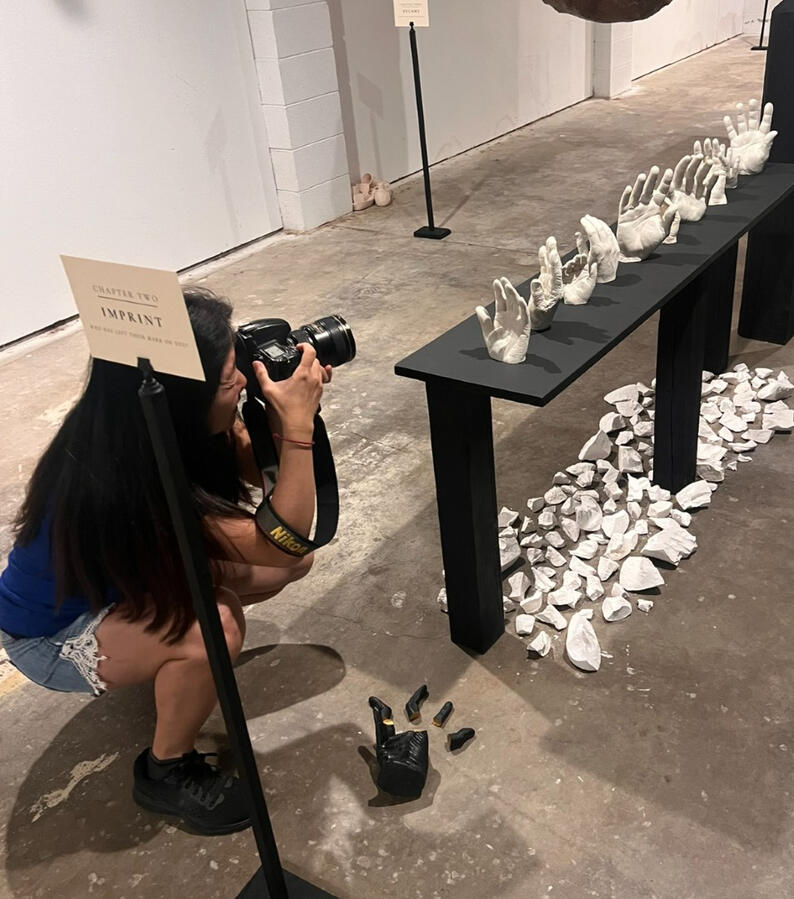
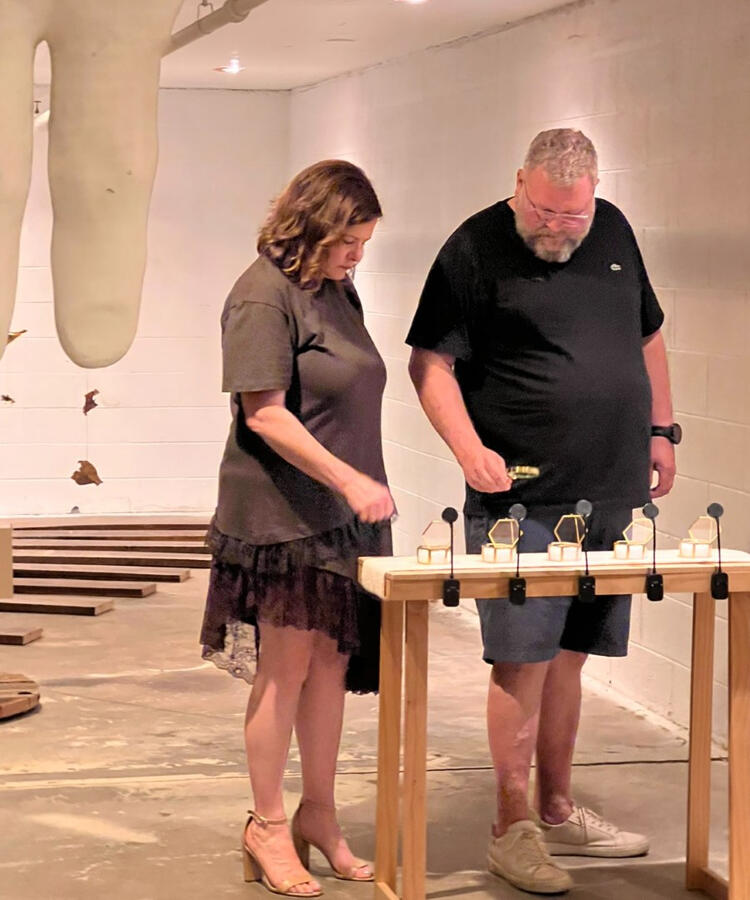
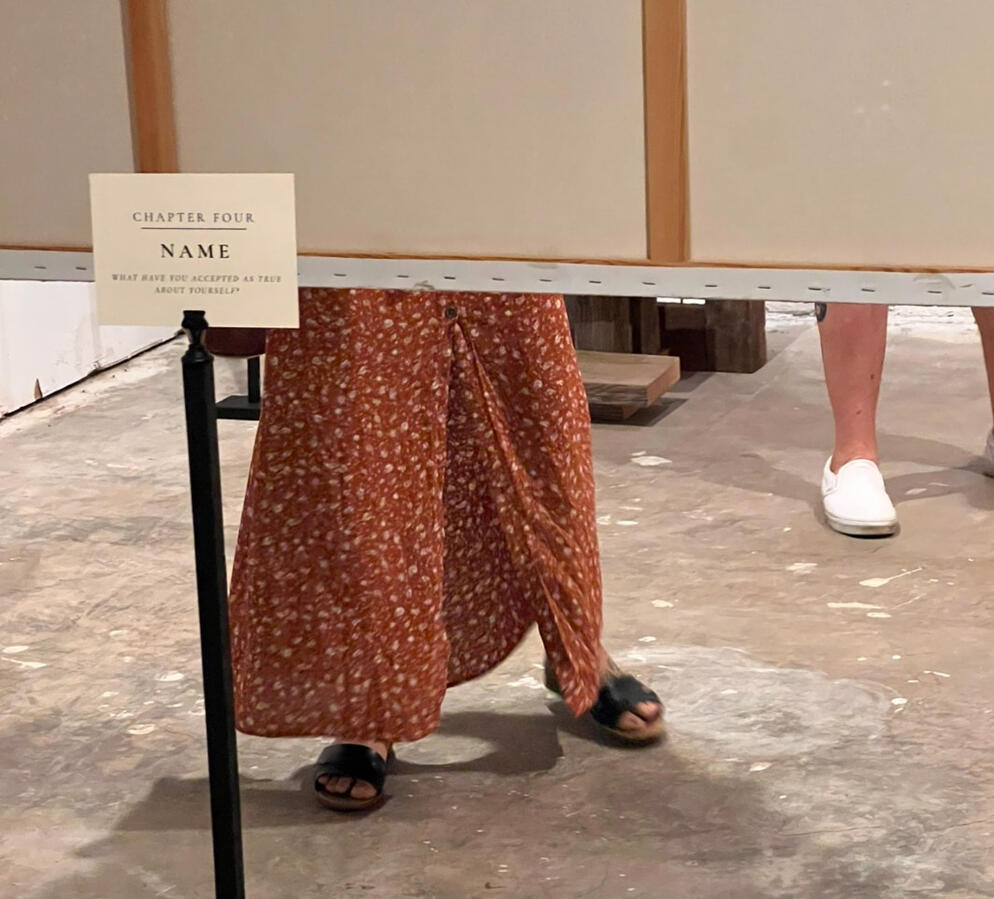
Somewhere along the way, other things started happening too.After the first weekend, a photographer who had been moved by the exhibition offered to come back and professionally document the work.The following weekend, filmmaker Tom Green and his wife Hannah spent a whole day inside MARKED beginning what would become a short documentary about it.Artists, business owners, educators and people I had never met started conversations with me about art, spaces, experiences and what I might make next.Jenn Co came through near the end of the final weekend. The next day, she invited me to join a panel at her book launch and talk about creating experiences that give people room for something meaningful to happen.None of that was part of my plan.Honestly, there wasn't much of a plan for what happened after September 11.I had been so focused on making MARKED that I hadn't really figured out what I was supposed to do if people actually cared about it.After the third weekend, I finally felt a little more ready to let it end. I closed the door Sunday night and walked outside to a beautiful sunset.I thought that was probably it.Then Monday came, and I opened the door again for a small private group.And as I write this, early in the morning on October 1st (1:29am to be precise), MARKED is still standing downtown.The building owner has asked me not to take it down yet.We are supposed to talk again.I don't know what happens next.A few months ago, that uncertainty probably would have bothered me a lot more.Right now, I'm okay being here.The door hasn't closed yet.
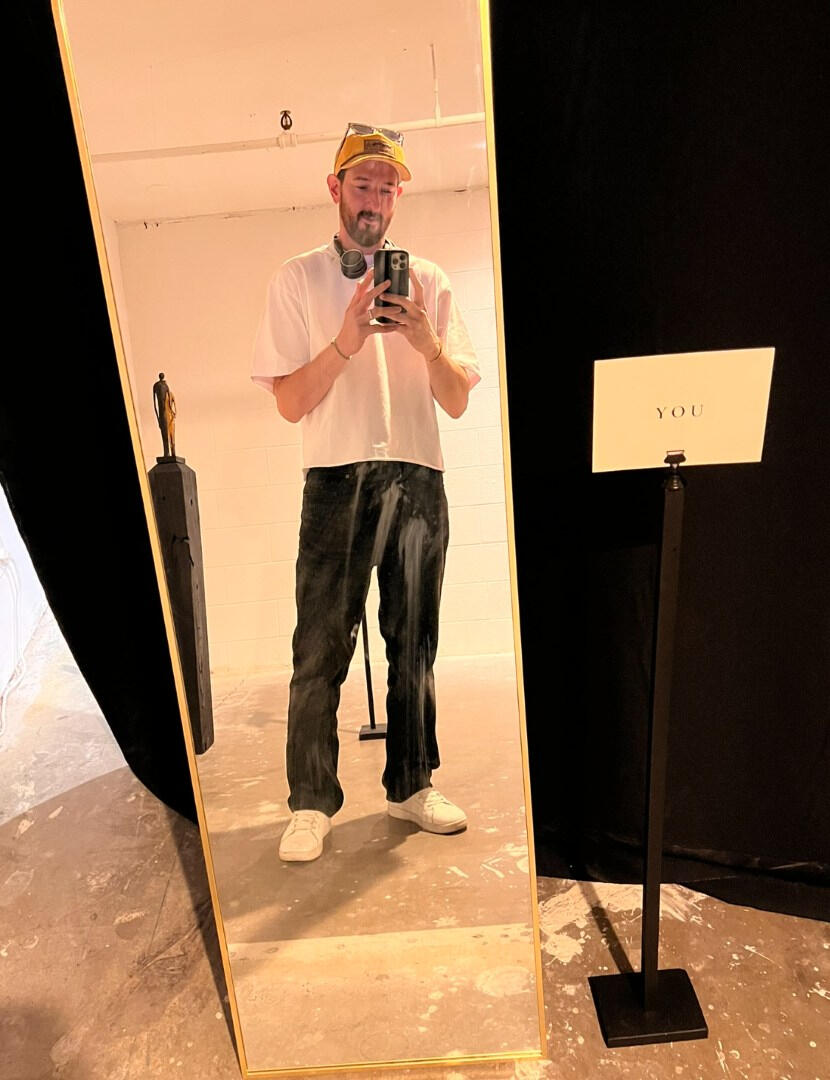
MOVEMENT V
THE GOLD THREAD
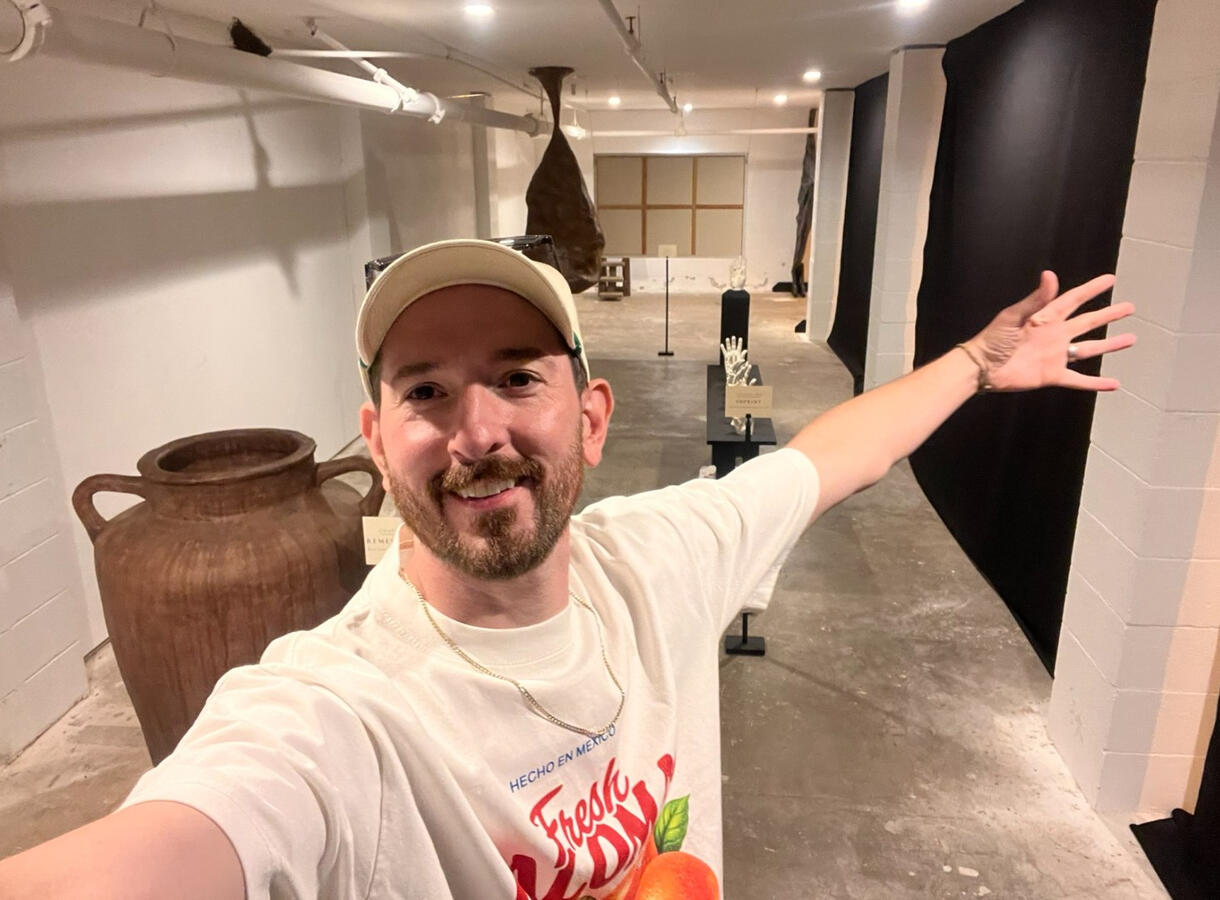
By the time I finished MARKED, the gold thread meant something different to me than when I first put it there.For most of my life, I've had this feeling that something was waiting for me somewhere ahead.A missing piece.The right job. The right opportunity. The right amount of success. The thing I was supposed to do. Some future version of myself who would finally arrive and understand what all of this had been leading toward.I think that's part of why turning 40 mattered so much to me.I didn't want to enter another decade still waiting for my life to begin.But somewhere in the process of making MARKED, I started wondering whether I had been looking in the wrong direction.Maybe the thing I was searching for wasn't waiting at the end.Maybe I needed the journey to recognize what had been there all along.The people. The experiences. The failures. The love. The things I had carried. The things I had lost. The moments that seemed insignificant when they happened but somehow became part of me.Not because every painful thing happened for a reason. Not because every loss was secretly good. And not because life becomes some perfectly arranged story if you look at it long enough.It doesn't.But a life is made from all of it.And sometimes you have to walk a little farther before you can look back and see the thread.
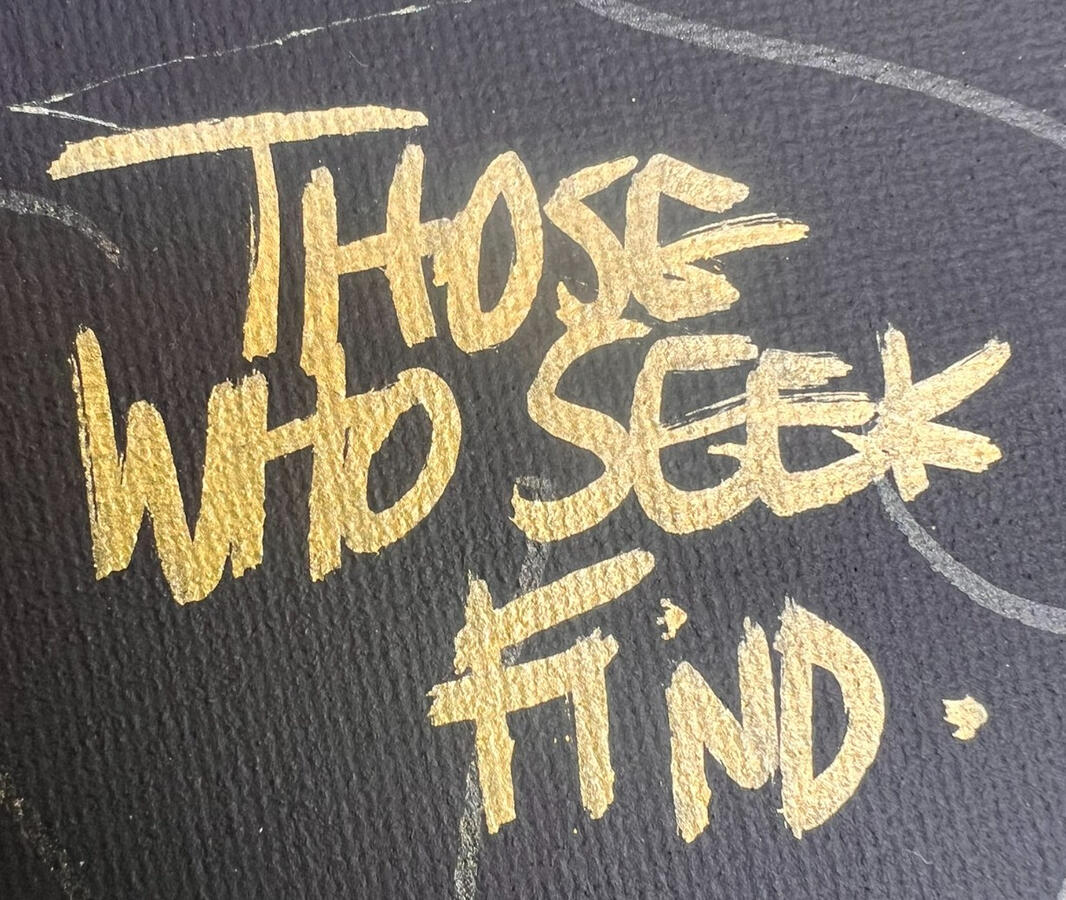
MARKED itself worked that way.A rock I put in my pocket became REMEMBRANCE. A broken hand I'd carried around for years became the beginning of IMPRINT. An old canvas I'd never touched became NAME. Boards from my parents' waterbed became TRUST.Packing paper became a storm.A fragment of shell my grandfather had once decided was worth keeping became WONDER. Foam someone else was throwing away became a hand reaching down from the ceiling. And eighteen years with Amy became the place where the thread finally came to rest.None of those things began as parts of an art exhibition.They were just pieces of a life.Then, for a few months in 2026, I put them all in the same room. And suddenly I could see them differently.Maybe that's why people walked through MARKED more than once.The room was circular. You could finish and begin again.And the second time through, you noticed things you hadn't seen the first time.The room hadn't changed.You had.
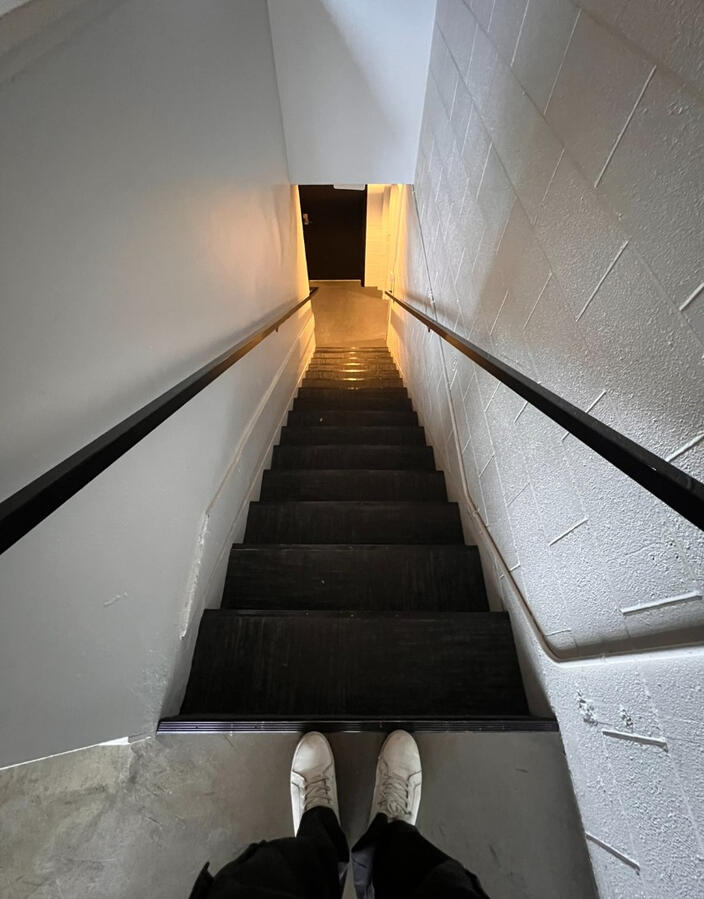
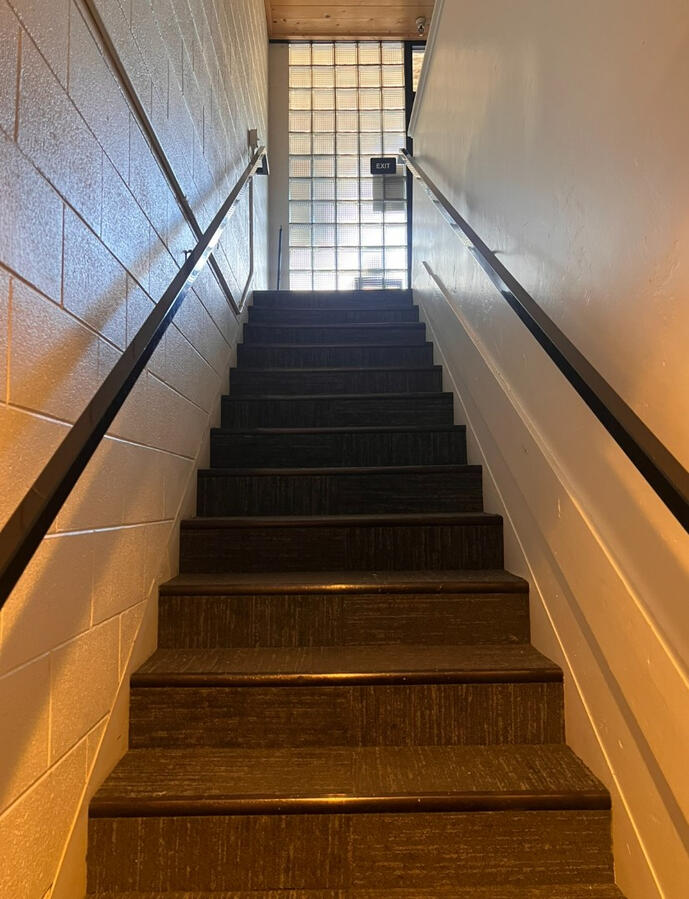
Four months ago, I was trying to understand what it meant to be fully Jonathan McKinney.I think I understand it better now.It doesn't mean I finally found the one thing that defines me. Actually, I think it's almost the opposite.I'm a husband. A dad. A friend. An artist. A creative. I've led people. I've failed at things. I've succeeded at things. I've been confident and completely unsure of myself.All of those things are true.None of them gets to name all of me.For years, I knew there was an artist somewhere in me. I just never felt completely comfortable saying it.I do now.Not because someone gave me permission. Because I made something. I followed an idea I couldn't completely explain for three months, into the garage night after night, through all the things that didn't work, and eventually down a stairwell into a room filled with people I had never met.And somewhere along the way, I came alive.I feel fully Jonathan McKinney.I feel fully alive.
I don't know what happens next.As I write this, MARKED is still standing downtown. There are conversations happening that I couldn't have predicted a few weeks ago. There are ideas in my head for things I haven't made yet. There's a documentary still being created. There are possibilities I don't know what to do with yet.And for once, I don't need to pretend I know where all of them lead.Maybe there will be another MARKED. Maybe this exhibition will travel somewhere. Maybe I'll make something completely different. Maybe the next chapter of my life looks nothing like what I'm imagining tonight.I don't know.I don't know the next chapter until I get through the one I'm in.And maybe that's okay.Because if MARKED taught me anything, it's that the journey is the story.There is no arrival.There is only the next step. The next person. The next thing worth noticing. The next piece of the thread becoming visible.And somewhere ahead of me, it disappears around another corner.So I'll keep following it.
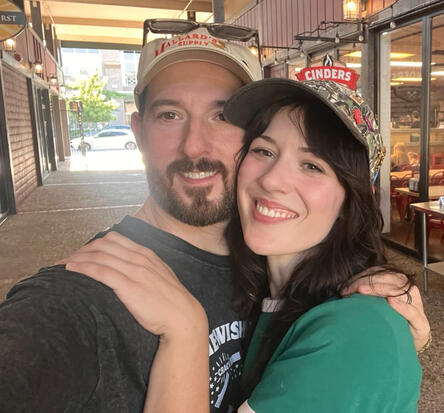
JONATHAN ANTHONY MCKINNEY
Redding, California
October 1, 2026
TELL ME WHAT STAYED WITH YOUIf you experienced MARKED, I'd love to know what stayed with you afterward. A piece. A moment. A question. Something you noticed here that you missed the first time.